Introduction: A Taste of Seoul’s History
Step into the warm embrace of one of Korea’s most iconic comfort foods: Seolleongtang. This milky, savory, and deeply satisfying soup is a staple of Seoul’s culinary landscape. With a history stretching back centuries, it’s a dish beloved by Koreans of all ages. Traditionally enjoyed for a hearty breakfast or as a restorative meal during chilly weather, Seolleongtang is celebrated for its clean and subtle flavor. The taste is intentionally mild, a blank canvas that you, the diner, bring to life with seasoning at your table. It’s more than just a soup; it’s a nourishing experience that warms you from the inside out.
Ingredients & Flavor Profile
Key Ingredients
The beauty of Seolleongtang lies in its elegant simplicity. The dish is built around a few high-quality components that work in perfect harmony:
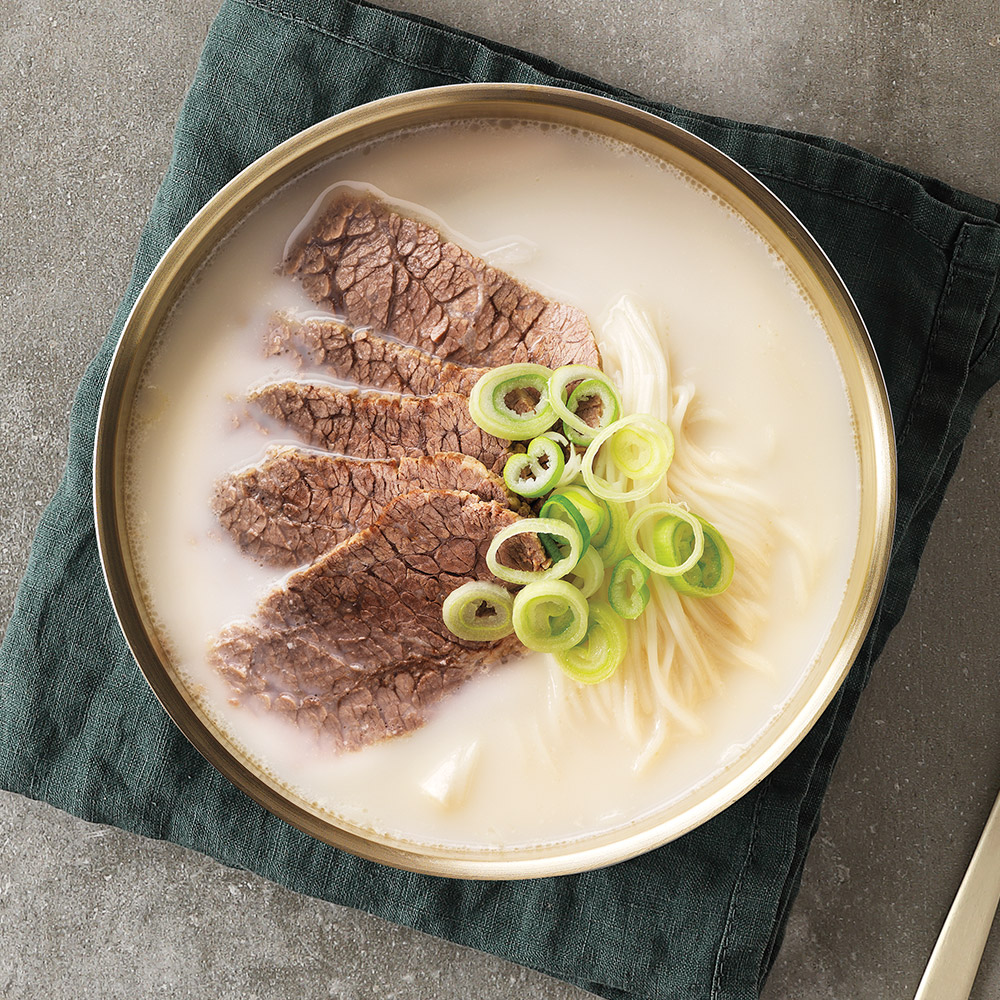
- Rich Ox Bone Broth: The heart and soul of the dish, this broth is created by simmering ox bones for many hours until it achieves its signature milky-white color and profound, savory depth.
- Tender Boiled Beef Slices: Thin, delicate slices of boiled beef are added to the soup, providing a satisfying texture and a boost of protein.
- Soft Wheat Noodles (Somen): A small portion of thin wheat noodles is typically included, soaking up the delicious broth and adding another layer of comfort.
The Secret of Taste: You Are the Chef!
Unlike many Korean dishes that arrive pre-seasoned, Seolleongtang puts the final flavor profile in your hands. The broth is served pure and unseasoned. On your table, you will find pots of salt, black pepper, and freshly chopped green onions. The true secret to enjoying this soup is to customize it to your exact preference. Add salt for savoriness, pepper for a gentle kick, and a generous spoonful of green onions for a fresh, aromatic crunch. This interactive element makes every bowl a uniquely personal creation.
Dietary Information
Please be aware that Seolleongtang is not a vegetarian dish. Its fundamental ingredient is the broth made from simmering ox bones, and it contains slices of beef.
Safety Tip: As this dish is fundamentally meat-based, it is unsuitable for vegetarians. For other dietary concerns, it’s always a wise practice for tourists to ask restaurant staff about specific ingredients, as recipes can vary slightly from one kitchen to another.
How It’s Served
Seolleongtang is a classic example of Korean gukbap (soup with rice). The preparation is a labor of love. The process begins with simmering ox leg bones for hours, sometimes even a full day, until the broth becomes opaque and rich with collagen. Just before serving, cooked somen noodles and thin slices of tender boiled beef are placed in a bowl. The piping hot, milky broth is then poured over them. It arrives at your table steaming in a traditional earthenware pot (ttukbaegi), which keeps it hot throughout your meal. It is typically served with a bowl of rice and, most importantly, kimchi and kkakdugi (diced radish kimchi), whose tangy spice provides the perfect contrast to the mild, savory soup.
This is a standard method based on general recipes. Every restaurant has its own secret twist and unique style!
Nutritional & Health Benefits
Beyond its comforting taste, Seolleongtang is also known for its restorative properties. It’s a meal that feels both indulgent and healthy.
- Rich in Collagen: The long simmering process extracts collagen from the ox bones, which is widely believed to support healthy skin, hair, and joints.
- Excellent Source of Protein: The tender beef slices provide a high-quality source of protein, essential for energy and muscle maintenance.
- Nourishing and Gentle: With its simple, clean ingredients, Seolleongtang is easy on the digestive system, making it a popular choice for a nourishing meal when one is feeling under the weather or in need of a gentle energy boost.

The KCulture Editorial Team is dedicated to providing deep insights and accurate information about the vibrant world of Korean culture.