Introduction & Synopsis
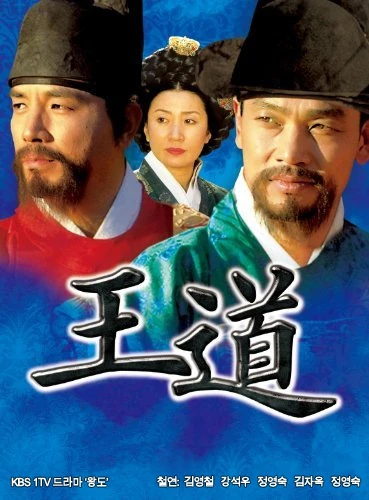
The Royal Way (왕도) is a masterful political sageuk (historical drama) that delves into the turbulent life of Hong Guk-yeong, one of the Joseon Dynasty’s most brilliant and controversial strategists. The narrative charts his meteoric rise from a minor official to the most powerful man in the kingdom, the mastermind who secures the throne for the reformist monarch, King Jeongjo. The series is not just a chronicle of historical events; it is an intense character study of loyalty, ambition, and the corrosive nature of absolute power, all centered on the complex, symbiotic, and ultimately tragic relationship between the kingmaker and the king he created.
Aired in 1991, this landmark production from public broadcaster KBS1 set a new standard for historical dramas, offering a nuanced and psychologically rich portrait of a pivotal era in Korean history.
Deep Cultural/Historical Insight
To fully appreciate The Royal Way, one must understand the fraught political landscape of 18th-century Joseon. King Jeongjo (r. 1776-1800) ascended the throne under the shadow of his father’s tragic death. His father, Crown Prince Sado, was executed by his own father, King Yeongjo, by being locked in a rice chest—an event that created deep and violent factional divides in the court. Jeongjo’s reign was a constant battle against the powerful aristocratic factions (*Bungdang*) that opposed his legitimacy and his reformist agenda.
This is where Hong Guk-yeong becomes a crucial figure. He was Jeongjo’s right-hand man, a political genius who ruthlessly purged the king’s enemies and consolidated his power. The drama brilliantly captures the Korean concept of Han (한), a deep-seated feeling of sorrow, injustice, and resentment. Both Jeongjo and Hong Guk-yeong are driven by their own forms of Han—Jeongjo by his father’s unjust death, and Hong by his desire to overcome his relatively humble origins. Their initial alliance is a fusion of these powerful sentiments, but as the story unfolds, it explores how unchecked ambition can poison even the most righteous causes.
Narrative Analysis
Unlike contemporary sageuks that often prioritize romance or fast-paced action, The Royal Way is a deliberately paced, dialogue-heavy political thriller. Its narrative strength lies in the meticulous depiction of court intrigue. The story is a grand chess match where every conversation is a move, every alliance is fragile, and every royal decree carries the weight of life and death. The drama excels at showing, not just telling, the immense pressure and isolation faced by those at the pinnacle of power.
The core of the drama’s compelling narrative is the evolution of Hong Guk-yeong’s character. He is not presented as a simple villain. He begins as a loyal and brilliant subject dedicated to a just cause: placing a worthy king on the throne. The series masterfully tracks his transformation as he accumulates power, forcing the audience to question where loyalty ends and self-serving ambition begins. It’s a timeless cautionary tale about whether noble ends can ever justify ruthless means, making its themes as relevant today as they were in 1991.
The Pulse of the Time
Upon its broadcast, The Royal Way was a massive success in South Korea. It was a prime example of the “jeongtong sageuk” (authentic historical drama) that KBS was renowned for, captivating audiences with its historical accuracy, powerful script, and stellar acting. In an era before the global K-wave, this was premium, appointment television. The drama solidified the public’s fascination with King Jeongjo as a tragic but brilliant reformist king, a view that has since been explored in numerous other dramas and films like Yi San and The Red Sleeve. Kim Yeong-cheol’s portrayal of Hong Guk-yeong became iconic, leaving a lasting impression of the historical figure as a complex and tragic anti-hero.
Cast Spotlight
Kim Yeong-cheol as Hong Guk-yeong
This was a career-defining role for Kim Yeong-cheol. His portrayal is a masterclass in intensity and nuance. He perfectly captures Hong’s sharp intelligence, unwavering confidence, and the eventual paranoia that consumes him. International fans may know him as a formidable villain or powerful patriarch in films like A Bittersweet Life or dramas like My Country: The New Age, and The Royal Way is the role that cemented his status as an actor capable of immense gravitas.
Kang Seok-woo as King Jeongjo
Playing opposite such a powerful performance, Kang Seok-woo delivers a subtle and intelligent portrayal of King Jeongjo. He embodies the monarch’s scholarly demeanor, his deep-seated grief, and the quiet steel required to rule a court full of enemies. He effectively portrays a king who is both dependent on and wary of the powerful subject he relies on, creating a palpable tension that drives the entire series.
Global Viewing Guide
Fans looking to discover this classic can typically find it on platforms dedicated to preserving Korean television history. Availability can change, but these are the best places to start:
- KBS Drama Classic YouTube Channel: The official channel is often the primary source for vintage dramas, sometimes offering episodes with community-contributed or official subtitles.
- Kocowa / Viki: These streaming services, which partner with Korean broadcasters, occasionally license classic titles like The Royal Way for global distribution. Check their libraries for regional availability.
Final Verdict
For viewers seeking the blueprint of the modern political sageuk and a masterclass in character-driven historical tragedy, The Royal Way is essential viewing. It’s a powerful, intelligent, and deeply human drama that proves the greatest stories of power and ambition are truly timeless.

The KCulture Editorial Team is dedicated to providing deep insights and accurate information about the vibrant world of Korean culture.