Introduction: The Ultimate Comfort Noodle Soup
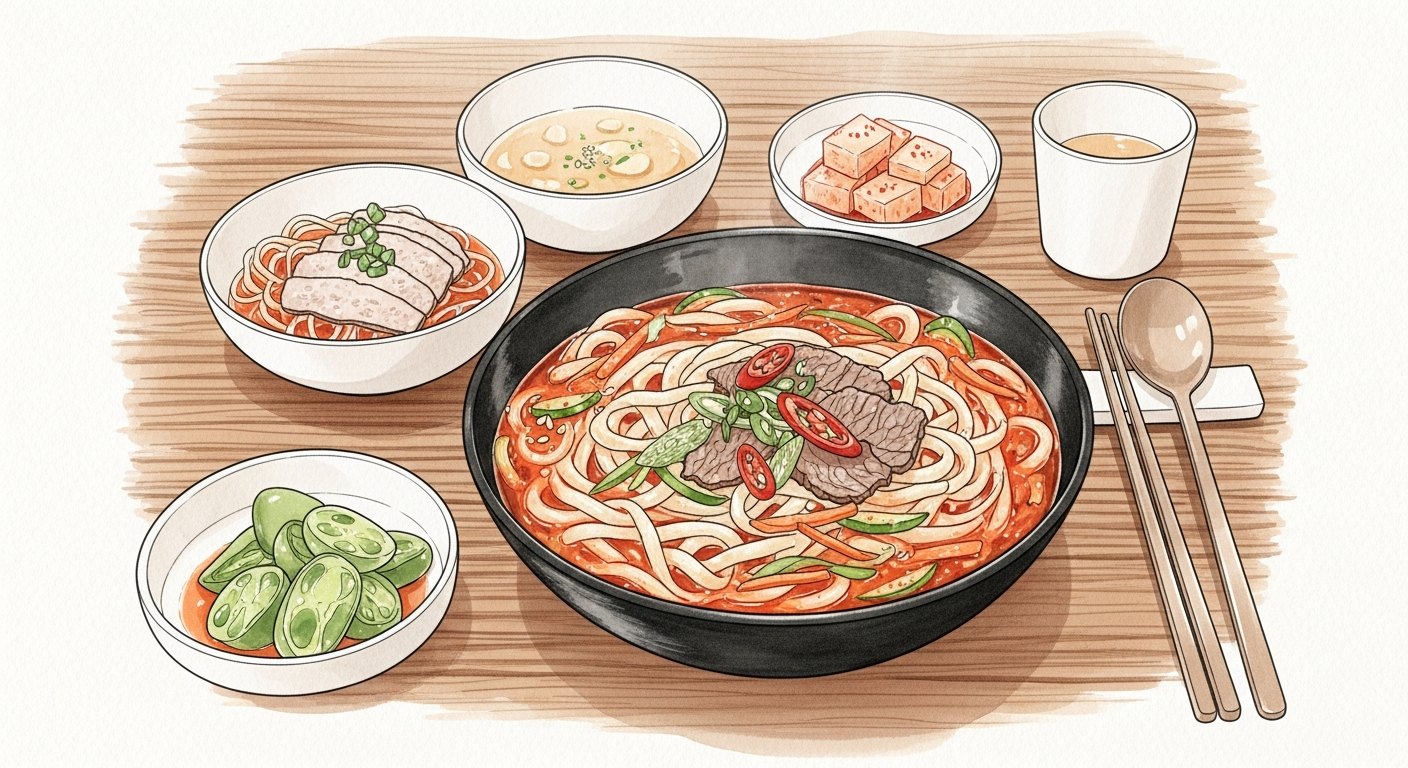
Imagine a cold, rainy day in Korea. What dish perfectly warms you from the inside out? For many, the answer is a steaming, fiery bowl of Jang Kalguksu. Unlike its milder, clear-broth cousin, Jang Kalguksu is a bold and robust noodle soup, famous for its deep red color and powerful flavors. This hearty dish is a regional specialty, particularly beloved in the mountainous Gangwon province, where its spiciness and warmth provide the perfect antidote to chilly weather. The taste is a masterful balance of spicy, savory, and umami, derived from two of Korea’s most essential fermented pastes: Gochujang (chili paste) and Doenjang (soybean paste).
Ingredients & Flavor Profile
Key Ingredients
The beauty of Jang Kalguksu lies in its humble yet powerful components. Here’s what makes up a classic bowl:
- Kalguksu Noodles: Literally “knife noodles,” these are fresh, wheat-based noodles that are sliced by hand, giving them a delightfully chewy and soft texture that absorbs the rich broth.
- Gochujang (Korean Chili Paste): This is the heart of the soup’s spiciness and vibrant red hue.
- Doenjang (Korean Soybean Paste): This fermented paste adds a deep, savory, and earthy complexity that balances the heat.
- Potatoes: Sliced or cubed potatoes are added to the soup, becoming wonderfully tender and helping to thicken the broth with their natural starch.
The Secret of Taste
The unforgettable flavor of Jang Kalguksu comes from the dynamic interplay of its seasoning. The foundation is a broth seasoned with Gochujang, which provides a sweet and spicy kick, and Doenjang, which lends a profound, salty umami depth that you can’t get from salt alone. Often, anchovy powder is used to create a savory seafood base, enhancing the overall richness of the soup. This trinity of flavors creates a broth that is simultaneously fiery, savory, and incredibly comforting.
Dietary Information (Vegetarian/Allergy)
Jang Kalguksu is Potentially Vegan. While the core ingredients like noodles, potatoes, and pastes are plant-based, the traditional broth is almost always made with an anchovy base. However, a vegan version is entirely possible and sometimes available.
Safety Tip: For a vegetarian or vegan diet, you must ask the restaurant if they can prepare the dish with a vegetable-based broth (“Chaesu” in Korean). Always confirm with the staff to ensure no hidden fish or meat products were used in the broth.
How It’s Cooked
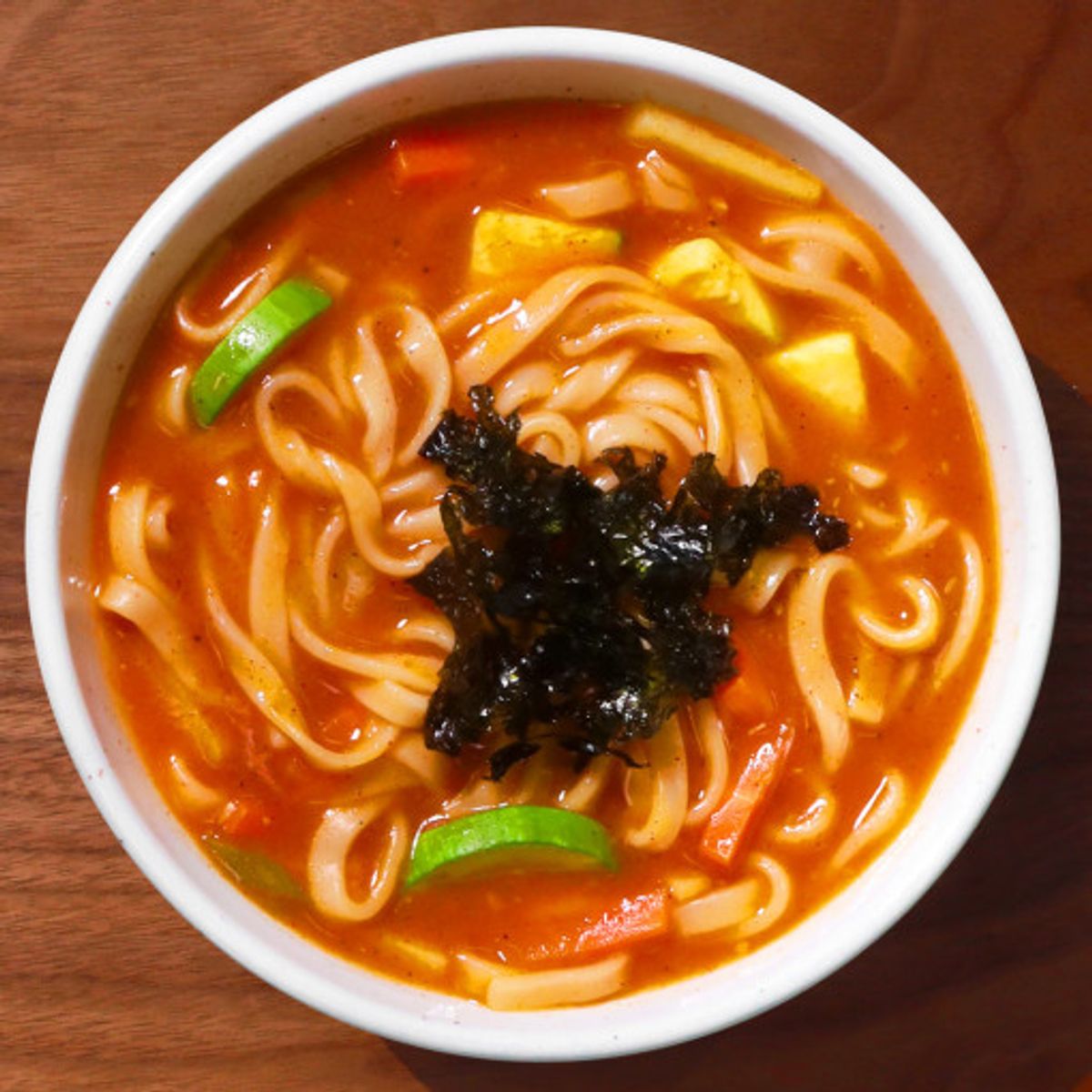
Jang Kalguksu is a quintessential single-dish meal, prepared with care to maximize flavor in every spoonful. The cooking process begins by creating the signature broth. Gochujang and Doenjang are dissolved into a simmering stock, transforming it into a fiery, fragrant, and savory base. Once the broth is perfectly seasoned, the fresh kalguksu noodles and sliced potatoes are added, then boiled together until the noodles are chewy and the potatoes are fall-apart tender. As they cook, the starch from both the noodles and potatoes naturally thickens the soup, giving it a hearty, stew-like consistency. To finish, the dish is often garnished with a sprinkle of roasted seaweed flakes (gimgaru) or a swirl of beaten egg, which adds another layer of texture and flavor.
This is a standard method based on general recipes. Every restaurant has its own secret twist and unique style!
Nutritional & Health Benefits
More than just a delicious meal, Jang Kalguksu offers some surprising health perks:
- Gut-Friendly Fermentation: Both Gochujang and Doenjang are fermented foods rich in probiotics. These beneficial bacteria can help improve digestion and support a healthy gut microbiome.
- Warming Properties: The capsaicin in the Gochujang not only provides heat but can also help improve blood circulation and boost metabolism, making it an excellent dish for warming the body on a cold day.
- Sustained Energy: The combination of wheat noodles and potatoes provides a healthy dose of complex carbohydrates, which are essential for providing long-lasting energy throughout the day.

The KCulture Editorial Team is dedicated to providing deep insights and accurate information about the vibrant world of Korean culture.