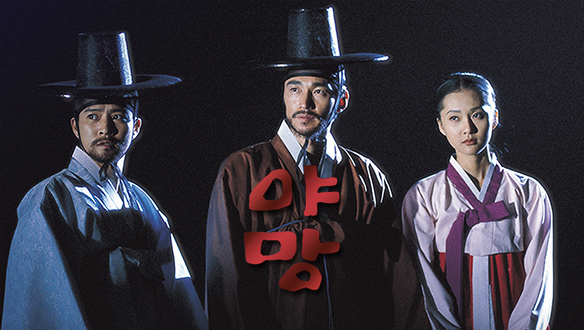
Introduction & Synopsis
Long before the global phenomenon of the K-wave, Korean television was crafting epic historical dramas that explored the nation’s soul. One such masterpiece is Ambition (야망), a sweeping saga of two young men whose friendship is tested by love, politics, and an unquenchable desire to rise above their station. Set during the tumultuous late Joseon Dynasty, the series masterfully depicts the ideological war between the progressive Silhak (Realist) scholars and the entrenched Sugu (Conservative) elite. At its heart, Ambition is the story of how personal dreams collide with the rigid walls of a society on the brink of change.
Aired in 1994, this landmark production from MBC became a touchstone for the historical genre, weaving a complex narrative of political intrigue, forbidden romance, and the profound human cost of chasing power. It examines what happens when loyalty gives way to rivalry and idealism confronts the harsh realities of a deeply stratified world.
The Battle for Joseon’s Soul: Understanding Silhak
To a global viewer, the political backdrop of Ambition might seem like a simple story of old versus new. However, its core conflict is deeply rooted in Korean intellectual history. The drama centers on the clash between the Sugu-pa (수구파), the conservative faction dedicated to preserving the rigid Neo-Confucian social order, and the Silhak-pa (실학파), the “Realist School of Thought.”
Silhak emerged in the 17th and 18th centuries as a counter-movement to what its proponents saw as the impractical and dogmatic philosophy of the ruling class. Silhak scholars advocated for practical reforms: modernizing agriculture, promoting commerce and technology, and opening up to new ideas from the outside world. They believed in meritocracy over birthright. In Ambition, this isn’t just a political debate; it’s a life-or-death struggle. The drama uses this historical tension to explore timeless questions: Should a nation cling to tradition for stability, or risk it all for progress? What is the price of challenging the status quo? This context transforms the characters’ personal struggles into a powerful allegory for Korea’s own journey toward modernity.
A Narrative of Gripping Rivalry
What makes Ambition so compelling is its refusal to paint its characters in simple black and white. The story is not merely about good versus evil but about two different, compelling visions for the future, embodied by its central protagonists. The narrative excels at building a slow-burn tension, where the bonds of youth fray under the immense pressure of societal expectation and political maneuvering. The “tightly woven story,” as it was praised at the time, ensures that every political decision has a deeply personal consequence, and every romantic entanglement sends ripples through the halls of power. It’s a masterclass in character-driven storytelling, where the grand sweep of history is felt in the intimate struggles of its characters.
The Pulse of the Time
When Ambition aired in 1994, South Korea was in the throes of its own rapid transformation. The “Miracle on the Han River” had brought unprecedented economic growth, but with it came intense competition and questions about tradition and identity. The drama’s theme of young men striving to break free from the constraints of their birth and forge their own destiny resonated powerfully with a generation navigating this new, hyper-competitive landscape. The series captured the national mood, becoming a much-loved and highly-regarded hit that cemented the historical epic as a major force in Korean television.
Cast Spotlight
The Pillars of the Story
The success of Ambition rests heavily on the shoulders of its powerhouse cast, whose impassioned performances brought the era to life.
- Choi Soo-jong (최수종): Already a household name, Choi Soo-jong delivered a defining performance that would help cement his reputation as the “King of Sageuk” (historical dramas). He masterfully portrays the fire of youthful idealism and the pain of a man caught between his principles and his heart. His performance is the moral anchor of the series.
- Jeong Bo-seok (정보석): As the brilliant and complex rival, Jeong Bo-seok is nothing short of magnetic. He excels at portraying characters driven by a fierce, often morally ambiguous, ambition. His on-screen chemistry with Choi Soo-jong creates a legendary dynamic of friendship and enmity that fuels the entire narrative.
- Kim Heung-ki (김흥기): A veteran actor of immense gravitas, Kim Heung-ki embodies the power and authority of the conservative establishment. He serves as a formidable obstacle and a symbol of the old guard, bringing a chilling conviction to the Sugu faction’s worldview.
Global Viewing Guide
For fans looking to discover this classic gem, the best place to start is often with the broadcaster’s official channels. Currently, you can find many classic MBC dramas available for streaming.
- MBC Drama Classic YouTube: The official channel frequently uploads episodes of its vintage dramas, sometimes with English subtitles available.
- Wavve: This Korean streaming platform holds a vast library of classic content, including many MBC productions. Access may require a VPN for viewers outside of South Korea.
Final Verdict
Ambition is more than just a historical drama; it is essential viewing for anyone who wants to understand the foundations of the modern K-drama epic. With its powerful performances, rich historical context, and timeless story of rivalry and love, it remains a compelling and insightful look into the forces that have shaped Korea. A must-watch for fans of political intrigue and profound character studies.

The KCulture Editorial Team is dedicated to providing deep insights and accurate information about the vibrant world of Korean culture.