Introduction & Synopsis
Long before Korean dramas became a global phenomenon, local television was finding memorable stories in the lives of ordinary families. Aunt Ok (옥이 이모), an SBS drama broadcast from May 14 to December 31, 1995, belongs to this tradition. Written by Kim Woon-kyung and directed by Sung Joon-ki, the 69-episode series combines a woman’s turbulent life story with a boy’s journey toward adulthood.
The story begins in a rural Gyeongsang community in the 1960s, with later episodes moving into the 1980s. At its emotional center is Choi Sun-ok, affectionately called Oki, whose experiences of love, loss, and family responsibility are seen through the eyes of her nephew, Kim Sang-gu. As Sang-gu grows older, his understanding of his aunt—and of the adults around him—also changes. The title’s imo means maternal aunt, making this relationship central to the drama from the outset.
Deep Cultural & Historical Insight: Rural Korea in Transition
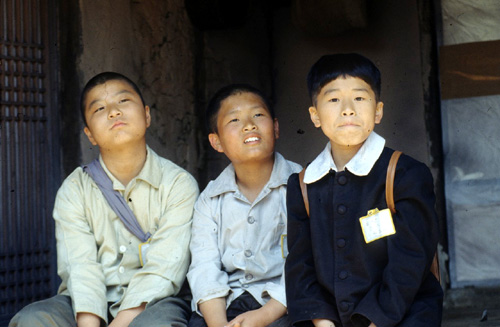
Rather than focusing primarily on the crowded urban neighborhoods of the 1970s, Aunt Ok initially draws viewers into the countryside of the 1960s. Its regional speech, village relationships, and children’s everyday adventures give the story a strong sense of place. For international viewers, this offers a useful reminder that modern Korean history was experienced differently in rural communities and rapidly expanding cities.
The drama’s family conflicts also provide a way to understand the expectations surrounding marriage, respectability, and women’s responsibilities. Oki’s life cannot be reduced to a reassuring portrait of selfless sacrifice. Her own desires matter, yet they repeatedly come into conflict with the judgments and demands of others. The warmth of family life exists alongside relationships that can be restrictive or painful.
One useful interpretive lens is jeong (정), the attachment that develops through shared experiences and continuing relationships. Here, emotional closeness does not necessarily mean perfect harmony: people can quarrel, disappoint one another, and still remain deeply connected. Oki’s accumulated sorrow can also be discussed through han (한), often associated with unresolved grief or resentment. These concepts offer ways of reading the drama, rather than a complete explanation of its characters or of Korean society.
Narrative Analysis: A Woman’s Life Through a Child’s Eyes
What distinguishes Aunt Ok is the relationship between its two narrative perspectives. Oki experiences the consequences of adult decisions, while young Sang-gu observes a world he does not yet fully understand. His changing perspective gives the series the shape of a coming-of-age story as well as a family drama. An adult’s behavior may appear puzzling or unfair to a child, only to acquire a different meaning with time.
The village ensemble and the children’s adventures bring humor and energy to this framework. Regional dialect is especially important, giving conversations a recognizable local rhythm. Yet the series also contains consequential romantic and family conflicts. Its appeal comes from the movement between childhood comedy and adult sorrow, rather than from an absence of dramatic events.
Oki herself is more than an endlessly patient caregiver. Her willingness to pursue love, her emotional vulnerability, and her determination to continue through hardship make her a character with desires and contradictions of her own.
The Pulse of the Time: Nostalgia and the Popularity of Its Child Actors
Aunt Ok found a receptive audience in 1995, particularly through its evocation of rural childhood and its lively supporting characters. Contemporary reporting highlighted the natural performances of its child actors, the appeal of its Gyeongsang dialect, and its especially enthusiastic reception in Busan and Daegu. By late August, a contemporary ratings report placed the series third in the weekly television rankings.
The children’s popularity even created a production dilemma. The original plan called for the story to move relatively quickly from childhood into adulthood, but the strong response encouraged the production team to reconsider how soon that transition should happen. This helps explain why memories of Aunt Ok are tied not only to its heroine but also to Sang-gu and his childhood companions.
Cast Spotlight: The People Behind the Community
The drama brings together its central performers, an extensive supporting ensemble, and child actors whose popularity became an important part of its original reception.
- Ok So-ri as Choi Sun-ok, or Oki: The title character is Sang-gu’s maternal aunt. Her story combines romantic longing, family obligations, and personal hardship. In a contemporary interview, Ok described Oki as outwardly tough but inwardly warm, emphasizing both her emotional strength and her willingness to act on her feelings.
- Ryu Jae-young and Sunwoo Jae-duk as Kim Sang-gu: Ryu plays the young Sang-gu, while Sunwoo portrays him as an adult. Sang-gu’s perspective connects the childhood episodes to the wider story of his aunt’s life. Ryu’s natural delivery and regional accent attracted particular attention during the original broadcast.
- Cho Jae-hyun as Shim Jong-rak: Jong-rak is Oki’s love interest. Their relationship is an important source of the emotional conflict surrounding her hopes for the future.
- Joo Hyun as Sang-gu’s paternal uncle: His character belongs to the boy’s extended family, giving him a specific place within the drama’s network of relatives rather than simply serving as a neighborhood elder.
- Chun Ho-jin as Dae-gil: Dae-gil is a servant in Sang-gu’s maternal family household, contributing to the ensemble through which the series depicts rural life and social relationships.
Global Viewing Guide
The clearest starting point is the official SBS page for Aunt Ok, which lists the drama’s archived episodes. SBS labels the series as offering free VOD viewing, although playback access may depend on your location and the service’s current conditions.
International viewers should check subtitle options before starting. An official Korean archive listing does not establish that English subtitles are available. The drama should not be assumed to be on KOCOWA or available in full on an official YouTube channel without a confirmed listing.
Final Verdict
Aunt Ok offers an appealing introduction to an earlier tradition of Korean family storytelling: regional voices, memorable children, complicated relatives, and a woman’s life unfolding beyond what her young nephew can initially comprehend. Its warmth gains depth from the conflicts within that familiar world. For viewers who enjoy family sagas and stories about growing up, it offers a rewarding glimpse of how Korean television brought everyday lives to the screen before the global Hallyu era.

The KCulture Editorial Team is dedicated to providing deep insights and accurate information about the vibrant world of Korean culture.