Gojoseon and Dangun: Korea’s Roots Beyond 1948
Every October 3, South Korea celebrates National Foundation Day, or Gaecheonjeol. The occasion looks far beyond the establishment of its modern government in 1948. It remembers Gojoseon (고조선), an ancient kingdom, and Dangun (단군), the legendary founder who gives Korea’s distant beginnings a familiar face.
For many Koreans, this connection expresses something simple: governments and borders have changed, but the history of the people reaches much further back. Families, communities, skills, and stories continued across the rise and fall of kingdoms. Gojoseon has become an early root through which that longer history is understood.
To explore that connection, this article brings together founding stories, ancient records, and recent historical research. The story leads from a bear who became a woman to a kingdom that resisted an empire—and then to the people and memories that survived its fall.
- Why Gojoseon and Dangun Still Matter
- The Bear, the Heavenly Prince, and a New Kingdom
- Was Dangun a Real Person?
- The Kingdom Behind the Story
- When Gojoseon Faced the Han Empire
- A Kingdom Fell. Its People Continued.
- How the Later Kingdoms Connect
- Why an Ancient Name Returned as Joseon
- Ancient Roots in a Modern Republic
- Meeting This History Today
Why Gojoseon and Dangun Still Matter
A modern state has a constitution, institutions, and a date when its government began. A people’s history stretches through many such changes. That is why Korea’s beginnings cannot be explained through 1948 alone.
Gojoseon occupies a special place in that longer story. It is remembered as Korea’s earliest kingdom, while Dangun offers a shared ancestor around whom the beginning can be imagined. The expression “descendants of Dangun” often conveys belonging to a historical community. People who use it may hold very different views about whether Dangun lived, whether the story is religious, and how literally it should be understood.
His meaning has also changed. Historian Kim Seong-hwan’s Tangun, from Mythology to History (2022) traces how Dangun came to be remembered in different periods. A sacred figure, an ancient founder, and a national ancestor could meet different needs in different societies.
There is a useful distinction in the name itself. The ancient kingdom was called Joseon. Gojoseon means “Old Joseon,” helping distinguish it from the much later Joseon dynasty. Its importance as a beginning in Korean political history does not mean that people first arrived on the peninsula when it was founded. Human life there was already far older.
The Bear, the Heavenly Prince, and a New Kingdom
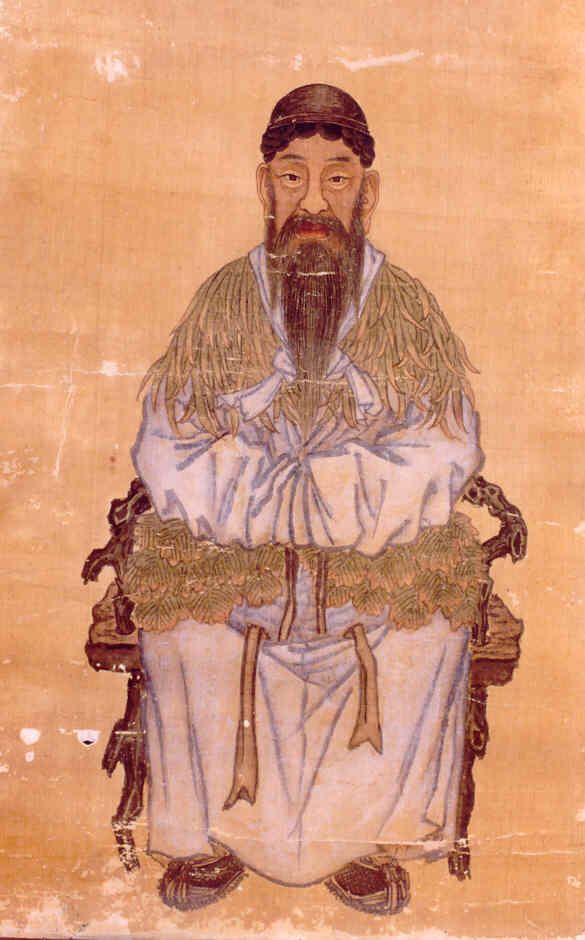
In the best-known account, Hwanung, a son of the heavenly figure Hwanin, wishes to live among humans. He descends beneath a sacred tree with followers and officials responsible for wind, rain, and clouds. His concerns include crops, illness, punishment, and the ordering of human life.
Then a bear and a tiger ask to become human. Hwanung gives them mugwort and garlic and tells them to stay away from sunlight. The tiger abandons the trial. The bear endures it and becomes a woman, Ungnyeo.
Ungnyeo later bears Hwanung’s son, Dangun Wanggeom, who establishes Joseon. Readers can find the story in the Samguk Yusa passage presented by the National Institute of Korean History.
The animal transformation makes the tale memorable, but the duties of the heavenly prince are just as revealing. Rain, harvests, sickness, and fair government were matters that could decide a community’s survival. The story can be read as a picture of leadership responsible for both nature and human society.
Its expression hongik ingan, usually understood as benefiting humanity broadly, still resonates. Korea’s Framework Act on Education carries this humanitarian ideal into its description of education. An ancient founding story has helped provide words for a modern hope: that a community should serve the people within it.
Was Dangun a Real Person?
Gojoseon was a real ancient kingdom. Dangun’s existence as one identifiable founder remains unproven. Keeping those two points together allows the story to be appreciated without confusing tradition with confirmed events.
The fullest early surviving accounts of Dangun appear in the late-thirteenth-century Samguk Yusa and the Jewang Ungi of 1287. They were written long after Gojoseon had disappeared. They may preserve older traditions, but they are not eyewitness accounts of its foundation.
The traditional founding date, 2333 BCE, belongs to that inherited chronology. It is widely commemorated, yet archaeology has not confirmed a founding event in that particular year. The cautious mainstream position therefore leaves Dangun’s personal identity open.
That does not make the story useless to historians. Some researchers look for memories of early religious leadership, alliances, or the joining of different communities. Jeon Jin-guk’s 2022 study of the founding myth, for example, interprets Hwanung as a symbol of religious and political leadership. This asks what historical experience the story might contain.
A minority gives the tradition greater historical weight. In his 2011 study of Gojoseon’s existence, Yun Nae-hyeon argues for a political community around the traditional founding era and interprets Dangun as a ruler’s title. The difficulty is connecting early archaeological remains to that named kingdom and its founder. The argument remains disputed.
The bear’s transformation belongs to myth. The existence of Gojoseon belongs to history. Between them lies an intriguing question: what did later generations remember about their earliest communities?
The Kingdom Behind the Story
Beyond the founding tale lies a society of farmers, craftspeople, traders, and increasingly powerful leaders. During the Bronze and early Iron Ages, settlements grew, wealth became unevenly distributed, and some communities gained influence over their neighbors. Gojoseon emerged through this longer process.
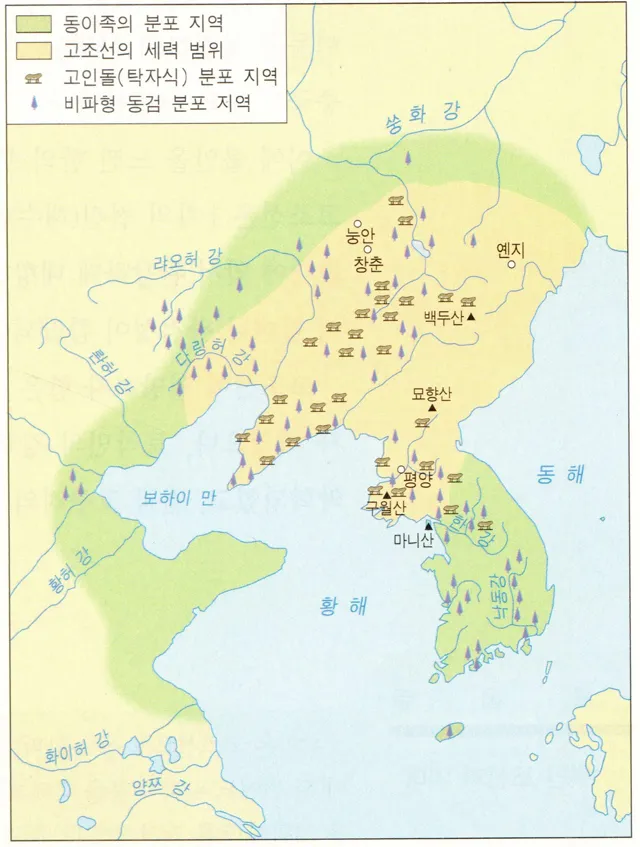
Its world connected what is now northeastern China with the northwestern Korean Peninsula. One influential reconstruction places an earlier center in the Liaoning region and a later one around Pyongyang (평양). Other locations and routes remain debated, as Kim Nam-jung explains in his 2024 review of Gojoseon’s territory. For a general reader, the essential point is that its centers and influence changed over time.
Written traditions describe kings and conflict with the neighboring state of Yan by the fourth and third centuries BCE. The account becomes clearer with Wiman, who displaced King Jun around 194 BCE. Wiman came from the former Yan region and ruled a population that included both local inhabitants and newcomers. Ancient communities were shaped by movement and exchange, much as later ones would be.
Wiman Joseon grew stronger by controlling access between neighboring communities and Han China. Trade, diplomacy, and military power worked together. The kingdom became important enough to stand in the way of an expanding empire.
A glimpse of everyday life
The Chinese Hanshu preserves three rules associated with Gojoseon’s “Eight Prohibitions”: killing was punished by death, injury required payment in grain, and theft could lead to enslavement. The penalties are severe, but they reveal a society concerned with life, crops, property, and labor. Only three rules survive in this passage; the full eight are unknown.
Archaeology adds another kind of detail. Bronze daggers, pottery, settlements, and burials reveal technology, social differences, and contact between regions. Yi Hu-seok’s 2026 study of early communities in central Korea emphasizes how outside influences entered local cultures. Similar objects help trace connections, although they cannot draw an exact border around a kingdom.
When Gojoseon Faced the Han Empire
Gojoseon’s end is more clearly documented than its beginning. Sima Qian’s Shiji account of Joseon describes a bitter confrontation with Emperor Wu’s Han empire.
Under King Ugeo, Wiman’s grandson, tensions grew over diplomatic obligations and access to neighboring peoples. Violence between a Han envoy and Joseon officials intensified the dispute. In 109 BCE, Han forces attacked by land and sea.
The conquest was difficult. Early attacks failed, negotiations broke down, and Joseon resisted a prolonged siege. Eventually, defections and division among its leaders weakened the defense. Ugeo was killed, and further resistance ended in 108 BCE.
Han then established administrative districts known as commanderies in the conquered region. Their boundaries and organization changed, and they never formed one permanent administration covering the whole peninsula. The northern landscape would later be reshaped again by Goguryeo’s expansion.
The war ended Gojoseon’s ruling regime. It also created new conditions in which its inhabitants had to live, move, and rebuild.
A Kingdom Fell. Its People Continued.
A fallen capital is a dramatic ending in a history book. For the people around it, life must continue. Fields still need cultivation, children need care, and communities must find ways to deal with new rulers.
Some inhabitants stayed in the old northern regions. Others moved. The surviving records preserve several stories of movement, and they belong to different moments.
King Jun’s reported flight south followed Wiman’s takeover, decades before the final conquest. Another account preserved through the Sanguozhi describes Yeokgyegyeong leaving Ugeo’s government for the southern state of Jin with more than two thousand households. These reports suggest repeated movements during political conflict.
Later Korean memory also linked Joseon people to southern communities. The Samguk Sagi account of Silla’s beginnings associates six early villages with people from Joseon. It offers a remembered connection, although it cannot establish the ancestry of every Silla inhabitant.
These accounts do not describe one great exodus in 108 BCE that suddenly created all of Samhan. Southern communities already had their own histories. New arrivals joined local populations, while many people remained in the north.
As Kim Young-Shim’s Migration and Social Change in Ancient Korea (2025) explains, movement shaped Korean society across many periods. This is where continuity becomes easier to imagine: people carried knowledge, relationships, and customs across political changes.
How the Later Kingdoms Connect
Korean history is often introduced through a familiar sequence of names: Gojoseon, Buyeo, Samhan, Goguryeo, Baekje, Silla, Goryeo, and Joseon. The actual story branches and overlaps. Several of these societies existed at the same time, and their relationships included migration, rivalry, conquest, and claims of shared ancestry.
Northern connections: Buyeo and Goguryeo
Buyeo developed in central Manchuria and overlapped with later Gojoseon. It was not simply the next government after Gojoseon fell. Its importance becomes especially clear in the origin traditions of Goguryeo and Baekje.
The Gwanggaeto Stele, erected in 414, describes Goguryeo’s founder Chumo as coming from North Buyeo. A letter attributed to Baekje’s King Gaero in 472 claims shared Buyeo origins with Goguryeo. Such statements show how kings understood their connections to an older world.
Southern connections: Samhan and the Three Kingdoms
Samhan refers to Mahan, Jinhan, and Byeonhan, groups of political communities in the south. Baekje expanded from within the Mahan world. Saro grew within Jinhan and developed into Silla. Byeonhan communities contributed to the Gaya states, which also belong in the story.
These changes took generations. Local populations and incoming groups helped shape the later kingdoms; none was simply a renamed gathering of Gojoseon refugees.
After the seventh-century wars, Silla ruled much of the peninsula, while Balhae developed in the north with Goguryeo-associated populations and Mohe communities. Goryeo, founded in 918, unified the Later Three Kingdoms in 936 and also received people from Balhae.
Goryeo’s name invoked Goguryeo, but its society inherited several regional pasts. That pattern appears repeatedly: a new state drew together people whose histories had begun under different rulers.
Continuity also survives in the landscape. The long history of land reclamation on Ganghwa Island (강화도) offers a later example of communities inheriting and reshaping the work of earlier generations.
Why an Ancient Name Returned as Joseon
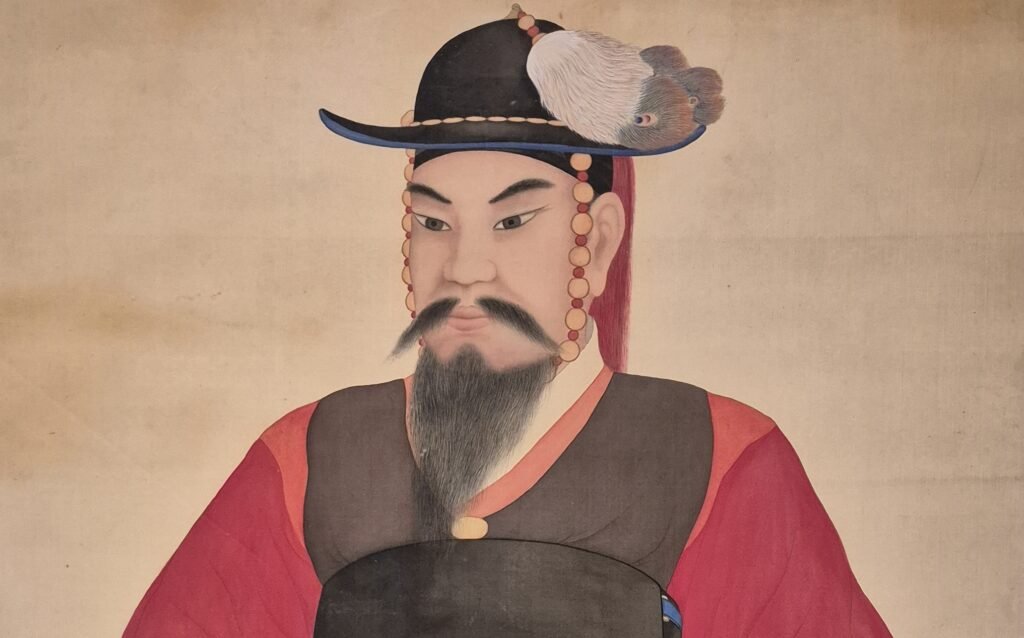
When Yi Seong-gye founded a new dynasty in 1392, choosing a name helped explain what his new government hoped to become. An ancient name offered both familiarity and prestige.
The name adopted was Joseon. “Gojoseon” is the term used to distinguish the ancient kingdom. It already appeared in the Samguk Yusa before Yi’s dynasty was founded.
The Annals of Taejo record two proposed names sent to the Ming court: Joseon and Hwaryeong. The reply favoring Joseon was recorded in 1393, and Taejo ordered its use.
The choice drew on the authority of ancient Joseon, but the story had a specifically Confucian side too. Jeong Do-jeon’s discussion of the state name gave importance to Gija, a figure traditionally credited with bringing civilized government to Joseon. Historians have not established the ancient Gija dynasty as fact, yet that tradition carried great weight among later Confucian thinkers.
Reviving Joseon’s name therefore expressed how a new dynasty understood its place in history. It was one of many occasions when an older past helped give a new government legitimacy.
The later dynasty developed a rich history of its own. Readers can explore it through Joseon’s horn bow and pyeonjeon, singijeon and hwacha rocket artillery, and the Uigwe records of King Jeongjo’s royal journey.
Ancient Roots in a Modern Republic
Even the modern name Daehan Minguk carries an older memory. In the 1897 discussion recorded in the Annals of Gojong, Gojong invoked Samhan and its remembered unity when choosing Daehan for his empire. “Samhan” here expressed a later idea of a united country. The name passed through the Provisional Government into today’s republic.
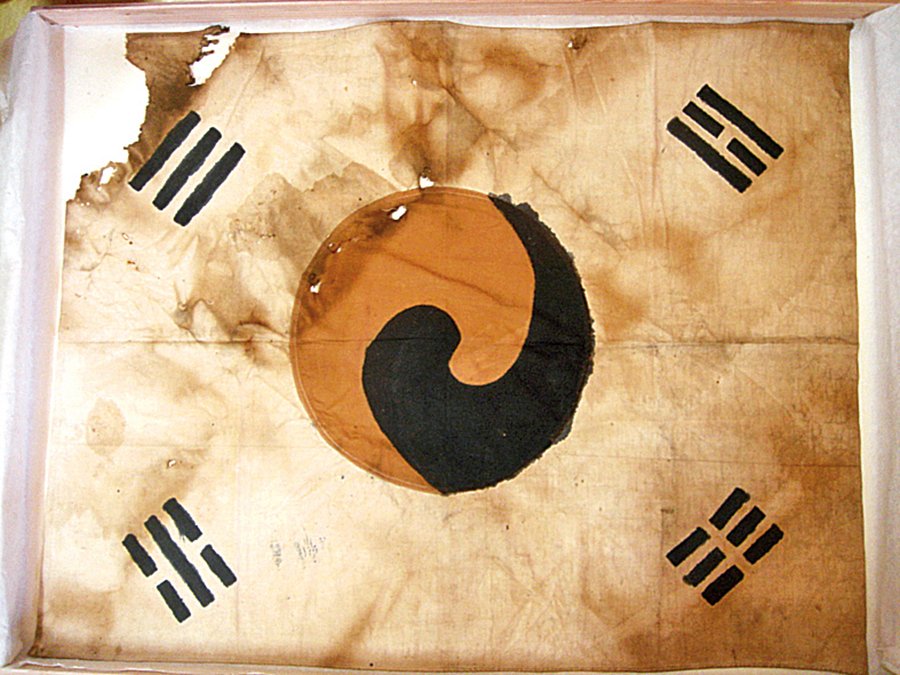
The Republic of Korea’s government was inaugurated on August 15, 1948. Its Constitution’s preamble also upholds the legacy of the Provisional Government established in 1919. Those are modern political and constitutional milestones within a much longer people’s history.
Why remembering Dangun became especially powerful
Under Japanese colonial rule, remembering an independent beginning could help affirm a community’s right to its own future. Park Seong Hae’s 2026 study of the magazine Gaebyeok shows how writers in the 1920s linked Dangun to shared ancestry and hope.
Religion supplied another connection. Na Cheol organized the movement that became Daejonggyo (대종교) in 1909; its communities later participated in the independence movement. Dangun could be a sacred figure for believers and a symbol of belonging for people outside that faith.
The modern republic even used Dangi, dating from Dangun’s traditional foundation, for official dates from September 1948 through 1961. Common Era dating began officially on January 1, 1962. Ancient origins briefly appeared on the paperwork of a new state.
To follow the later struggle over sovereignty, explore the Ganghwa Island battles, the Donghak Peasant Revolution, the destruction of Joseon’s royal palaces during Japanese rule, and the foreign supporters of Korea’s independence movement.
Today, calling Gojoseon a root of Korean history recognizes both an early kingdom and the memory built around it. This inheritance reaches through many communities and can be shared by people who join Korean society today. It does not require proving that every citizen descends from one ancient man.
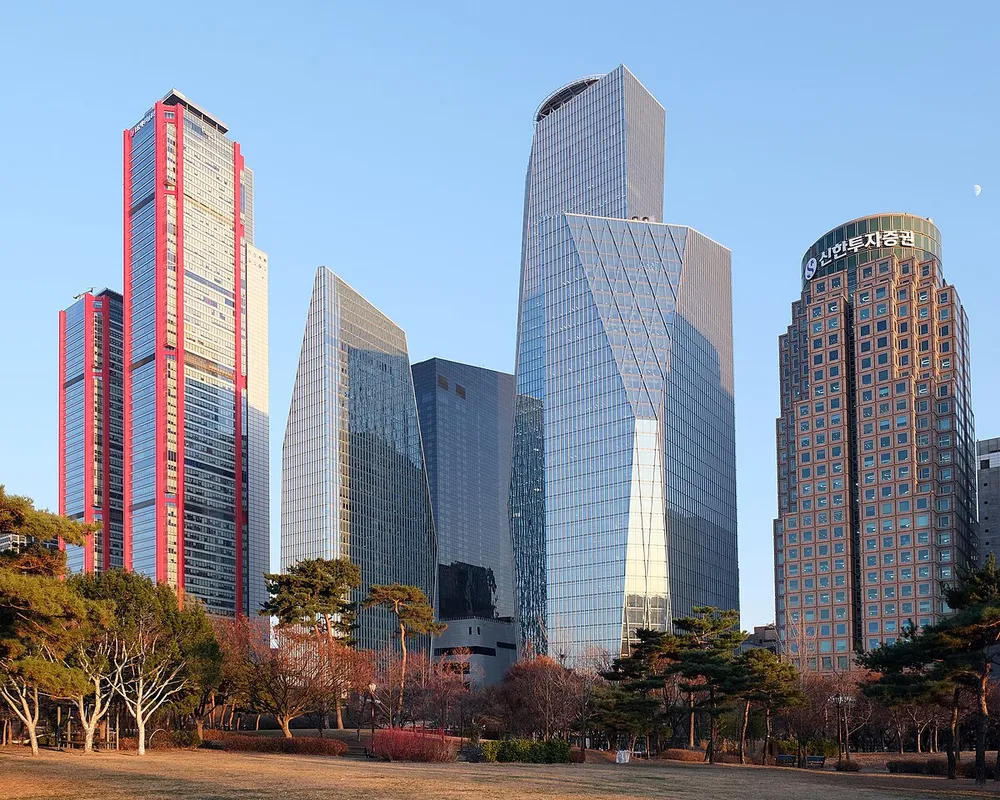
The shared story keeps growing. Korea’s responses to the 1997 financial crisis and its reforestation experience belong to much more recent chapters that later generations will also inherit.
Meeting This History Today
At the National Museum of Korea (국립중앙박물관) in Seoul, the Gojoseon, Buyeo, and Samhan galleries bring the ancient world closer through objects people made, used, and buried.
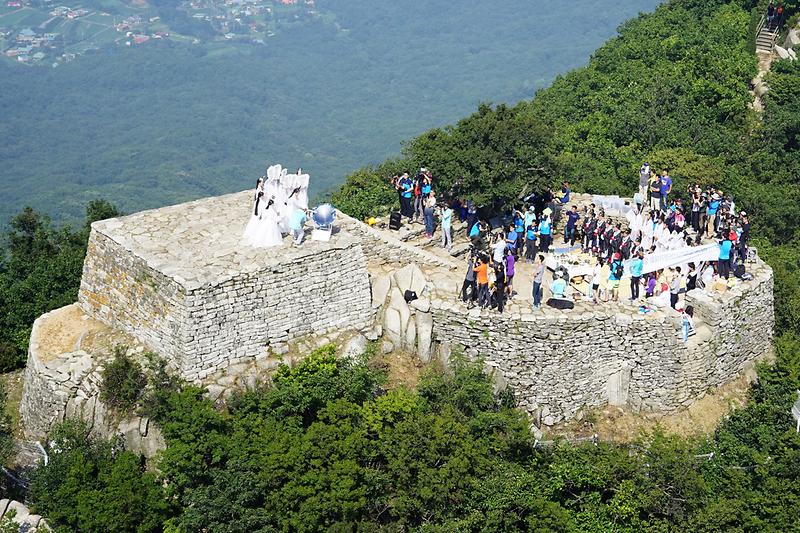
On Ganghwa Island, Chamseongdan altar (참성단) on Mount Mani (마니산) preserves a tradition of Dangun’s worship of heaven. Its identification as his own altar is unconfirmed, but its later history shows how generations kept that memory alive. Ganghwa’s dolmens, part of a UNESCO World Heritage listing with Gochang and Hwasun, offer material evidence of prehistoric communities.
Readers who want to follow the records can explore the Korean History Database, with Chinese and Korean texts and translations. Japan’s National Archives introduction to the Nihon Shoki opens another window onto the later Korean kingdoms and their overseas connections.
Gojoseon matters because its story did not end with its rulers. People remained, moved, and helped shape other societies. Later generations remembered an ancient beginning and gave it new meanings. Dangun makes that beginning vivid; the history around him shows how communities can carry their past through profound change.
That is the connection between ancient Gojoseon and Korea today: a long inheritance of lives, places, and stories that each generation receives—and continues.

Founder of Kculture.com and MA in Political Science. He shares deep academic and local insights to provide an authentic perspective on Korean history and society.