The 1894 Donghak Peasant Revolution: The Awakening of Joseon’s People
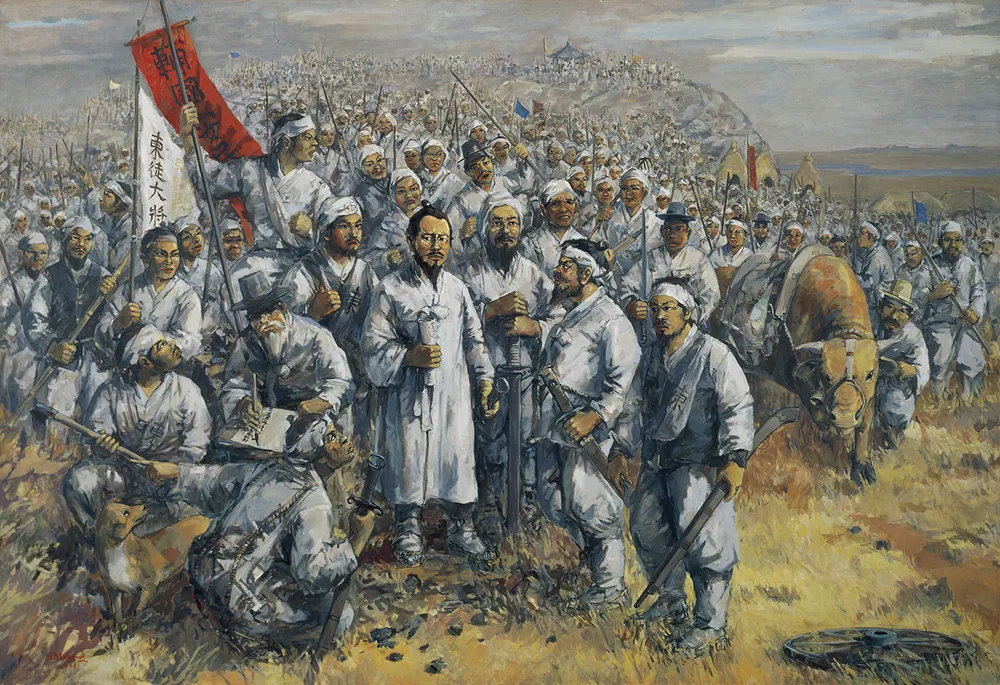
The 1894 Donghak Peasant Revolution was a defining historical turning point where Joseon’s ordinary citizens armed themselves to overthrow a corrupt feudal system and fight off Japanese imperialism, fundamentally altering Korea’s destiny despite their tragic defeat. The peasants were ultimately decimated by modern foreign weaponry, but their unprecedented demand for human equality, anti-corruption, and national sovereignty proved that the true agents of social change were not the ruling elites, but the people themselves. This monumental uprising serves as the spiritual bedrock for the nation’s modern democracy and independence movements. This guide explores the philosophical roots of the Donghak movement, the devastating clash of primitive weapons against modern firepower, and the enduring legacy that shaped Korea’s future.
- The Dawn of Donghak: What Was “Eastern Learning”?
- The Spark of Revolution and the First Uprising
- The Jeonju Truce and Peasant Self-Government
- The Fatal Misstep: Foreign Intervention and the Sino-Japanese War
- The Battle of Ugeumchi: Bamboo Spears Against Gatling Guns
- Why It Is a “Revolution,” Not a Rebellion
- From Defeat to the March 1st Movement
- Tracing the Legacy: Places to Visit in Korea Today
- FAQ
The Dawn of Donghak: What Was “Eastern Learning”?
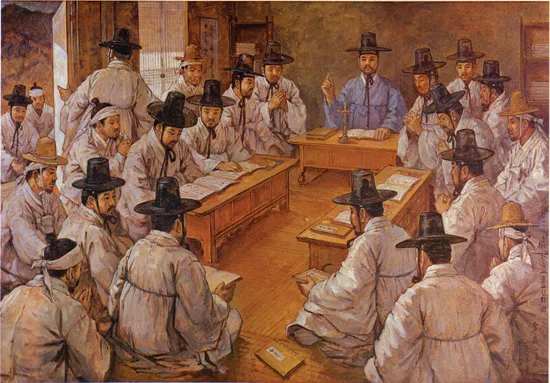
To understand the revolution, one must first understand the ideology that fueled it. Founded in 1860 by Choe Je-u, Donghak (Eastern Learning) emerged as a nationalistic religion and philosophical movement. During a time when Western powers were encroaching on Asia and Catholicism—known as Seohak (Western Learning)—was spreading, Donghak was established to protect the nation’s spiritual and cultural integrity from foreign influence.
However, its most revolutionary aspect was its core doctrine: Innaecheon (인내천), which translates to “Man is Heaven” or “Human beings are Heaven.” In the rigidly stratified Joseon society, where the ruling Yangban aristocrats held absolute power over commoners and outcastes, this idea was inherently dangerous. It declared that all human beings—regardless of social class, gender, or wealth—carried the divine within them and were fundamentally equal.
💡 Historical Insight: According to Donghak scholars, the ideology of Donghak was not merely a religious doctrine, but a homegrown, indigenous egalitarianism that rivaled modern Western concepts of human rights. For the oppressed peasants, it transformed into a powerful ideological weapon for social reform.
The Spark of Revolution and the First Uprising
The revolution did not happen overnight. It began as a local tax revolt that spiraled into a nationwide struggle for justice. In 1892, Jo Byeong-gap was appointed magistrate of Gobu County in the Jeolla province. Jo extorted local farmers by forcing them to build the Manseokbo reservoir and then charging illegal water-usage fees.
In January 1894, farmers led by local Donghak leader Jeon Bong-jun (전봉준)—affectionately known as Nokdu Janggun (녹두장군, Green Pea General) due to his short stature—stormed the county office. The central government responded by sending an investigator, Yi Yong-tae, who harshly punished the victims instead of the corrupt officials. This crackdown ignited a full-scale uprising.
By March, the peasant army began a stunningly effective military campaign under the slogans of Bogukanmin (보국안민, “Protect the nation and secure the people”) and Jepokgumin (제폭구민, “Remove oppression and save the people”).
| Battle / Event | Date (1894) | Result & Significance |
|---|---|---|
| Gobu Uprising | January | Farmers seize the county office; the government crackdown sparks a larger revolt. |
| Battle of Hwangtojae | April | The peasant army decisively defeats provincial troops, gaining massive momentum. |
| Battle of Hwangryong River | Late April | Peasant forces defeat a well-equipped central government relief army led by Hong Gye-hun. |
| Capture of Jeonju Fortress | Late April / Early May | The peasant army captures the provincial capital (전주성), sending panic to the royal court in Seoul. |
The Jeonju Truce and Peasant Self-Government
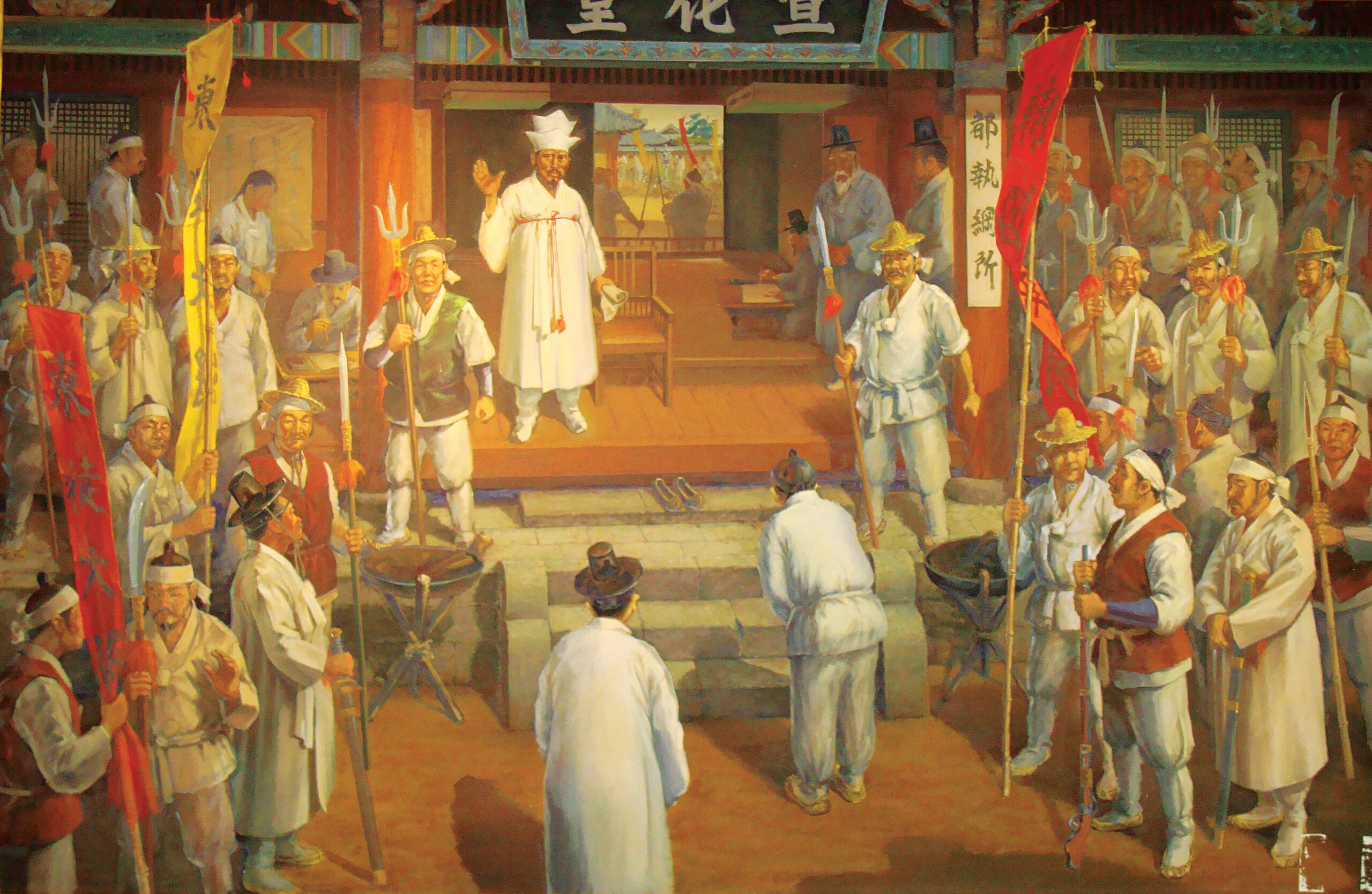
With the peasant army holding Jeonju Fortress, the terrified royal court made a catastrophic decision: they requested military assistance from the Qing Dynasty of China. Realizing that a foreign army was entering Korean soil, the peasant leadership and the government quickly negotiated the Jeonju Truce in May 1894 to prevent an international crisis. The peasant army agreed to voluntarily disperse.
Following the truce, the peasant movement established Jibgangso (집강소), local self-governing offices across the Jeolla province. Through these offices, ordinary Korean farmers briefly ran local governments themselves, implementing a 12-point reform plan. They cracked down on corrupt officials, demanded the burning of slave records, canceled illegal debts, and pushed for the fair redistribution of land.
The Fatal Misstep: Foreign Intervention and the Sino-Japanese War
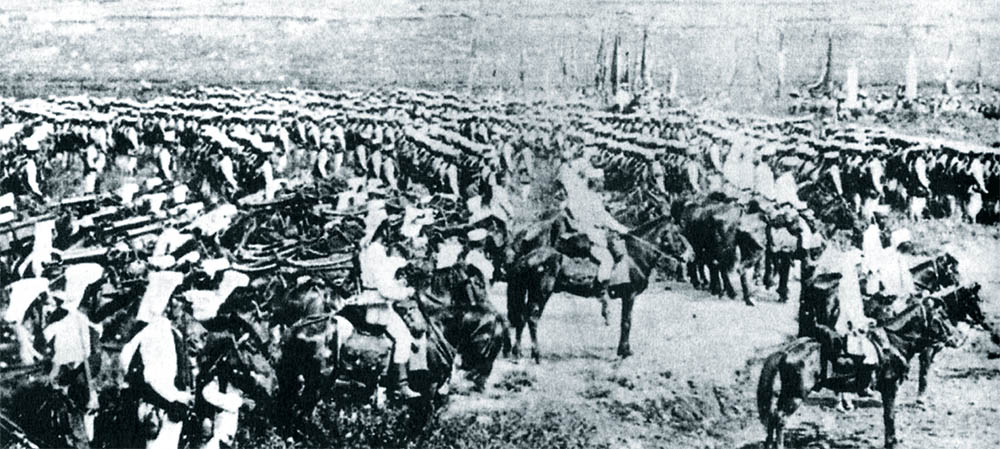
Although the domestic crisis had ended with the Jeonju Truce, the foreign armies refused to leave. Japan seized upon the Joseon court’s request for Qing troops as a pretext for invasion. Citing the 1885 Convention of Tientsin—which required China and Japan to notify each other if deploying troops to Korea—Japan dispatched a massive expeditionary force to Incheon under the guise of “protecting Japanese residents.”
| Actor | Immediate Objective | Action Taken |
|---|---|---|
| Joseon Government | Suppress the massive peasant uprising in Jeonju. | Requested Qing military assistance. |
| Qing China | Maintain traditional dominance and influence over Korea. | Sent troops to Asan and notified Japan. |
| Empire of Japan | Expand imperial influence and challenge Qing dominance. | Sent a massive army, refusing to leave even after the truce. |
| Donghak Peasant Army | Reform corrupt government without inviting foreign war. | Voluntarily withdrew from Jeonju to prevent international conflict. |
On July 23, 1894, Japanese forces illegally breached and occupied Gyeongbokgung Palace (경복궁) in Seoul, capturing the King and installing a pro-Japanese puppet cabinet. Days later, Japan launched a surprise naval attack on Qing warships, officially sparking the First Sino-Japanese War on Korean territory.
Consequently, the Korean peninsula suffered the profound tragedy of becoming a brutal battlefield for two foreign empires. Although the conflict was a geopolitical struggle for regional dominance between Qing China and Japan, the actual combat and devastation occurred almost entirely on Korean soil. This tragic turn of events ravaged the land, inflicted immense suffering upon the very citizens the peasant army had sought to protect, and brutally exposed the utter helplessness of the Joseon state to defend its own borders.
The Battle of Ugeumchi: Bamboo Spears Against Gatling Guns
The Japanese occupation of the royal palace transformed the movement. In September 1894, the peasant army rose up a second time. This was no longer an anti-corruption protest; it was a war of national resistance against Japanese imperialism. Tens of thousands of farmers marched toward Seoul, culminating in the Battle of Ugeumchi (우금치) near Gongju in late October to November.
The military balance was tragically lopsided. The Donghak peasant army relied on bamboo spears, agricultural tools, and outdated matchlock muskets that were rendered useless in rain or snow and had an effective range of less than 100 meters.
They faced a dug-in coalition of Japanese soldiers and Japanese-trained Joseon royal troops. Though vastly outnumbered, the Japanese forces were armed with modern Snider and Murata breech-loading rifles boasting a lethal range of 400 to 500 meters. Furthermore, they deployed Gatling guns that fired hundreds of rounds per minute. As wave after wave of peasants charged uphill against the prepared defensive lines, they were subjected to a massacre. Tens of thousands were slaughtered, breaking the revolution’s military back.
Why It Is a “Revolution,” Not a Rebellion
For over a century, the event was downgraded as the “Donghak Rebellion” (Donghak-nan). However, in 2004, the South Korean government passed the Special Act on the Restoration of Honor for Participants in the Donghak Peasant Revolution, officially elevating its historical status. Historians define it as a true revolution for two defining reasons:
- Anti-Feudalism: Through the Jibgangso and their reform demands, the peasants directly challenged the hereditary class system, demanding equal rights and the abolition of slavery.
- Anti-Imperialism: The second uprising was a pure, nationalistic struggle by ordinary citizens fighting to protect their nation’s sovereignty when their own government had capitulated.
There is also a profound historical paradox: while the revolution failed to seize political power, the sheer pressure of the uprising forced the Joseon government into the Gabo Reforms of 1894, which officially abolished the caste system and slavery.
From Defeat to the March 1st Movement
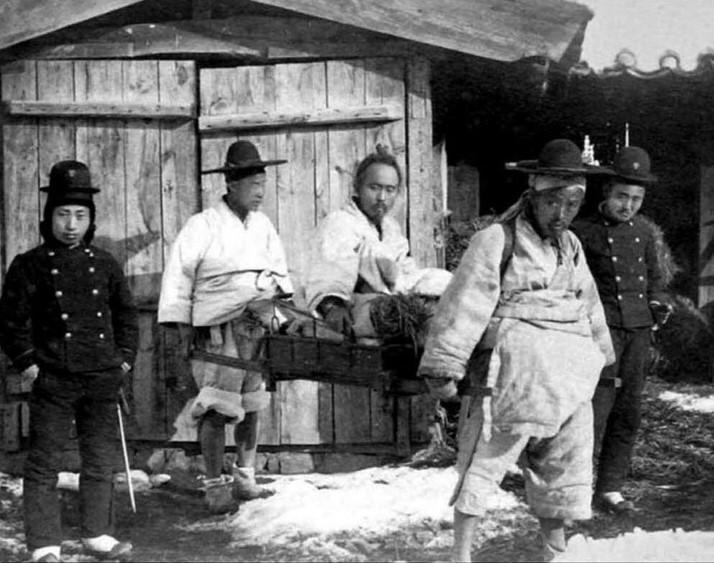
Following the defeat at Ugeumchi, Jeon Bong-jun was betrayed, captured, and executed in Seoul in 1895. Japan won the Sino-Japanese War, solidifying its grip on Korea and eventually annexing the peninsula in 1910.
However, the organizational memory of the movement survived. Many surviving Donghak fighters joined the Righteous Armies (Uibyeong) to fight Japanese colonial rule. In 1905, the Donghak religion was reorganized into Cheondogyo (천도교). By 1919, Cheondogyo leaders, including Son Byeong-hui (who had fought in the 1894 uprising), became the primary financial and organizational force behind the historic March 1st Independence Movement.
The Donghak Peasant Revolution demonstrated that ordinary people—not just kings or elites—could become the makers of history. This spirit paved the way for Korea’s relentless pursuit of democracy throughout the 20th century.
Tracing the Legacy: Places to Visit in Korea Today
To connect with this profound chapter of history in modern Korea, several historical sites remain preserved:
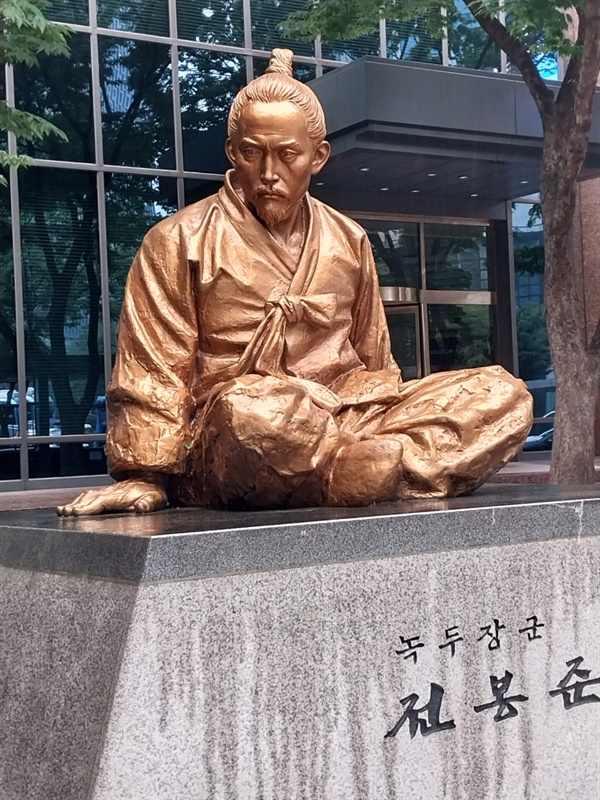
- Statue of General Jeon Bong-jun (Seoul): Located near Exit 6 of Jonggak Station. Unveiled in 2018, the bronze statue sits on the former site of Jeonokseo, the Joseon-era prison where Jeon Bong-jun was held. It brilliantly captures his unyielding gaze from a famous photograph taken during his capture.
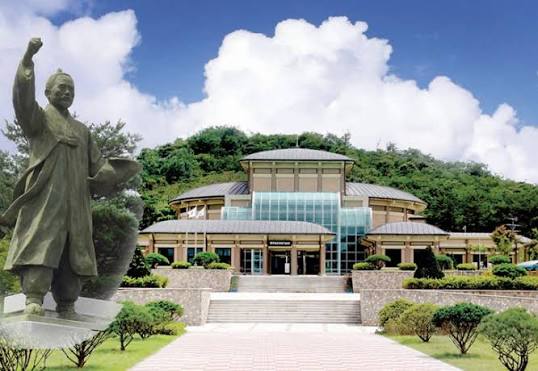
- Donghak Peasant Revolution Memorial Hall (Jeongeup): Situated in Jeongeup, near the site of the original Gobu uprising and the Hwangtojae battlefield. This museum features historical records, original weapons, and detailed dioramas with English explanations.
- Ugeumchi Battlefield (Gongju): A solemn hillside in Gongju where the tragic final battle took place. A memorial tower now stands on the quiet pass to honor the peasant fighters who charged against modern machine guns.
FAQ
What caused the Donghak Peasant Revolution?
It initially began as a local tax revolt against the corrupt magistrate of Gobu in early 1894, but quickly expanded into a nationwide movement due to the organizing power of the Donghak religious network and deep-seated anger over Joseon’s oppressive feudal class system.
Why did Japan and China fight a war over a Korean peasant uprising?
When the peasant army captured Jeonju, the Joseon court requested Qing China’s help. Japan invoked a treaty clause allowing it to send troops as well. Japan then used its military presence to occupy the royal palace in Seoul and attacked Qing forces, sparking the First Sino-Japanese War.
What was the Jibgangso?
The Jibgangso were local self-governing offices established by the peasant army after the Jeonju Truce. For several months, ordinary farmers ran local administration and implemented anti-feudal social reforms.
Why is it officially called a “Revolution”?
In 2004, the South Korean government formally recognized the event as a revolution because the participants actively demanded the dismantling of the feudal caste system and organized a nationwide military resistance to defend national sovereignty against Japanese invasion.
To dive deeper into the historical struggles and civic triumphs of Korea, explore our other detailed historical guides below:
- Ganghwa Island Battles: The Fall of Joseon’s Isolation
- How Japan Systematically Destroyed Joseon Royal Palaces
- Eulmi Incident 1895: Empress Myeongseong’s Assassination
- Foreign Heroes of Korea’s Independence Movement
- History of the 1987 June Democratic Struggle in Korea
Korean Culture portal KCulture.com

Founder of Kculture.com and MA in Political Science. He shares deep academic and local insights to provide an authentic perspective on Korean history and society.