The mastery of Joseon Dynasty archery was not born overnight, nor was it simply a matter of natural talent; it was the result of highly advanced composite engineering (Gakgung) and a brilliantly designed, guided miniature arrow system (Pyeonjeon). While modern audiences marvel at South Korea’s Olympic archery dominance, the true historical strength of the Korean bow lies in its sophisticated material science, international supply chains for rare animal horns, and strict military secrecy. If you have ever wondered why historical Korean armies relied so heavily on the bow while other nations turned entirely to swords or spears, the answer lies in understanding how these specific weapons were constructed and deployed.
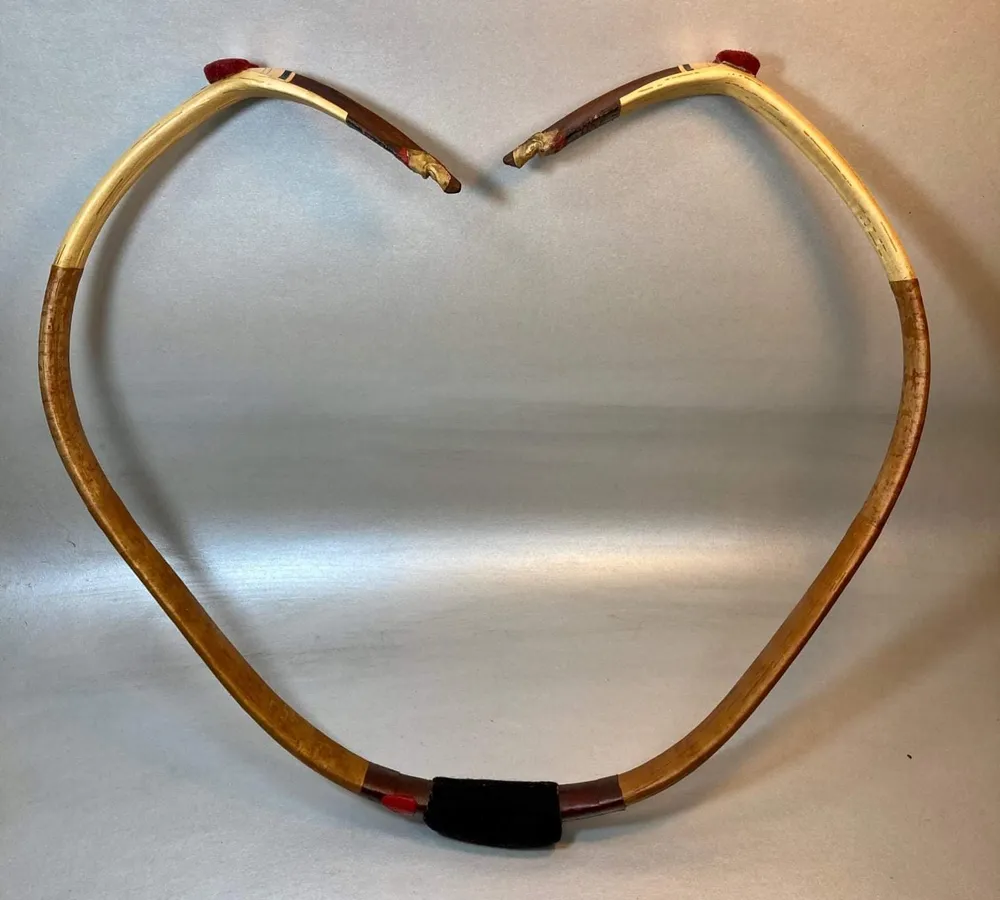
As a history enthusiast living in Korea, I often explore ancient fortresses and museums where these remarkable weapons are displayed. Looking at a traditional horn bow unstrung—curled entirely backward into a tight loop—you immediately sense the immense kinetic energy waiting to be unleashed. This article delves deep into the untold history of Joseon archery: how Korean bowyers sourced exotic water buffalo horns, the mechanical genius behind the lethal “baby arrow,” the espionage incidents that nearly exposed state secrets, and how this unique weapon system compares to other legendary bows around the world.
- The Evolution of Korean Composite Bows
- Crafting Gakgung: A High-Tech Weapon of the Past
- Water Buffalo Diplomacy: The Quest for Horns
- Pyeonjeon and Tong-a: Joseon’s Lethal Mini-Arrow
- The 1437 Espionage Incident: Protecting a State Secret
- How Joseon Bows Compare to Global Archery
- Why the Bow Defined Korean Military Strategy
- Explore More Korean Military History
The Evolution of Korean Composite Bows
It is a common misconception that the Joseon Dynasty invented the Korean horn bow from nothing when the kingdom was founded in 1392. In reality, Joseon inherited a much older, highly refined Eurasian composite bow tradition that had existed on the Korean peninsula since ancient times. Dating back to the early Three Kingdoms period, the warriors of the Goguryeo Kingdom used a powerful composite weapon known as the Maekgung (맥궁).
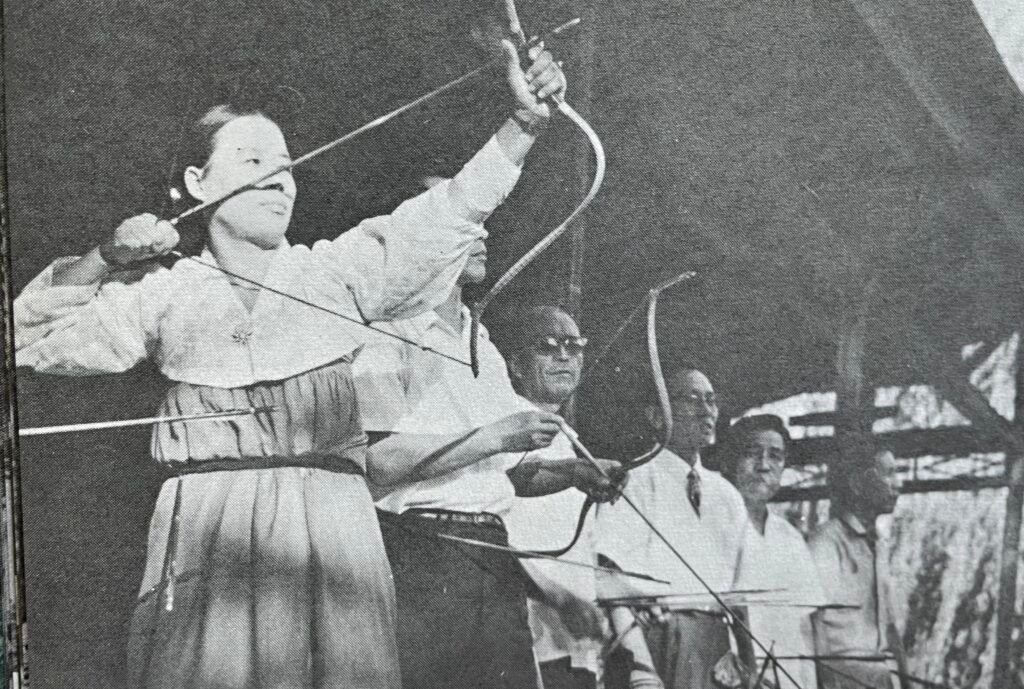
What the Joseon Dynasty did was take this ancient foundation and institutionalize it. Facing constant military tension with northern Jurchen tribes and coastal pirates, Joseon elevated archery from a simple battlefield skill to a state-managed industry. The government standardized production, rigorously tested archers in national military exams, and continuously experimented with materials to maximize range and armor-piercing capabilities.
Crafting Gakgung: A High-Tech Weapon of the Past
The traditional Korean horn bow is called Gakgung (각궁). While the name literally translates to “horn bow,” horn is just one of several critical components. It is a highly reflexed composite bow, meaning its power comes not from its length, but from the extreme tension and compression created by laminating different organic materials together.
Crafting a Gakgung required months of meticulous labor, highly dependent on precise seasonal temperatures and humidity. It was, in essence, the high-tech material science of its day.
| Material | Function in the Bow |
|---|---|
| Bamboo | Forms the core skeleton, providing the basic shape and foundational elasticity. |
| Water Buffalo Horn | Applied to the “belly” (the side facing the archer). It withstands immense compression when the bow is drawn. |
| Cow Sinew | Layered on the “back” (the side facing the target). It stretches and provides explosive snap-back resilience. |
| Mulberry & Oak Wood | Used at the tips and handle to adjust structural strength and maintain balance. |
| Croaker Swim Bladder Glue | A natural, highly resilient adhesive (민어 부레풀) that binds materials of different densities without shattering under shock. |
| Birch Bark & Lacquer | Wrapped around the finished bow to waterproof the sensitive natural glue and protect it from the elements. |
💡 Pro Tip: Because the Croaker swim bladder glue is sensitive to moisture and temperature, historical archers had to warm their bows over a gentle fire before stringing them, a delicate process known as “jeom-hwa” to awaken the bow’s elasticity safely.
Water Buffalo Diplomacy: The Quest for Horns
One of the most fascinating aspects of Joseon archery is that its most crucial material—water buffalo horn—was not native to the Korean peninsula. A Joseon horn bow was not simply made in a local workshop; it connected Korean bowyers to a vast international trade network.
To secure these prized horns, the Joseon court engaged in complex diplomacy and trade with Ming China, Japan, and the Ryukyu Kingdom (modern-day Okinawa). Historical records from King Sejong’s reign reveal that the state even traded textiles and confiscated goods in the Liaodong region to acquire buffalo horns. However, international supply was often restricted by Ming China or disrupted by maritime issues.
To overcome this, Joseon kings attempted massive domestic agricultural experiments. King Sejo tried substituting local cow horns to create the Hyanggakgung (향각궁), but these horns were too short and required splicing, making the bows less durable. They even tested deer horns with limited success. The boldest move came in 1461, when live water buffaloes were imported from Japan. By the reign of King Seongjong, the royal stables actually managed a herd of around 70 water buffaloes in an attempt to breed a domestic horn supply, proving just how vital this weapon was to national security.
Pyeonjeon and Tong-a: Joseon’s Lethal Mini-Arrow
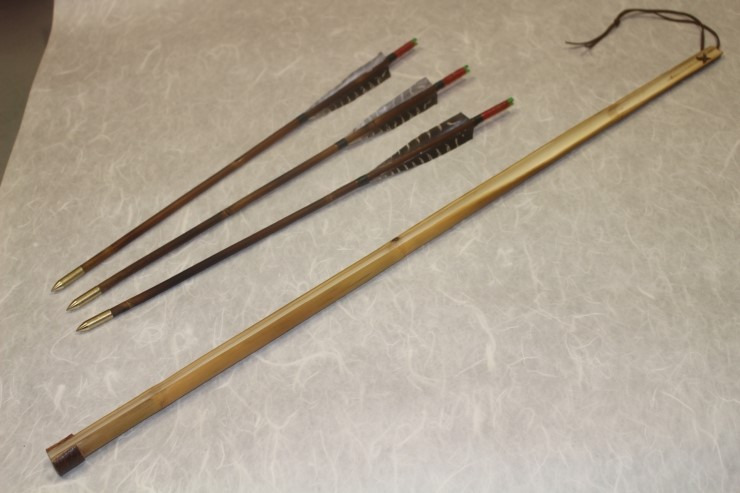
If the Gakgung was the engine, the Pyeonjeon (편전), often called the “baby arrow,” was the devastating projectile. However, understanding the Pyeonjeon requires looking at it not just as a short arrow, but as a two-part weapon system.
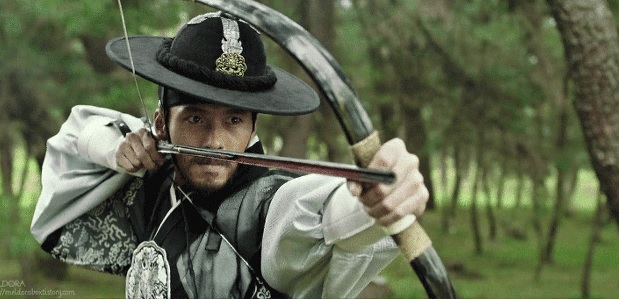
A standard Joseon arrow measured roughly 80 to 90 centimeters, allowing the archer to draw the bow fully. The Pyeonjeon, however, was only about 30 to 40 centimeters long. Because it was so short, drawing it normally would cause the arrowhead to fall inside the bow, making it impossible to shoot. To solve this, Joseon archers used a Tong-a (통아), a hollowed-out bamboo tube that acted as an overdraw device or arrow guide.
- The Mechanics: The archer places the short Pyeonjeon inside the Tong-a. They hold the Tong-a against the bow while gripping the bowstring and the arrow’s nock. As they draw, the Tong-a supports the short arrow, allowing the archer to utilize the massive full-draw power of the Gakgung.
- The Release: Upon release, the Pyeonjeon shoots forward with terrifying velocity, while the Tong-a remains safely in the archer’s bow hand, tied to their wrist with a string.
- The Tactical Advantage: Because the arrow was small and incredibly fast, it was nearly invisible in flight, making it impossible for enemies to dodge. Furthermore, if an enemy soldier picked up a fired Pyeonjeon, they could not shoot it back unless they also possessed a Tong-a and knew the highly specialized technique to use it.
The 1437 Espionage Incident: Protecting a State Secret
The mechanical brilliance of the Pyeonjeon was highly protected. While similar overdraw devices existed in other parts of Eurasia, Joseon was unique in how deeply it integrated this weapon into its national military system and how fiercely it guarded the technique.
In 1437, during the 19th year of King Sejong’s reign, an alarming report reached the royal court. Officials discovered that a Japanese visitor at Busanpo (부산포) had carefully observed Korean soldiers training. The visitor managed to secretly copy the design of the Tong-a and successfully practiced firing the Pyeonjeon. Recognizing the severe security threat, the Joseon court immediately enacted a strict military ban: soldiers were absolutely forbidden from practicing or demonstrating the Pyeonjeon in the presence of foreign envoys or visitors.
This historical episode perfectly highlights that the Pyeonjeon was not merely a traditional tool, but a classified piece of military technology that the government actively sought to keep out of enemy hands.
How Joseon Bows Compare to Global Archery
To truly appreciate the engineering of the Joseon bow, it is helpful to see how it contrasts with the primary ranged weapons of other historical powers.
| Bow Type | Defining Characteristics | Comparison to Joseon Gakgung |
|---|---|---|
| English Longbow | A tall, single-piece wooden bow (self bow), excellent for massed infantry volley fire. | The Gakgung is much shorter, highly reflexed, and relies on composite layers rather than a single piece of wood, making it far more compact. |
| Japanese Yumi | An exceptionally long, asymmetrical bow made of laminated bamboo and wood. | While both are laminated, the Gakgung is perfectly symmetrical and significantly shorter, designed specifically for mobility on horseback. |
| Eurasian Composite Bows | Horn, sinew, and wood bows used by Mongol, Turkic, and Manchu warriors. | They share the same composite ancestry, but the Korean bow developed a more extreme reflex curve and specialized in firing the unique Pyeonjeon via the Tong-a. |
In 1488, a Ming Dynasty envoy named Dong Yue observed Joseon archers and noted in his records that while the Korean bow was slightly shorter than the Chinese standard, the striking power of its arrows was astonishingly fierce. This perfectly encapsulates the Korean design philosophy: maximizing lethal force in the most compact frame possible.
Why the Bow Defined Korean Military Strategy
Why did the Korean peninsula become a land defined by the bow? The answer lies in geography, institutional structures, and cultural philosophy.
Strategically, the mountainous terrain of the Korean peninsula and the vast plains of the northern borders required a weapon that could be fired downward from fortress walls or utilized rapidly by mobile cavalry. The compact Gakgung was the perfect solution.
Institutionally, archery was the absolute core of the Gwageo (과거), the national military service examination. To become an officer, one had to master shooting standard wooden arrows (Mokjeon), heavy iron-tipped arrows (Cheoljeon), and the highly technical Pyeonjeon. Specifically, the Pyeonjeon was tested at a range of 130 paces, proving that its use was heavily institutionalized.
📌 Local Note: Even when advanced matchlock muskets (arquebuses) proved their devastating tactical value during the Imjin War (1592–1598) and Joseon rapidly expanded its firearm units, the bow did not disappear. It remained a vital secondary weapon for cavalry, an essential tool for physical cultivation among scholars, and a revered symbol of royal authority until the very end of the dynasty.
Explore More Korean Military History
The story of the Gakgung and Pyeonjeon is just one chapter in Korea’s rich history of defense and survival. To deepen your understanding of how the Korean peninsula defended itself through the ages, explore our other detailed historical guides:
- Gukgung: Korean Traditional Archery History & Where to Try It
- Singijeon & Hwacha: Joseon Dynasty’s Secret Rocket Artillery
- Beyond Castles: The Survival Strategy of Korean Fortresses
- The Paradox of Peace: South Korea Military Readiness Explained
Korean Culture portal KCulture.com

Founder of Kculture.com and MA in Political Science. He shares deep academic and local insights to provide an authentic perspective on Korean history and society.