Introduction & Synopsis
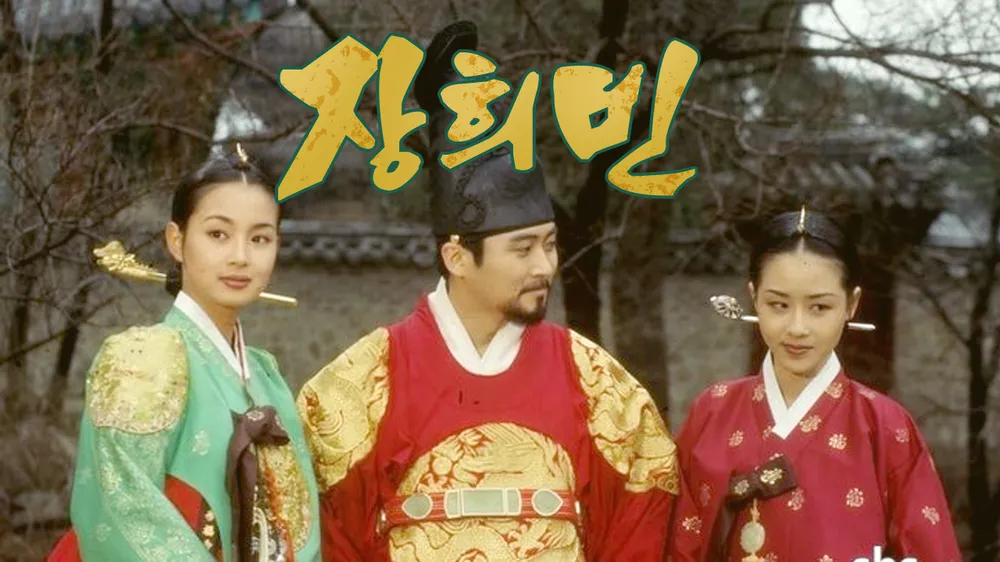
First broadcast on SBS in 1995, Jang Hui-bin (장희빈) is a historical court drama about Jang Ok-jeong, the royal consort whose rise and fall became one of Korea’s most frequently retold palace stories. Written by Im Chung and directed by Lee Jong-su, the 63-episode series follows her relationship with King Sukjong, her rivalry with Queen Inhyeon, and the political struggles surrounding the royal succession. As she moves from palace attendant to royal consort and eventually queen, personal ambition becomes inseparable from the interests of powerful court factions. The result is a story of love, status, insecurity, and survival in a world where royal favor can transform a life—and just as quickly destroy it.
Deep Cultural/Historical Insight
Jang Ok-jeong was a real historical figure, but the familiar image of her as an exceptionally wicked woman owes much to literary retellings and screen adaptations. Her background also deserves more precision than the phrase “humble origins” suggests: she came from a family associated with interpreters, outside the elite yangban aristocracy. Her rise crossed significant social boundaries, but it should not automatically be interpreted as a conscious rebellion against the entire Confucian order.
Her title can be confusing for international viewers. Hui-bin was a title held by a royal concubine, not the title of a queen. King Sukjong elevated her to queen in 1689 after deposing Queen Inhyeon. When Inhyeon was restored in 1694, Jang was demoted to Hui-bin again. She is nevertheless widely remembered as Jang Hui-bin. Her son later became King Gyeongjong, which helps explain why her position mattered far beyond the king’s private affections.
The political background involved the Westerners (Seoin) and Southerners (Namin), with the Westerners themselves divided into Noron and Soron. Jang’s fortunes were closely connected to the Southerners, while Inhyeon’s family connections lay with the Westerners. Sukjong repeatedly changed the ruling faction through upheavals known as hwanguk. These struggles concerned succession, court appointments, and royal authority as well as personal loyalties. The drama’s private conversations and emotional motives should therefore be understood as dramatic interpretation, rather than a complete historical record.
Narrative Analysis
The 1995 series combines palace rivalry with the wider political consequences of royal relationships. Its longer format allows the story to develop through court debates, shifting alliances, and confrontations over status and succession. Viewers accustomed to shorter contemporary dramas should expect a more extended narrative and a formal style of dialogue.
It would be misleading, however, to describe this adaptation as having no interest in understanding its central character. In a March 1995 SBS magazine interview, Jeong Seon-kyung expressed a wish to move beyond the stereotyped contrast between an entirely sympathetic Inhyeon and an invariably cruel Jang. She discussed Jang as a woman struggling to adapt to the circumstances of her time. That perspective gives viewers a useful way to approach the series: its ambition, jealousy, and rivalry can be considered alongside the pressures surrounding a woman whose security depended on royal favor and her son’s future.
The Pulse of the Time
Jang Hui-bin belongs to the tradition of expansive television sageuk that made palace politics and disputed historical reputations familiar subjects for Korean audiences. The title character had already appeared in earlier films and television dramas, so the 1995 production entered an established conversation about how she should be portrayed. For Jeong Seon-kyung, the role became an important step in establishing her television career. The series remains a useful point of comparison with later portrayals, especially for viewers interested in how different adaptations frame the same woman’s ambition and vulnerability.
Cast Spotlight
The three central roles bring the conflict between royal affection, personal status, and political authority into focus.
- Jeong Seon-kyung as Jang Hui-bin: Jeong takes on a character already burdened with a powerful public reputation. Her role encompasses Jang’s desire for affection and recognition, her pursuit of higher status, and the insecurity accompanying her position. Her contemporary interview also shows that she approached the part with an interest in moving beyond a purely one-dimensional villain.
- Im Ho as King Sukjong: Im plays the monarch whose decisions reshape both the royal household and the political order. Affection and conflict are central to the drama, but the historical Sukjong was also an active ruler who used changes of faction to reinforce royal authority. His role is best understood with that political agency in mind.
- Kim Won-hee as Queen Inhyeon: Kim portrays the queen whose displacement and restoration form a central thread of the story. Inhyeon’s association with dignity and moral legitimacy provides an important counterpoint to Jang’s ambitions, while her position also carries political significance through her family and factional connections.
Global Viewing Guide
For this particular adaptation, search using the Korean title 장희빈, the year 1995, and the broadcaster SBS. This helps distinguish it from the separate KBS series starring Kim Hye-soo and other dramas about Jang Ok-jeong.
- SBS official VOD: The broadcaster maintains an official episode archive for the series. Check the episode page for current playback conditions, account requirements, and access from your location.
- English subtitles: An official English-subtitled edition could not be confirmed during this review. Check the actual player’s subtitle options before relying on a listing, particularly if you do not understand Korean.
- Other streaming listings: Confirm the year and cast before subscribing to any service. A listing for Jang Hui-bin may refer to a different adaptation, and catalogs can vary by country and change over time.
Final Verdict
Jang Hui-bin (1995) is worth considering for viewers interested in classic palace dramas and the changing screen image of one of Joseon’s most debated women. Its appeal lies in the intersection of intimate rivalry, social hierarchy, royal succession, and factional politics. The extended format and uncertain availability of official English subtitles may make it a demanding watch for international audiences, but it offers a valuable perspective on the storytelling traditions that shaped Korean television sageuk.

The KCulture Editorial Team is dedicated to providing deep insights and accurate information about the vibrant world of Korean culture.