In the Korean countryside, autumn glows orange as persimmons ripen above courtyard walls and rows of peeled fruit appear beneath the eaves. Those hanging fruits become gotgam, Korean dried persimmons: sweet, chewy treats usually made from astringent varieties. They preserve the harvest and make a delicious introduction to Korea’s seasonal food traditions.
For many Koreans, this is a familiar picture of home: a persimmon tree beside an old house, relatives gathering fruit, and something sweet saved for winter. Understanding that scene opens up a surprisingly rich story about the fruit, the people who grow it, and a souvenir worth seeking out on your next visit.
- Persimmon Trees and Korean Autumn
- The Many Ways to Enjoy Korean Persimmons
- Gotgam in Korean Culture
- How Korean Dried Persimmons Are Made
- How to Eat Gotgam
- Where to Try and Buy Gotgam
- Bringing Gotgam Home
- Explore More Korean Food
Persimmon Trees and Korean Autumn
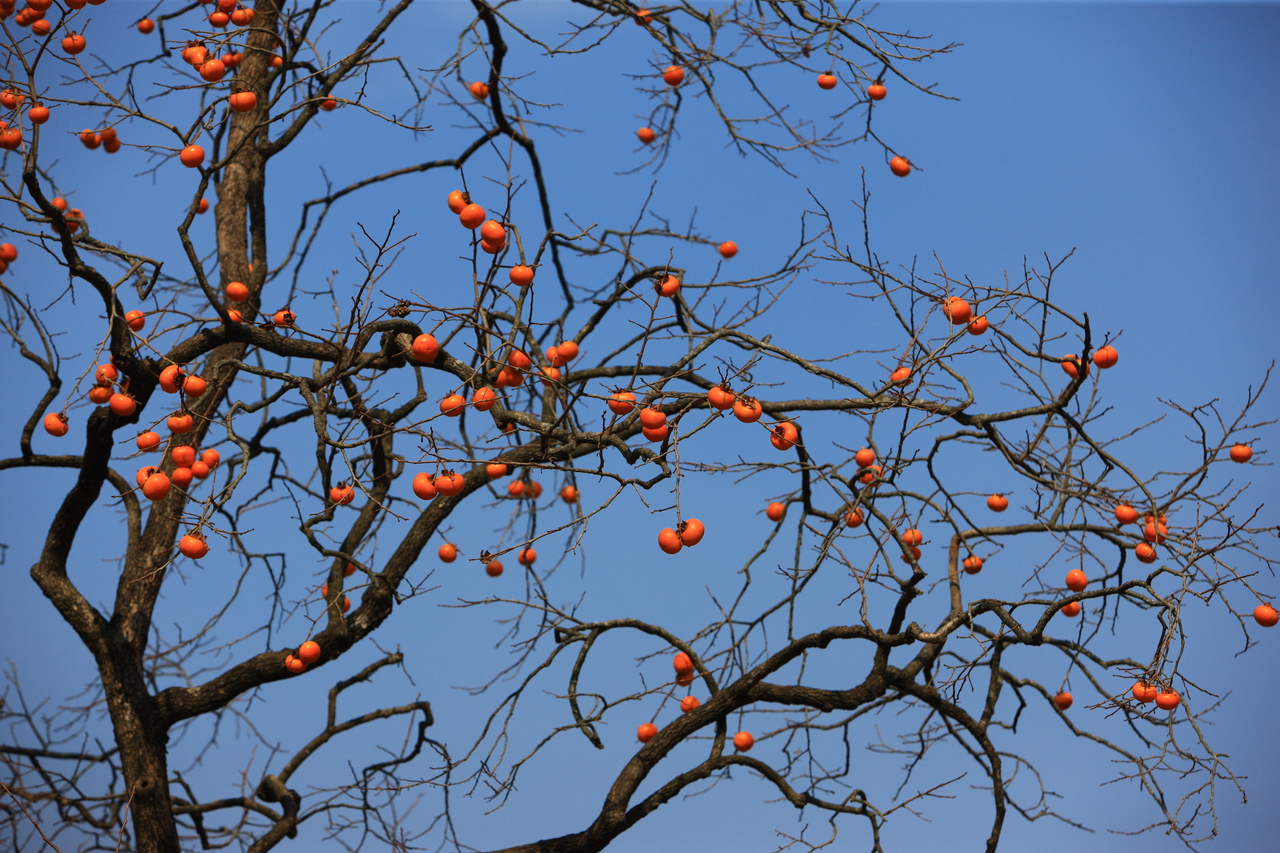
Maples get much of the attention during Korea’s autumn foliage season, but persimmon trees offer a quieter spectacle. Their leaves change colour and fall, sometimes leaving bright fruit suspended against bare branches and a clear sky. Beside a tiled roof or a low village wall, the effect can be wonderfully simple.
Especially in central and southern growing regions, a persimmon tree was once such an ordinary part of a rural home that it barely needed explaining. Trees grew beside houses, along field boundaries, and near village paths. A courtyard tree supplied fruit for eating fresh, softening indoors, drying, and sharing with relatives or neighbours.
The tree therefore belonged to everyday household life as much as to agriculture. Its annual harvest gave families something to work on together and something to send away with visitors. That connection between seasonal ingredients and care for others also runs through Korean home cooking and the culture of jipbap.
Look closely after the harvest and you may notice a few fruits left high on a tree. The custom known as kkachibap, literally “magpie food,” leaves a share for birds. It is often understood as a small expression of generosity: even after gathering what the household needs, something remains for other creatures facing winter.

The Many Ways to Enjoy Korean Persimmons
A first encounter with the wrong persimmon can be memorable for an unfortunate reason. Bite into a firm astringent variety and your mouth may suddenly feel dry and puckered. That sensation comes from soluble tannins. An orange persimmon is not automatically ready to eat like an apple.
Korea grows both sweet varieties, commonly called dangam, and astringent varieties. The latter are valuable food ingredients: soft ripening, drying, or a suitable astringency-removal treatment can make them delicious. Many already contain plenty of sugar while they still taste puckeringly astringent.
| Form | What to Expect | How to Enjoy It |
|---|---|---|
| Dangam | A sweet persimmon that can be eaten while firm, with a crisp bite. | Wash and slice; peel if preferred and watch for seeds. |
| Hongsi or yeonsi | A persimmon allowed to become very soft, with sweet, jelly-like flesh. | Scoop out the flesh with a spoon, leaving the skin and seeds. |
| Frozen hongsi | Soft-ripe fruit preserved by freezing. | Let it soften slightly for a cold, spoonable dessert. |
| Gotgam or geonsi | A peeled, dried whole persimmon; fuller drying gives a denser, chewier texture. | Eat in small bites or slice for a tea plate. |
| Bangeonsi | A semi-dried persimmon with a tender exterior and a much softer centre. | Enjoy as a moist dessert and follow its cold-storage instructions. |
| Gam-mallaengi | Persimmon pieces or strips dried into convenient bites. | Try as an easy snack, checking the package for storage requirements. |
Hongsi and yeonsi are overlapping everyday terms for soft persimmons, rather than names for a single variety. For someone who has only tasted crisp sweet persimmons, their custardy texture can be a delightful surprise.
The tree’s uses extend further. Persimmons become vinegar and preserves, while processed leaves are brewed as tea. But among the best-loved ways of turning astringent fruit into a lasting sweet, gotgam holds a special place.
Gotgam in Korean Culture
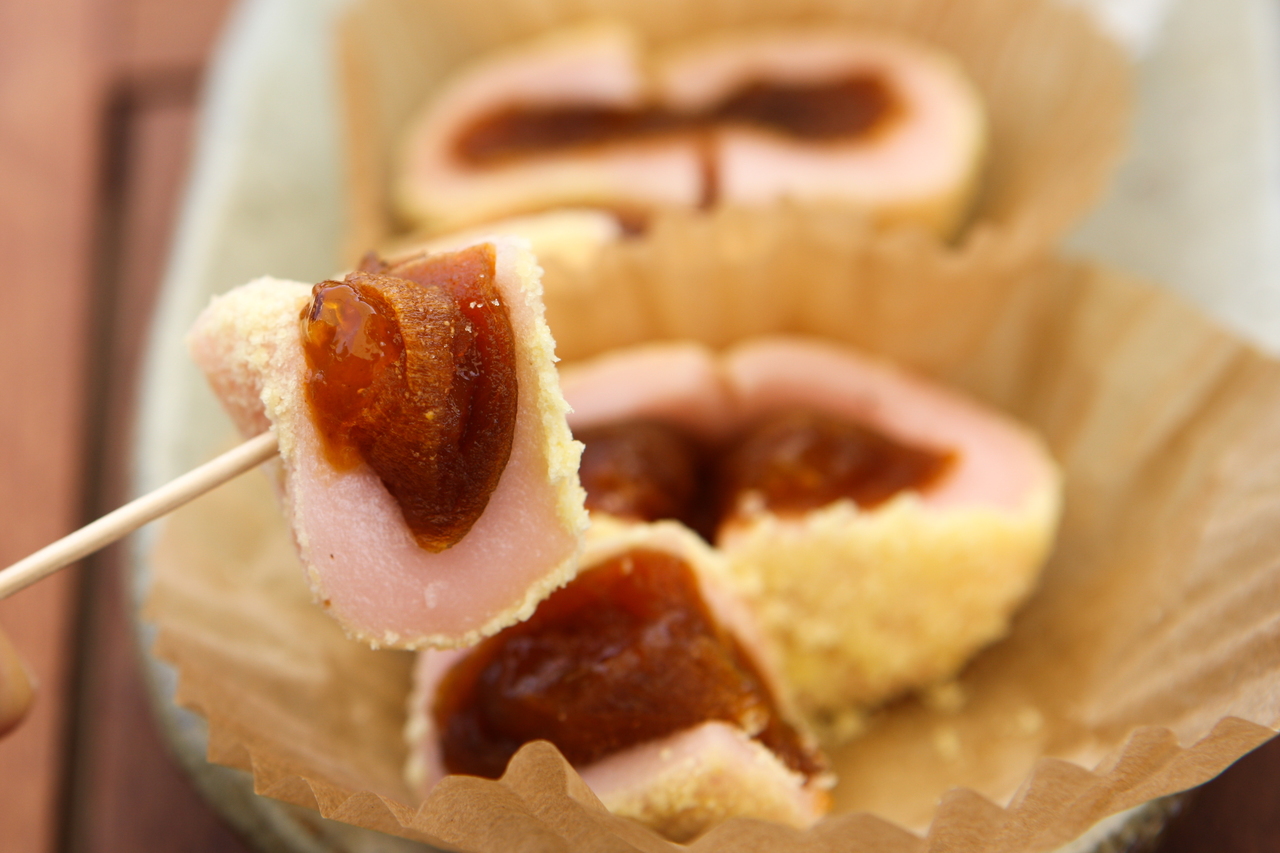
A large harvest presents a practical problem: fresh fruit has a limited life, and a whole tree’s worth cannot all be eaten at once. Drying lets households carry autumn’s abundance into colder months. As moisture leaves, the sweetness becomes more concentrated and the texture changes into something satisfyingly substantial.
Persimmons and dried persimmons appear in historical records from Korea’s Joseon period. Their cultural standing also reaches beyond everyday snacking. Dried persimmons are familiar on ancestral offering tables, and carefully arranged boxes remain popular gifts around Seollal, the Lunar New Year, and Chuseok, the autumn harvest holiday. Family practices vary, but the association with hospitality, remembrance, and seasonal abundance is enduring.
The Sweet That Frightened a Tiger
Gotgam even stars in a much-loved folktale. A tiger overhears a mother trying to quiet a crying child. Threatening that a tiger might come has no effect, but offering a dried persimmon stops the tears. The bewildered tiger assumes this mysterious “gotgam” must be more terrifying than itself.
The joke works because the audience understands what the tiger does not: the child simply wants something delicious. It is a charming measure of how comfortably gotgam belongs in Korean domestic life.
Its slow transformation also fits a wider appreciation of foods shaped by time. Readers interested in that theme can explore Korea’s slow food and fermentation traditions. For gotgam, the defining preservation method is drying.
How Korean Dried Persimmons Are Made
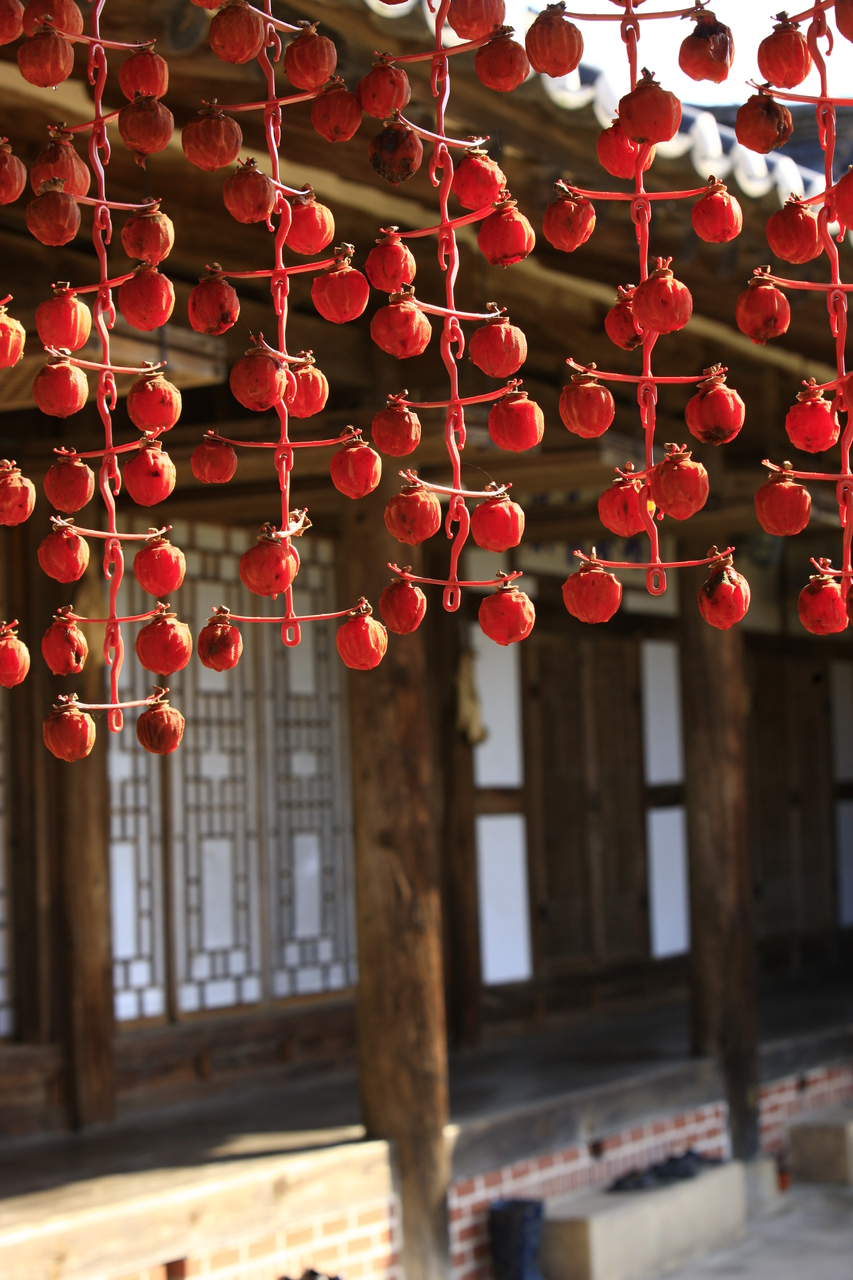
Rows of peeled persimmons hanging from racks are among the most appealing sights of the late-autumn countryside. The basic process is easy to understand, although good results depend on suitable fruit, clean handling, and careful management of the drying conditions.
From Firm Fruit to a Winter Sweet
- Choose sound, well-coloured fruit that is still firm. Astringent varieties are traditional favourites. Fruit should have developed its mature colour while remaining firm enough to peel and hang; heavily green or already collapsing fruit is unsuitable.
- Clean, dry, and peel. Wash the whole fruit under running water and dry it thoroughly before peeling with clean equipment. Keep a sound stalk or an appropriate attachment point for hanging.
- Hang with space around each fruit. A retained T-shaped stalk can hold a string; producers also use purpose-made hangers. Fruits should stay separated so air reaches their surfaces.
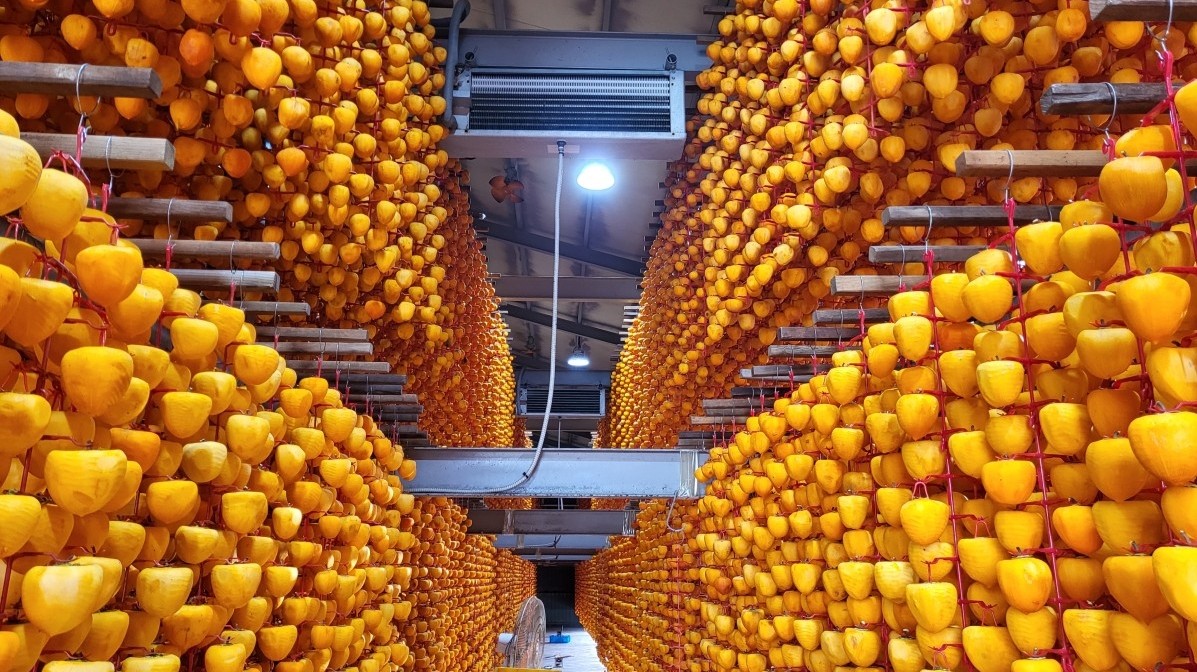
- Manage the drying environment. Traditional drying takes advantage of cool autumn weather and moving air, with shelter from rain. Producers monitor conditions and may use controlled drying equipment.
- Allow time for the desired texture. The fruit shrinks and darkens as it dries. Some makers gently shape or massage it after the surface has firmed. Softer semi-dried fruit and more fully dried gotgam require different handling and storage.
The process changes the tannins responsible for astringency into forms that are less soluble, while water loss concentrates the fruit’s existing sugars. A good plain gotgam can therefore taste remarkably sweet without added sugar.
Why Weather Matters More Than a Fixed Timetable
Drying takes several weeks, sometimes approaching two months, depending on fruit size, weather, equipment, and the intended finish. A particular number of days cannot guarantee that a home batch is ready or will store safely.
There is also no universal rule that persimmons must never receive sunlight. Sun drying has a place in Korean production. The real concern is managing heat, humidity, ventilation, and contamination; a hot enclosed balcony or a damp room can create poor conditions. Anyone trying whole-fruit drying at home should follow a tested process suited to the local climate.
What Is the White Powder on Gotgam?
A fine white coating can be sisang, a natural bloom formed as fruit sugars crystallize on the surface. Its presence varies, so a heavy coating is not a requirement for good gotgam.
Food note: White growth is not automatically sugar. Fuzzy patches, unusual smells, or other signs of spoilage need caution. If mould is suspected, discard the affected fruit rather than cutting off the visible patch or tasting it to check.
How to Eat Gotgam
Start with a small piece on its own. Remove the dried calyx and stalk, watch for seeds, and take a slow bite. The outside may offer a gentle resistance before giving way to rich, concentrated fruit. More fully dried examples can suggest the satisfying chew of a date; semi-dried ones have a softer, almost jammy middle.
With Tea
A few slices beside unsweetened tea make an easy introduction. The fruit supplies plenty of sweetness, so a small serving goes a long way. This pairing belongs naturally alongside the treats explored in Korea’s traditional desserts and teas.
Wrapped Around Walnuts
For gotgam-ssam, a dried persimmon is opened, checked for seeds, and wrapped around walnuts, then often sliced into rounds. The nut’s crunch and gently bitter edge balance the sweet fruit. Here, ssam refers to wrapping, an idea also central to Korea’s savoury wrap culture.
In Sujeonggwa
Another classic encounter is sujeonggwa, a cinnamon-and-ginger punch often served chilled. A piece of dried persimmon adds sweetness and softens in the fragrant liquid; pine nuts may float on top. Look for it at traditional tea houses and Korean restaurants, while checking the menu because recipes and garnishes vary.
At home, chopped gotgam also works well with plain yoghurt, porridge, or a cheese plate. These simple pairings make a gift box easy to enjoy even without preparing a Korean meal.
Where to Try and Buy Gotgam
You can look for packaged gotgam in supermarkets, department-store food halls, regional specialty shops, and traditional markets selling dried fruit. A small pack is a sensible first purchase: try the texture before choosing a large gift set.
For a closer connection with the landscape behind the food, these growing regions are especially worth knowing:
- Sangju (상주), North Gyeongsang Province: One of Korea’s best-known gotgam centres, associated with the local Dungsi persimmon. The area’s drying racks and persimmon traditions offer a natural focus for a countryside food trip.
- Yeongdong (영동), North Chungcheong Province: A recognised persimmon-growing area where dried persimmons and other persimmon products are regional specialties.
- Sancheong (산청), South Gyeongsang Province: A well-known producing area near Jirisan (지리산), associated with Gojongsi persimmons used for drying.
Some producing areas hold winter gotgam festivals. Check the local tourism calendar for your travel year, since dates and programmes change. Harvesting and hanging happen earlier than many festival dates, and individual drying facilities may be working farms with limited visitor access.
Shopping tip: Show the seller the words 곶감 for dried persimmons or 반건시 for semi-dried persimmons. Explain whether you prefer a chewy texture or a very soft centre, and ask how the product must be stored during your journey.
For a souvenir from Korea, check the stated country of origin: being sold in a Korean shop does not by itself establish where the fruit was grown. Compare the fruit count, net weight, drying style, and packaging. An elaborate box may be lovely for a formal gift, while a modest pack can be better for everyday sharing.
Bringing Gotgam Home
Gotgam makes a thoughtful edible souvenir, especially for someone who enjoys dried fruit, tea, or seasonal foods. The main practical point is moisture: even fruit described as “dried” may still need refrigeration or freezing.
- Read the storage label before buying. Semi-dried fruit is particularly moist, and many products are sold frozen. Follow the producer’s instructions.
- Plan for the whole journey. Ask whether the product can tolerate your expected travel time and how to maintain any required cold storage. Sealed packaging alone does not make fruit shelf-stable.
- Choose clear labelling. Keep the original package with its ingredients, origin, storage directions, and use-by information. Check fillings such as walnuts when buying for someone with allergies.
- Check your destination’s entry rules. Confirm the requirements for dried fruit and any nut fillings with the destination’s customs or biosecurity authority before purchasing, and declare food where required.
If keeping it properly chilled would be difficult, enjoy the softest varieties during your stay and ask about a product specifically labelled for your travel conditions. A tea-house serving or a small shared pack is already a worthwhile encounter.
There is something particularly fitting about tasting gotgam after seeing a persimmon tree in autumn. The bright fruit above a village wall and the small, wrinkled sweet on a plate belong to the same seasonal story: a household harvest, carefully handled, with enough sweetness saved to share.
Explore More Korean Food
Continue planning your food experiences with these guides:
- Korean winter street food for warming snacks as autumn turns cold.
- Korean temple food for another perspective on seasonal ingredients.
- Guk, tang, jjigae, and jeongol to navigate Korean soups and stews.
- Korea’s favourite bunsik for casual market-day meals.
- The world of Korean ramyeon for an everyday comfort-food favourite.
- The diversity of Korean kimchi for more on the country’s preservation traditions.
- Ten internationally popular K-foods featured in our 2025 guide to expand your tasting list.
Korean Culture portal KCulture.com

Founder of Kculture.com and MA in Political Science. He shares deep academic and local insights to provide an authentic perspective on Korean history and society.