Introduction: A Taste of Humble Elegance
Step into the world of traditional Korean comfort food with Boribap-jeongsik, a wholesome and satisfying set meal centered around nutritious barley rice. While many are familiar with bibimbap, its rustic cousin, boribap, offers a heartier texture and a deep connection to Korea’s agricultural roots. Historically, this was a staple meal for commoners, a testament to making delicious and filling food from humble ingredients. Today, Boribap-jeongsik has transformed into a beloved health food, sought after by Koreans from all walks of life for its nostalgic flavor and incredible nutritional benefits. The taste profile is a masterful blend of savory, earthy, and nutty notes, thanks to a rich soybean paste sauce, a hint of spicy gochujang, and a drizzle of fragrant sesame oil.
Ingredients & Flavor Profile
Key Ingredients of a Healthy Feast
A Boribap-jeongsik is a beautiful spread that celebrates the natural flavors of its components. At the heart of the meal, you will find:
- Barley Rice (Boribap): A chewy and nutty blend of barley and white rice, or sometimes pure barley, which is packed with fiber.
- Thick Soybean Paste Stew (Gang-doenjang): A rich, intensely savory, and salty stew made from fermented soybean paste (doenjang), often cooked down with vegetables until thick. This is the primary seasoning for the dish.
- Young Summer Radish Kimchi (Yeolmu-kimchi): A crisp, refreshing, and slightly tangy kimchi that cuts through the richness of the stew and adds a delightful crunch.
- Various Seasoned Vegetables (Gakjong Namul): An assortment of seasonal wild and cultivated vegetables, lightly blanched and seasoned, adding a variety of textures, colors, and nutrients to your bowl.
The Secret of Taste
The soul of Boribap-jeongsik lies in its robust seasoning. The star is the Gang-doenjang (thick soybean paste stew), which delivers a powerful punch of umami and savory depth that coats every grain of rice. To this, you add Gochujang (Korean red chili paste) to your desired level of spiciness, introducing a subtle sweetness and a pleasant heat. The final touch is a swirl of Sesame Oil, which ties everything together with its rich, nutty aroma and smooth finish. This combination creates a perfectly balanced flavor that is both comforting and invigorating.
Dietary Information (Vegetarian/Allergy)
Great news for plant-based diners! Boribap-jeongsik is typically a fully vegan meal. The core components—barley rice, vegetables, and soybean paste—are all plant-derived, making it an excellent and authentic choice for vegetarians and vegans visiting Korea.
Safety Tip: While the standard recipe is vegan, it’s always wise to confirm with the restaurant staff. Some establishments might add small amounts of seafood to their gang-doenjang for extra flavor, so simply ask to ensure your meal is completely free of animal products.
How It’s Served: A Communal Mix
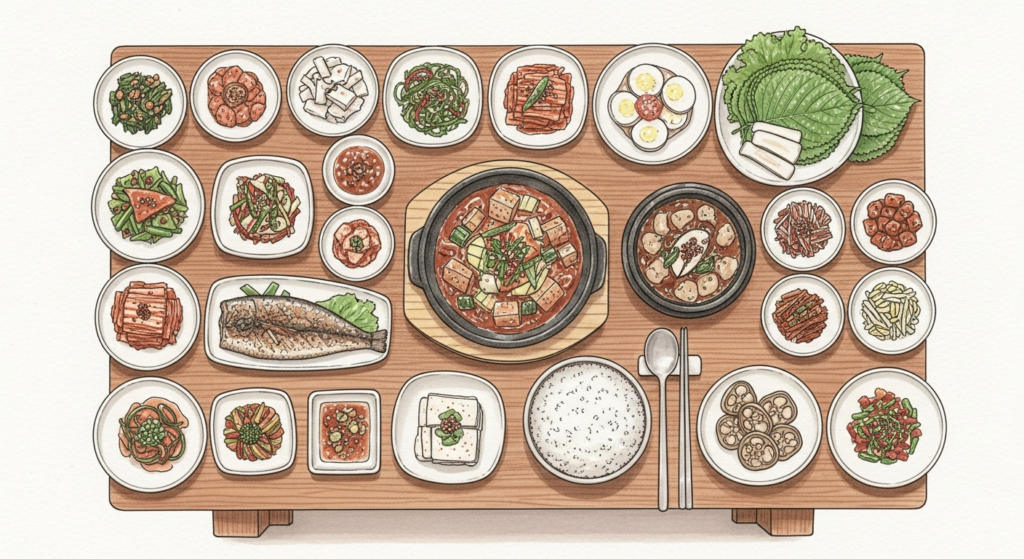
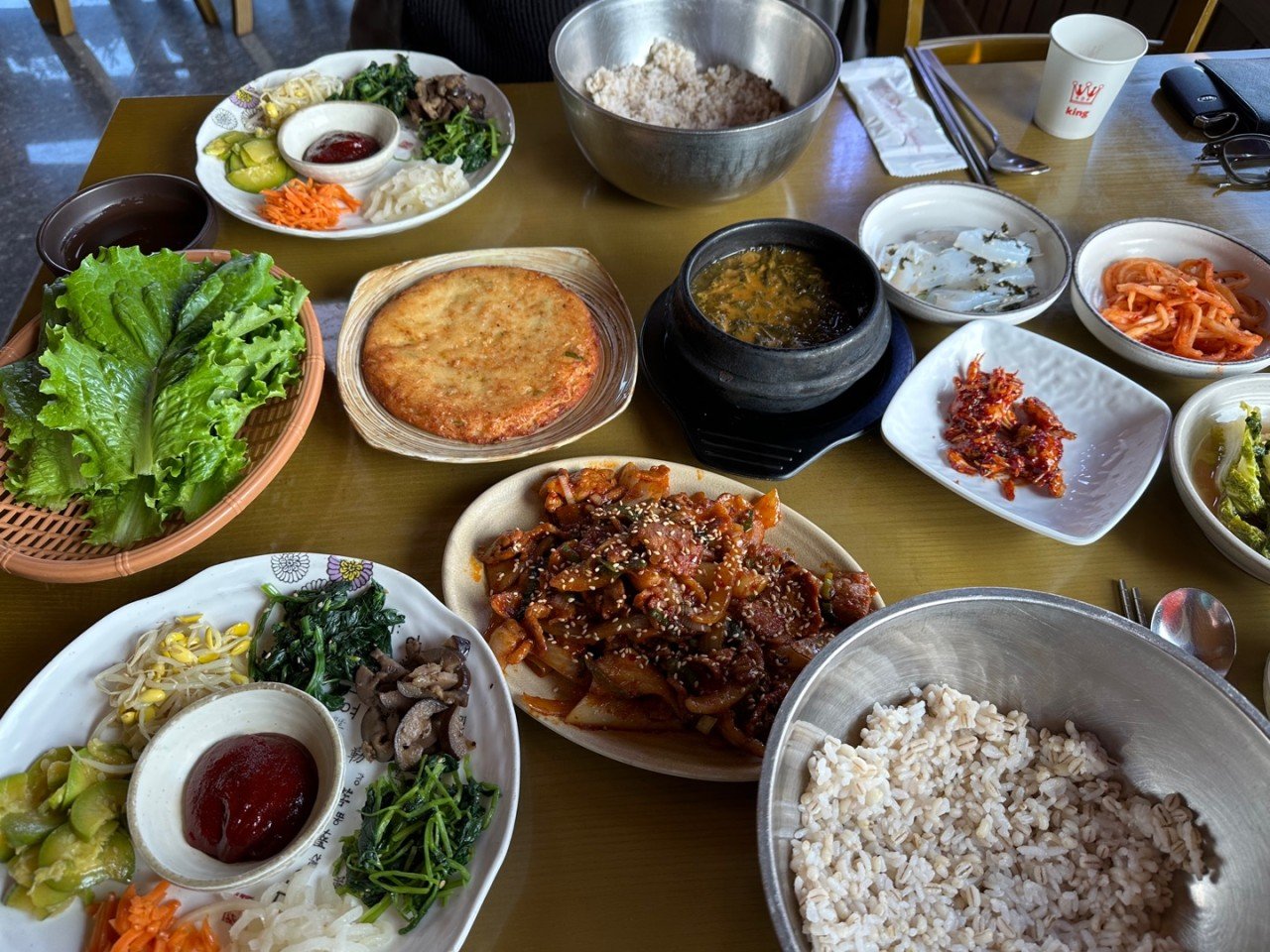
As a “jeongsik” (set menu), this dish is a feast for the eyes before it even touches your palate. A large bowl of warm barley rice is presented to you, surrounded by an array of small side dishes (banchan) featuring the colorful namul and kimchi. You’ll also receive a bubbling pot or bowl of the star seasoning, gang-doenjang.
The experience is wonderfully interactive. You begin by spooning the seasonal vegetables and kimchi into your large bowl of barley rice. Next, add a generous scoop of the savory gang-doenjang and a dollop of gochujang for heat. With your spoon, you mix everything together vigorously—a motion Koreans call “sseuk-sseuk bibida”—until every ingredient is beautifully combined. Each spoonful offers a perfect harmony of chewy barley, crisp vegetables, and rich, savory sauce.
This is a standard method based on general recipes. Every restaurant has its own secret twist and unique style!
Nutritional & Health Benefits
Boribap-jeongsik is more than just a delicious meal; it’s a powerhouse of nutrition. Its reputation as a modern “health food” is well-deserved for several reasons:
- High in Dietary Fiber: The barley rice is an excellent source of fiber, which aids digestion, promotes gut health, and helps you feel full and satisfied.
- Rich in Probiotics: The main seasoning, doenjang (fermented soybean paste), is packed with beneficial probiotics that support a healthy gut microbiome and immune system.
- Vitamins and Minerals Galore: The wide variety of seasoned vegetables (namul) ensures you are getting a diverse range of essential vitamins, minerals, and antioxidants in a single, delicious bowl.

The KCulture Editorial Team is dedicated to providing deep insights and accurate information about the vibrant world of Korean culture.