Introduction: A Social Sizzle on a Pan
Imagine gathering around a massive, sizzling hot plate with friends, the air filled with the tantalizing aroma of spicy, savory chicken and fresh vegetables. This is the essence of Dak-galbi, one of Korea’s most beloved communal dishes. Hailing from the city of Chuncheon, this spicy stir-fried chicken isn’t just a meal; it’s a social event. It’s the perfect food for a lively dinner, a celebratory gathering, or a comforting meal shared among friends, often enjoyed with a bottle of soju. The flavor is a dynamic explosion of spiciness from Korean chili paste, balanced with savory soy sauce, a pungent kick of garlic, and a surprisingly aromatic hint of curry that makes it utterly addictive.
Ingredients & Flavor Profile
The magic of Dak-galbi lies in its simple yet powerful combination of ingredients that create a harmony of textures and tastes.
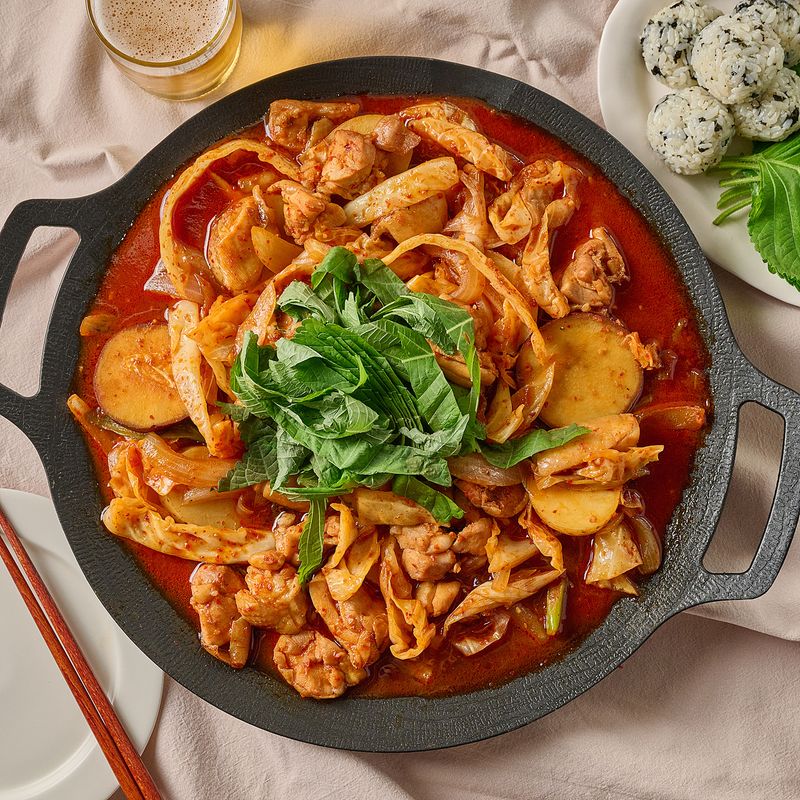
- Key Ingredients: The star of the show is tender, juicy chicken thigh meat. It’s accompanied by crisp, sweet cabbage, chunks of earthy sweet potato that soften beautifully in the sauce, and delightfully chewy rice cakes (tteok) that soak up all the flavor.
- The Secret of Taste: The soul of the dish is its rich, red sauce. It’s built on a foundation of gochujang (Korean chili paste) and gochugaru (chili powder) for that signature spicy kick. Soy sauce adds a deep, savory umami flavor, while fresh garlic provides a pungent, aromatic punch. The unique secret ingredient in many recipes is a touch of curry powder, which adds a warm, complex fragrance that elevates the dish beyond a simple spicy stir-fry.
Dietary Information (Vegetarian/Allergy)
Standard Dak-galbi is not vegetarian as chicken is the main component. However, the dish is adaptable. Many restaurants are happy to prepare a vegetable-only version, stir-frying the cabbage, sweet potatoes, and rice cakes in the delicious sauce. This is often called “Yachae-galbi.”
Safety Tip: When ordering, always clarify with the restaurant staff that you would like a version without any meat. It’s also wise to ask if the base sauce contains any hidden meat broth or fish sauce to ensure it meets your dietary needs.
How It’s Cooked (and Served)
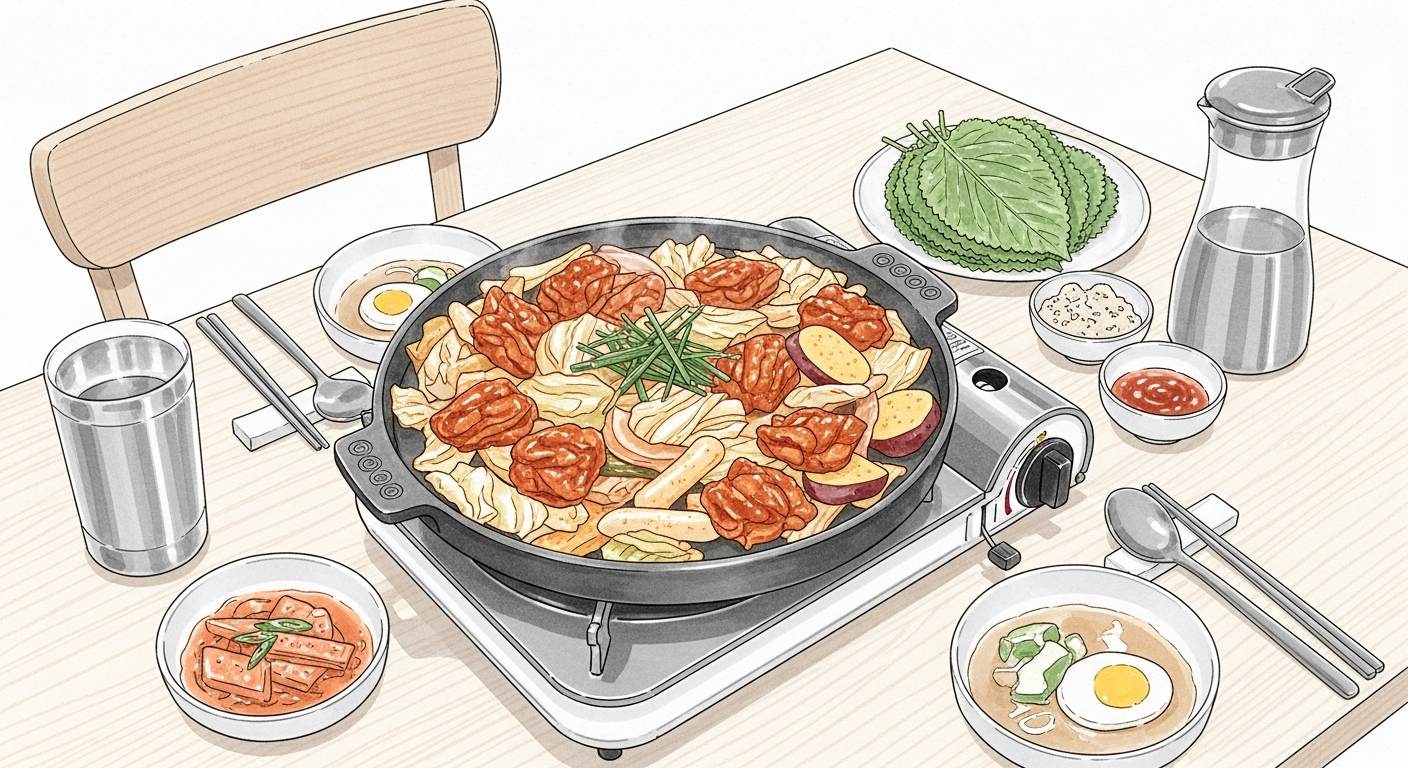
The preparation of Dak-galbi is part of the experience. A large, round cast-iron pan (cheolpan) is placed in the center of your table over a gas burner. The raw, marinated chicken is added to the pan along with heaps of chopped cabbage, sweet potatoes, rice cakes, and sometimes other additions like perilla leaves.
As the pan heats up, you (or the restaurant staff) begin to stir-fry the ingredients, mixing them with the vibrant red sauce. The sizzle and steam create a mouth-watering spectacle. You continue to cook and stir until the chicken is perfectly cooked through, the cabbage is tender-crisp, and the sweet potatoes are soft and creamy. Once it’s ready, everyone digs in, picking their favorite pieces directly from the shared pan. The grand finale, and a must-do, is ordering “bokkeum-bap” (fried rice) at the end. The server will take your leftover sauce and remnants, add a bowl of rice, seaweed, and sometimes cheese, and stir-fry it right in the pan for a final, delicious course.
This is a standard method based on general recipes. Every restaurant has its own secret twist and unique style!
Nutritional & Health Benefits
Beyond its incredible taste, Dak-galbi offers a surprisingly balanced meal with several health benefits derived from its fresh ingredients.
- High in Protein: The chicken thigh is an excellent source of protein, which is essential for building muscle and maintaining energy levels.
- Rich in Vitamins and Fiber: Cabbage and sweet potatoes are packed with dietary fiber, aiding digestion. They are also great sources of Vitamin C (from cabbage) and Vitamin A (from sweet potatoes), which support immune function and vision.
- Beneficial Compounds: Garlic is known for its immune-boosting properties, while the fermented gochujang used in the sauce contains beneficial probiotics that can contribute to a healthy gut.

The KCulture Editorial Team is dedicated to providing deep insights and accurate information about the vibrant world of Korean culture.