Introduction: A Cool Escape in a Bowl
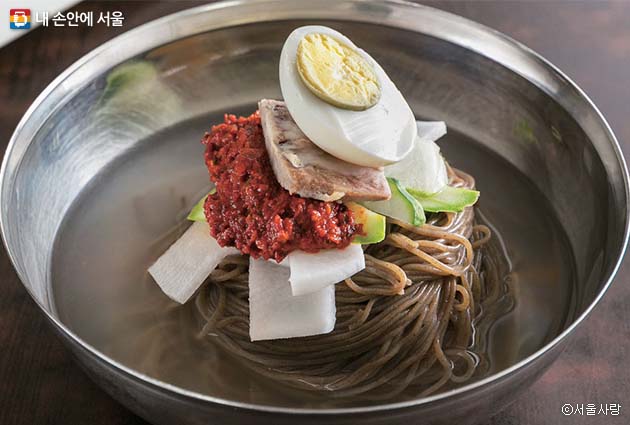
When the Korean summer heat arrives, locals turn to a cherished culinary remedy: Makguksu. This cold buckwheat noodle dish, originating from the mountainous Gangwon province, is the epitome of rustic and refreshing Korean cuisine. The name itself, “Makguksu,” roughly translates to “just-made noodles,” highlighting the fresh, simple, and immediate nature of the dish. It’s a go-to meal for a quick, cooling lunch or after a long hike in the mountains. The flavor profile is a delightful dance of sweet, sour, and savory notes, with a distinct nutty undertone from perilla oil, making it an incredibly satisfying and invigorating experience.
Ingredients & Flavor Profile
Key Ingredients
The beauty of Makguksu lies in its simple yet high-quality components. Here are the stars of the show:
- Buckwheat Noodles: The foundation of the dish, these noodles have a delightfully chewy texture and a distinct, earthy flavor.
- Dongchimi or Meat Broth: The dish is served with a chilled broth. This can be a tangy and refreshing radish water kimchi broth (dongchimi) or a savory, clear meat broth. Often, restaurants will have their own unique blend.
- Fresh Vegetables: A variety of crisp, fresh vegetables are typically added as toppings, providing a wonderful textural contrast.
The Secret of Taste
The soul of Makguksu is its vibrant seasoning. The magic happens when a special sauce, often based on gochujang (Korean chili paste), is combined with other key elements. A touch of sugar provides a subtle sweetness that balances the sharp, tangy kick from vinegar. The spicy and savory depth comes from the gochujang seasoning, which coats every strand of the noodle. Finally, a generous drizzle of perilla oil imparts a unique, fragrant nuttiness that ties all the flavors together, creating a complex yet harmonious taste that is truly unforgettable.
Dietary Information (Vegetarian/Allergy)
Makguksu can be a vegetarian-friendly option, but it requires careful attention. The dish is potentially vegetarian if the broth and toppings are adjusted. Many restaurants offer a version made with a vegetable or dongchimi broth instead of a meat-based one, and toppings can be requested without any meat.
Safety Tip: To ensure your meal is completely vegetarian, it is crucial to communicate with the restaurant staff. Always ask if the broth (육수, “yuksu”) is made from meat or vegetables and confirm the toppings are meat-free.
How It’s Served
Preparing and serving Makguksu is an art of speed and freshness. The process begins by boiling the delicate buckwheat noodles until they are perfectly cooked, then immediately rinsing them in ice-cold water to achieve a firm, chewy texture. These chilled noodles are then placed in a large bowl and topped with the signature seasoning sauce, a sprinkle of seaweed flakes, and a drizzle of aromatic perilla oil. The final, crucial step is left to you: a chilled dongchimi or meat broth is served alongside, and you can pour as much or as little as you like into your bowl. You can choose to mix it all up into a saucy, spicy dish (bibim-makguksu) or add more broth to enjoy it as a soupy, refreshing noodle dish (mul-makguksu). It’s a personalized culinary experience right at your table.
This is a standard method based on general recipes. Every restaurant has its own secret twist and unique style!
Nutritional & Health Benefits
Beyond its delicious taste, Makguksu offers several health benefits, making it a guilt-free pleasure.
- Rich in Fiber: Buckwheat noodles are a fantastic source of dietary fiber, which aids digestion and can help maintain stable blood sugar levels. They are often considered a healthier alternative to noodles made from refined white flour.
- Packed with Nutrients: The fresh vegetable toppings provide essential vitamins and minerals, adding a nutritious crunch to every bite.
- Probiotic Potential: If your Makguksu is served with a traditional dongchimi (radish water kimchi) broth, you’re also getting a dose of healthy probiotics, which are beneficial for gut health.

The KCulture Editorial Team is dedicated to providing deep insights and accurate information about the vibrant world of Korean culture.