Introduction: A Symphony of Flavors and Colors
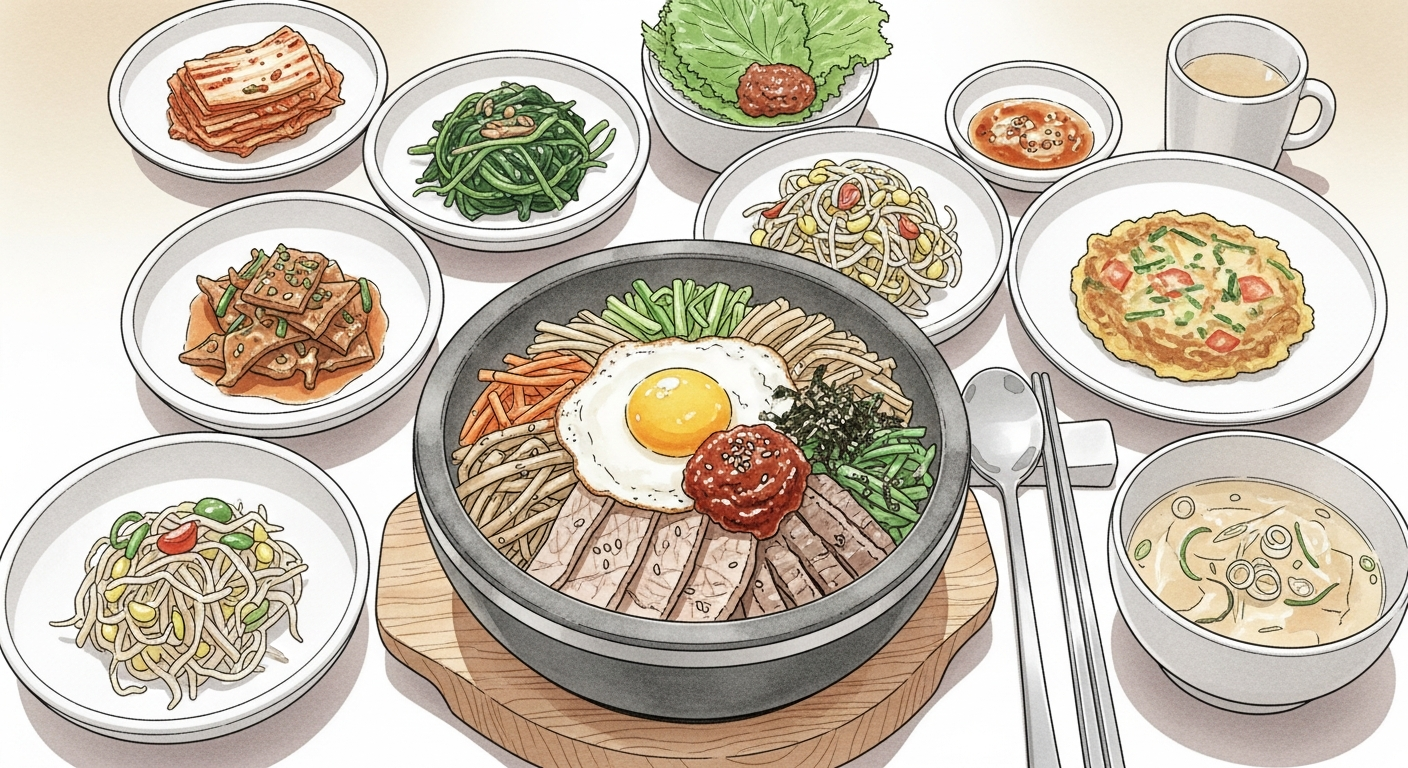
Bibimbap, which literally translates to “mixed rice,” is one of Korea’s most beloved and iconic dishes. It’s a beautiful canvas of colors and textures, a complete meal served in a single bowl. Culturally, Bibimbap is a wonderfully versatile dish. It can be a simple, quick meal made from leftover side dishes (banchan) at home, or an elaborately prepared dish for special occasions. It embodies the Korean culinary philosophy of balance and harmony. The taste profile is a delightful journey, starting with the savory and nutty notes of sesame oil, followed by the deep, spicy-sweet kick from gochujang, all coming together in a perfect medley with every spoonful.
Ingredients & Flavor Profile
Key Ingredients: The Building Blocks of Balance
A bowl of Bibimbap is a carefully constructed masterpiece. While variations are endless, the classic version is built upon these essential components:
- Cooked Rice: The warm, comforting foundation of the dish.
- Assorted Seasoned Vegetables (Namul): A colorful array of vegetables like spinach, bean sprouts, carrots, and mushrooms, which are blanched or stir-fried and lightly seasoned.
- Beef: Typically thinly sliced and marinated in a savory soy sauce blend before being stir-fried to add a rich, protein-packed element.
- Egg: Often served as a sunny-side-up fried egg placed right on top, its runny yolk acting as a creamy sauce when mixed in.
The Secret of Taste: A Trio of Korean Flavors
The magic that ties all these ingredients together lies in its signature seasoning. This is what transforms a simple bowl of rice and toppings into the Bibimbap we know and love.
- Gochujang (Korean Chili Paste): This fermented condiment is the heart of Bibimbap’s flavor, providing a complex spicy, savory, and slightly sweet depth.
- Sesame Oil: A generous drizzle of this fragrant oil lends a rich, nutty aroma and a smooth finish that coats every ingredient.
- Toasted Sesame Seeds: Sprinkled on top for a final touch, these seeds add a subtle crunch and enhance the nutty flavor profile.
Dietary Information for Travelers
Bibimbap can be an excellent choice for various dietary needs. Based on its standard ingredients, it is possible to enjoy a fully vegan version by simply requesting the dish without beef and egg. This leaves you with a delicious and healthy bowl of rice and assorted vegetables.
Safety Tip: When ordering a vegetarian or vegan Bibimbap, it is always wise to confirm with the restaurant staff. Politely ask if any meat-based broth was used to cook the vegetables or if there are other hidden animal products to ensure the dish meets your dietary requirements.
How It’s Prepared and Served
Creating a bowl of Bibimbap is an exercise in preparation and presentation. First, each vegetable component is individually prepared—some are blanched and seasoned, while others are julienned and lightly stir-fried to bring out their natural sweetness and maintain a crisp texture. Separately, the beef is marinated and cooked until tender. The final assembly is where the art comes in. A serving of warm rice is placed in a large bowl, and the prepared vegetables and meat are beautifully arranged in sections on top of the rice, creating a vibrant mosaic of colors. A freshly fried egg is crowned in the center, and a dollop of gochujang and a sprinkle of sesame seeds are added. It’s served with a bottle of sesame oil on the side, allowing you to customize the richness to your liking before you mix it all together into a delicious harmony.
This is a standard method based on general recipes. Every restaurant has its own secret twist and unique style!
Nutritional & Health Benefits
Beyond its incredible taste, Bibimbap is celebrated for being a well-balanced and nutritious meal. Here are a few of its health benefits:
- A Complete, Balanced Meal: The combination of rice (carbohydrates), beef and egg (protein), and a wide variety of vegetables (vitamins, minerals, and fiber) makes Bibimbap a nutritionally complete meal in one bowl.
- High in Fiber: Thanks to the generous amount of assorted namul (vegetables), this dish is an excellent source of dietary fiber, which aids digestion and promotes gut health.
- Rich in Vitamins and Minerals: The colorful assortment of vegetables isn’t just for looks; each one contributes a unique set of essential vitamins and minerals, making it a wholesome choice for any diner.

The KCulture Editorial Team is dedicated to providing deep insights and accurate information about the vibrant world of Korean culture.