Introduction: The Taste of Haste and Heart
Welcome to the bustling streets of Korea, where convenience meets incredible flavor in the form of Cup-bap, literally “cup rice.” This humble yet mighty meal is a cornerstone of modern Korean fast-food culture, especially beloved by students and busy professionals needing a quick, satisfying, and affordable bite. Born from the need for speed in Korea’s fast-paced society, Cup-bap is more than just food; it’s a delicious solution. The flavor profile is a delightful symphony of savory, sweet, and spicy notes, thanks to a masterful blend of sauces like teriyaki, creamy mayonnaise, and the iconic gochujang, ensuring every spoonful is an explosion of taste.
Ingredients & Flavor Profile
Cup-bap’s magic lies in its customizable layers of texture and taste. While variations abound, a classic cup typically includes a hearty foundation of key ingredients.
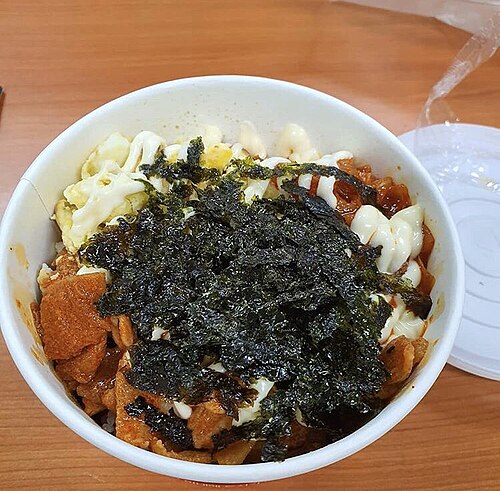
- Key Ingredients: The meal starts with a comforting base of warm cooked rice, which is then generously layered with savory stir-fried kimchi, creamy tuna with mayonnaise, savory ham, and a final flourish of crispy seaweed flakes.
- The Secret of Taste: The true genius of Cup-bap is in its sauce combination. The sweet and savory notes of teriyaki sauce provide a familiar, comforting flavor. Creamy mayonnaise adds a rich, smooth texture that balances the heat, while a dollop of gochujang (Korean chili paste) introduces a classic spicy and slightly sweet kick. When mixed together, these seasonings coat every ingredient, creating a perfectly balanced and incredibly addictive flavor experience.
Dietary Information (Vegetarian/Allergy)
Cup-bap can be a vegetarian-friendly option with careful selection. Since the dish is built to order at most street stalls, you can customize your toppings.
Vegetarian Status: Vegetarian-Friendly with Customization.
Safety Tip: To enjoy a vegetarian version, simply ask the vendor to omit the ham and tuna mayonnaise. You can request extra vegetable toppings instead. It’s always a good idea to confirm that any stir-fried vegetables or sauces are free from hidden meat products like fish sauce or beef broth.
How It’s Served
The beauty of Cup-bap is its brilliant simplicity and on-the-spot assembly. It’s not cooked as one dish but rather constructed right before your eyes. The process begins with a generous scoop of hot, steamy rice packed into a large paper cup, forming the foundation. Next, the vendor skillfully layers your chosen toppings—perhaps some tangy stir-fried kimchi, followed by savory ham, and creamy tuna salad. Finally, the creation is crowned with a sprinkle of seaweed flakes and a generous drizzle of sauces. You’re then handed the cup and a spoon, and the final, crucial step is up to you: mix everything thoroughly until every grain of rice is coated in sauce and every bite contains a perfect medley of all the ingredients.
This is a standard method based on general recipes. Every restaurant has its own secret twist and unique style!
Nutritional & Health Benefits
While designed for convenience, Cup-bap offers a surprisingly balanced nutritional profile perfect for refueling on the go.
- Energy Boost: The base of rice provides essential carbohydrates, delivering a quick and sustained source of energy to power you through a busy day.
- Probiotic Power: The inclusion of stir-fried kimchi, a fermented food, introduces beneficial probiotics that can aid in digestion and support gut health.
- Source of Protein: Toppings like tuna and ham provide a good dose of protein, which is vital for muscle maintenance and helps keep you feeling full and satisfied.

The KCulture Editorial Team is dedicated to providing deep insights and accurate information about the vibrant world of Korean culture.