The Sinyu Persecution of 1801 was a brutal suppression of early Catholics in the Joseon Dynasty, driven primarily by intense political factional struggles masked as a defense of traditional Confucian values. If you have ever watched a Korean historical drama and found yourself wondering why early Western learning faced such deadly, systematic resistance, you are certainly not alone in your curiosity. I am here to guide you through the complex rise of early Catholicism, the tragic political purges that ensnared renowned scholars like the Jeong brothers, and the profound historical sites that still bear witness to this turbulent era.
- The Dawn of Early Catholicism in Joseon
- The Sinyu Persecution of 1801: Religion Masking a Political Purge
- The Bloodshed: Executions and the Hwang Sa-yeong Incident
- The Exile of the Jeong Brothers: A Political and Cultural Shift
- Historical Impact: From Noble Scholars to the Grassroots
- Must-Visit Historical Sites for History Enthusiasts
- Cinematic Retellings: Movies and Dramas to Watch
The Dawn of Early Catholicism in Joseon
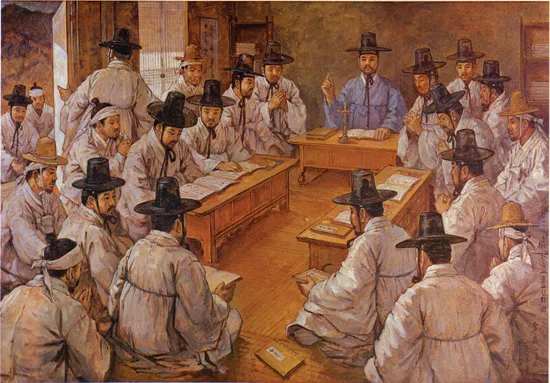
Unlike many other countries where Christianity was introduced by foreign missionaries, Catholicism in Korea has a highly unique origin story. It began in the 18th century not as a religious movement, but as an academic pursuit. Progressive noblemen, particularly those of the Nam-in (Southerners) political faction, began studying Catholic texts brought over from China. They treated this new knowledge as “Seohak” (Western Learning), a philosophical and scientific curiosity.
However, what started as an intellectual exercise in libraries and study rooms soon evolved into a deeply held spiritual belief. The egalitarian principles of Catholicism deeply resonated with some scholars, who began to practice the faith secretly. Yet, in a strict Neo-Confucian society built on strict social hierarchies and ancestral worship, this new faith was a ticking time bomb.
The Sinyu Persecution of 1801: Religion Masking a Political Purge
To truly understand the Sinyu Persecution of 1801, we must look beyond religion and step into the treacherous royal courts of Joseon. On the surface, the state claimed it was eradicating a dangerous heresy that threatened the Neo-Confucian order. In reality, it was a calculated political purge.
The Death of King Jeongjo and Queen Jeongsun’s Regency
King Jeongjo was an open-minded monarch who favored the Nam-in faction and showed relative leniency toward the growing Catholic movement. However, his sudden death in 1800 changed everything. His successor, King Sunjo, was merely 11 years old. This power vacuum allowed Queen Dowager Jeongsun, the step-grandmother of the young king and a core figure of the opposing Noron Byeokpa faction, to assume regency.
The Noron Byeokpa faction despised the Nam-in faction, who had enjoyed King Jeongjo’s favor. With Queen Dowager Jeongsun in power, they found the perfect pretext to eliminate their political rivals: accuse them of harboring heretical Catholic beliefs.
Ideological Clash and the Refusal of Ancestral Rites
The political purge was easily justified to the public due to a fundamental clash of ideologies. Catholicism preached equality before God, which directly threatened the Joseon class system. More critically, the Pope in Rome had forbidden Catholics from participating in Confucian ancestral rites, deeming it idol worship. In a society where failing to honor one’s ancestors was considered the ultimate betrayal of human morality, the Catholic refusal of rites provided the Noron faction with all the ammunition they needed.
The Bloodshed: Executions and the Hwang Sa-yeong Incident
In January 1801, Queen Dowager Jeongsun issued a royal edict demanding the strict eradication of Catholicism. This decree unleashed a storm of blood across the peninsula.
The Fall of the Early Catholic Leaders
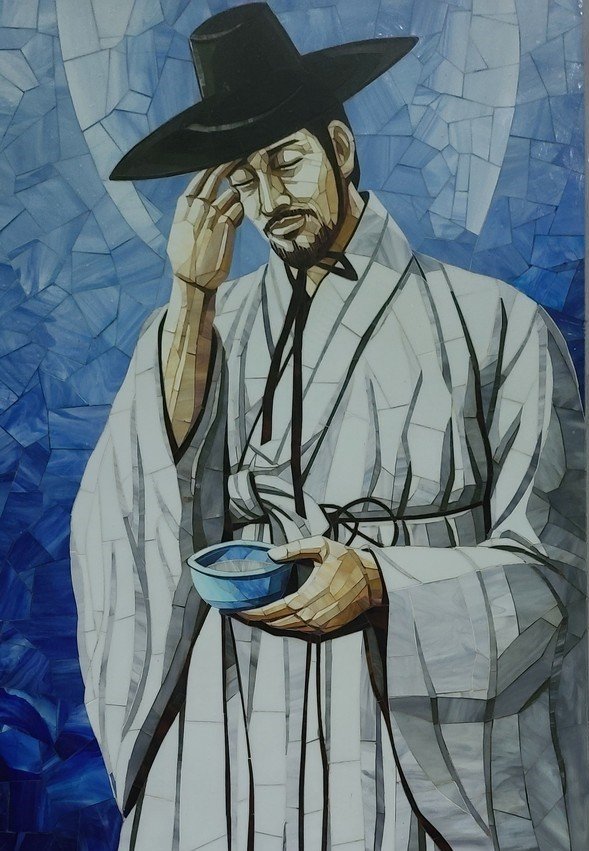
The persecution systematically wiped out the early leadership of the Joseon Catholic Church. Prominent figures were arrested, tortured, and beheaded. Yi Seung-hun, a particularly tragic and pivotal figure, was among them. In 1784, Yi traveled to Beijing as part of a diplomatic mission, where he studied Western mathematics and religion. There, he was baptized as Peter, becoming the first officially baptized Korean Catholic. Upon returning to Joseon, he brought back Catholic literature and religious artifacts, effectively founding the early Korean Catholic Church by baptizing his peers, including the Jeong brothers. Although his faith wavered and he publicly renounced his beliefs several times under immense political pressure throughout his life, he was ultimately arrested and beheaded during the 1801 purge.
Alongside him, Choe Chang-hyeon, a prominent lay leader, and Jeong Yak-jong, a core intellectual of the faith, were executed. The Chinese Priest Ju Mun-mo, who had smuggled himself into Joseon to minister to the growing flock, voluntarily surrendered to spare his followers and was martyred.
The Hwang Sa-yeong Silk Letter Incident
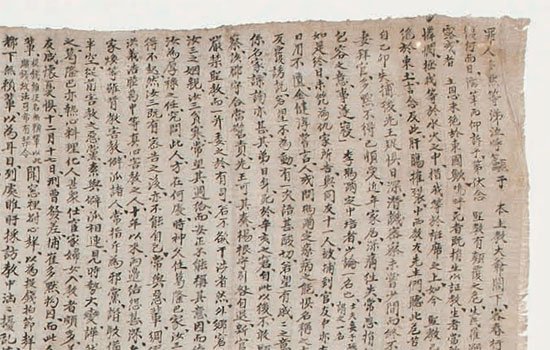
Just as the initial wave of executions was devastating the church, an event occurred that poured gasoline on the fire. A devout Catholic named Hwang Sa-yeong fled the capital and hid in a small cave in the countryside. Desperate, he wrote a secret letter on a piece of white silk, intended for the Bishop in Beijing. In this letter, he detailed the horrific persecutions and made a fateful plea: he asked for Western naval fleets to be sent to pressure the Joseon government into granting religious freedom.
The letter was intercepted before it could leave the country. For the Joseon court, this was the ultimate proof of treason. Catholicism was no longer just an eccentric heresy; it was officially branded as a treasonous syndicate colluding with foreign powers to overthrow the state. The persecution intensified to an unprecedented level of brutality.
The Exile of the Jeong Brothers: A Political and Cultural Shift
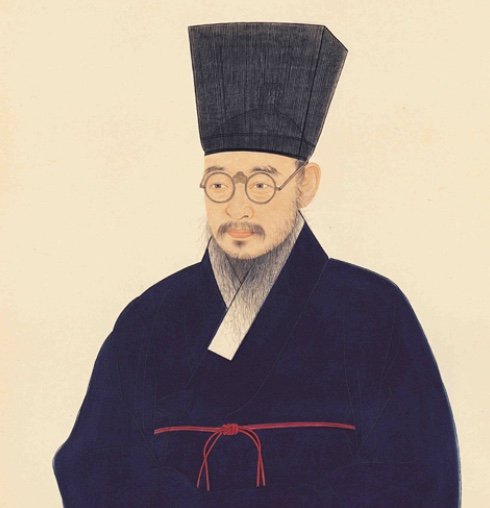
The Sinyu Persecution is also deeply intertwined with the fate of one of Korea’s most celebrated intellectual families: the Jeong brothers. While their brother Jeong Yak-jong embraced martyrdom, Jeong Yak-jeon and Jeong Yak-yong (often known by his pen name, Dasan) narrowly escaped death. Under immense pressure, they formally renounced their faith.
Spared the executioner’s sword, they were instead sentenced to agonizingly long exiles that would ironically birth a cultural renaissance. Isolated from the political chaos of the capital, the brothers devoted themselves to studying the lives of the common people, nature, and practical sciences, compiling some of the greatest works of Silhak (Practical Learning) in Korean history.
Jeong Yak-jeon was banished to the remote island of Heuksando (흑산도). Rather than wallowing in despair, he developed a deep fascination with the local marine environment and formed a close bond with the island’s fishermen. His observations culminated in the writing of Jasaneobo (자산어보, The Book of Fish), a groundbreaking marine biology encyclopedia that meticulously categorized and described the marine life of the surrounding waters.
Meanwhile, Jeong Yak-yong (Dasan) endured 18 years of exile in Gangjin (강진), primarily residing at Dasan Chodang. He channeled his political isolation into an astonishing period of academic productivity, writing over 500 volumes across various disciplines. His most representative masterpiece, Mongmin Simseo (목민심서, Admonitions on Governing the People), is a definitive manual on administrative reform, local governance, and anti-corruption. Another major work, Gyeongse Yupyo (경세유표, Design for Good Government), outlined his grand vision for restructuring state institutions. Through their respective exiles, the Jeong brothers left behind an intellectual legacy that far outlasted the political factions that banished them.
Historical Impact: From Noble Scholars to the Grassroots
The aftermath of 1801 completely transformed the demographic landscape of Catholicism in Korea. Hundreds were executed, and over 400 people were exiled. The noble intellectual leadership of the church was utterly decimated.
To survive, the remaining believers fled deep into the rugged mountains, forming hidden “Gyouchon” (Catholic villages). Stripped of their aristocratic leaders, the religion shifted dramatically. It transformed from an academic pursuit of noblemen into a religion of the marginalized—commoners, peasants, butchers, and women—who found profound comfort in the church’s message of radical equality and salvation in the afterlife.
Must-Visit Historical Sites for History Enthusiasts
If you are traveling in Korea and want to physically connect with this intense chapter of history, I highly recommend visiting these deeply moving sites:
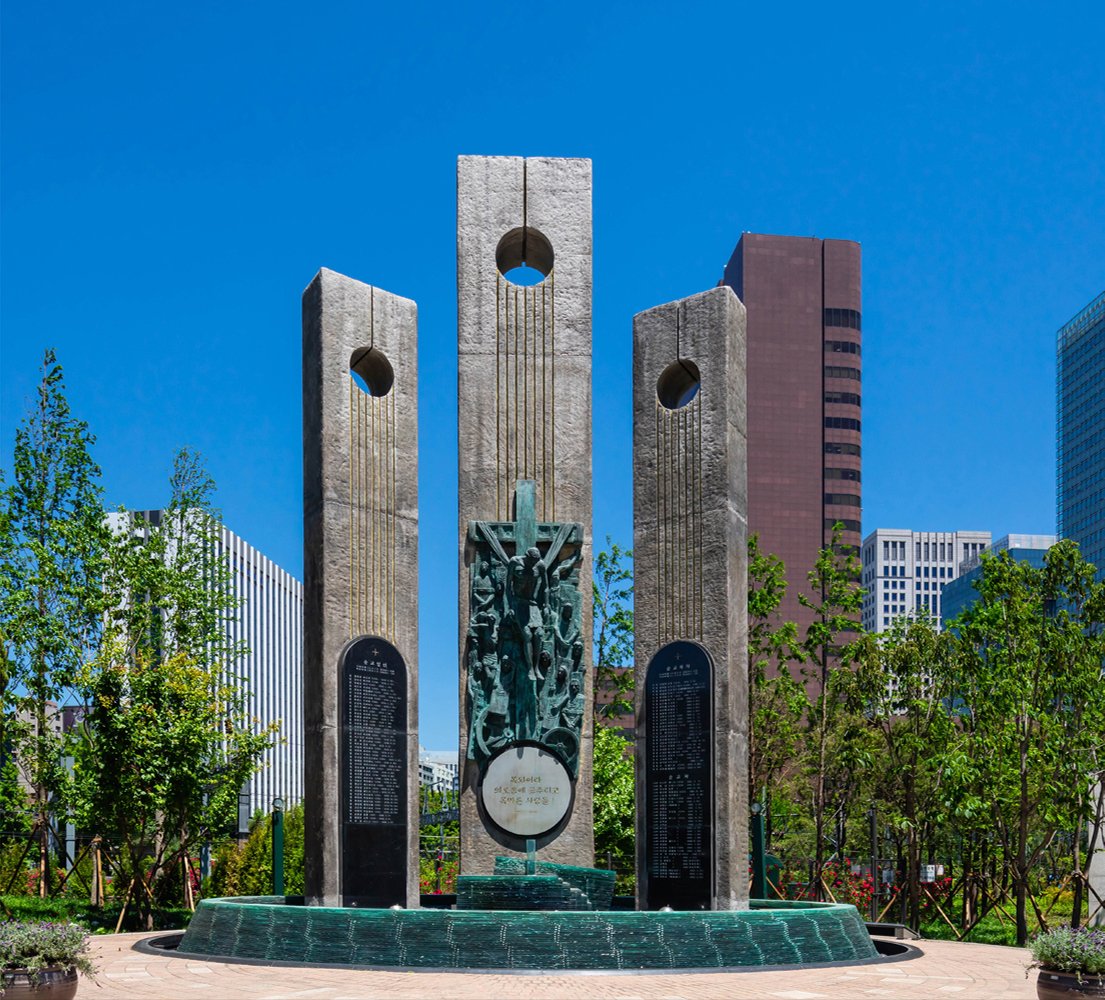
- Seosomun Martyrs Shrine (서소문 밖 네거리 순교성지): Located in central Seoul, this was the official execution ground during the Joseon era. Many early Catholic leaders, including Yi Seung-hun and Jeong Yak-jong, were beheaded here. Today, it has been transformed into a breathtaking, architecturally stunning underground museum and park.
- Baeron Holy Ground (제천 배론성지): Situated in the mountains of North Chungcheong Province, this is where Hwang Sa-yeong hid in a small cave to write his infamous silk letter. It later became the site of Korea’s first Catholic seminary.
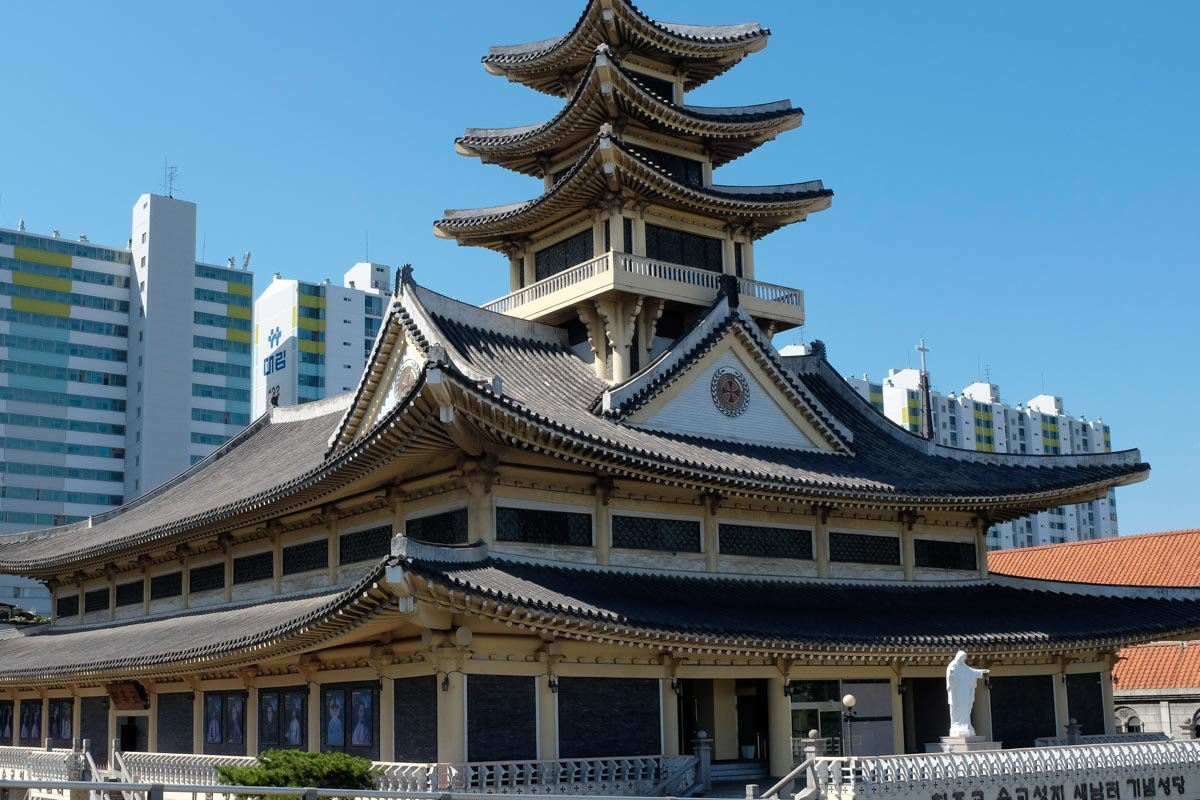
- Saenamteo Martyrs Shrine (새남터 순교성지): Located near the Han River in Seoul, this site marks where the Chinese Priest Ju Mun-mo was martyred. It features a unique church built in the traditional Korean architectural style.
- Dasan Chodang (다산초당) & Sachon Seodang (사촌서당): While not strictly Catholic sites, these locations in Jeolla Province are where the exiled Jeong brothers lived. Visiting Dasan Chodang in the southern mainland and Sachon Seodang on the remote Heuksando island gives you a profound sense of the isolation they endured after the persecution.
📌 Local Insider Tip: When visiting the Seosomun Martyrs Shrine, take your time in the underground “Consolation Hall.” The stark, minimalist architecture combined with natural light pouring from above offers a deeply emotional atmosphere, perfect for quiet reflection regardless of your personal religious beliefs.
Cinematic Retellings: Movies to Watch
To truly visualize the emotional weight of this era, modern Korean cinema offers some spectacular entries. As a local cultural critic, I strongly suggest the following films to complement your historical journey.
| Title | Overview & Relevance | Where to Watch (Korea) |
|---|---|---|
| The Book of Fish (자산어보, 2021) | Directed by Lee Joon-ik, this cinematic masterpiece follows the exiled Jeong Yak-jeon as he writes his famous marine biology book. The stunning black-and-white opening sequence explicitly details the Sinyu Persecution, the martyrdom of Jeong Yak-jong, and the brutal interrogations of the Jeong brothers. It is incredibly historically accurate in its emotional tone. | Netflix, TVING, Wavve, Watcha |
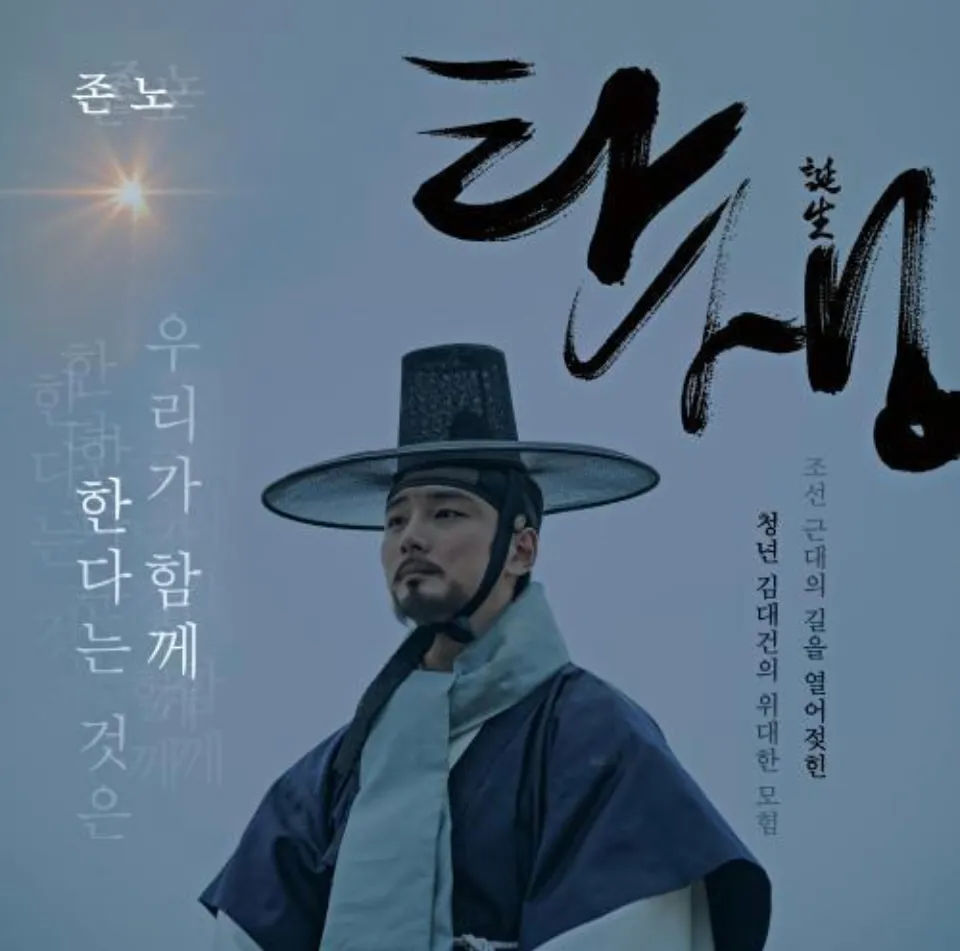
| A Birth (탄생, 2022) | While this film focuses on Father Andrew Kim Dae-geon (the generation after 1801), it perfectly illustrates the lingering trauma and the harsh reality of the hidden mountain Catholic villages (Gyouchon) that formed as a direct result of the Sinyu Persecution. | Netflix, TVING, Wavve |
Exploring the history of the Sinyu Persecution offers a profound look into the resilience of faith, the harshness of Joseon politics, and the enduring spirit of scholars who sought truth in a rigid society. Whether you walk the modern architectural halls of Seosomun or watch the beautiful cinematography of The Book of Fish, this history remains vividly alive today.
Korean Culture portal KCulture.com
Founder of Kculture.com and MA in Political Science. He shares deep academic and local insights to provide an authentic perspective on Korean history and society.