When the sweltering humidity hits, the ultimate answer to beating the heat is Korean summer cold noodles: Naengmyeon (chilled buckwheat noodles) and Kongguksu (creamy soy milk noodles). As a culinary enthusiast living in Korea, I can tell you that these dishes are not just meals; they are essential, nutrient-dense culinary remedies designed to immediately lower your body temperature and replenish your exhausted energy. If you are sweating through your first Korean summer or simply looking to understand this unique food culture, this guide will walk you through the rich history, the distinct regional varieties, how to overcome the initial culture shock, and where to find the absolute best bowls.
- 1. The History and Philosophy Behind Korean Summer Cold Noodles
- 2. Naengmyeon: The Great Divide Between Pyongyang and Hamhung
- 3. Kongguksu: The Creamy Protein Powerhouse
- 4. Overcoming the Culture Shock: A Foreigner’s Perspective
- 5. Pro Tips: How to Eat Cold Noodles Like a Local
- 6. Top Restaurant Recommendations in Seoul and Busan
The History and Philosophy Behind Korean Summer Cold Noodles
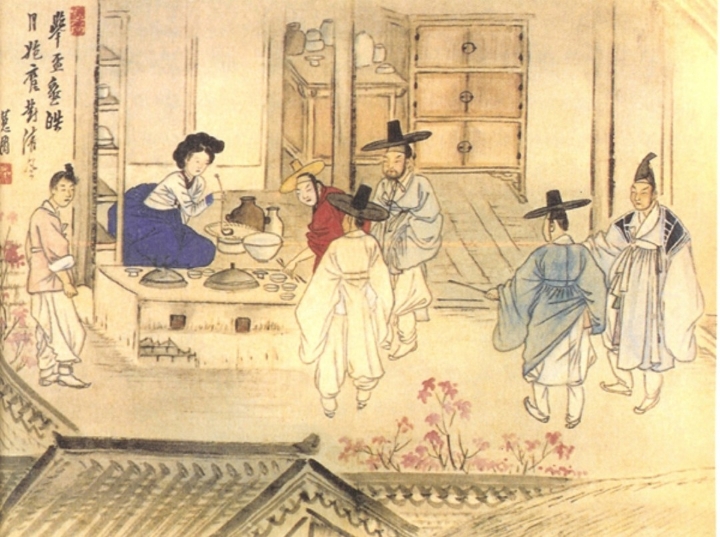
Writing about Korean summer cuisine requires introducing a fascinating cultural concept known as “I-chi-naeng-naeng” (fighting cold with cold). While modern Koreans flock to these dishes in July and August, historically, cold noodles were actually a winter delicacy. In the northern regions of the Korean peninsula, families would sit on their warm ondol (traditional heated floors) during freezing winters, enjoying bowls of chilled buckwheat noodles steeped in cold broth.
The history of these noodles dates back deeply into the Joseon Dynasty. According to historical records, King Jeongjo, the 22nd ruler of Joseon, had a profound love for cold noodles. He would famously treat his royal officials to bowls of buckwheat noodles mixed with refreshing radish water kimchi during late-night royal duties. It wasn’t until after the Korean War, when refugees from the North brought their precious recipes to the South, that cold noodles transformed into a nationwide summer staple.
Naengmyeon: The Great Divide Between Pyongyang and Hamhung
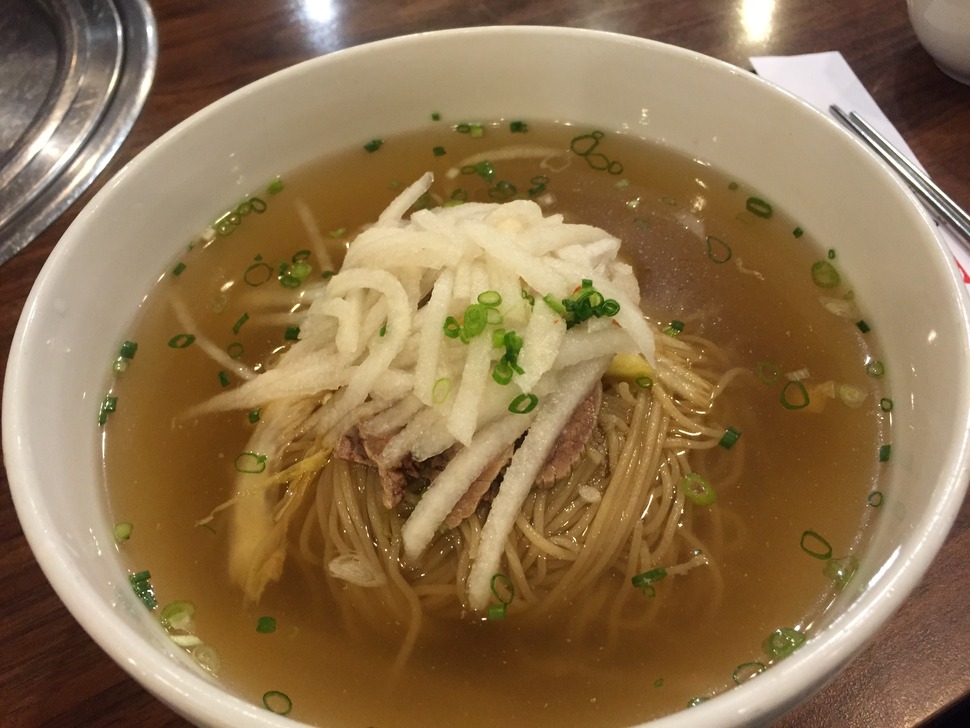
Naengmyeon literally translates to “cold noodles,” and it represents the very soul of Korea’s chilled cuisine. However, stepping into a restaurant requires you to make a crucial choice between two fiercely defended styles: Pyongyang and Hamhung.
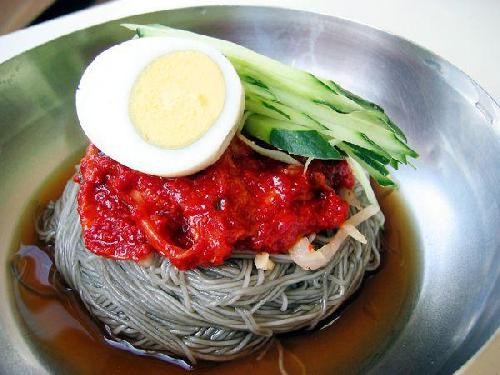
| Feature | Pyongyang Naengmyeon (Mul-Naengmyeon) | Hamhung Naengmyeon (Bibim-Naengmyeon) |
|---|---|---|
| Origin | Pyongyang (North Korea) | Hamhung (North Korea) |
| Noodle Base | High buckwheat content (thick, earthy, easy to bite) | Potato or sweet potato starch (thin, very chewy) |
| Broth / Sauce | Clear, chilled beef or pheasant broth, often mixed with radish water kimchi | Spicy, sweet, and savory gochujang-based red sauce (no broth) |
| Texture | Soft and slightly grainy | “Rubber-band” elastic and bouncy |
| Taste Profile | Minimalist, subtle, and clean (an acquired taste) | Bold, spicy, and punchy |
Beyond the taste, Naengmyeon is incredibly healthy. Buckwheat is gluten-friendly (though commercial noodles often contain some wheat to bind the dough) and is highly regarded in Oriental medicine for its natural cooling properties. It is also rich in rutin, an antioxidant that helps regulate blood pressure.
For a deeper dive into the minimalist beauty of the Pyongyang style, I highly recommend reading our dedicated guide: Pyeongyang Naengmyeon (평양냉면): The Subtle and Refreshing Cold Noodles of Korea.
Kongguksu: The Creamy Protein Powerhouse
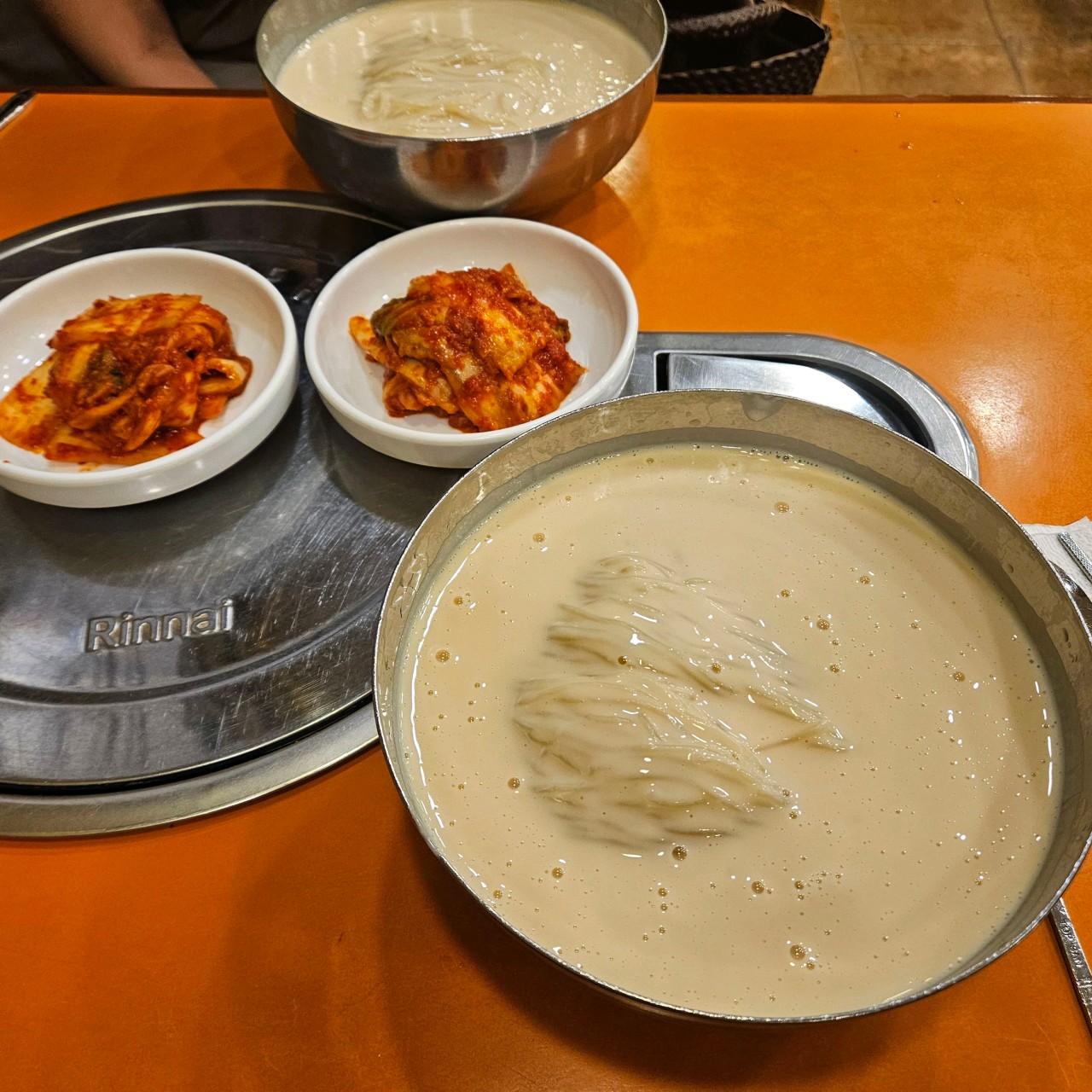
If Naengmyeon is about sheer refreshment, Kongguksu is about rich replenishment. This dish features chewy wheat noodles submerged in a thick, velvety, and chilled broth made entirely from freshly ground soybeans. Originating as a “peasant’s dish” to provide much-needed protein during the exhausting summer farming months, it also has deep roots in Korean temple cuisine, where meat was strictly forbidden.
The soul of Kongguksu lies in its broth. It is incredibly goso-hada (nutty) and creamy. However, it also sparks one of the most passionate culinary debates in Korea: what do you add to the broth? People from Seoul and the central regions typically add salt to enhance the deep, savory nuttiness, while those from the southern regions swear by adding sugar, turning the savory dish into an almost dessert-like delight.
Overcoming the Culture Shock: A Foreigner’s Perspective
For many international visitors, your first encounter with Korean summer cold noodles might feel like “culture shock in a bowl.” In many Western culinary traditions, soup is inherently meant to be hot. Drinking a bowl of icy beef broth or chilled, thick soybean milk can feel quite counterintuitive.
The texture is another hurdle. The extreme chewiness of Hamhung noodles often surprises foreigners, who might feel as though they are chewing on rubber. Additionally, beginners often find the subtle Pyongyang broth tastes uncomfortably bland. In Korea, we call this minimalist flavor profile pyeong-sang-do—a subtle, hidden depth that you only truly appreciate after your third or fourth bowl.
So, why must you try it anyway? Because it is the ultimate culinary reset button. Once you get past the initial surprise, the remarkably clean finish of the broth and the rich vitality of the soy milk provide a level of core-cooling refreshment that standard air conditioning simply cannot match. It is a masterclass in balance and culinary minimalism.
Pro Tips: How to Eat Cold Noodles Like a Local
To truly enjoy these dishes, you need to know the unwritten rules of the Korean dining table.
📌 Local Note: The Golden Rule of Broth
Most Naengmyeon restaurants provide squeeze bottles of vinegar and spicy mustard on the table. However, do not add them immediately! Always lift the heavy stainless steel bowl with both hands and take a long sip of the pure, unadulterated broth first. Purists believe the original broth is a work of art that shouldn’t be prematurely masked by strong condiments.
- To Cut or Not to Cut: Because Hamhung noodles are incredibly elastic, the server will usually offer to cut them with scissors. Say yes to one or two cuts. However, true Pyongyang Naengmyeon aficionados refuse the scissors, believing that preserving the long buckwheat strands symbolizes a long, healthy life.
- The Boiled Egg: You will always find half a hard-boiled egg sitting on top of your noodles. Eat this first! The protein and fats coat your stomach lining, protecting it from the acidic chill of the broth and the spicy mustard.
Top Restaurant Recommendations in Seoul and Busan
If you are ready to embark on this culinary journey, here are the most prestigious and consistently top-rated spots (as of May 2026) to experience these masterpieces.
In Seoul
- Woo Lae Oak (우래옥): The undisputed “Gold Standard” for Pyongyang Naengmyeon. Located in the heart of the city, their broth features a more intense beef flavor than other minimalist spots, making it the absolute best entry point for beginners.
- Ojang-dong Heungnamjip (오장동 흥남집): Specializing in Hamhung Naengmyeon since 1953, this vibrant eatery is famous for their hoe-naengmyeon, which comes topped with spicy, seasoned raw skate.
- Jinju Hoegwan (진주회관): Located near City Hall, this legendary spot has a 60-year history of serving Kongguksu. Their soybean broth is so thick and richly yellow that it looks and tastes like heavy cream.
In Busan
- Wonsan Myeonok (원산면옥):Located in the bustling Nampo-dong (남포동) area, this legendary spot has been serving its classic, deeply satisfying cold noodles since 1953, surviving decades of fleeting food trends.
- Hamgyeong Myeonok (함경면옥): (Updated for 2026) Because many older neighborhood noodle shops have closed over the years, locals now flock to Hamgyeong Myeonok in Deokcheon-dong (덕천동) for the ultimate authentic Hamhung Naengmyeon experience. *Branch : 21 Geumgok-daero, Buk-gu (부산 북구 금곡대로 21)
- Hidden Market Gems: While Busan is famously known for Milmyeon (its own local wheat noodle variation), if you want authentic Kongguksu, head straight to Gukje Market (국제시장). Here, hidden stalls grind fresh soy milk on the spot for a truly rustic experience.
Whether you find yourself slurping a subtle beef broth in Seoul or digging into a spicy, chewy bowl in Busan, Korean summer cold noodles are an unforgettable adventure. Embrace the chill, and let the flavors cool you from the inside out.
Explore More Korean Culinary Traditions:
- Soul Food of Korea: Discover the Magic of Temple Food
- Haejangguk: Korea’s Ultimate Hangover Soup
- [Bomnamul] How to Find and Cook Korean Spring Greens
Korean Culture portal KCulture.com

Founder of Kculture.com and MA in Political Science. He shares deep academic and local insights to provide an authentic perspective on Korean history and society.