An Icy Broth Fit for Royalty
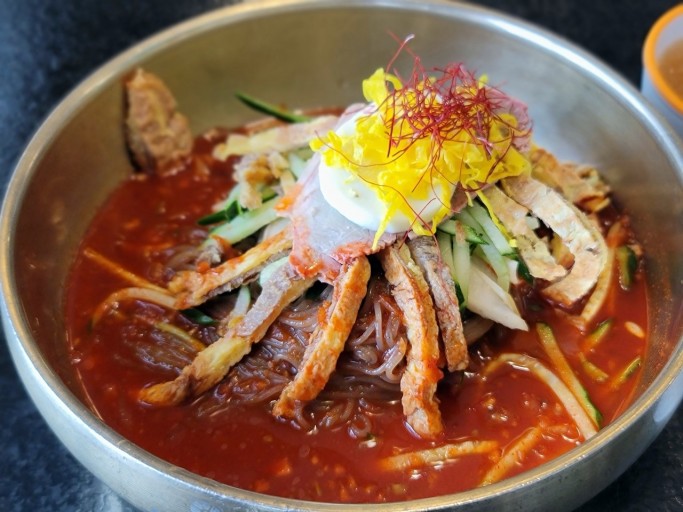
When the Korean summer heat arrives, locals turn to a cherished culinary tradition: ice-cold noodles. While many are familiar with the standard Pyeongyang or Hamheung styles of naengmyeon, there exists a lesser-known but incredibly luxurious version called Jinju Naengmyeon. Hailing from the historic city of Jinju, this dish was once considered a delicacy served to high officials and aristocrats. It stands apart with its uniquely rich and savory seafood-based broth, offering a complex yet profoundly refreshing taste. The flavor profile is a masterful balance of deep umami from the broth, a savory touch from soy sauce, and a bright, tangy finish from vinegar, making it the perfect meal to rejuvenate your senses on a warm day.
Ingredients & Flavor Profile
Jinju Naengmyeon’s regal character comes from its carefully selected, high-quality ingredients that create a symphony of textures and tastes.
- Key Ingredients: The foundation of this dish includes chewy and nutty buckwheat noodles (Maemil-myeon), a rich and deeply flavorful seafood broth, and its signature topping, savory pan-fried beef pancake (Sogogi Yukjeon).
- The Secret of Taste: The soul of Jinju Naengmyeon is its broth. Unlike other naengmyeon varieties that often use beef or dongchimi (radish water kimchi) broth, this version uses a broth made from seafood, lending it a profound and complex umami flavor. This rich base is seasoned with a touch of soy sauce (Ganjang) for savory depth and vinegar (Sikcho) for a clean, tangy kick. The combination elevates the dish from a simple cold noodle soup to an elegant culinary experience.
Dietary Information
Due to the core components of this dish, Jinju Naengmyeon is not suitable for vegetarians. The broth is made from seafood, and the main topping is pan-fried beef.
Safety Tip: For tourists with dietary restrictions, it’s always a good practice to confirm with the restaurant staff about all the ingredients used, as hidden elements like meat broth or fish-based components are common in Korean cuisine.
How It’s Served
The preparation of Jinju Naengmyeon is a testament to the care and detail of traditional Korean cooking. First, a deep and aromatic seafood broth is carefully simmered for hours to extract maximum flavor, then chilled to a refreshing, icy temperature. Separately, thin slices of beef are coated in an egg batter and pan-fried to create the tender and savory ‘yukjeon’. To serve, a portion of freshly cooked buckwheat noodles is placed in a large bowl and bathed in the chilled seafood broth. The dish is then generously garnished with colorful toppings, most notably thin strips of the beef yukjeon and often julienned egg garnish, creating a final presentation that is as beautiful as it is delicious.
This is a standard method based on general recipes. Every restaurant has its own secret twist and unique style!
Nutritional & Health Benefits
Beyond its incredible taste, Jinju Naengmyeon offers several health benefits rooted in its wholesome ingredients.
- High in Protein: The generous serving of pan-fried beef pancake (yukjeon) makes this dish an excellent source of high-quality protein, essential for muscle repair and providing sustained energy.
- Rich in Minerals: The unique seafood-based broth is naturally infused with essential minerals from the sea, such as iodine, which is crucial for thyroid function.
- Digestive Health: Buckwheat noodles are a key ingredient and are known to be a good source of dietary fiber, which aids in digestion and promotes a healthy gut.

The KCulture Editorial Team is dedicated to providing deep insights and accurate information about the vibrant world of Korean culture.