Finally Reopening: Why Manjanggul Lava Tube Is One of Jeju’s Most Incredible Natural Wonders
After more than two years of closure, Manjanggul Lava Tube (만장굴) in Jeju Island is officially reopening on May 30, 2026. For travelers planning a deeper and quieter side of Korea beyond the crowded streets of Seoul and Busan, this UNESCO World Natural Heritage site is one of the most unforgettable places you can visit.
Unlike ordinary limestone caves found in many countries, Manjanggul is a massive lava tube formed by flowing volcanic magma hundreds of thousands of years ago. Its enormous scale, near-perfect preservation, and eerie underground atmosphere make it one of the world’s most important volcanic caves.
If you are currently planning a Jeju trip, you may also want to explore our other detailed Jeju guides including Jeju Travel : Where to Stay and Go(for Every Traveler Type), Hallasan Hiking : Essential Reservations, Route Comparison & Rules, Jeju Olle Trail : The Best Courses & How to Book Your Hiker Stay, How to Explore Jeju’s Volcanic Oreums by Bus and Car, and Jeju Island: The Ultimate 3-Day Bus Adventure.
- Why Manjanggul Is So Special
- Lava Tube vs Limestone Cave
- What You Will See Inside
- Essential Visitor Information
- How to Reach Manjanggul Without a Car
- Nearby Attractions Worth Visiting
- Practical Tips Before You Go
Why Manjanggul Is So Special
Manjanggul Lava Tube is part of the Geomunoreum Lava Tube System (거문오름 용암동굴계), which was designated as a UNESCO World Natural Heritage site in 2007.
What makes this cave extraordinary is not simply its size, but how well it has been preserved for hundreds of thousands of years. Many lava tubes around the world have partially collapsed or been damaged by human activity. Manjanggul remains remarkably intact, allowing visitors to experience the raw geological power that shaped Jeju Island.
The cave stretches for approximately 7.4 kilometers in total length, although only around 1 kilometer is open to the public to protect the ecosystem and ensure visitor safety.
| Feature | Details |
|---|---|
| Total Length | Approx. 7.4 km |
| Public Access Section | Approx. 1 km |
| Maximum Width | Approx. 23 m |
| Maximum Height | Approx. 30 m |
| Temperature | 11–15°C year-round |
| UNESCO Status | World Natural Heritage Site |
📌 Local Note: Even during Jeju’s hot summer months, the inside of Manjanggul feels surprisingly cold and damp. Many travelers regret visiting in shorts and sandals.
Lava Tube vs Limestone Cave
One of the most fascinating aspects of Manjanggul is that it is a lava tube, not a limestone cave.
Most famous caves worldwide are “limestone caves,” formed slowly as water dissolves rock over time. Those caves are known for stalactites and stalagmites.
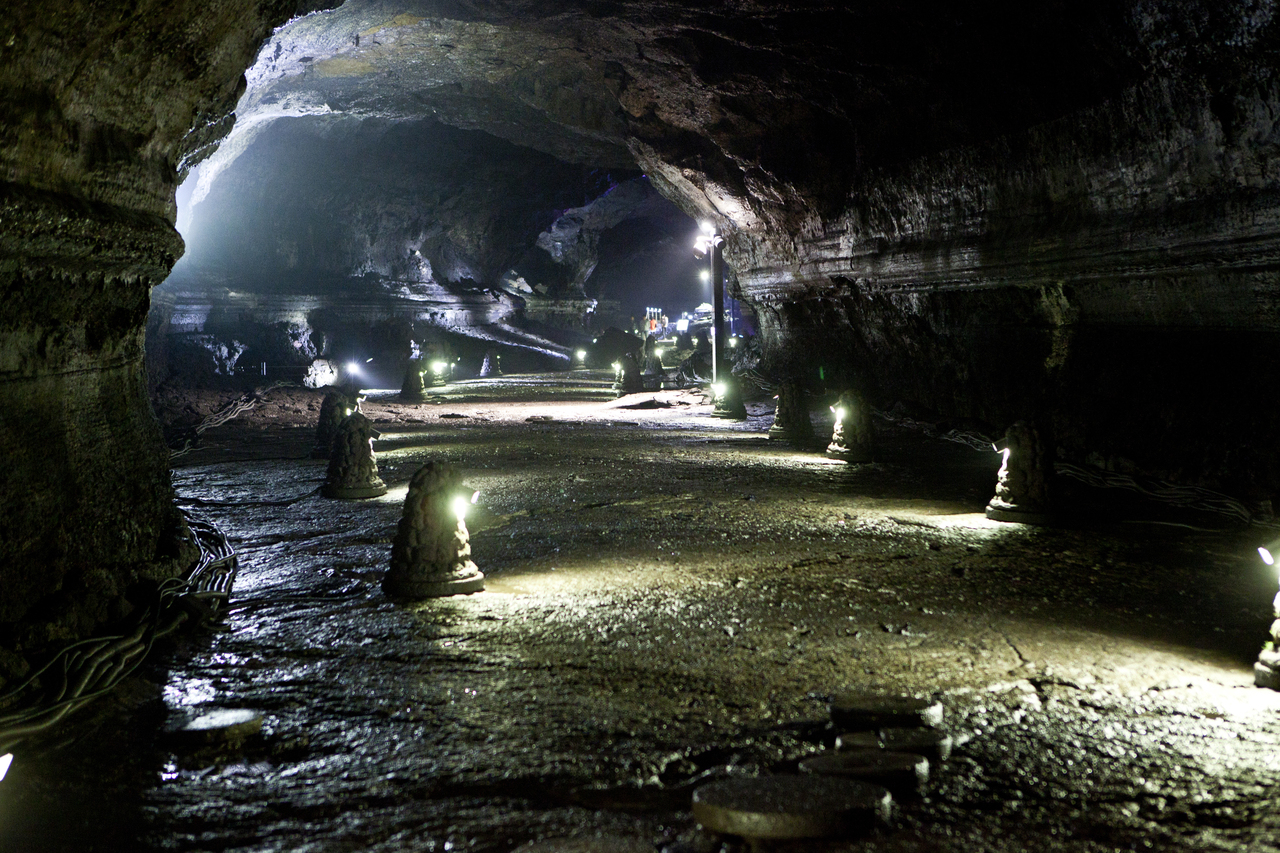
Manjanggul formed very differently. Around 100,000 to 300,000 years ago, volcanic lava flowed from Jeju’s volcanic system. As the outer surface cooled and hardened, molten lava continued moving beneath it, eventually leaving behind a giant tunnel-like passage.
This creates a completely different visual experience:
- Dark volcanic rock walls instead of white mineral formations
- Massive tunnel-like passages created by flowing magma
- Distinct lava shelves and flow patterns
- A more dramatic “journey into the earth” atmosphere
For geology enthusiasts, Manjanggul is considered one of the finest lava tube systems in the world.
What You Will See Inside
The Giant Lava Column
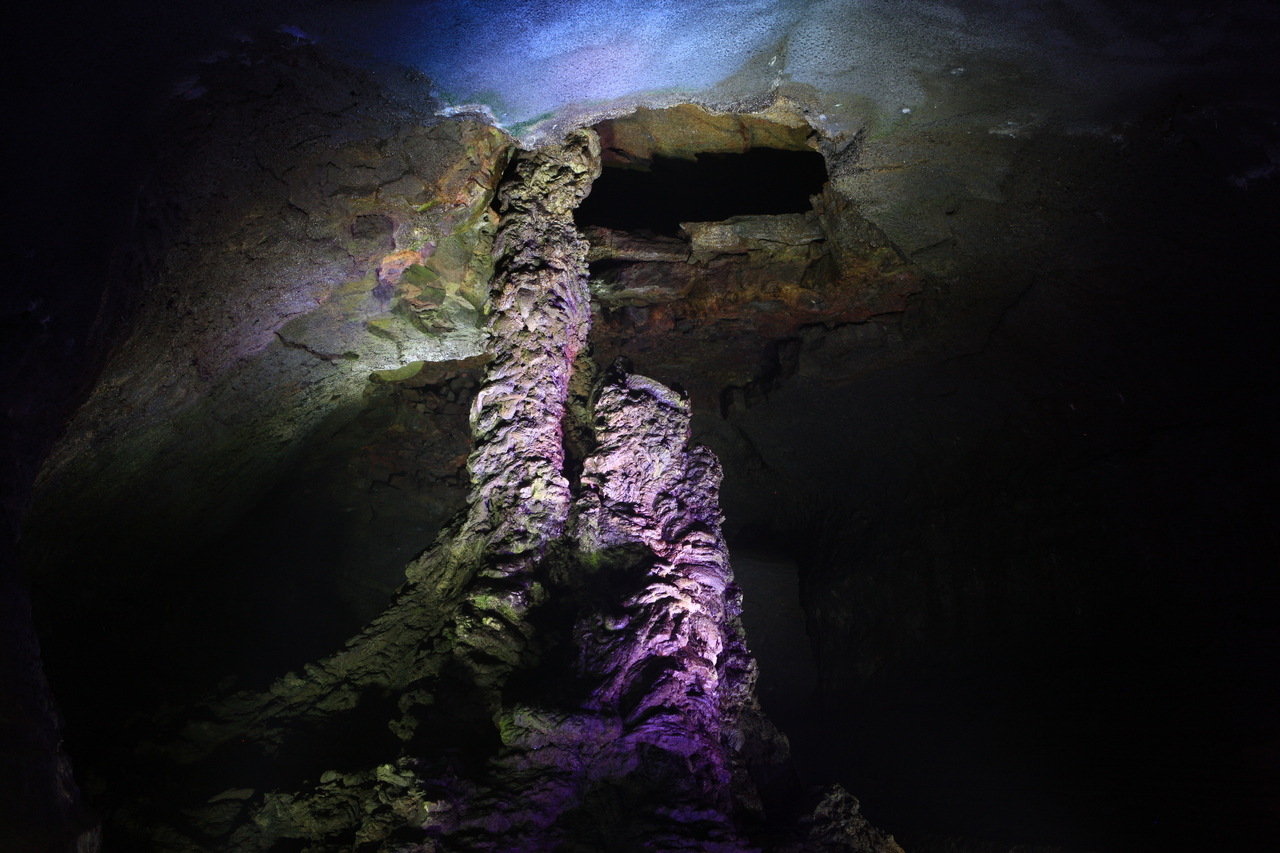
The highlight of Manjanggul is the enormous Lava Column located near the end of the public walking route.
This towering structure stands approximately 7.6 meters tall and is considered the largest known lava column in the world. It was formed when molten lava dripping from the ceiling connected with lava rising from the floor and solidified into a gigantic stone pillar.
Seeing it in person feels almost surreal because the scale is difficult to understand from photographs alone.
The Underground Atmosphere
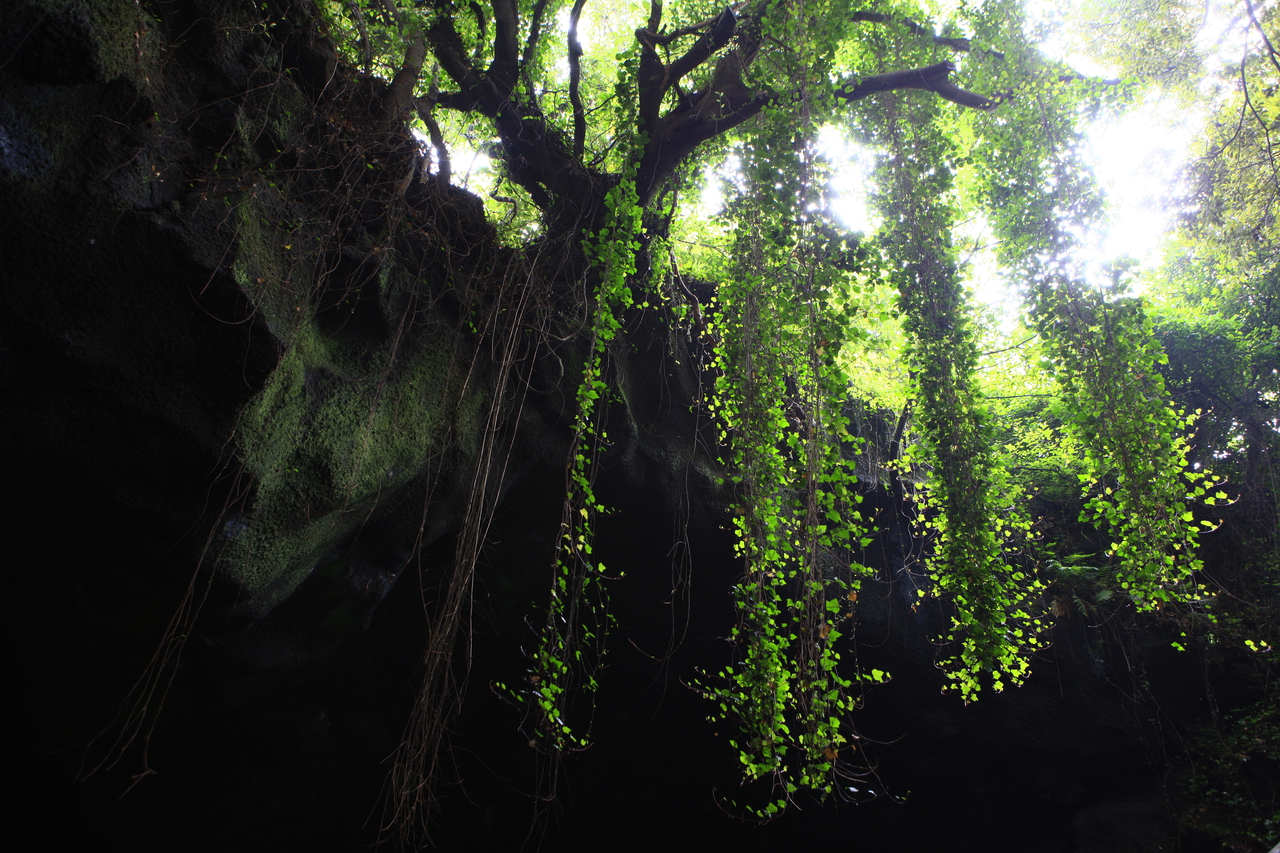
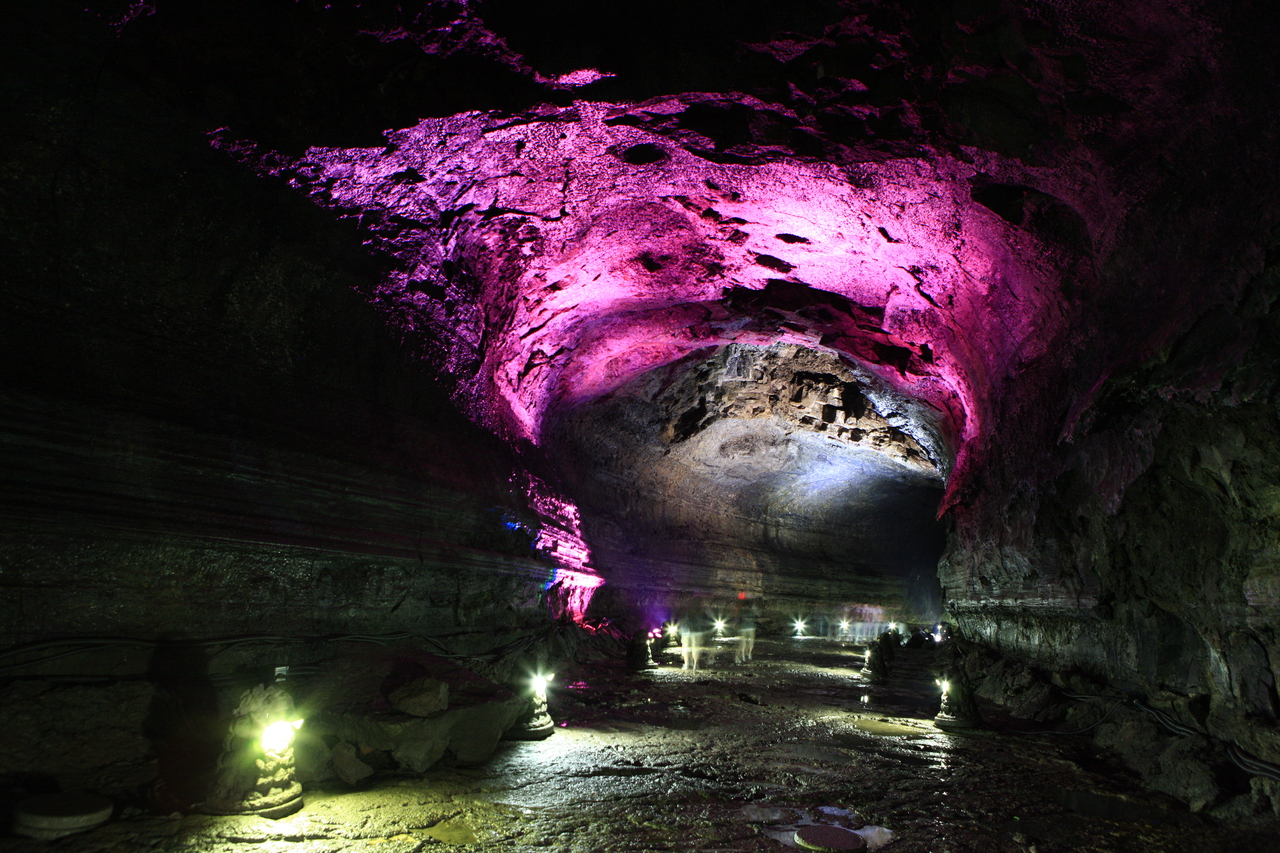
Walking through Manjanggul feels more like entering a volcanic tunnel than a decorated cave. The floor can be uneven and slippery in places, and the darkness creates an almost cinematic atmosphere.
You will also notice:
- Lava flow lines along the walls
- Natural lava shelves
- Volcanic rock textures rarely seen elsewhere
- Occasional bat habitats protected inside the cave
The Jeju World Heritage Headquarters carefully monitors humidity, temperature, and ecological conditions to minimize environmental damage.
💡 Pro Tip: The cave pathway is darker and rougher than many tourists expect. Sneakers or hiking shoes are strongly recommended.
Essential Visitor Information
| Information | Details |
|---|---|
| Official Reopening Date | May 30, 2026 |
| Operating Hours | 09:00–18:00 |
| Last Entry | 17:10 |
| Regular Closure | Every 1st Wednesday of the month |
| Recommended Visit Time | 1–1.5 hours |
| Location | Gujwa-eup (구좌읍), eastern Jeju Island |
Manjanggul had been closed since December 2023 following a rockfall incident. The long closure period allowed Jeju authorities to install advanced safety systems and monitoring infrastructure while preserving the cave’s original condition.
Because this reopening is highly anticipated, visitor numbers are expected to surge during the first several months.
How to Reach Manjanggul Without a Car
Many foreign travelers worry that Jeju is difficult without driving. Honestly, Jeju is much easier with a rental car, but Manjanggul is still absolutely possible by public transportation if you plan carefully.
Option 1: Smart Transfer via Hamdeok Beach (Most Recommended)
This is the most realistic and stress-free method for international visitors.
Route:
Jeju Airport or Jeju City → Hamdeok Beach (함덕해수욕장) → Taxi to Manjanggul
Take Express Bus 101 from the airport and get off at Hamdeok Beach, one of Jeju’s busiest tourist hubs.
Because Hamdeok always has waiting taxis, getting a ride to Manjanggul is usually easy. The distance is about 12 km, and the fare is generally around KRW 12,000–15,000.
This short-distance route is attractive for taxi drivers, meaning Uber or Kakao T requests are normally accepted quickly.
📌 Local Note: Trying to call a taxi directly from remote countryside bus stops in Jeju can be surprisingly difficult. Hamdeok works much better as a “transfer hub.”
Option 2: Budget Backpacker Route via Opseo-bus 711-2
This is the cheapest method using only buses and is especially useful for budget backpackers traveling around eastern Jeju without a rental car.
Route:
Jeju Airport or Jeju City → Gimnyeong Transfer Stop (김녕환승정류장) → Bus 711-2 → Manjanggul
Take Express Bus 101 or Local Bus 201 to Gimnyeong Transfer Stop, then transfer to the local circular route 711-2, also known locally as the “Opseo-bus.”
The useful part for foreign travelers is that Bus 711-2 stops directly near the Manjanggul parking area, eliminating the need for long countryside walks.
According to the official Jeju Bus Information System, the morning fixed-schedule departures toward Manjanggul generally operate at times such as 08:35, 10:25, and 11:38 from the Gimnyeong area, although seasonal adjustments can occur.
Because schedules may change, travelers should always check the official timetable before departure:
Official Jeju Bus 711-2 Schedule
One important detail is that some afternoon operations switch to a DRT (Demand Responsive Transport) system. This means the bus only operates when passengers request it in advance.
Foreign visitors may find the Korean-language reservation system difficult to use. In that situation, calling Korea Travel Hotline 1330 is extremely helpful. The hotline supports English, Japanese, and Chinese, and operators can assist with transportation guidance or help explain how the Opseo-bus system works.
💡 Pro Tip: If the DRT system feels too complicated, many travelers simply use the “Hamdeok Beach + Taxi” strategy instead. It is usually much easier and saves significant time.
Option 3: Direct Taxi from the Airport or City
If you are traveling with family or friends, this is often the most convenient solution.
Travel Time: Approx. 30–40 minutes
Estimated Fare: KRW 25,000–30,000
This saves significant transfer time and is especially useful during bad weather.
For the return trip, it is smart to book your taxi about 10–15 minutes before leaving the cave area. Long-distance city-bound rides are generally accepted more easily by drivers.
Nearby Attractions Worth Visiting
Gimnyeong Maze Park (김녕미로공원)
Located within walking distance of Manjanggul, Gimnyeong Maze Park is Korea’s first maze park and remains one of Jeju’s most charming hidden attractions.
It was created by an American professor who spent years cultivating the maze and gardens. The atmosphere feels surprisingly international and relaxed.
One unexpected highlight is the large number of friendly cats living freely around the park. Cat lovers often end up spending far more time here than planned.
Gimnyeong Beach (김녕해수욕장)
Gimnyeong Beach offers one of eastern Jeju’s most beautiful coastal landscapes.
The combination of white sand, emerald water, black volcanic rocks, and giant offshore wind turbines creates a scenery that feels very different from mainland Korea.
After the cool underground temperatures of Manjanggul, sitting at a seaside café near Gimnyeong Beach feels especially refreshing.
Woljeongri Beach (월정리해변)
If you continue along the eastern coastline, Woljeongri Beach is another excellent stop known for stylish cafés and ocean views.
It is particularly popular among younger Korean travelers looking for slower and quieter Jeju experiences away from crowded urban tourism zones.
Practical Tips Before You Go
- Bring a light jacket even during summer.
- Wear shoes with good grip because the floor can be wet.
- Avoid visiting on the first Wednesday of the month.
- Morning visits are usually less crowded.
- Mobile signal inside the cave can be weak.
- Photography is allowed, but flash should be minimized.
For travelers who think Jeju is only about beaches and cafés, Manjanggul offers something completely different: a chance to walk through one of the planet’s best-preserved volcanic tunnels.
And because the cave is finally reopening after a long closure, 2026 may become one of the most exciting moments to experience this legendary underground world again.
Related Jeju Travel Guides
- Jeju Travel : Where to Stay and Go(for Every Traveler Type)
- Hallasan Hiking : Essential Reservations, Route Comparison & Rules
- Jeju Olle Trail : The Best Courses & How to Book Your Hiker Stay
- How to Explore Jeju’s Volcanic Oreums by Bus and Car
- Jeju Island: The Ultimate 3-Day Bus Adventure
Korean Culture portal KCulture.com

Founder of Kculture.com and MA in Political Science. He shares deep academic and local insights to provide an authentic perspective on Korean history and society.