Introduction: Story & Culture
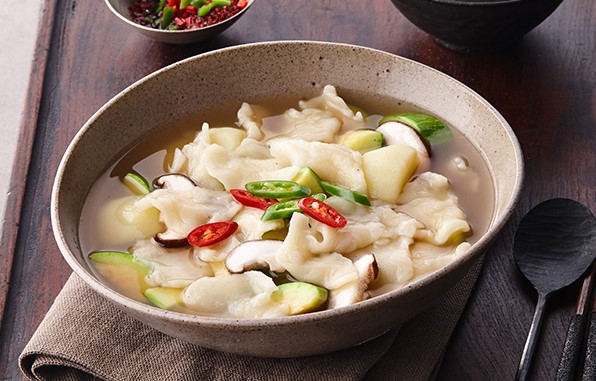
Step into the world of Korean comfort food with Sujebi, a rustic and deeply satisfying soup featuring hand-torn dough flakes. This humble dish is the culinary equivalent of a warm hug, cherished for its simplicity and nostalgic flavor. In Korea, the sound of rain often brings Sujebi to mind; it’s the quintessential meal for a dreary, wet day, warming you from the inside out. The taste profile is wonderfully savory and clean, built upon a rich anchovy broth seasoned with soup soy sauce, garlic, and a touch of salt. It’s a dish that doesn’t rely on flashy ingredients, but rather on the soulful harmony of its simple components.
Ingredients & Flavor Profile
The beauty of Sujebi lies in its straightforward and honest ingredients, which come together to create a flavor greater than the sum of its parts.
- Key Ingredients: The stars of the dish are the chewy, hand-torn flour dough flakes, which swim in a savory anchovy broth alongside tender chunks of potato and slices of fresh zucchini.
- The Secret of Taste: The flavor is crafted from a classic Korean seasoning trio. The foundation is a rich anchovy broth, which provides a deep umami base. This is then seasoned with guk-ganjang (soup soy sauce) for a savory depth, minced garlic for a fragrant aroma, and a pinch of salt to balance everything perfectly. The dough flakes absorb this delicious broth, making every spoonful a delight.
Dietary Information (Vegetarian/Allergy)
Traditionally, Sujebi is not vegetarian because its signature broth is made from anchovies. However, it can often be adapted for a plant-based diet. A delicious vegetarian or vegan version is entirely possible by substituting the anchovy broth with a clear and flavorful vegetable broth (known as chaesu in Korean).
Safety Tip: If you are vegetarian or have dietary restrictions, it is crucial to communicate with the restaurant staff. Ask if they can prepare the dish with a vegetable broth and confirm that no other animal products, like fish sauce, are used in the seasoning.
How It’s Cooked (or Served)
Sujebi is a celebration of handmade charm. The process begins by kneading a simple dough of flour and water until it’s smooth and elastic. While the dough rests, a savory anchovy broth is prepared and brought to a rolling boil. Here comes the most distinctive step: instead of being rolled and cut, the dough is torn by hand into thin, rustic pieces and dropped directly into the bubbling soup. Sliced potatoes and zucchini are added to the pot, and the soup is left to simmer until the dough flakes are cooked through, becoming delightfully chewy and translucent, and the vegetables are perfectly tender. The result is a hearty, one-pot meal that is served steaming hot.
This is a standard method based on general recipes. Every restaurant has its own secret twist and unique style!
Nutritional & Health Benefits
Beyond its comforting taste, Sujebi offers several wholesome benefits derived from its simple ingredients.
- Source of Energy: The flour dough flakes are a great source of carbohydrates, providing a steady release of energy to fuel your day.
- Vitamins and Minerals: The addition of potatoes and zucchini enriches the soup with essential nutrients. Potatoes offer potassium and Vitamin C, while zucchini provides dietary fiber and antioxidants.
- Hydrating and Warming: As a hot soup, Sujebi is an excellent way to hydrate the body. Its warmth is particularly comforting on cold or rainy days, helping to soothe the body and soul.

The KCulture Editorial Team is dedicated to providing deep insights and accurate information about the vibrant world of Korean culture.