Introduction & Synopsis
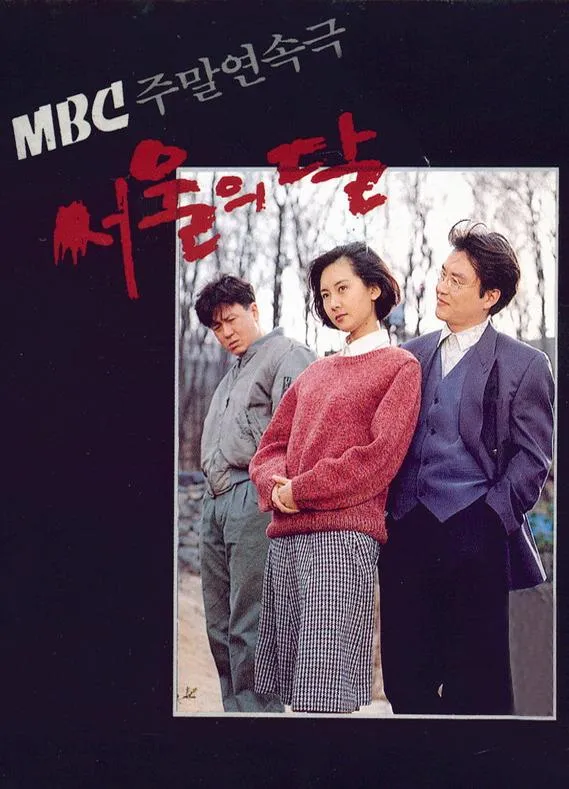
Before the global glitz of Gangnam, there was the gritty reality of Seoul’s hillside slums. The Moon of Seoul (서울의 달), a seminal 1994 masterpiece from MBC, is a raw, unflinching portrait of life in a daldongnae (a “moon village,” or shantytown), where dreams are as close as the moon in the sky but as distant as the glittering city below. The drama follows two friends from the countryside who represent opposing paths to survival in the sprawling capital. Kim Hong-sik is a suave, ambitious swindler—a jebijok—who uses his charm to seduce wealthy women, seeing it as his only ticket out of poverty. His loyal, simple-hearted friend, Park Chun-seop, works hard at menial jobs, clinging to the hope of an honest, albeit difficult, life. Caught between their worlds is Cha Young-sook, a pragmatic company clerk who navigates her affections and ambitions amidst the harsh realities of their neighborhood. This is not a fairy tale; it is a powerful story of aspiration, friendship, and the price of the Korean Dream.
Deep Cultural/Historical Insight: The Shadows of a Booming City
To understand The Moon of Seoul, one must understand Seoul in the early 1990s. The 1988 Seoul Olympics had showcased a modern, prosperous nation to the world, but this economic miracle cast long shadows. The gap between the newly rich and the urban poor widened dramatically. The drama’s setting, the daldongnae, is a powerful symbol of this disparity. These hillside shantytowns, so named for being close to the moon, were home to those left behind by rapid industrialization—people who could see the glittering skyscrapers but couldn’t touch them.
The drama masterfully captures the social anxiety of the era. The character of Hong-sik, the jebijok (literally “swallow tribe,” a term for male gigolos), is a product of this environment. He represents a desperate, morally ambiguous shortcut to success in a society where legitimate upward mobility felt impossible for the underclass. His story is not just about a con artist; it’s a critique of a system that pushes people to such extremes. The series taps into a deep-seated Korean sentiment of han (한)—a collective feeling of unresolved resentment and sorrow—while also celebrating the resilience and jeong (정), the deep, binding affection, that holds communities together even in the bleakest of times.
Narrative Analysis: Realism Over Romance
What makes The Moon of Seoul timeless is its profound commitment to realism, a hallmark of legendary writer Kim Woon-kyung. The dialogue is not polished; it’s the authentic, often coarse, language of people struggling to get by. The plot eschews grand twists in favor of the small, heartbreaking and occasionally hopeful moments that define real life. The central love triangle is less a romantic fantasy and more a painful negotiation of survival, class, and personal integrity. The story never judges its characters, instead presenting their flawed choices as a direct consequence of their circumstances. This narrative honesty is why the drama felt less like fiction and more like a documentary of a forgotten Seoul, allowing viewers to see themselves and their neighbors on screen.
The Pulse of the Time: A National Phenomenon
When it aired in 1994, The Moon of Seoul was more than a hit; it was a cultural event. The drama captured the national consciousness, soaring to a peak viewership rating of 48.7%. It dominated conversations across the country. Audiences were captivated by the anti-hero protagonist, Hong-sik. His slick fashion, confident swagger, and tragically ambitious nature made him an icon of the era. The series became a defining “people’s drama” (seomin drama), resonating deeply with the everyday joys and sorrows of the working class and cementing its place as one of the most important television series of the decade.
Cast Spotlight: The Birth of Legends
The drama’s legacy is inseparable from the career-defining performances of its cast, who would go on to become titans of the Korean film industry.
- Han Suk-kyu as Hong-sik: This was Han Suk-kyu’s breakout role, transforming him into a superstar. He perfectly embodied the complex duality of Hong-sik—effortlessly charming on the surface but driven by a deep-seated insecurity and desperation. His portrayal was so magnetic that he made a morally gray character not just understandable, but unforgettable.
- Choi Min-shik as Chun-seop: Years before his explosive global fame in films like Oldboy, Choi Min-shik delivered a performance of incredible warmth and humanity. As the kind-hearted, naive Chun-seop, he was the story’s moral compass. His portrayal of unwavering friendship and simple decency provided a powerful, grounding contrast to Hong-sik’s dangerous ambitions.
- Chae Shi-ra as Young-sook: Already a top star, Chae Shi-ra brought a grounded strength and intelligence to her role. She portrayed Young-sook not as a passive love interest, but as a resilient woman making difficult choices for her own survival and happiness, reflecting the pragmatic struggles of her generation.
Global Viewing Guide
For international fans looking to explore this classic, finding officially subtitled versions can be a challenge. However, your best starting point is often the broadcaster’s official channels.
- MBC YouTube Archive: MBC often uploads full classic dramas to its official YouTube channels, sometimes with community-provided or official subtitles.
- Wavve: This Korean streaming service is the official home for most classic MBC content, though it typically requires a Korean subscription.
Final Verdict
The Moon of Seoul is essential viewing for anyone who wants to understand the roots of modern Korean society and the soul of its capital city. It is a time capsule of 1990s Korea, capturing the raw ambition, heartbreak, and resilience of a generation caught between poverty and progress. Watch it not just for the gripping story, but to witness the birth of cinematic legends and to see the real face of Seoul, long before the K-wave made it a global fantasy. To understand the light of today’s Seoul, you must first sit with the shadows of its moon.

The KCulture Editorial Team is dedicated to providing deep insights and accurate information about the vibrant world of Korean culture.