A Korean Gaetbol (갯벌) tidal flat experience is an interactive eco-tourism adventure where visitors walk onto expansive, receding intertidal wetlands to dig for fresh clams, razor clams, and sea snails using traditional hand tools. Unlike ordinary sandy beaches, South Korea’s western and southwestern mudflats—officially inscribed on the UNESCO World Natural Heritage List in 2021—offer world-class biodiversity and well-managed fishing village centers equipped with English-friendly rentals, washing stations, and seaside dining. For travelers exploring Korea in 2026, heading out to the mudflats provides an unforgettable opportunity to harvest your own seafood and connect with an authentic, centuries-old coastal tradition.
Whether you are traveling with family, planning a unique day trip from Seoul, or looking to experience nature beyond typical city sightseeing, digging for shellfish in the cool mud is a nostalgic summer ritual for locals and a thrilling discovery for international tourists. In this comprehensive guide, we will walk you through how a mudflat experience works, where to find the most beginner-friendly spots, what gear you need, how to read tidal schedules, and how to turn your fresh catch into a comforting Korean meal.
- What Is a Korean Gaetbol Experience?
- Why Korea’s Tidal Flats Are So Special
- How a Mudflat Experience Works
- What Can You Catch in the Mudflats?
- Best Mudflat Experience Locations for Foreign Visitors
- Costs and Equipment Rental Systems
- What to Wear and Pack for the Mudflats
- The Golden Rule: Checking the Tide Timings
- From Mud to Table: How to Purge and Cook Your Catch
- Essential Safety Rules on the Tidal Flats
- A Perfect Coastal Day Trip Itinerary
- Frequently Asked Questions (FAQ)
- Explore More Essential Korea Travel Guides
What Is a Korean Gaetbol Experience?
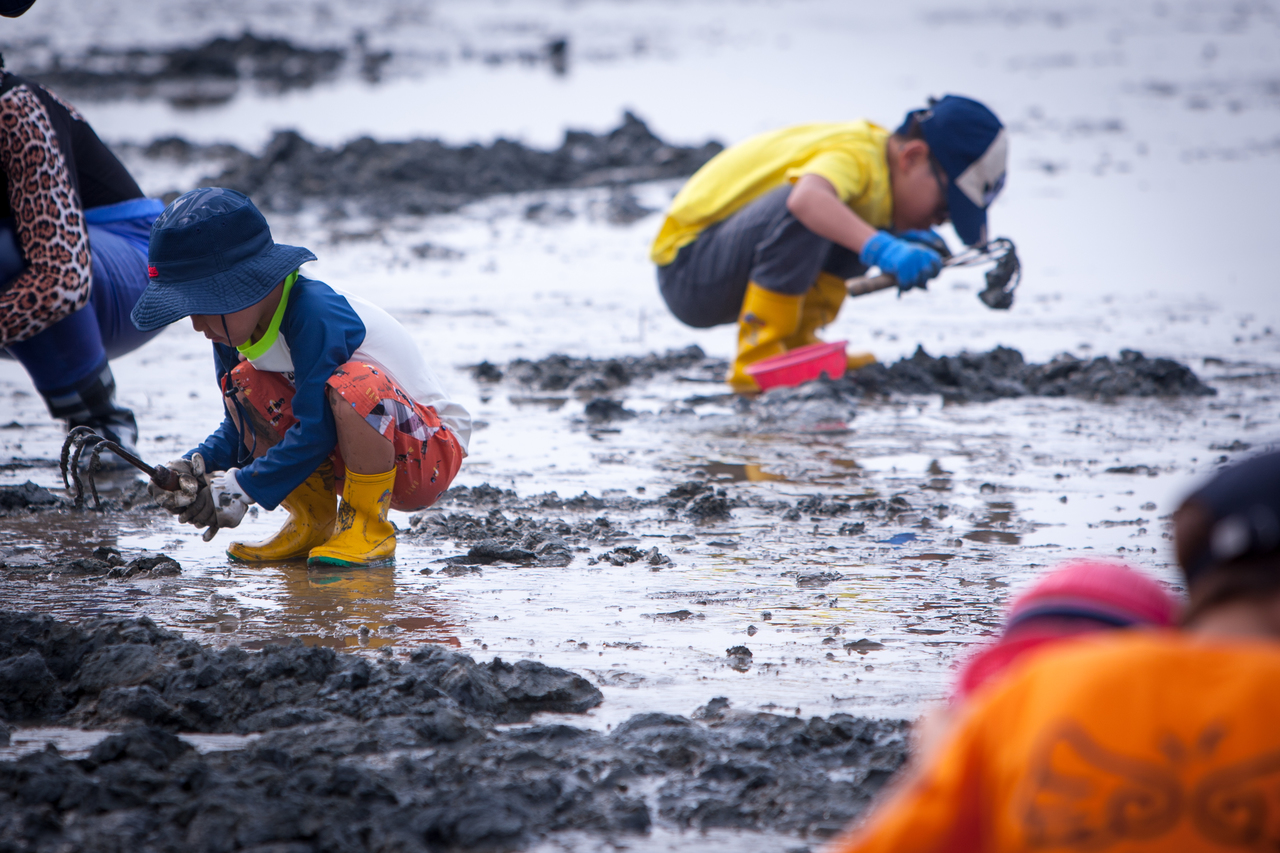
A Gaetbol is an intertidal mudflat that appears when the sea retreats during low tide. For a few hours each day, the ocean floor transforms into an enormous natural playground where visitors can search for Manila clams (바지락), razor clams (맛조개), sea snails (골뱅이), and other marine life.
Unlike many countries where coastal wetlands are strictly protected viewing zones with no entry permitted, South Korea has developed numerous well-managed fishing village experience centers where visitors are actively welcomed to participate safely. With structured equipment rentals, high-pressure washing facilities, clean changing rooms, spacious parking, ocean-view cafés, and local seafood restaurants on-site, the experience is surprisingly seamless and beginner-friendly.
For many Koreans, digging for clams is far more than just an outdoor workout—it is a cherished family tradition that blends environmental education, hands-on fun, and delicious dining.
💡 Local Insight: Many Korean adults grew up visiting these tidal flats with their grandparents during summer vacations. Today, living in Korea, we see a new generation of parents bringing their own children out to the coast, making it one of the country’s most beloved multigenerational weekend activities.
Why Korea’s Tidal Flats Are So Special
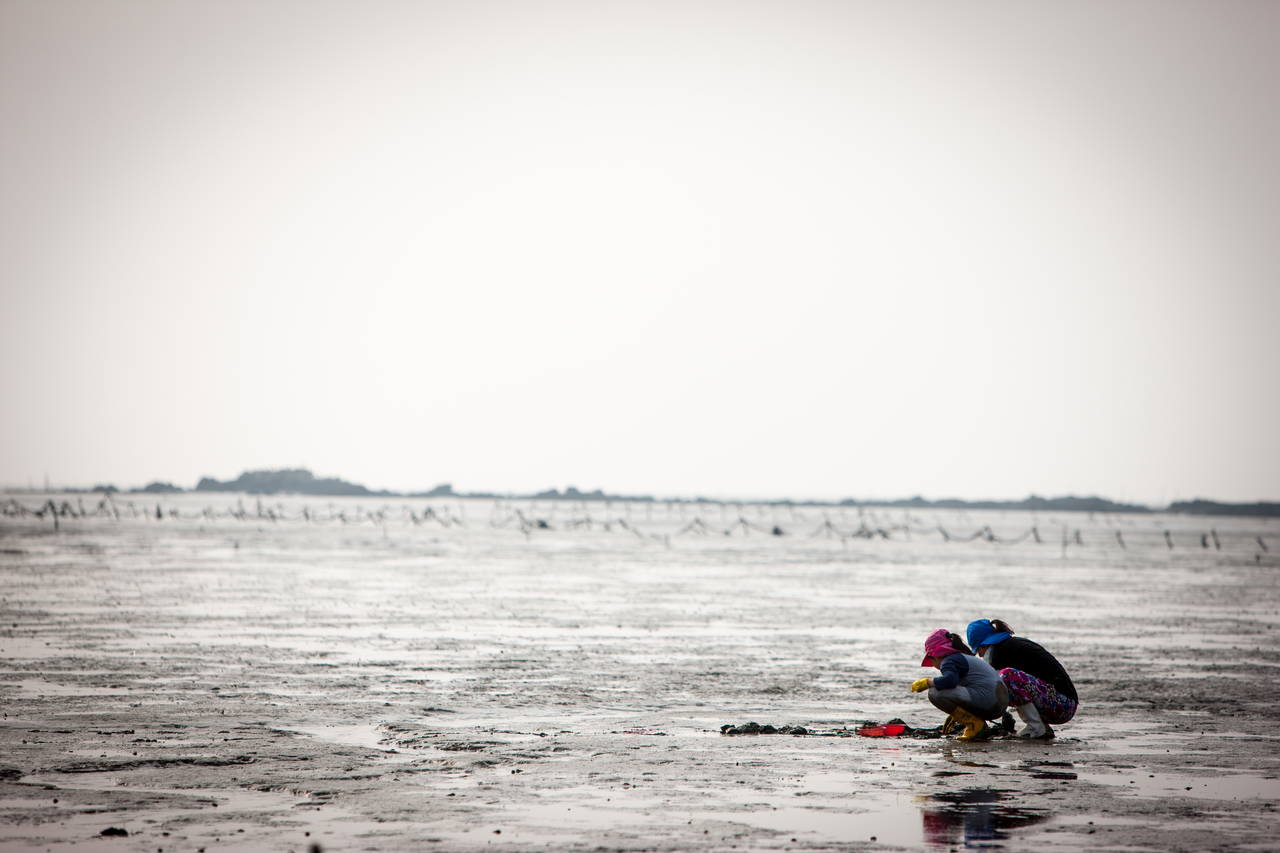
Korea’s western coastline along the Yellow Sea experiences one of the largest tidal ranges on the planet. During low tide, the ocean water can retreat hundreds of meters—or even several kilometers—revealing vast horizontal mudflats that seem to stretch endlessly toward the horizon.
These dynamic coastal wetlands support an extraordinary ecosystem, including:
- Millions of endangered migratory birds using the flats as a vital fueling station
- Thousands of specialized marine species, including mudskippers and fiddler crabs
- Rich, nutrient-dense shellfish beds that have sustained coastal villages for centuries
- Immense natural carbon storage capacity (often called “blue carbon”) that helps combat global climate change
Recognizing their exceptional geological and ecological value, UNESCO officially inscribed several Korean tidal flats as a World Natural Heritage Site. When you participate in a mudflat experience, you are not simply digging for dinner—you are walking through one of East Asia’s most important and protected living landscapes.
How a Mudflat Experience Works
If you have never visited a tidal flat before, the process at an organized Korean fishing village center is straightforward and highly systematic:
- Arrive Before Low Tide: Aim to arrive about two hours before the exact low-tide timestamp.
- Pay Admission: Purchase your ticket at the village reception booth to receive an identifying vest or wristband.
- Gear Up: Rent regulation rubber boots and sturdy digging tools at the equipment counter.
- Get Your Net Bag: Receive a standardized mesh collection bag (usually strictly limited to around 2 kg per person to prevent overfishing).
- Enter the Flats: Walk or ride the village transit out onto the exposed tidal flat within designated safety zones.
- Harvest Shellfish: Spend two to three hours scraping the sand and mud to gather fresh clams.
- Wash Up: Return to the center’s outdoor washing sinks to rinse mud off your harvest and boots using pressurized seawater and tap water.
- Enjoy Your Catch: Pack your clams to take home, or head straight to a nearby seaside restaurant to have them cooked fresh!
What Can You Catch in the Mudflats?
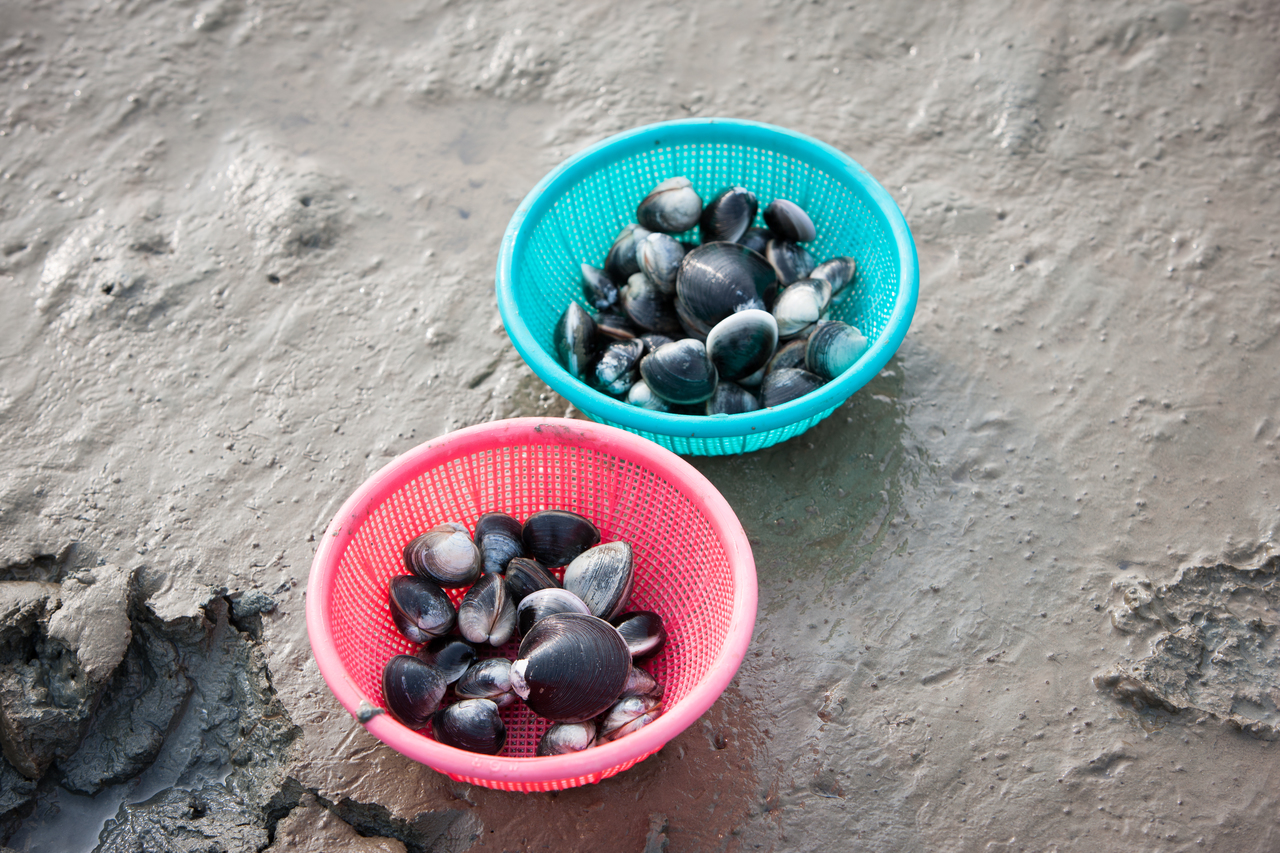
Depending on whether the coastal floor is predominantly compact sand, soft mud, or a mineral-rich mixture, you will encounter different types of shellfish:
| Korean Name | English Name | Typical Habitat & Harvesting Technique |
|---|---|---|
| 바지락 | Manila Clam | Found in shallow muddy sand; easily harvested by lightly scraping the surface with a hand hoe. |
| 동죽 | Surf Clam | Abundant in mixed sandy mudflats; often discovered in clusters just a few centimeters underground. |
| 맛조개 | Razor Clam | Thrives in firm sand; caught using a fascinating technique of pouring ordinary salt into oval breathing holes. |
| 백합 | Hard Clam | A premium, larger clam found in deeper sand beds requiring slightly more digging effort. |
| 골뱅이 | Sea Snail | Often found gliding across the wet surface or resting in shallow tide pools; gathered easily by hand. |
The undisputed crowd favorite—especially for international tourists and children—is hunting for razor clams (맛조개). By slicing away the top layer of sand with a shovel and sprinkling a pinch of salt into the small breathing burrows that appear, you trick the clam into thinking the ocean tide has returned. Watching the razor clam suddenly shoot vertically out of its burrow is a thrilling moment that never gets old!
Best Mudflat Experience Locations for Foreign Visitors
To ensure a safe, comfortable, and language-friendly trip, international visitors should focus on officially designated Fishing Village Experience Camps. Here are the top four destinations across South Korea for July 2026.
1. Masian Mudflat (마시안 갯벌), Yeongjong Island
Located on Yeongjong Island (영종도), immediately adjacent to Incheon International Airport (인천국제공항), Masian Mudflat offers unbeatable accessibility for short-term visitors and Seoul-based travelers. The terrain is a mix of firm sand and mineral mud, meaning your feet will not sink uncomfortably deep.
- Target Catch: Surf clams, sea snails, and conchs.
- Unique Highlight: On weekends, visitors can ride the famous “Mudflat Carriage” (갯벌 마차)—a modified tractor that transports you across the tidal flats to distant, nutrient-rich harvesting grounds.
- Vibe: Surrounded by trendy ocean-view bakery cafés and bustling grilled clam restaurants, making it the ultimate seamless day trip.
2. Mongsanpo Mudflat (몽산포 갯벌), Taean
Situated in Taean (태안) along the scenic West Coast, Mongsanpo Mudflat is renowned for its expansive, hard-packed sandy shores. Because the ground is firm and stable, it is a premier destination for families with children and travelers who want to enjoy clam digging without dealing with sticky, heavy mud.
- Target Catch: Razor clams and surf clams.
- Unique Highlight: This beach is the undisputed mecca for catching razor clams using the salt-sprinkling technique.
- Vibe: Relaxed, spacious, and highly rewarding for beginners looking for an exciting outdoor activity.
3. Hajeon and Mandol Mudflat Villages (하전·만돌 갯벌), Gochang
If you want to experience the pristine core of Korea’s UNESCO World Natural Heritage zone, head south to Gochang (고창). The neighboring Hajeon and Mandol villages represent the largest clam-producing region in the nation, harvesting a massive percentage of South Korea’s annual Manila clam supply.
- Target Catch: Manila clams.
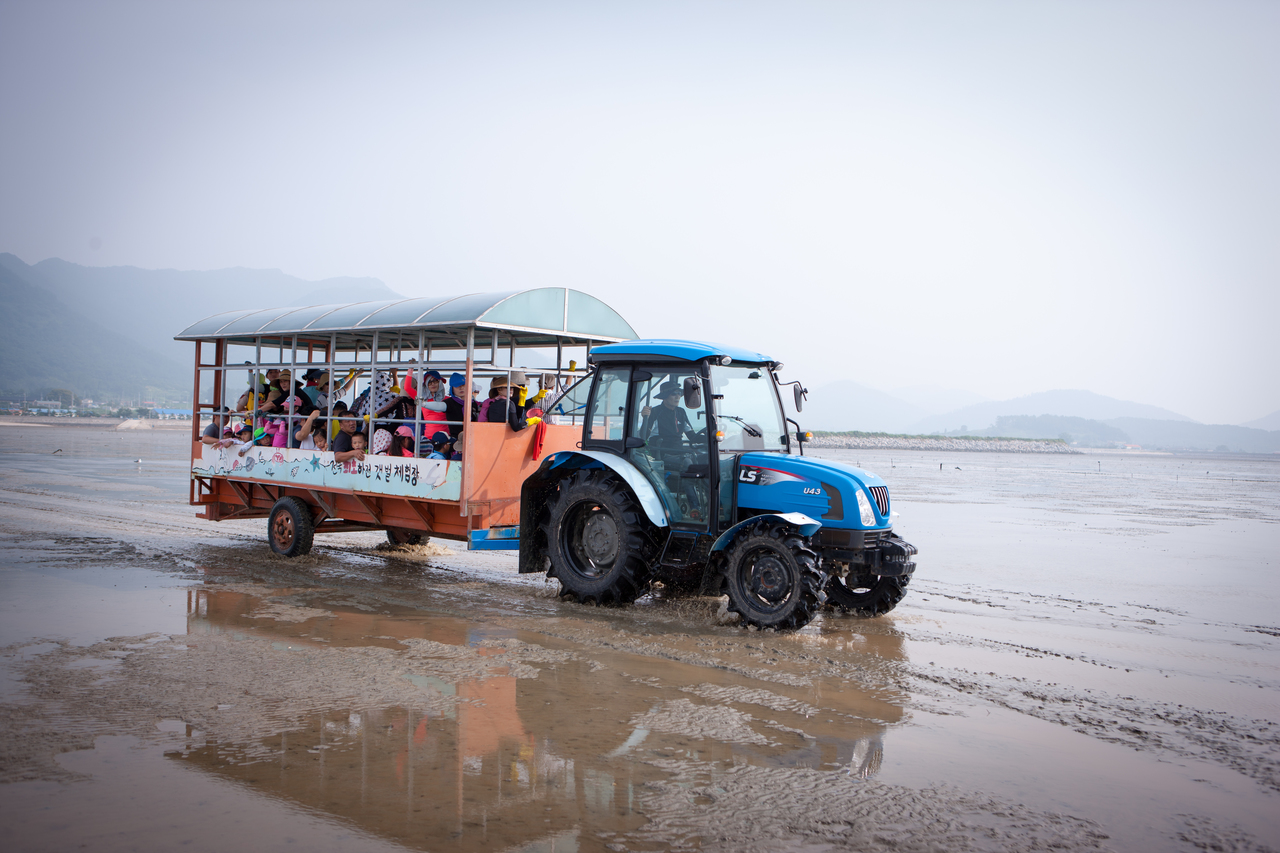
- Unique Highlight: Hop aboard the dynamic “Mudflat Bus” (갯벌 버스), a heavy-duty tractor pulling passenger trailers that drives adventurous visitors deep into the endless coastal horizon where clam beds are densest.
- Vibe: Authentic, ecologically pristine, and visually breathtaking, offering a deep immersion into traditional Korean fishing culture.
4. Seondori Mudflat Village (선도리 갯벌), Seocheon
Also situated within the protected UNESCO ecological boundary, Seondori Mudflat in Seocheon (서천) combines top-notch village infrastructure with outstanding coastal scenery. Directly facing the harvesting grounds are two picturesque island peaks known as Ssangdo (쌍도), which serve as a stunning dramatic backdrop.
- Target Catch: Razor clams, surf clams, and premium hard clams.
- Unique Highlight: The center features exceptionally clean washing and changing facilities alongside well-maintained guided harvesting zones that guarantee a bountiful catch even for complete novices.
- Vibe: Scenic, highly organized, and ideal for travelers who appreciate spotless tourist amenities.
📌 Travel Tip: If you are planning a history-focused journey through western Korea, you can easily combine a morning at Seondori Mudflat with an afternoon exploring ancient royal heritage. Check out our comprehensive guide to Buyeo Travel: Inside the Ancient Baekje Kingdom for a rewarding multi-day regional itinerary.
Costs and Equipment Rental Systems
One of the greatest advantages of visiting a Korean fishing village experience center is that you can arrive completely empty-handed. As of July 2026, organized community centers operate under a standardized, highly affordable ticketing and rental system.
| Item / Service | Estimated Cost (KRW / USD) | What is Included / Notes |
|---|---|---|
| Adult Admission Fee | 8,000 – 12,000 KRW ($6 – $9 USD) | Includes entry wristband or colored vest, a regulation 2kg mesh collection bag, and full access to outdoor seawater washing sinks. |
| Rubber Boots (장화) Rental | 2,000 KRW ($1.50 USD) | Available in all sizes from toddlers to large adult sizes; essential for foot safety and comfort. |
| Hand Rake / Hoe (호미/갈퀴) | 1,000 – 2,000 KRW ($1 – $1.50 USD) | Sturdy metal hand tools specifically angled for scraping wet sand without crushing shellfish shells. |
| Salt & Squeeze Bottle | 1,000 – 2,000 KRW ($1 – $1.50 USD) | Sold separately at the village ticket booth or convenience store; required only if you plan to hunt for razor clams. |
Once you pay admission, staff will hand you your numbered vest and mesh net bag. To protect the marine ecosystem from depletion, visitors are strictly instructed to take home only what fits inside this regulation bag—no overflowing buckets allowed!
What to Wear and Pack for the Mudflats
Exploring the open coast in mid-summer requires smart preparation. July in South Korea is famously hot and humid, and because tidal flats are wide open horizontal landscapes, there is zero natural shade. Dressing appropriately will make the difference between an exhausting afternoon and a delightful outdoor adventure.
- Old or Dark Clothing: Mineral-rich mud can be stubborn to wash out of bright white fabrics. Wear breathable shorts, athletic leggings, or older clothes that you do not mind getting dirty. Leggings are particularly recommended as they protect your legs from minor scrapes and intense sunlight.
- Thick, Long Socks: This is a crucial local insider secret! Never wear rented rubber boots barefoot or with low-cut ankle socks, as the friction from wet rubber will quickly cause painful blisters during a two-hour walk. Bring thick, calf-length sports socks.
- Serious Sun Protection: Wide-brimmed sun hats with chin straps (to secure against coastal breezes), UV-blocking sunglasses, and water-resistant sunscreen are non-negotiable essentials.
- Waterproof Smartphone Pouch: You will definitely want to take photos and videos of your catch, but dropping your phone into wet saltwater mud can be disastrous. Wear a neck-hanging waterproof pouch.
- After-Care Essentials: Bring a full set of spare clothes, personal towels, and a plastic bag for your wet laundry. Every village center provides free pressurized outdoor taps to wash off mud, along with clean indoor changing rooms.
The Golden Rule: Checking the Tide Timings
This is the single most important rule of mudflat exploration: you cannot simply arrive at any time of day. Because the tidal flats exist only when the ocean water recedes, planning your visit around the tidal schedule is absolute perfection.
Every day experiences two high tides and two low tides, and the exact timing shifts daily by roughly 50 minutes. Safe and productive harvesting is only possible during a four-hour window: exactly two hours before low tide (간조) and two hours after low tide. Arriving outside of this window means you will either find a deep ocean or risk being rushed by rapidly returning seawater.
💡 Pro Tip: Before departing, always check daily tide tables on Korean maritime tracking websites like Badatime (바다타임) or look up the “Today’s Tide Schedule” notice board on the official website of the specific fishing village you plan to visit. When checking the chart, locate the time marked as Low Tide (간조) and aim to arrive at the ticket booth about two hours before that exact timestamp.
From Mud to Table: How to Purge and Cook Your Catch
For many international visitors, the biggest question after stepping off the mudflat is how to handle and eat their fresh catch. Freshly dug clams are full of internal sand and mud, meaning they must undergo a natural purging process known in Korean as Haegam (해감) before they can be cooked.
Step 1: How to Purge Clams (Haegam)
- Before leaving the experience center, fill your provided take-home bucket or heavy-duty plastic bag with your clams and top it off with the clean, filtered seawater available at the village washing taps.
- Once you arrive at your accommodation, place the open container in a cool, quiet spot and cover the top completely with a dark towel or black plastic bag to block out all light.
- In the dark, the clams will believe they are safely buried underground and will actively pump out trapped sand over two to three hours (or overnight for the best results).
📌 Local Note: If you want to speed up the purging process, drop a clean stainless steel spoon or a copper coin into the saltwater with the clams. The metal generates a mild chemical ion reaction in the saltwater that stimulates the shellfish to spit out mud much faster!
Step 2: Recommended Iconic Korean Recipes
Once your clams are thoroughly purged and rinsed in fresh water, they are ready to be transformed into comforting Korean coastal dishes that highlight their sweet, briny flavor:
- Bajirak Kalguksu (바지락 칼국수): A warm, comforting Korean handmade noodle soup boiled in a rich, savory broth made from your fresh Manila clams, green onions, and minced garlic. It is mild, deeply flavorful, and universally loved by international travelers.
- Jogaetang (조개탕): A refreshingly clear clam soup requiring minimal ingredients. Simply boil the purged clams in clean water with minced garlic, fresh green chili peppers, and a pinch of salt to taste the pure, unadulterated essence of the ocean.
💡 Pro Tip for Tourists: What if you are staying in a standard Seoul hotel without a kitchen? Do not worry! Many independent seafood restaurants located immediately outside the mudflat entrances offer a special cooking service. For a small preparation fee (often called gongimbi, or labor fee), restaurant chefs will professionally purge and clean your harvest, transforming your personal catch into a steaming bowl of clam noodle soup or a grilled seafood platter right before your eyes. Alternatively, booking a coastal glamping site or pension with kitchen facilities is a fantastic way to enjoy an authentic self-cooked seafood feast.
Essential Safety Rules on the Tidal Flats
While tidal flat harvesting is exceptionally safe when following village guidelines, the marine environment demands respect. By keeping a few essential safety rules in mind, you can ensure a secure and worry-free excursion.
- Heed Tide Sirens Immediately: Along the West Coast, incoming tides move astonishingly fast—often faster than an adult can walk. If you hear warning sirens broadcasting across the beach or see safety wardens waving flags and blowing whistles, stop digging immediately and walk back to the paved shoreline without delay.
- Never Enter Barefoot: It might be tempting to feel the soft mud between your toes, but tidal flats are scattered with razor-sharp oyster shells, barnacles, and broken rocks buried just beneath the surface. Entering barefoot is strictly forbidden at all centers; always wear your rented rubber boots or hard-soled water shoes.
- Stay Within Marked Zones: Designated tourist harvesting areas are checked daily for solid footing. Wandering off into unmarked, remote mud channels increases the risk of stepping into deep, sinkhole-like mud pockets where extricating your boots can be difficult.
- Hydrate Constantly: Digging for clams under the warm July sun is a surprising workout. Carry a bottle of frozen water or electrolyte drinks in your pocket to prevent summer dehydration and heat exhaustion.
A Perfect Coastal Day Trip Itinerary
If you are arriving through Incheon International Airport or basing your trip in Seoul, one of the easiest itineraries is to spend a morning at Masian Mudflat, enjoy a fresh clam noodle soup lunch overlooking the Yellow Sea, and then relax at one of Yeongjong Island’s famous bakery cafés before heading back to the city.
For travelers embarking on a broader summer road trip along the western or southern coastlines, a mudflat experience pairs naturally with Korea’s vibrant beach culture. Check out our curated selection of the 5 Best Beaches in South Korea for Foreigners: 2026 Guide to combine clam digging with relaxing coastal swims.
If your travel itinerary also includes historical exploration and traditional culinary deep-dives across other regions of South Korea, consider enriching your journey by visiting Ganghwa Island Day Trip Guide: Korea’s Historic Time Machine for UNESCO megalithic tombs and fortress walls, exploring majestic royal heritage at Exploring Donggureung: Korea’s Largest Royal Tombs, or discovering spiritual mountain tranquility at Why Daeheungsa Is One of Korea’s Most Important Temples.
Frequently Asked Questions (FAQ)
Can complete beginners and foreign tourists enjoy a mudflat experience?
Absolutely. Organized Korean fishing village experience centers are specifically designed for families and first-time visitors. With standardized rental gear, structured safety supervision, and English-friendly facilities at major tourist sites, no prior experience is required.
Do I need to buy and bring my own digging tools and boots?
No. Every official experience center provides low-cost rentals for rubber boots in all sizes, alongside metal hand hoes, rakes, and regulation collection bags. You only need to bring sun protection, long socks, and spare clothes.
Can I take home all the shellfish I catch?
You may keep everything you catch up to the official village limit—typically one full regulation mesh net bag (about 2 kg per person). This restriction is strictly enforced to protect marine biodiversity and ensure sustainable harvesting for future visitors.
Is clam digging safe and suitable for young children?
Yes, tidal flat harvesting is one of Korea’s most popular family activities. Locations with firm sandy mud, such as Mongsanpo and Masian, are exceptionally safe and easy for children to navigate under adult supervision.
Explore More Essential Korea Travel Guides
To help you build an unforgettable, well-rounded travel itinerary across South Korea that balances outdoor adventures, historical heritage, and regional gastronomy, explore our curated expert guides below:
- 5 Best Beaches in South Korea for Foreigners: 2026 Guide
- Ganghwa Island Day Trip Guide: Korea’s Historic Time Machine
- Buyeo Travel: Inside the Ancient Baekje Kingdom
- Why Daeheungsa Is One of Korea’s Most Important Temples
- Best Food in Jeju: Traditional Dishes and Hidden Gems
- Exploring Donggureung: Korea’s Largest Royal Tombs
Korean Culture portal KCulture.com

Founder of Kculture.com and MA in Political Science. He shares deep academic and local insights to provide an authentic perspective on Korean history and society.