The Kingmaker’s Chronicle
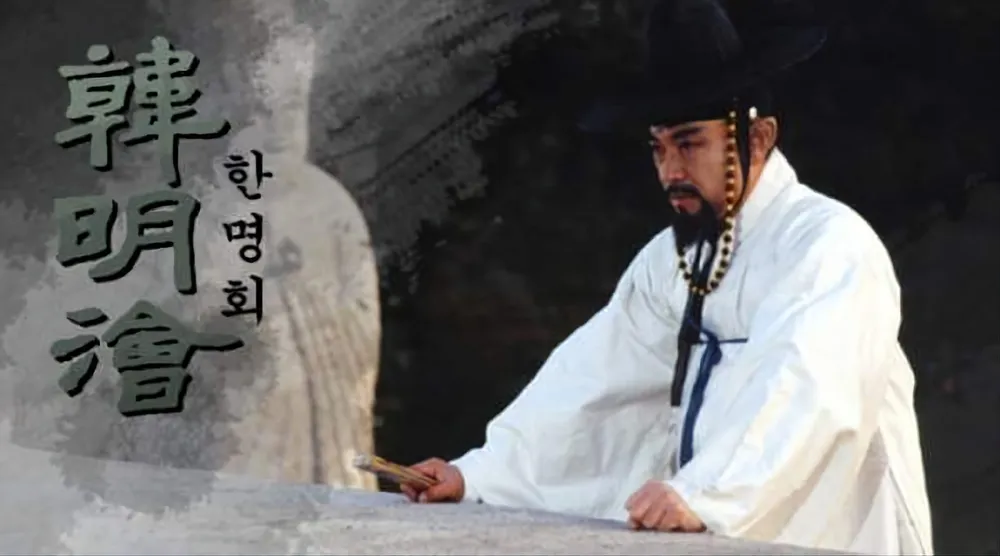
Long before the sleek, high-budget historical epics of the 21st century, there was Han Myung-hoe (한명회), a raw and powerful political saga that defined the genre for a generation. Aired in 1994 by KBS2, this sprawling drama is not a tale of heroic generals or star-crossed lovers. Instead, it offers an unflinching look into the heart of ambition, chronicling the life of Han Myung-hoe, one of Joseon’s most brilliant and controversial political strategists. Born prematurely as a “seven-month baby” (칠삭둥이), a sign of weakness in that era, Han rises from obscurity to become the architect of a bloody coup, forever altering the course of his nation’s history. The narrative revolves around his intricate, symbiotic relationship with the ambitious Grand Prince Suyang, whom he masterfully installs on the throne as King Sejo.
The Coup That Defined a Dynasty
To understand the gravity of Han Myung-hoe, one must understand the event at its core: the Gyeyu Jeongnan of 1453. This was not merely a political shuffle; it was a violent coup d’état where Grand Prince Suyang seized power from his young nephew, the boy-king Danjong. In the rigid Confucian hierarchy of Joseon, this was an act of profound betrayal, shattering the sacred bonds of family and loyalty. The drama excels at portraying this moral crossroads. Was Suyang a ruthless usurper, or was he the strong leader the nation needed to save it from the grip of powerful court ministers? Was Han Myung-hoe a disloyal schemer, or was he a pragmatist who chose the survival of the state over abstract ideals?
Han Myung-hoe immerses the global viewer in this complex dilemma. It explores a world where loyalty is a commodity and power is the only true currency. The series presents its protagonist not as a simple villain but as a Machiavellian figure whose genius is matched only by his ruthlessness. For a global audience, the series serves as a masterclass in the intricate power dynamics of a Confucian court, where a single whispered word could be more devastating than a sword.
A Narrative of Whispers and Wills
Unlike modern historical dramas that often lean on romance or action, the storytelling in Han Myung-hoe is a patient, psychological burn. The tension doesn’t come from grand battles but from closed-door meetings, shifting alliances, and conversations heavy with unspoken threats. The plot is a complex chess match played by men who understand that information and influence are the ultimate weapons. The drama’s brilliance lies in its ability to make these political machinations utterly compelling. It dissects the anatomy of a power grab, showing how Han Myung-hoe identifies weaknesses, forges alliances, and manipulates his opponents with chilling precision. This focus on intellectual and psychological warfare, rather than physical combat, established a benchmark for the “authentic sageuk” (정통 사극) style that would influence political dramas for decades to come.
The Pulse of a Nation
Upon its release in 1994, Han Myung-hoe was a cultural phenomenon. In an era before the global K-wave, this was appointment television for the entire nation. The drama was lauded for its historical accuracy, its dense script, and above all, its powerhouse performances. It reaffirmed KBS’s reputation as the home of premium historical epics. Lee Deok-hwa’s portrayal of the title character became legendary, cementing Han Myung-hoe in the public consciousness as a figure of immense intellect and terrifying ambition. The series resonated deeply, tapping into timeless Korean themes of power, loyalty, and the moral compromises made in the name of a greater good.
Cast Spotlight: A Trinity of Power
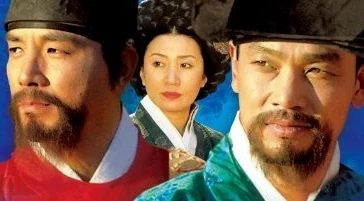
Lee Deok-hwa as Han Myung-hoe
Lee Deok-hwa’s performance is nothing short of iconic. He embodies Han Myung-hoe not as a caricature of evil, but as a deeply complex man driven by a towering intellect and a conviction in his own vision for the nation. With his piercing gaze and commanding voice, Lee Deok-hwa captures the character’s journey from a marginalized scholar to the most powerful man in the kingdom. It is a defining role of his career, often cited as one of the greatest performances in the history of Korean television.
Seo In-seok as King Sejo (Grand Prince Suyang)
As the ambitious prince who would be king, Seo In-seok is the perfect counterpart to Lee Deok-hwa. He portrays Suyang with a regal charisma that makes his thirst for power both understandable and menacing. The chemistry between the two leads is the engine of the drama; their relationship is a fascinating study of a king and his kingmaker—a bond built on mutual ambition but haunted by an ever-present mistrust.
Kim Young-ran as Queen Insu (Crown Princess Su / Insu Daebi)
Delivering a commanding and sophisticated performance, Kim Young-ran portrays Queen Insu as a formidable political intellect within the royal court. Far from a passive royal consort, her Queen Insu is an astute and relentless strategist who navigates the cutthroat power struggles of the palace, forging pivotal political ties with Han Myung-hoe to secure her lineage and influence the dynastic succession. Her performance adds a crucial layer of political gravitas to the drama’s overarching narrative.
Global Viewing Guide
Finding this 90s classic can be a rewarding journey for dedicated fans of historical drama. Here are the best places to look:
- KBS World YouTube / KBS Drama Classic: The official channels for the Korean Broadcasting System frequently upload and archive episodes of classic historical epics.
- KOCOWA & Wavve: These streaming services, focused on Korean broadcasting archives, are the most reliable platforms to host the drama for viewers in eligible regions.
Final Verdict
Han Myung-hoe is not a casual watch; it is a dense, demanding, and profoundly rewarding political thriller. For viewers who appreciate intricate plotting, masterful character studies, and a deep dive into pivotal historical events, this drama is essential viewing. It is a foundational text of the K-drama world and a timeless story of how a single, determined mind can bend history to his will.

The KCulture Editorial Team is dedicated to providing deep insights and accurate information about the vibrant world of Korean culture.