
Haneul Park in Seoul: From a Massive Landfill to the City’s Most Beautiful Eco-Park
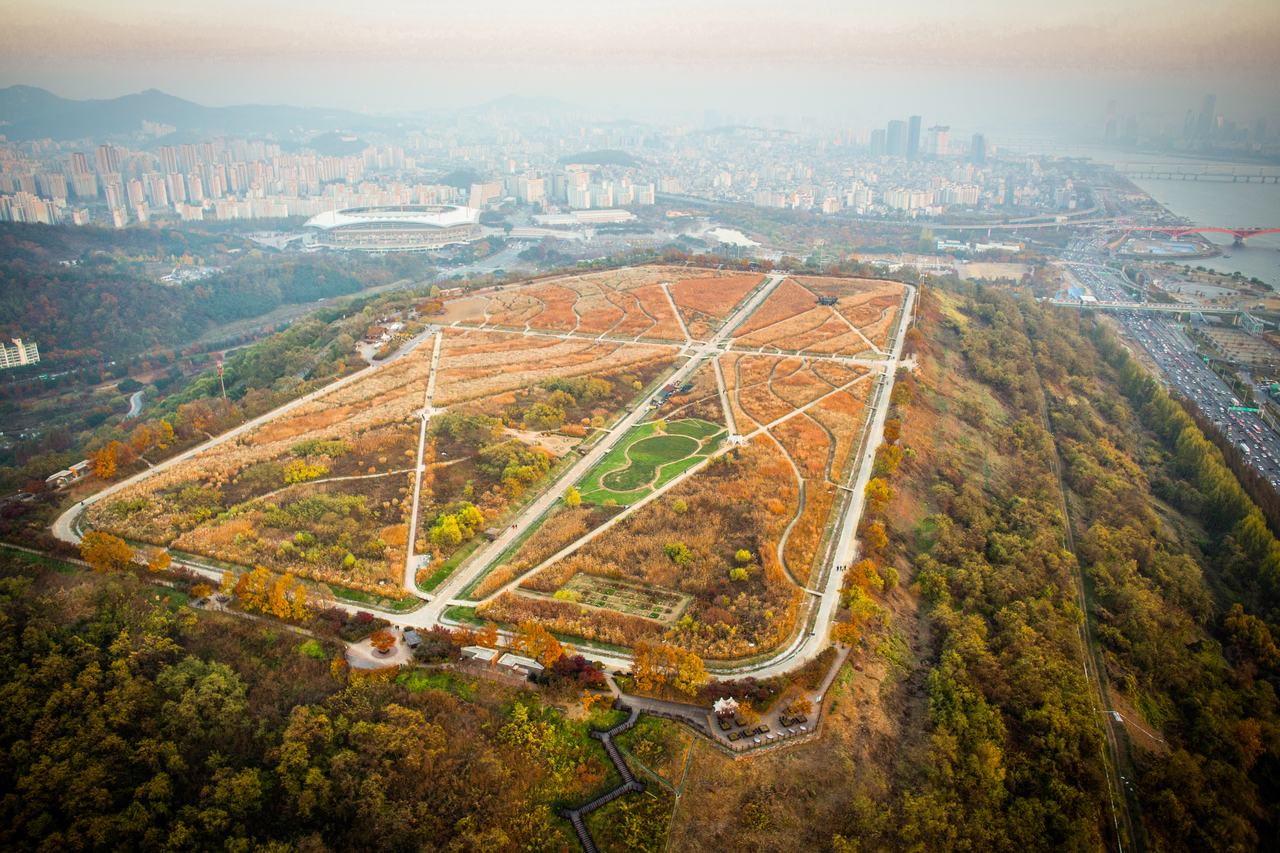
Haneul Park (하늘공원), located in western Seoul, is a breathtaking ecological park famously built on top of Nanjido (난지도), which was once the city’s largest garbage landfill. Today, it stands as a global model of urban regeneration, offering visitors sweeping views of the Han River (한강), vast fields of silver grass, and a peaceful everyday escape powered entirely by captured landfill gas. This comprehensive guide covers the park’s remarkable history, its hidden green infrastructure, the celebrated autumn festival, and essential tips for visiting in 2026 and beyond.
- The Remarkable History: From Orchid Island to Trash Mountain
- Turning a Threat Into Power: Methane Gas and Wildlife
- Exploring the Park: The Sky Stairs and Maengkkongi Shuttle
- The Seoul Silver Grass (Eoksae) Festival
- What to Expect in 2028: The Seoul Twin Eye
- Practical Tips for Visiting in 2026
- FAQ
The Remarkable History: From Orchid Island to Trash Mountain
The story of Haneul Park is one of the most fascinating examples of Seoul’s ability to reinvent itself. Long before it became an environmental disaster, Nanjido—meaning “Orchid Island”—was a beautiful, low-lying island in the Han River known for its abundant wild orchids, irises, and seasonal flora. Up until the 1970s, it was a beloved picnic spot for students and a romantic destination for couples.
However, as Seoul industrialized and expanded at an unprecedented rate, the city designated Nanjido as its official waste dump in 1978. For the next 15 years, trucks poured an estimated 92 million tons of household and industrial garbage onto the site. This unrelenting disposal formed two massive man-made mountains rising nearly 100 meters above sea level—roughly the height of a 30-story building. For years, Nanjido was synonymous with pollution and environmental decay.
The turning point arrived ahead of the 2002 FIFA World Cup. The Seoul metropolitan government launched an ambitious ecological restoration project. Engineers installed protective retaining walls and membranes to block toxic leachate, capped the mounds with layers of fresh soil, and allowed nature to heal. In May 2002, the site triumphantly reopened as the centerpiece of World Cup Park (월드컵공원), turning a dark symbol of rapid industrialization into a monument of environmental hope.
Turning a Threat Into Power: Methane Gas and Wildlife
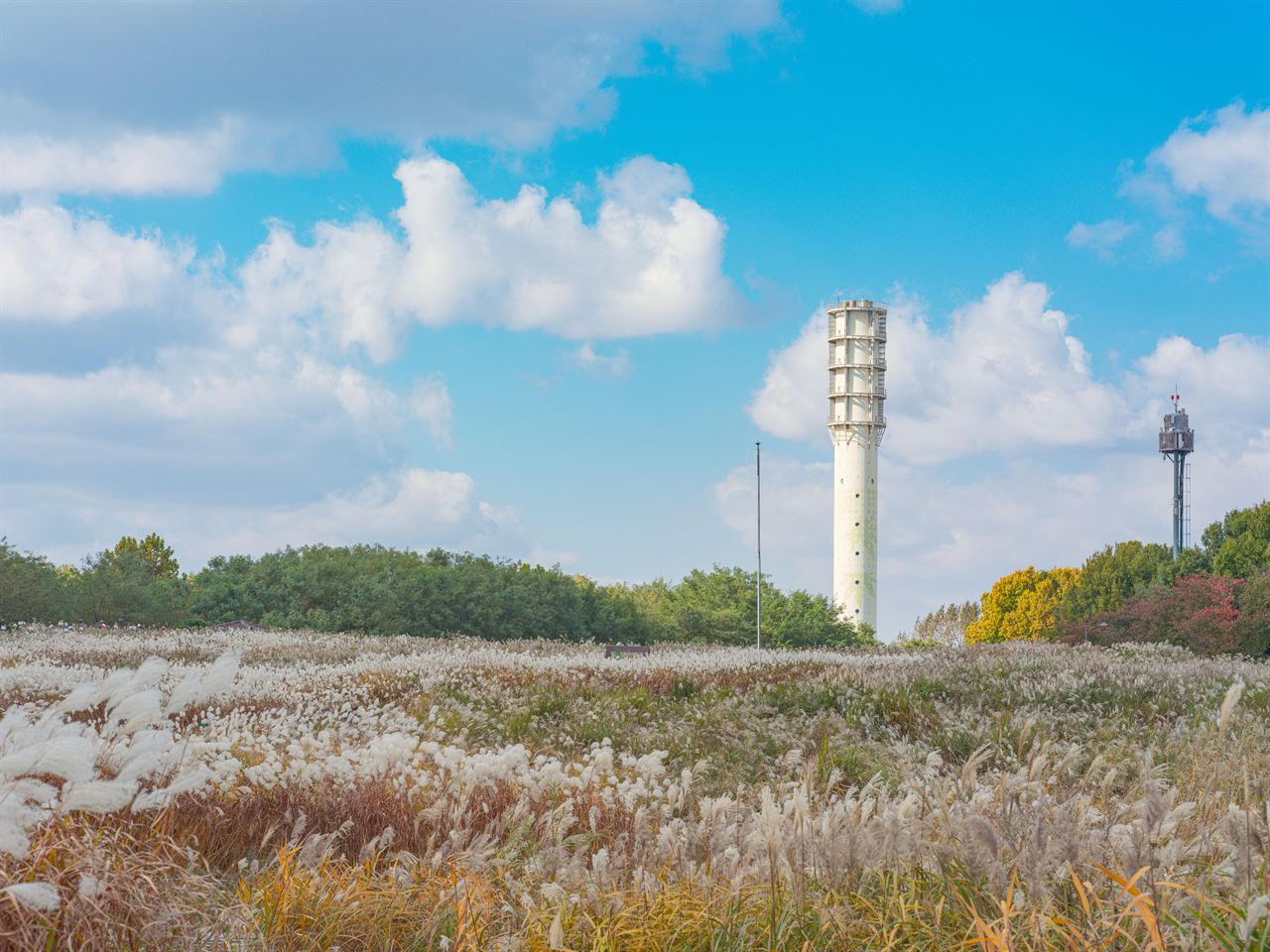
While the surface offers a beautiful meadow landscape, the underground infrastructure is a marvel of modern environmental engineering. Because millions of tons of waste are still buried beneath the soil, the decomposing organic matter continuously produces lethal landfill gas, primarily methane.
Instead of letting this greenhouse gas escape into the atmosphere or pose a fire hazard, the park utilizes a network of 106 extraction wells to safely capture it. This gas is then converted into usable heat energy, supplying district heating to the nearby Sangam-dong (상암동) apartment complexes and the Seoul World Cup Stadium. It is a brilliant system that simultaneously manages an environmental hazard and generates renewable energy.
As a result of these restorative efforts, nature has reclaimed the land. The park is now a thriving sanctuary for wildlife, including raccoon dogs, leopard cats, and dozens of bird species. Most notably, the golden-rimmed pond frog (맹꽁이), a protected species in Korea, has returned in large numbers. The frog is so symbolic of the area’s recovery that the park’s eco-friendly electric shuttles were affectionately named after it.
💡 Pro Tip: Korea’s dedication to preserving its ecosystems extends far beyond Seoul. If you are fascinated by how the country balances tourism and nature, consider reading about the Korean Mudflat Experience: Clam Digging Guide to explore its coastal preservation efforts.
Exploring the Park: The Sky Stairs and Maengkkongi Shuttle
Haneul Park is not just a tourist attraction; it is a vital part of everyday life for Seoulites who visit to walk their dogs, exercise, or watch the sunset. To reach the sprawling plateau at the summit, visitors have two main options:
- The Sky Stairs (하늘계단): A wooden staircase consisting of 291 steps that zigzags up the side of the hill. It takes about 15 to 20 minutes to climb and rewards visitors with gradually expanding views of the Han River.
- The Maengkkongi Electric Buggy (맹꽁이 전기차): A small, eco-friendly shuttle that loops between the parking lot and the summit for a small fare. It is highly recommended for families with young children or those looking to save their energy for walking around the massive park at the top.
📌 Local Note: A popular strategy is to take the Maengkkongi shuttle up to the summit to save energy, and then walk down the Sky Stairs during the golden hour to enjoy the breathtaking sunset views over the river without straining your knees.
Once at the top, the lack of tall trees—an intentional design choice to maintain the grassland ecosystem—allows for unobstructed, panoramic views of the city skyline and the surrounding mountains. Additionally, visitors can explore the nearby Metasequoia Forest Road near the base of the park, offering a contrasting, shaded walking path that beautifully complements the open skies of the hilltop.
The Seoul Silver Grass (Eoksae) Festival
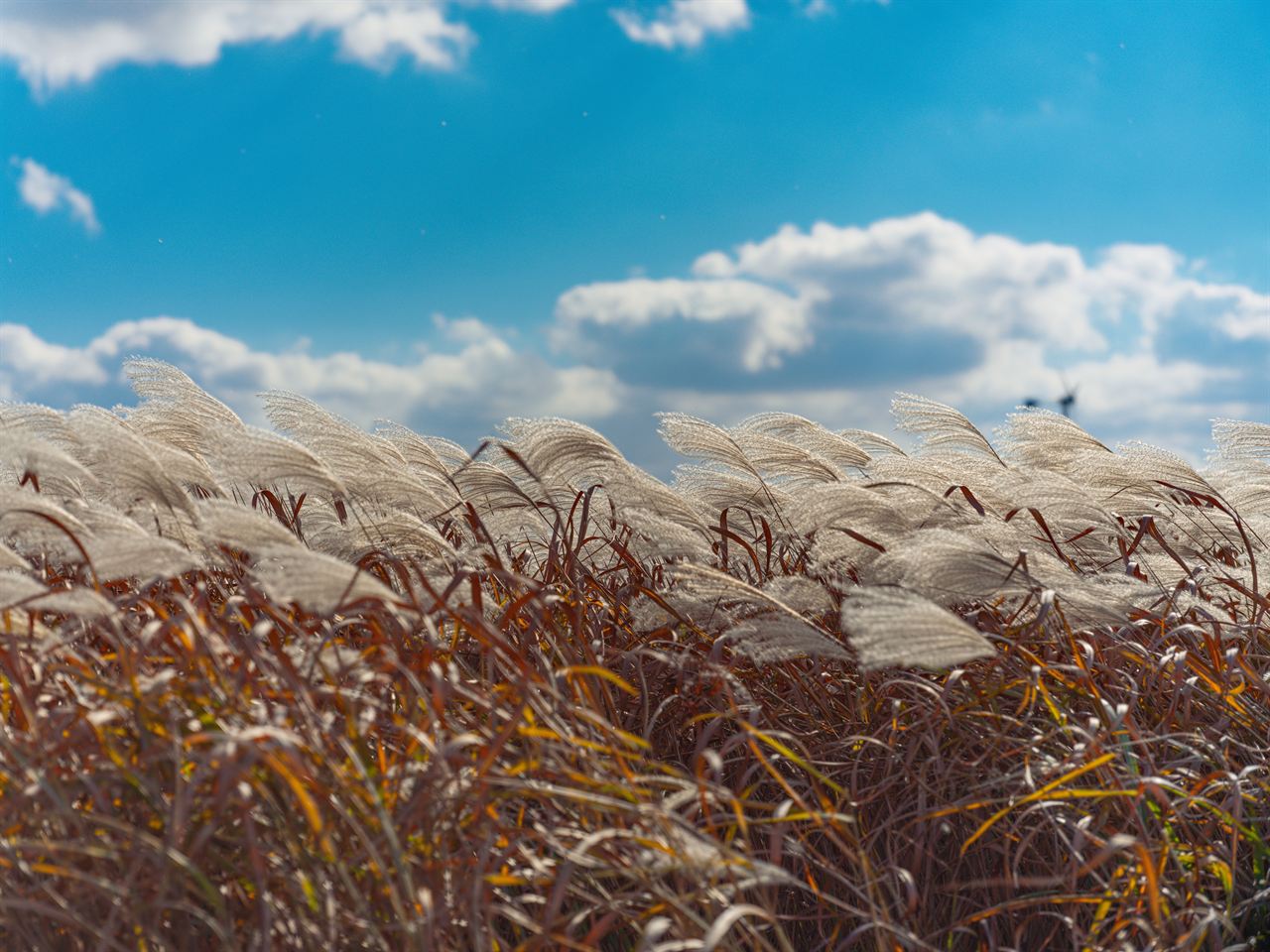
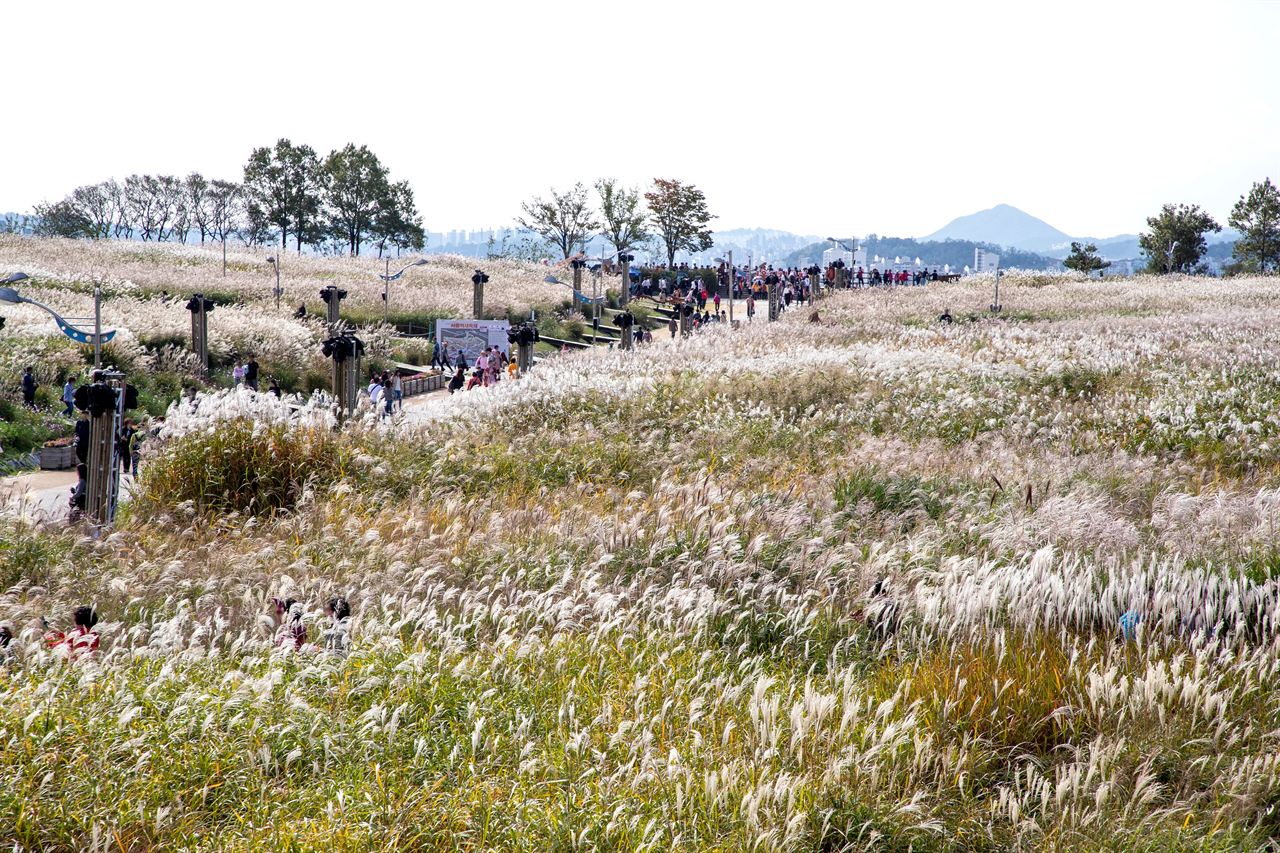
Autumn is undeniably the most spectacular time to visit. Every October, the 98-meter-high plateau transforms into a shimmering ocean of silver grass (억새, Eoksae). The grass sways gracefully in the autumn breeze, creating a highly photogenic and cinematic atmosphere.
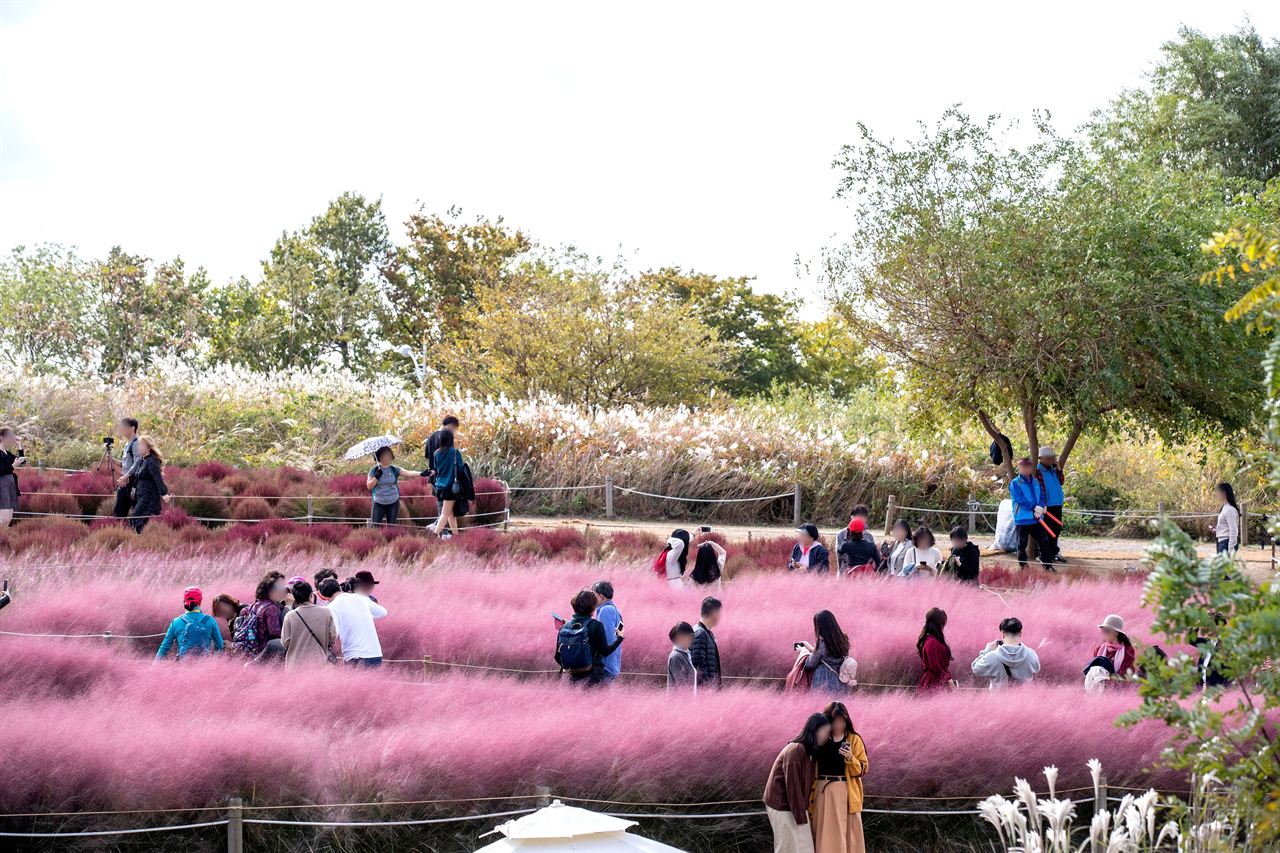
This seasonal beauty is celebrated during the annual Seoul Silver Grass Festival. While nighttime entry to the park is normally strictly prohibited to protect nocturnal wildlife, the park extends its hours during the festival week (typically mid-to-late October). The fields are illuminated with vibrant lighting displays, media art, and photo zones, allowing visitors to experience the silver grass against the glowing backdrop of Seoul’s night sky. In recent years, distinct patches of pink muhly grass have also been added, creating even more colorful photo opportunities.
For visitors traveling to Korea during this season, autumn offers an array of stunning landscapes. To discover more seasonal highlights, check out the Best Korea Autumn Foliage Destinations (Beyond Red Leaves), or if you prefer traditional festivities, the Suwon Hwaseong Festival 2026: Dates, Parade & Travel Tips is a spectacular addition to any October itinerary.
What to Expect in 2028: The Seoul Twin Eye
The skyline surrounding World Cup Park is preparing for a futuristic addition. Slated for completion around 2028, the area will become home to the “Seoul Twin Eye,” the world’s first spokeless, twin-wheel observation Ferris wheel featuring two intersecting rings.
Designed to be roughly 180 meters in diameter and reaching a height of 220 meters, this landmark aims to surpass the scale of the London Eye. With massive capsules capable of carrying up to 1,440 riders at a time, the Twin Eye will be located in the broader Peace Park area near the World Cup Stadium. Once completed, it will offer unprecedented, sweeping views of Haneul Park, the Han River, and the entire metropolitan area, further solidifying western Seoul as a premier cultural and leisure hub.
Practical Tips for Visiting in 2026
Proper planning ensures a smooth and enjoyable visit to this massive park. Here is the essential information you need:
| Category | Details & Insider Advice |
|---|---|
| Getting There | Take Subway Line 6 to World Cup Stadium Station (Exit 1) and walk about 15 minutes to the park entrance. During autumn weekends, parking lots are incredibly congested, making public transportation the smartest choice. |
| Operating Hours | Park access is restricted after sunset to protect wildlife (typically 8:30 PM in summer, 6:00 PM in winter). For night views, you must visit during the October festival. |
| What to Pack | Because it is a high-altitude plateau with almost no shade, bring a hat, sunglasses, sunscreen, and bottled water. Wear comfortable walking shoes, as the park is expansive. |
| Food & Facilities | There is a small convenience kiosk at the top, but options are limited. Purchasing picnic snacks or drinks from the large supermarket near the subway station before heading up is highly recommended. |
A half-day trip to western Seoul can easily be paired with deeper explorations of Korean heritage. Consider balancing your nature walks with historical insights by Exploring Donggureung: Korea’s Largest Royal Tombs or attending the 2026 K-Royal Culture Festival Autumn Guide.
FAQ
Is Haneul Park actually built on top of garbage?
Yes. The park sits directly on one of two massive landfill mounds created between 1978 and 1993, when the area received 92 million tons of waste. The site was heavily engineered, capped, and ecologically restored before opening to the public.
Is the park safe to visit, considering the methane gas?
Absolutely. The entire site is sealed with protective barriers, and the landfill gas is actively and safely collected through a highly regulated well network, so there is no exposure risk to visitors.
Is Haneul Park worth visiting outside of autumn?
Yes. While autumn is famous for the silver grass, spring and summer offer vibrant green landscapes and clear skies. Recently, the park has also started leaving the silver grass standing through the winter, providing a dramatic, quiet landscape for photographers.
Is there an entrance fee?
General admission to Haneul Park is completely free year-round. You only need to pay if you choose to ride the Maengkkongi electric shuttle.
For those looking to expand their Korean travel itinerary beyond the capital, discover coastal beauty in Why You Must Visit Tongyeong: Korea’s Hidden Coastal Gem, explore serene mountain retreats at Woljeongsa Temple: Healing Forests & Historic Treasures, or witness the striking summer blooms detailed in Maekmundong: The Secret Purple Flowers of Korean Summer.
Korean Culture portal KCulture.com

Founder of Kculture.com and MA in Political Science. He shares deep academic and local insights to provide an authentic perspective on Korean history and society.