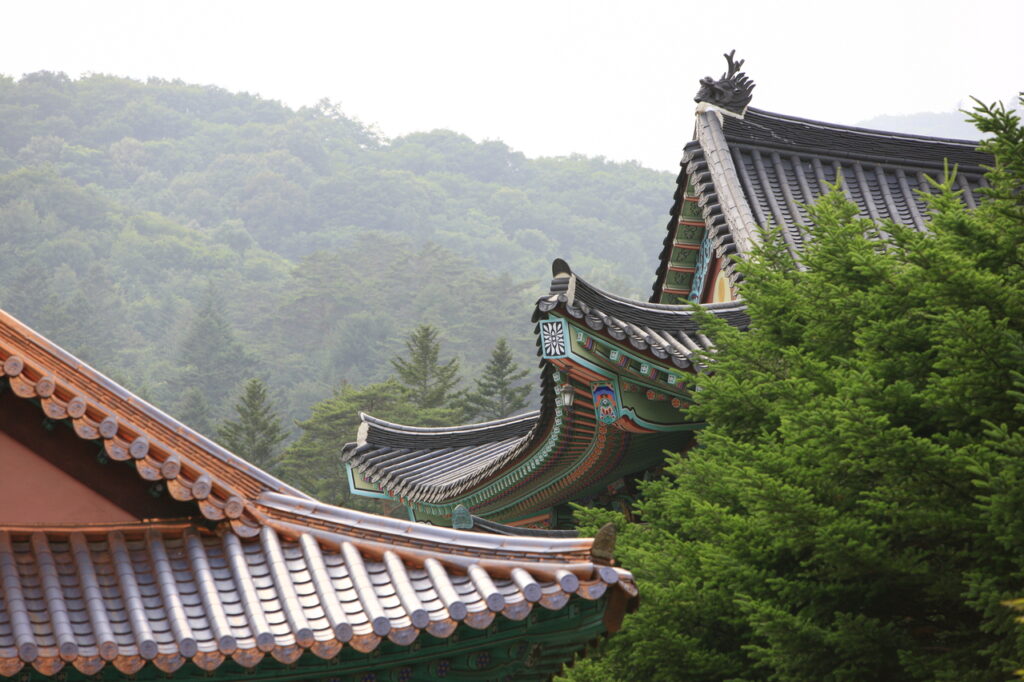
Autumn foliage in South Korea is a deeply rooted cultural ritual blending ancient temple history, meditative forest hikes, and seasonal local feasts. For 2026, the five best fail-proof autumn destinations are Naejangsan, Odaesan, Gyeongju, Hwadam Forest, and Songnisan. These locations guarantee stunning landscape views even if climate change delays the peak leaf colors. This guide explores the unique culture behind Korean fall travel, the absolute best spots offering multi-layered experiences beyond just colorful leaves, and essential tips for navigating the seasonal crowds.
- Why Koreans Have Celebrated Autumn Leaves for Centuries
- Climate Change and Smart 2026 Autumn Travel
- 1. Naejangsan National Park & Baegyangsa Temple
- 2. Odaesan National Park & Woljeongsa Temple
- 3. Gyeongju Historic Areas
- 4. Hwadam Forest
- 5. Songnisan National Park & Beopjusa Temple
- Essential Tips & Temple Etiquette
- Frequently Asked Questions (FAQ)
Why Koreans Have Celebrated Autumn Leaves for Centuries
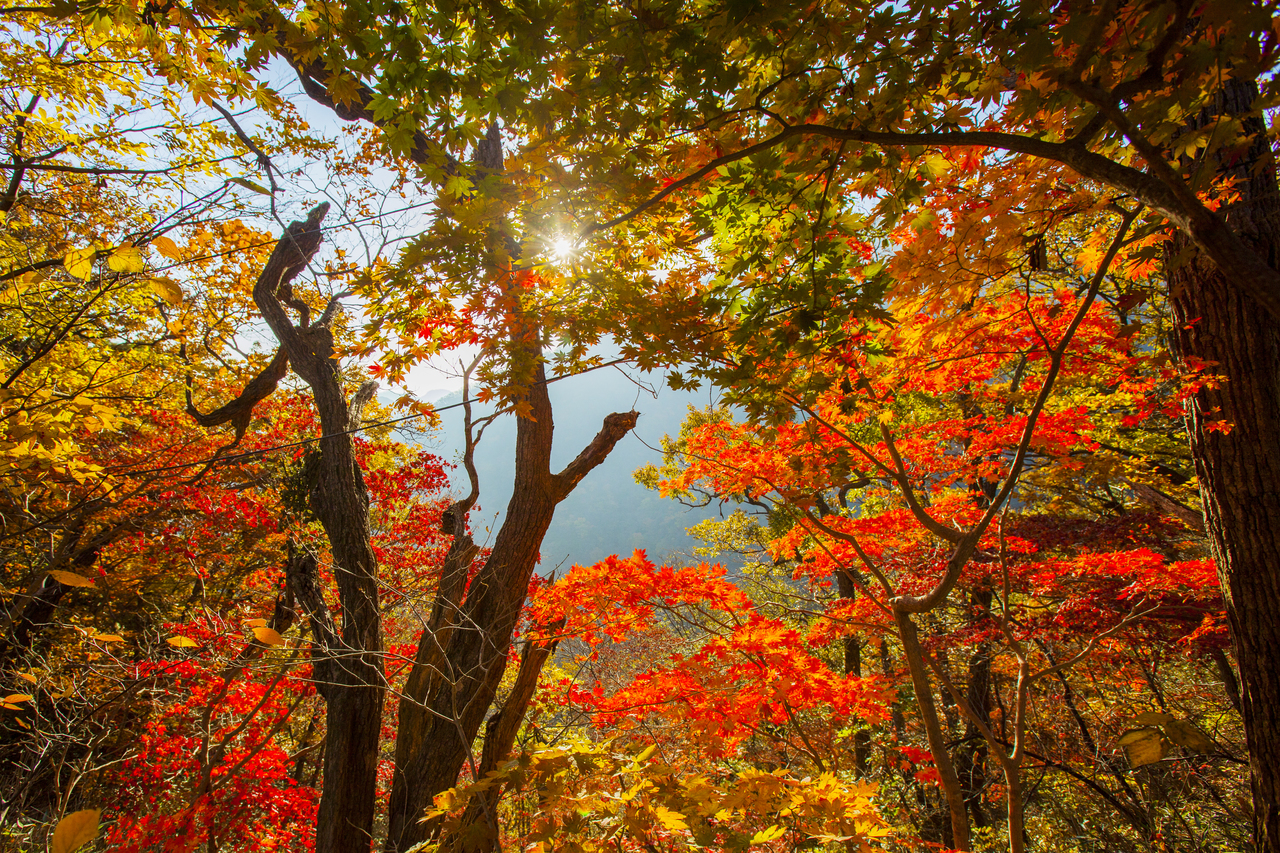
In many Western countries, autumn is often associated with scenic drives or simply enjoying colorful landscapes from a distance. In Korea, however, appreciating the autumn leaves—known as Danpung (단풍)—is a highly active, centuries-old cultural tradition. Every autumn, millions of Koreans head into the mountains carrying hiking backpacks and picnic meals, participating in a seasonal outing called danpung nori (단풍놀이), literally meaning “going out to enjoy the autumn leaves.”
The Symmetry of Spring and Fall
To truly understand Korean autumn, one must look at how it mirrors the spring. Historically, Koreans celebrated the arrival of spring on the third day of the third lunar month (Samjinnal) by enjoying flower viewing and eating sweet pan-fried azalea cakes (hwajeon). In perfect symmetry, autumn was celebrated on the ninth day of the ninth lunar month, known as Jungyangjeol (중양절). On this highly auspicious day, people followed the custom of climbing high mountains (deunggo), gazing at the crimson peaks, and wishing for health and longevity.
| Spring Tradition (Kkot Nori) | Autumn Tradition (Danpung Nori) |
|---|---|
| Celebrating the arrival of new life | Reflecting on seasonal change and impermanence |
| Flower viewing and outdoor picnics | Mountain hiking and ancient temple visits |
| Pan-fried flower cakes (Hwajeon) | Chrysanthemum wine and mountain vegetables |
💡 Local Insight: Pungryu (풍류)
For Korean scholars in the Joseon Dynasty, the changing of seasons was an act of Pungryu—a philosophy of harmonizing with nature through art, food, and quiet appreciation. According to the Dongguk Sesigi (동국세시기), a 19th-century almanac of Korean seasonal customs, residents of old Seoul already had a mainstream habit of climbing peaks specifically for autumn leaves over 150 years ago. To explore the vibrant floral transitions leading up to fall, discover Maekmundong: The Secret Purple Flowers of Korean Summer.
The modern version of this culture remains vividly alive. The hike itself still ends the same way it always has: sharing crispy seafood pancakes (haemul pajeon) and a bowl of chilled makgeolli (rice wine) at a mountain-base restaurant. To fully embrace this routine, read The Korean Hiking: Peaks, Picnics, Makgeolli and review Hiking in Korea: The Complete Guide for Foreign Travelers.
Climate Change and Smart 2026 Autumn Travel
Tracking the autumn leaves is a national event, with the Korea Forest Service releasing highly anticipated foliage maps annually. However, peak foliage in Korea is no longer as predictable as it used to be. Prolonged summer heatwaves and warmer early autumn temperatures have pushed peak color later, often shifting from mid-October to late October or even early November. Furthermore, sharp temperature fluctuations sometimes cause leaves to dry out before turning a vibrant red.
Estimated 2026 Foliage Timeline
| Region | Typical First Color | Estimated Peak (2026) |
|---|---|---|
| Odaesan (Gangwon, Northeast) | Early to Mid-October | Late October |
| Seoul & Gyeonggi (incl. Hwadam) | Mid-October | Late October to Early November |
| Songnisan (Central) | Late October | Early to Mid-November |
| Gyeongju (Southeast) | Late October | Early to Mid-November |
| Naejangsan (Southwest) | Late October | Mid to Late November |
Because of these shifting weather patterns, experienced travelers now prioritize “multi-layered” landscapes—places where historic temples, vast lakes, evergreen forests, and ancient architecture provide a breathtaking experience regardless of the exact color of the maple leaves.
1. Naejangsan National Park & Baegyangsa Temple
Located on the border of Jeollanam-do and Jeollabuk-do, Naejangsan National Park (내장산) is historically ranked among the “Eight Scenic Views of Joseon” and is widely considered the pinnacle of Korean autumn beauty.
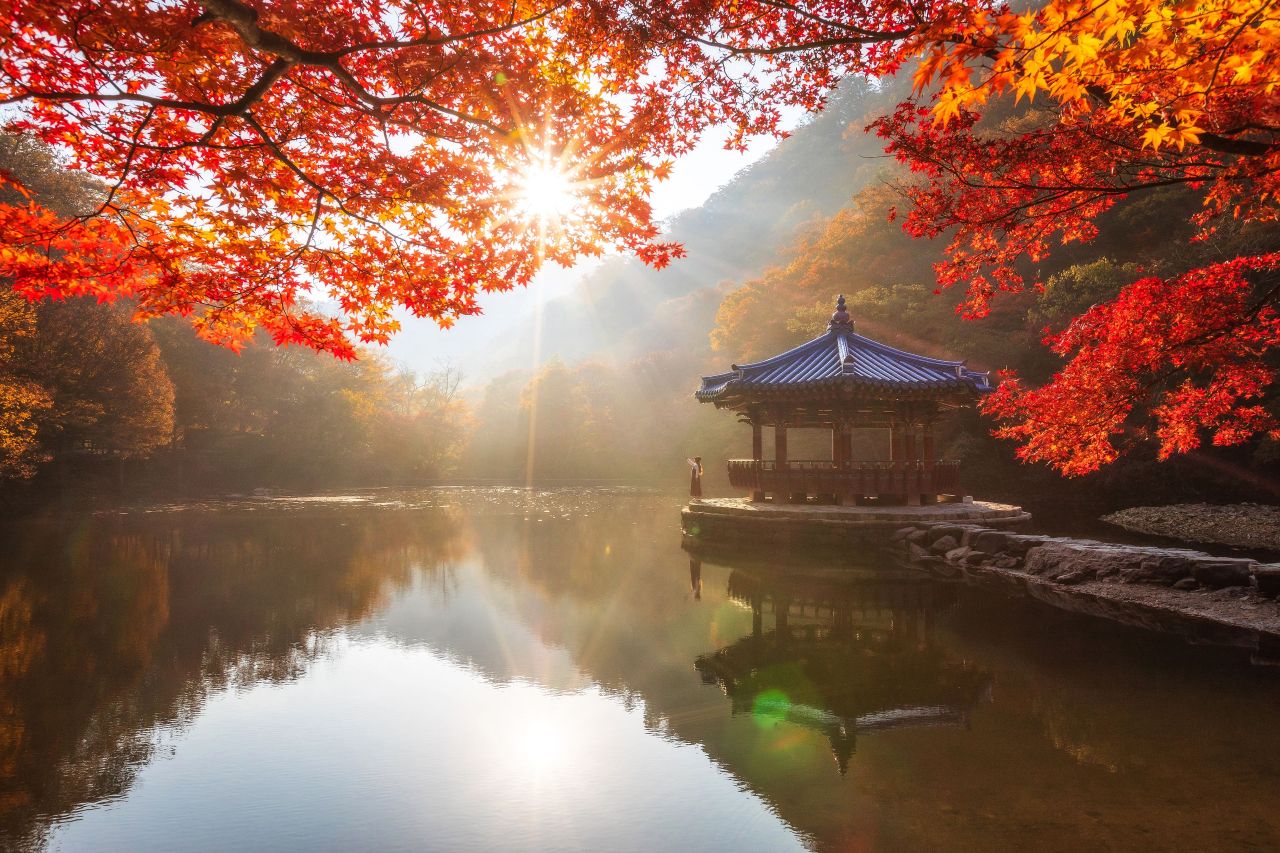
- Why it is Fail-Proof: Even if the autumn leaves dry up slightly, the reflection of the rugged Baekhakbong peak and the beautiful Ssanggyeru Pavilion (쌍계루) at Baegyangsa Temple (백양사) creates a scene straight out of a traditional ink painting.
- Highlights: The area is famous for its aegi-danpung (“baby maples”), which have leaves smaller than an adult’s palm, resulting in exceptionally vivid crimson colors. Visitors can also walk through a magnificent forest of Korea’s oldest oak trees near the temple entrance.
- Local Food & Culture: Inside the Baegyangsa Temple grounds is Chunjinam hermitage, home to Jeong Kwan sunim, the Buddhist nun famously featured on Netflix’s Chef’s Table. It is a global sanctuary for vegan temple food.
If you are exploring the southwestern Jeolla region, you can easily combine this scenic mountain trip with a coastal adventure using our Korean Mudflat Experience: Clam Digging Guide.
2. Odaesan National Park & Woljeongsa Temple
Located in the alpine region of Pyeongchang, Gangwon-do, Odaesan National Park (오대산) is perfect for travelers arriving in Korea slightly earlier in the autumn season.
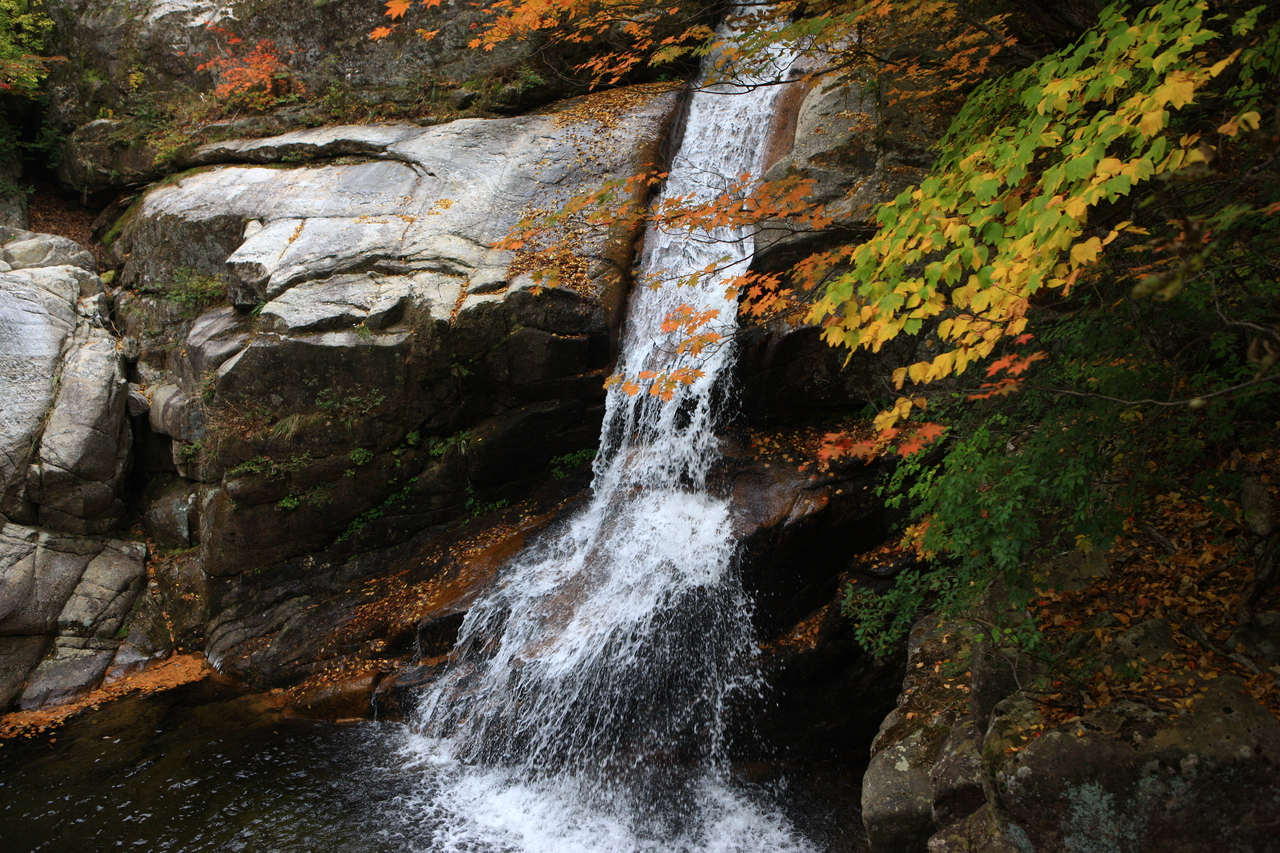
- Why it is Fail-Proof: The entrance to Woljeongsa Temple (월정사) is guarded by a massive, centuries-old fir tree forest. Because fir trees are evergreens, this therapeutic, phytoncide-rich forest guarantees a deeply spiritual atmosphere completely independent of the maple leaf conditions. It is also famously known as a filming location for the K-drama Guardian: The Lonely and Great God (Goblin).
- Highlights: Walk barefoot along the 1km dirt path through the fir forest, or hike the gentle 9km Seonjaegil trail that follows the valley stream up to Sangwonsa Temple. The temple itself houses a magnificent National Treasure: the Nine-Story Octagonal Stone Pagoda.
- Local Food: Pyeongchang is the undisputed capital of Korean buckwheat. Savor cold buckwheat noodles (makguksu) and crispy buckwheat crepes after your walk.
For a deeper dive into this incredible location, read Woljeongsa Temple: Healing Forests & Historic Treasures.
3. Gyeongju Historic Areas
For those who prefer walking through an ancient city rather than hiking a mountain, Gyeongju (경주)—the thousand-year capital of the ancient Silla Kingdom—is the ultimate autumn destination.
- Why it is Fail-Proof: Gyeongju is a massive autumn canvas. If the mountain maples are disappointing, the city compensates with golden ginkgo avenues, ancient royal tombs covered in autumn grass, fields of pink muhly, and glowing nightscapes at ancient palaces.
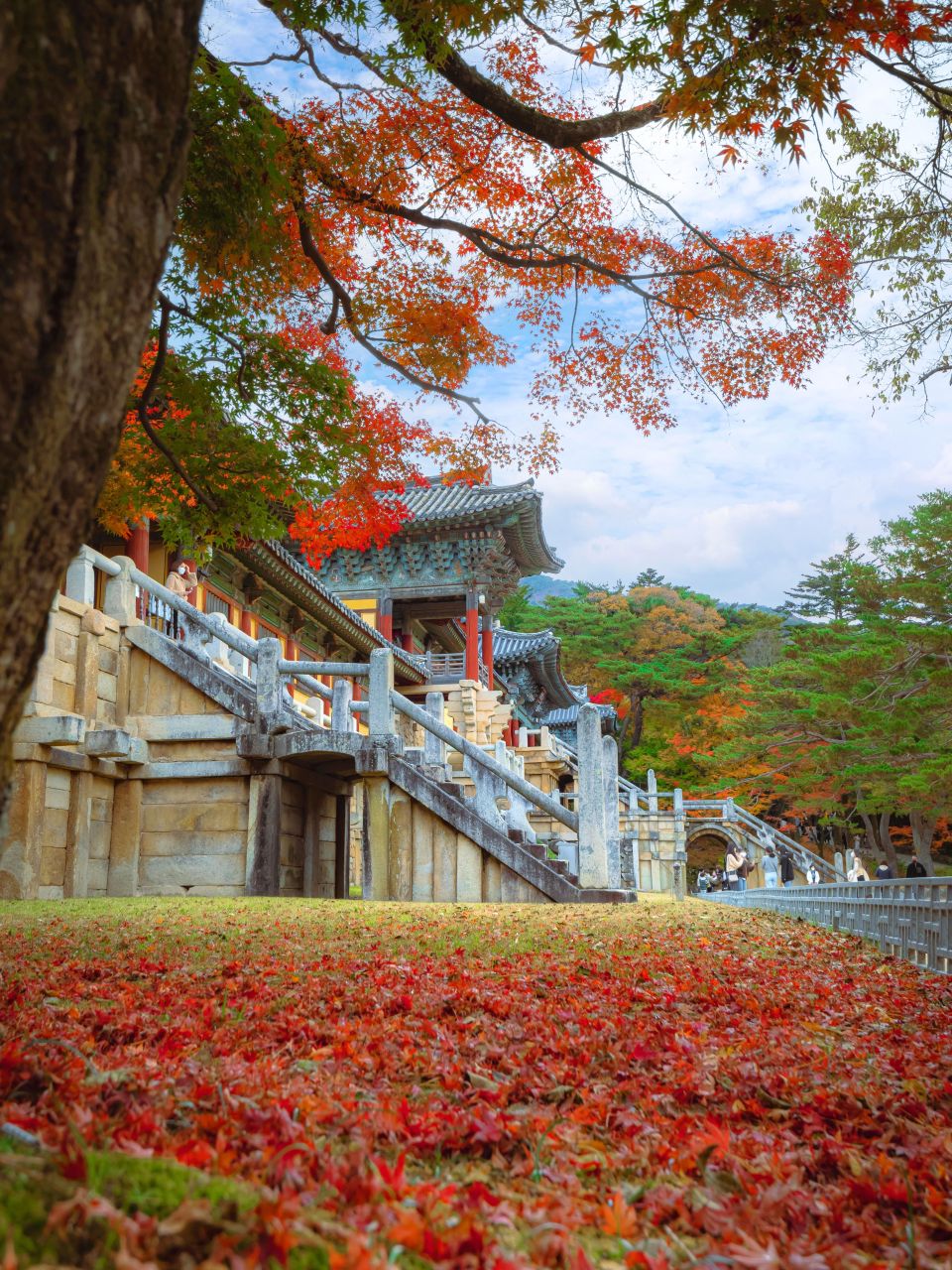
- Highlights: The contrast between bright red maples and the stone architecture of Bulguksa Temple (불국사) is unmatched. Do not miss the 2km ginkgo tree-lined road at Tongiljeon, the awe-inspiring 360-year-old giant ginkgo tree at Ungok Seowon (운곡서원), and the stunning nighttime reflection of Donggung Palace and Wolji Pond.
- Local Food: Stroll down the trendy Hwangnidan-gil street to grab Hwangnam bread (sweet red-bean pastry) and dine in a modernized Hanok courtyard.
If you are captivated by Korea’s royal history, enhance your itinerary with the 2026 K-Royal Culture Festival Autumn Guide: Dates & Tickets.
4. Hwadam Forest
Located in Gwangju, Gyeonggi-do, less than two hours from Seoul, Hwadam Forest (화담숲) is an impeccably curated ecological park created to promote harmony with nature.
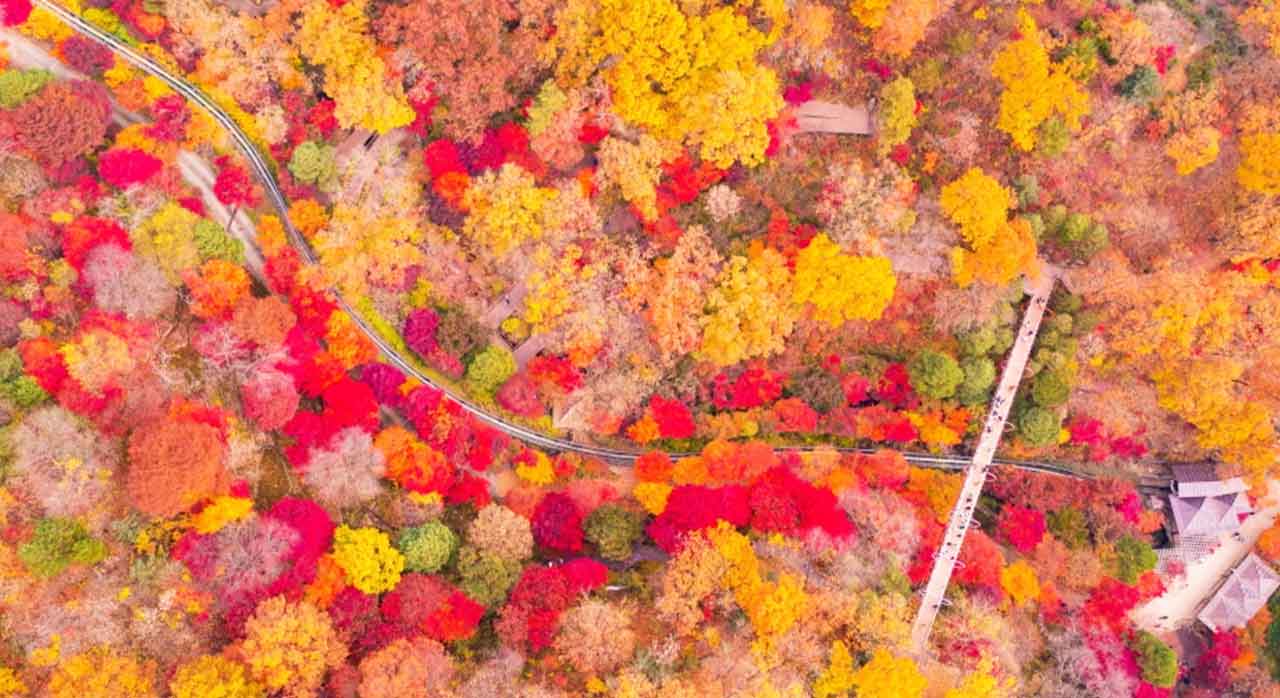
- Why it is Fail-Proof: Instead of relying on a single maple species, the park features over 400 different varieties of maples that change colors at slightly different times. Combined with a striking white-barked birch forest and lush moss gardens, the scenery remains impressive even when seasonal timing shifts.
- Highlights: The forest features an eco-friendly monorail that loops around the mountain, providing sweeping views. The entire walking path consists of a gentle, barrier-free wooden deck, making it incredibly accessible for strollers and wheelchairs.
📌 Crucial Reservation Tip
Hwadam Forest operates on a 100% online advance reservation system during autumn. Walk-up tickets are practically non-existent on weekends. Tickets typically open about a month ahead of time, so international visitors must secure their spots early.
Since you are in the Gyeonggi-do area, autumn is the perfect time to experience traditional grand parades. Learn more in our Suwon Hwaseong Festival 2026: Dates, Parade & Travel Tips.
5. Songnisan National Park & Beopjusa Temple
Songnisan National Park (속리산), meaning a mountain where one “escapes the secular world,” is located in the central Chungcheongbuk-do province and remains one of the most rewarding and least crowded autumn destinations.
- Why it is Fail-Proof: The gentle Sejo-gil walking trail follows a beautiful reservoir. The reflection of jagged rock formations on the water’s surface does the visual heavy lifting regardless of foliage conditions. The profound cultural weight of Beopjusa Temple (법주사) offers deep satisfaction year-round.
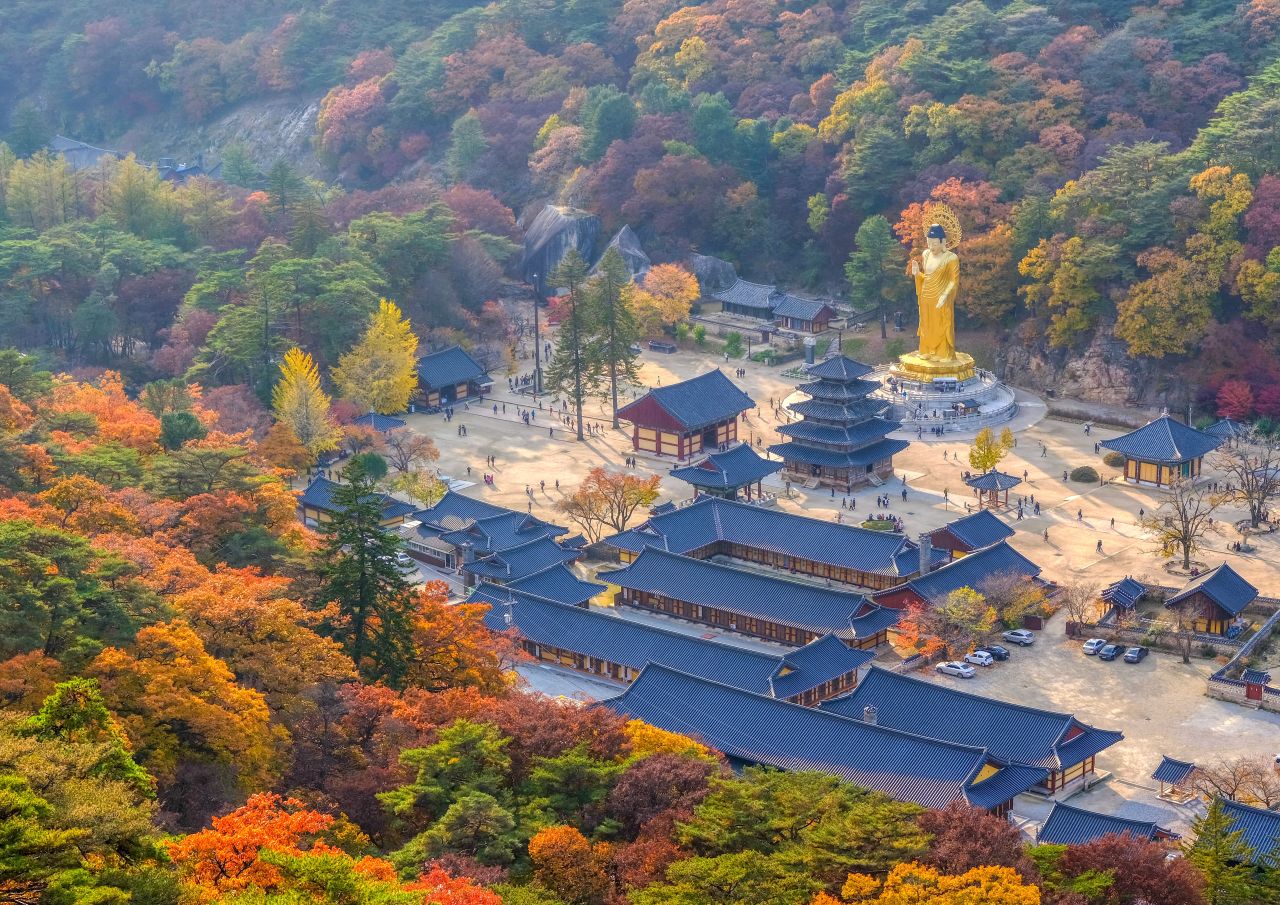
- Highlights: Walk the 2.4km Sejo-gil trail, named after a Joseon King who walked this exact path for healing. Marvel at the Palsangjeon Wooden Pagoda—Korea’s only remaining five-story wooden pagoda—and spot the 600-year-old Jeongipumsong pine tree near the entrance.
- Local Food: The Boeun region is famous for producing the highest quality jujubes (Korean dates). Warm up with rich jujube tea and enjoy a wild mushroom hot pot forged from the surrounding mountains.
Essential Tips & Temple Etiquette
To ensure a smooth and enjoyable autumn journey, keep these practical guidelines in mind:
- Beat the Crowds: The difference between a Tuesday and a Saturday is monumental. Visit famous national parks on weekdays. If you must go on a weekend, arrive before 8:00 AM to enjoy quieter trails and better photography lighting.
- Smart Transportation: Weekend traffic toward major mountains can be brutal. Use high-speed KTX or SRT trains to reach regional hubs (like Pyeongchang, Gyeongju, or Jeongeup), then take a local taxi or shuttle bus to the park entrance.
- Temple Etiquette: Many of the best foliage spots are located on sacred Buddhist grounds. Maintain a quiet voice, do not photograph the interiors of main prayer halls or meditating monks, and dress modestly.
- Layered Clothing: Mountain temperatures in autumn can be 5–10°C cooler than nearby cities. Dress in layers to adapt to chilly mornings and warmer afternoons.
Frequently Asked Questions (FAQ)
When is the best time to see autumn foliage in Korea in 2026?
Peak color moves from north to south and from high to low altitudes. Generally, it starts in mid-to-late October in the northern mountains (like Odaesan) and finishes in mid-to-late November in southern regions (like Naejangsan). The Korea Forest Service releases official forecasts in September.
What happens if I visit before or after the peak color?
Korea’s foliage season builds and fades gradually. By choosing destinations like the ones in this guide—which feature ancient temples, historic architecture, evergreen forests, and tranquil lakes—you will still experience breathtaking scenery and cultural depth even if the maples are not at their absolute peak.
Do I need hiking experience to enjoy these destinations?
Not at all. While there are advanced trails available, the primary highlights at Naejangsan, Odaesan (Seonjaegil), Hwadam Forest, and Songnisan (Sejo-gil) feature gentle, well-maintained paths suitable for beginners, families, and casual walkers.
Can I do these as day trips from Seoul?
Hwadam Forest is easily accessible as a half-day trip from Seoul. Destinations like Odaesan, Naejangsan, and Gyeongju are further out and are best experienced as an overnight stay or a very early full-day trip using the KTX high-speed train.
Korean Culture portal KCulture.com

Founder of Kculture.com and MA in Political Science. He shares deep academic and local insights to provide an authentic perspective on Korean history and society.