Introduction & Synopsis
Before the polished wards of Hospital Playlist or the intense surgeries of Dr. Romantic, there was a drama that first picked up the scalpel and carved out an entire genre. That drama is General Hospital (종합병원), the 1994 MBC production that stands as the definitive progenitor of the Korean medical drama. The series plunges viewers into the chaotic and demanding world of surgical residents at a university hospital, chronicling their professional trials and personal growth with an unprecedented level of realism for its time.
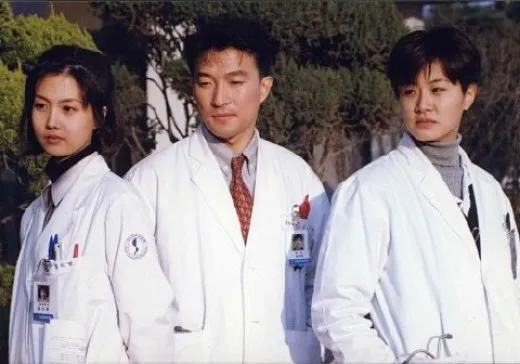
The story orbits around a core group of young doctors, primarily the compassionate and humane Kim Do-hoon (Lee Jae-ryong), the technically brilliant, cool-headed and rational Baek Hyun-il (Jeon Kwang-ryul), and the energetic, trailblazing Lee Jung-hwa (Shin Eun-kyung). Through their eyes, we witness the daily grind of sleepless nights, life-or-death decisions, and the complex human stories that unfold in every hospital room.
The Scalpel That Carved a Genre
To understand the impact of General Hospital, one must look at the Korean television landscape of the early 1990s. The airwaves were dominated by family sagas and historical epics. Dramas centered around specific professions, especially with a commitment to technical accuracy, were a rarity. MBC’s decision to produce a series based on meticulous research—including consulting with real medical professionals—was a landmark moment. It signaled the dawn of the “genre drama” (장르물), a specialized, plot-driven form of storytelling that now defines the K-drama industry.
The show resonated deeply in a 1990s South Korea that was undergoing rapid economic growth and modernization. There was a burgeoning societal respect for expertise and professionalism. General Hospital captured this zeitgeist perfectly, presenting doctors not as infallible gods but as highly skilled, hardworking individuals grappling with immense pressure. Furthermore, the drama powerfully illustrated the Korean concept of Jeong (정)—a deep, binding affection—not just among the residents who formed a surrogate family, but also in the profound connections forged between doctors and their patients, adding a layer of emotional depth that transcended mere medical procedure.
More Than Just Medical Cases
While each episode introduces compelling patient cases, the true narrative genius of General Hospital lies in its unwavering focus on character. The show masterfully balances high-stakes medical crises with the subtle, slow-burn development of its young doctors. It was one of the first Korean dramas to show that failure is a part of the journey. The residents make mistakes, face ethical quandaries, and suffer from burnout. This raw authenticity was revolutionary.
The storytelling thrives on the ideological friction between its leads. The conflict between Kim Do-hoon’s patient-first humanism and Baek Hyun-il’s results-driven pragmatism creates a compelling debate about what it truly means to be a good doctor. This thematic tension would become a foundational pillar for nearly every medical K-drama that followed.
A 90s Cultural Phenomenon
General Hospital wasn’t just a drama; it was a cultural event. It achieved massive viewership ratings, cementing its place as a national sensation. Its influence extended far beyond the screen, reportedly causing a significant spike in applications to medical schools across the country as a generation of young people became inspired by the characters’ dedication.
The most explosive impact, however, was the “Shin Eun-kyung Syndrome.” Her portrayal of Lee Jung-hwa—with a chic short haircut, baggy, practical clothing, and an assertive, no-nonsense attitude—became an instant icon. In an era where female drama characters were often passive or demure, Lee Jung-hwa was a competent, confident professional who was every bit the equal of her male colleagues. She became a role model for a new generation of Korean women, and her “tomboy” style was emulated nationwide.
The Residents Who Defined an Era
Lee Jae-ryong as Kim Do-hoon
Lee Jae-ryong embodied the show’s moral compass. His portrayal of Kim Do-hoon was filled with a gentle warmth and quiet strength, making him the empathetic anchor viewers could rally behind. He represented the soul of medicine.
Jeon Kwang-ryul as Baek Hyun-il
As the brilliant and rational Baek Hyun-il, Jeon Kwang-ryul crafted the archetype of the stoic, intellectually rigorous surgeon. His cool exterior and sharp pragmatism provided the perfect foil to Do-hoon’s idealism, and his complex character arc made him utterly captivating.
Shin Eun-kyung as Lee Jung-hwa
Shin Eun-kyung delivered a star-making performance that redefined the “K-drama heroine.” She imbued Lee Jung-hwa with a magnetic energy and fierce intelligence. Her character wasn’t just a female doctor; she was a phenomenal doctor who happened to be a woman, a crucial distinction that broke new ground.
Global Viewing Guide
Finding this 90s classic can be a challenge, but dedicated fans of drama history can often find it through these channels:
- MBC Classic YouTube Channel: This is often the primary official source for international fans to find clips or full, sometimes subtitled, episodes of archived MBC dramas.
- Wavve: For viewers located in South Korea, this domestic streaming service holds the complete MBC library, including General Hospital.
- Kocowa: As a joint venture involving MBC, this platform occasionally licenses classic dramas for audiences in the Americas and other regions.
Final Verdict
General Hospital is more than just an old drama; it’s a foundational text. Watching it is like discovering the blueprint from which modern medical K-dramas were built. For any fan who wants to understand the history of Hallyu and witness the birth of a beloved genre, this series is essential, fascinating, and deeply rewarding viewing.

The KCulture Editorial Team is dedicated to providing deep insights and accurate information about the vibrant world of Korean culture.