
The Paradox of Peace: Understanding South Korea’s Military Readiness
South Korea’s military readiness and everyday peace may seem like contradictory ideas, but the country remains one of the safest travel destinations precisely because of its comprehensive defense posture. For international visitors wondering why they might see tanks or soldiers on public roads, these are simply routine training exercises essential for deterrence against North Korea’s nuclear threats and regional instability. Living in Korea, I often see how this robust preparation—fueled by mandatory conscription, independent intelligence networks, and a booming domestic defense industry—acts as the invisible shield protecting our daily lives.
Many travelers are surprised when they encounter military convoys near the northern borders, but understanding this context transforms a moment of alarm into a deeper appreciation of Korean society. This article explores the historical realities shaping Korea’s security, why the nation developed world-class weapons like the KF-21 fighter jet to achieve defense independence, the global irony of the nuclear paradox, and exactly what you should do if you encounter military drills during your trip.
- The Historical Reality Behind Korea’s Security Environment
- Why You Might See Tanks on the Road (And What to Do)
- From Dependence to Self-Reliance: The Rise of K-Defense
- Building Independent Intelligence and Surveillance Capabilities
- KF-21 and the Future of Korean Defense Technology
- The Nuclear Paradox Facing South Korea
- Mandatory Military Service and National Readiness
- Related Sites for Understanding Korea’s Security History
The Historical Reality Behind Korea’s Security Environment
To understand why South Korea invests so heavily in its military strength, one must look at its undeniable historical experiences. The security concerns facing the Korean peninsula are not abstract war games or theoretical scenarios; they are rooted in direct, painful history.
Between 1950 and 1953, the Korean War devastated the peninsula. The conflict involved both North Korean and Chinese forces fighting directly against South Korea and United Nations forces. Millions of civilians were displaced, and much of the country was reduced to ashes. That experience left a lasting lesson in the national consciousness: peace cannot be taken for granted.
Today, South Korea operates as a peaceful, denuclearized democracy, but it shares borders with highly militarized neighbors. North Korea maintains a dynastic, authoritarian regime that has actively developed and tested nuclear weapons. To the west, China continues to rapidly expand its military reach. For South Korea, maintaining an overwhelming conventional military force is the absolute minimum self-defense mechanism required to protect its sovereignty in a volatile region.
Why You Might See Tanks on the Road (And What to Do)
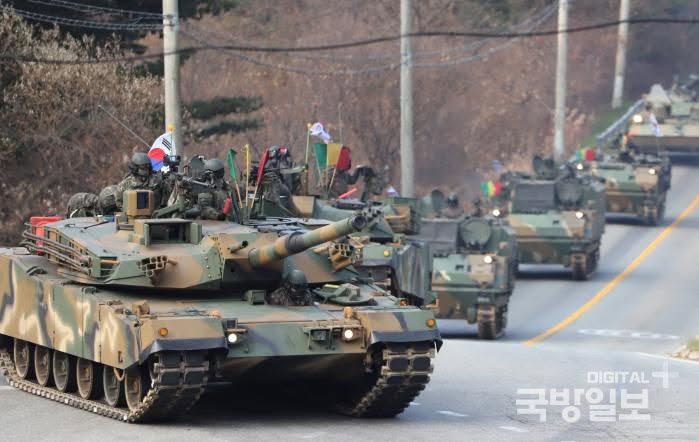
One question frequently asked by foreign visitors is: “Why did I see tanks on a public road?”
If you rent a car or take a bus tour through northern border areas such as Paju (파주), Cheorwon (철원), Yanggu (양구), Hwacheon (화천), Inje (인제), or Goseong (고성), encountering military vehicles is not unusual. Because the physical distance between the capital and the heavily fortified border is short, military bases are tightly woven into the geographic fabric of these provinces.
You may observe:
- Armored vehicle convoys moving between bases
- Military transport trucks and engineering units operating near roads
- Groups of fully armed soldiers conducting tactical exercises
- Helicopter training flights overhead
- Temporary checkpoints during scheduled drills
For first-time visitors, these scenes can appear alarming. However, they are usually routine training activities rather than signs of an imminent crisis. In many ways, they are visible evidence of the preparedness that helps preserve the peaceful atmosphere most travelers experience throughout Korea.
💡 Pro Tip: What to Do During Military Activity
If you encounter troops or tanks on the road, remain calm and continue your normal activities. Follow any instructions from military personnel or traffic controllers, and allow military convoys priority. Avoid entering restricted areas, flying drones near installations, or photographing specific checkpoints and sensitive facilities, as this is strictly prohibited for security reasons. If a convoy temporarily stops traffic, simply wait—such delays are generally brief and a normal part of local life.
From Dependence to Self-Reliance: The Rise of K-Defense
One of the most remarkable aspects of South Korea’s modern history is the transformation of its defense industry. During the outbreak of the Korean War, South Korea lacked the industrial capacity to manufacture even basic rifles, leaving the nation entirely dependent on foreign military assistance to survive.
Over the decades, policymakers concluded that excessive dependence on foreign suppliers created massive strategic vulnerabilities. In a major conflict, access to spare parts, ammunition, and advanced equipment might be blocked by international political shifts. This painful realization fueled a relentless half-century push for defense independence.
Today, South Korea produces its own world-class weapons systems, fundamentally transforming into a global defense exporter. Key examples of this indigenous technology include:
| System Name | Military Role | Significance |
|---|---|---|
| K2 Black Panther | Main Battle Tank | One of the most advanced tanks globally, featuring auto-loading and active protection. |
| K9 Thunder | Self-Propelled Artillery | Dominates the global self-propelled howitzer export market with rapid-fire capabilities. |
| Chunmoo | Multiple Rocket Launch System | Provides devastating, precision-guided saturation fire against long-range targets. |
| Redback | Infantry Fighting Vehicle | Next-generation armored vehicle designed for high survivability and modern combat. |
| Dosan Ahn Changho Class | Attack Submarine | Indigenously designed submarines capable of launching ballistic missiles (SLBMs). |
Building Independent Intelligence and Surveillance Capabilities
For much of the Cold War and the decades following it, South Korea relied heavily on the United States alliance for strategic intelligence gathering and analysis. However, true defense independence requires the ability to see and assess threats without relying entirely on a partner’s eyes.
Recent years have seen substantial, historic investments in indigenous information gathering. South Korea has successfully launched its own military reconnaissance satellites and synthetic aperture radar (SAR) systems into orbit. By building advanced command-and-control networks, long-range surveillance platforms, and unmanned aerial reconnaissance systems, South Korea is securing independent situational awareness. The goal is not to replace the critical U.S. alliance, but to strengthen South Korea’s own real-time decision-making capabilities, making it one of the most technologically advanced military information networks in Asia.
KF-21 and the Future of Korean Defense Technology
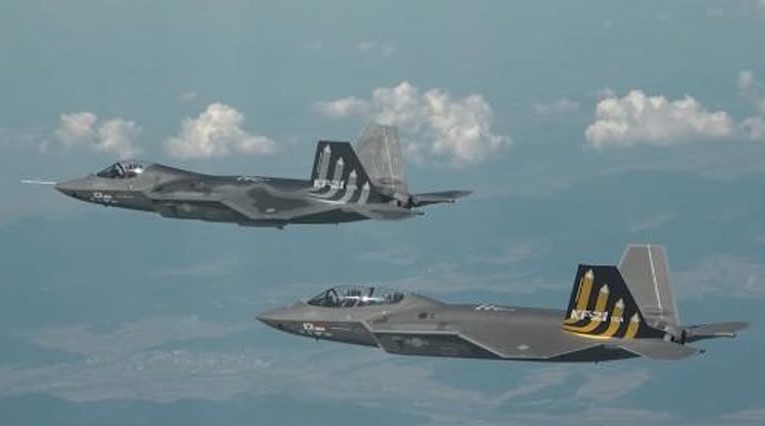
The newly developed KF-21 Boramae (보라매) represents one of the clearest symbols of South Korea’s technological ambitions. Developing a cutting-edge supersonic fighter jet is a feat only a handful of nations have achieved. Built domestically with significant indigenous technology, the aircraft demonstrates the immense progress of the country’s aerospace and defense sectors.
Beyond the fighter itself, the KF-21 program forced the domestic development of critical technologies, such as AESA (Active Electronically Scanned Array) radar, advanced avionics, and precision weapons integration. The KF-21 is more than a new aircraft; it is living proof of an industrial ecosystem that now confidently spans from land-based artillery to aerospace dominance.
The Nuclear Paradox Facing South Korea
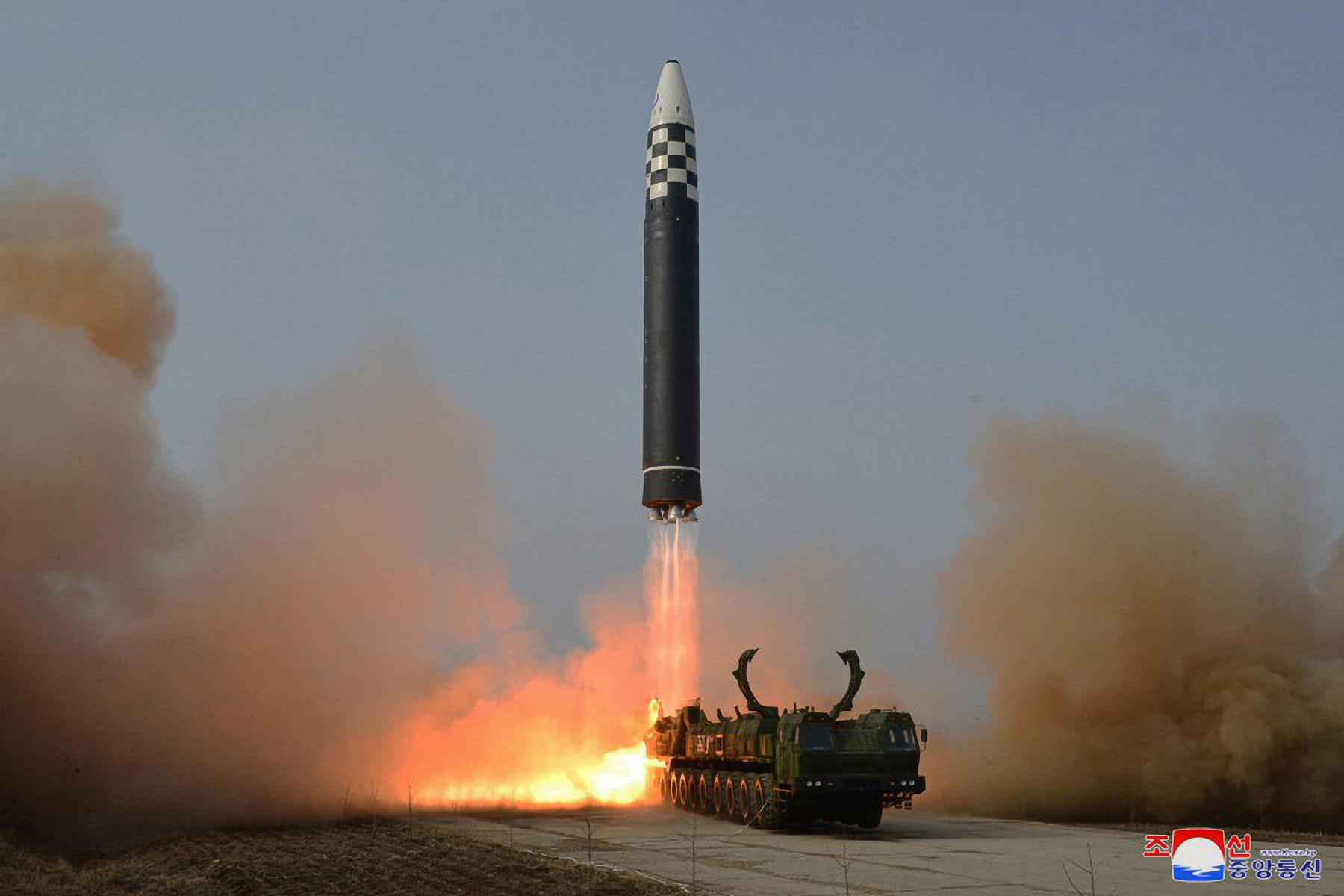
Perhaps the most complex issue surrounding South Korea’s military strategy is the paradox of the global nuclear order. The international nuclear non-proliferation system (NPT) was designed to stop the spread of nuclear weapons. Yet, the system has practically failed to prevent North Korea from illegally developing a massive nuclear arsenal, nor has it effectively checked the unacknowledged nuclear capabilities of nations like Israel.
This creates a profound geopolitical irony: democratic nations like South Korea, which strictly adhere to international laws and submit to transparent, democratic controls, are legally bound from developing nuclear deterrents. Meanwhile, they are left directly exposed to the nuclear threats of dictatorial regimes that flagrantly violate those exact treaties. Rather than pursuing nuclear weapons, South Korea’s response has been to push its conventional military capabilities to the absolute limit. This high-tech readiness is a deeply realistic and somewhat poignant alternative—a way to ensure survival in a fundamentally asymmetrical landscape.
Mandatory Military Service and National Readiness
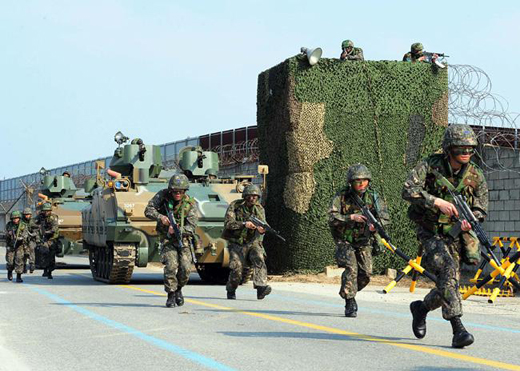
Another fundamental pillar of South Korea’s security is its mandatory military service system. Most able-bodied male citizens are required to serve in the armed forces, usually for a period of 18 to 21 months. This shared national duty deeply impacts the culture, career timelines, and social fabric of the country.
Even after active duty concludes, these men transition into the reserve forces, attending regular training sessions for years. This structure provides South Korea with a massive, highly trained pool of personnel who can be rapidly mobilized during a national emergency.
To provide a clearer picture of why this readiness is required, here is a brief comparison of the current military realities on the peninsula:
| Category | South Korea | North Korea | Key Takeaway |
|---|---|---|---|
| 2026 GFP Military Rank | World Rank 5th | World Rank 31st | South Korea sits in the top tier globally, following the US, Russia, China, and India. |
| Nuclear Arsenal | None (Strict treaty compliance) | De facto state (Six nuclear tests) | The most significant asymmetrical threat on the Korean peninsula. |
| Weapons Systems | K2, K9, F-35A, KF-21 (Qualitative edge) | Aging Soviet-era tech (Quantitative mass) | South Korea maintains overwhelming superiority in conventional warfare technology. |
📌 Local Note: The music flowing from a stylish Seoul café and the sound of military vehicles training near the northern frontier may seem like scenes from different worlds. Yet their coexistence reflects a fundamental reality of modern Korea: peace is maintained not through complacency, but through deterrence and vigilance.
Related Sites for Understanding Korea’s Security History
Understanding the military and historical context of South Korea deeply enriches any travel experience here. It transforms a simple sightseeing trip into a journey through a nation’s resilience. To dive deeper into how this history shapes modern Korea, explore these detailed guides:
- The Real History of the DMZ: From 1945 to 2026
- How to Visit the Korean DMZ in 2026: Fees & Booking Guide
- Honoring Heroes: A Guide to the War Memorial of Korea and UN Cemetery
- Inside Korea’s Mandatory Military Service: A Deep Dive
- Operation Chromite (1950): Memorial Hall, Wolmido, and Jayu Park
Korean Culture portal KCulture.com

Founder of Kculture.com and MA in Political Science. He shares deep academic and local insights to provide an authentic perspective on Korean history and society.