An Unforgettable Texture Adventure
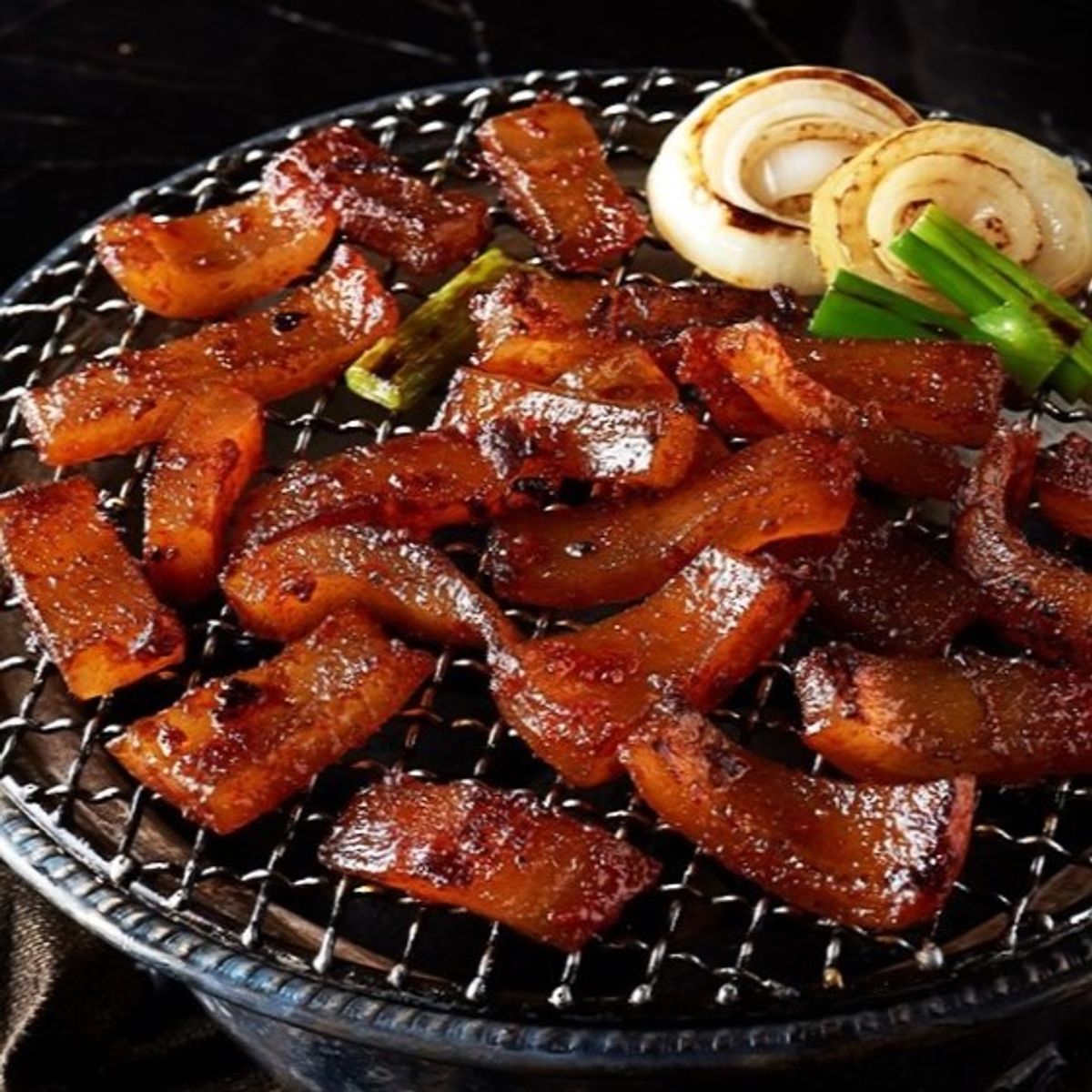
Step into any bustling Korean barbecue house, and alongside the famous cuts of pork belly and galbi, you might find a true local favorite: Dwaeji-kkeopdegi, or grilled pork rind. While it might sound unusual, this dish is a beloved staple, especially enjoyed with a glass of soju among friends. It’s the ultimate ‘anju’ (food paired with alcohol), celebrated for its addictive, chewy texture and savory flavor. The taste profile is a delightful dance of savory and sweet, thanks to a rich marinade that makes every bite an experience.
Ingredients & Flavor Profile
- Key Ingredient: The star of the show is simply Pork Rind (or Pork Skin). It’s prepared meticulously to transform it from a humble ingredient into a culinary delight known for its unique gelatinous and chewy texture that becomes wonderfully crisp on the edges when grilled.
- The Secret of Taste: The magic lies in its marinade. A base of soy sauce provides a deep, savory umami flavor, while sugar adds a touch of sweetness to create that perfect ‘dan-jjan’ (sweet and salty) balance. Aromatic ginger cuts through the richness and adds a subtle, spicy warmth, while a hint of cinnamon introduces a complex, fragrant note that makes the dish truly special.
Dietary Information
Dwaeji-kkeopdegi is made from a meat by-product and is not suitable for vegetarians or vegans. As this dish is entirely animal-based, there are no vegetarian versions available. Those with pork-related dietary restrictions should avoid this menu item.
How It’s Cooked and Served
As a classic ‘Gogi-gui’ (Korean BBQ) dish, Dwaeji-kkeopdegi is cooked right at your table for a fresh and interactive dining experience. The process is as much a part of the fun as the eating itself.
- Preparation: Before it even reaches your table, the pork rind is first boiled. This crucial step cleans the skin and tenderizes it, removing any excess fat and ensuring a pleasant, chewy consistency.
- Marination & Grilling: The boiled rind is then soaked in the signature soy sauce-based marinade. Once you order, it’s placed on the hot grill. You’ll notice it start to curl and sizzle. A special grilling press is often used to hold it flat against the grill, which prevents the skin from dangerously popping and ensures it cooks evenly to a beautiful golden-brown.
- The Finishing Touch: Once grilled to perfection—crispy on the outside and chewy on the inside—it’s cut into bite-sized pieces. The traditional way to enjoy it is by dipping each piece into a small bowl of ‘konggaru’ (roasted soybean powder). This nutty, savory powder wonderfully complements the rich flavor of the pork rind and helps absorb a bit of the oil, creating a perfect final taste.
This is a standard method based on general recipes. Every restaurant has its own secret twist and unique style!
Nutritional & Health Benefits
While Dwaeji-kkeopdegi is an indulgent treat, it comes with some surprising perks that Koreans have long celebrated:
- Collagen Powerhouse: Pork rind is famously rich in collagen. In Korean culture, consuming collagen-rich foods is believed to promote skin elasticity and health, making this dish a “beauty food” favorite.
- Source of Protein: Beyond its texture, pork rind also provides a good amount of protein, which is essential for muscle repair and overall body function.

The KCulture Editorial Team is dedicated to providing deep insights and accurate information about the vibrant world of Korean culture.