
Girls’ Generation-HyoRiSoo is the trio of Hyoyeon, Yuri, and Sooyoung, an official subunit that turned a self-aware YouTube comedy premise into one of K-pop’s most delightful 2026 debuts. Their appeal is not simply that three second-generation legends returned to the stage. HyoRiSoo works because veteran skill, genuine friendship, absurd “sixth-generation rookie” role-play, and two new songs all belong to the same story.
For international fans, the group is also an unusually accessible lesson in Korean idol humor. The members parody position battles, generational labels, debut anxiety, fandom culture, and their own 19-year history without treating the music as a joke. Here is how HyoRiSoo was formed, why the comedy travels so well, and what to watch and listen to first.

- Who Is Girls’ Generation-HyoRiSoo?
- Meet Hyoyeon, Yuri, and Sooyoung
- How a YouTube Joke Became a Real Subunit
- HyoRiSoo’s Comedy Code Explained
- “Skibidi” and “Lowkey In Love”
- HyoRiSoo’s 2026 Activity Timeline
- Why HyoRiSoo Is More Than Nostalgia
- How International Fans Can Watch HyoRiSoo
- HyoRiSoo FAQ
- More Korean Music Stories
Who Is Girls’ Generation-HyoRiSoo?
HyoRiSoo (효리수), officially styled Girls’ Generation-HRS for its music release, is formed from Hyoyeon, Yuri, and Sooyoung. The Korean name is normally pronounced roughly “Hyo-ree-soo.” Like Girls’ Generation’s earlier unit TaeTiSeo—Taeyeon, Tiffany, and Seohyun—the name combines parts of the members’ names.
HyoRiSoo is generally described as Girls’ Generation’s third formally released subunit, following TaeTiSeo and Girls’ Generation-Oh!GG. The comparison with TaeTiSeo is central to the joke. TaeTiSeo became famous as a polished vocal unit, while HyoRiSoo emerged from three members strongly associated with Girls’ Generation’s performance line and then loudly demanded the main-vocal and center positions for themselves. Yet calling HyoRiSoo only the “dance-line unit” undersells them. All three have nearly two decades of recording, touring, television, and live-stage experience, and the project deliberately gives their voices more room than casual listeners might expect.
Longtime Girls’ Generation fans are known as SONEs, pronounced like “sowon,” the Korean word for “wish.” For SONEs, HyoRiSoo is especially rewarding because many jokes depend on familiar group roles while also overturning those expectations.
Quick answer: HyoRiSoo is both a real Girls’ Generation subunit and an ongoing comedy universe. The “rookie group” is fictional role-play; the August 31, 2026 digital single, official performance video, festival stages, and television performances are real.
Meet Hyoyeon, Yuri, and Sooyoung
| Member | Name in HyoRiSoo | Established Strengths | HyoRiSoo Character |
|---|---|---|---|
| Hyoyeon | “Hyo” | Elite dancer, rapper, solo artist, DJ, and variety personality | The instigator who wants the main-vocal crown and treats every wild idea as a reasonable career plan |
| Yuri | “Ri” | Powerful performer, singer, soloist, actor, and entertainer | The confident competitor whose commitment makes even the most ridiculous premise feel serious |
| Sooyoung | “Soo” | Dancer, singer, lyricist, actor, host, and famously quick variety wit | The unit’s youngest member and fast-talking challenger, able to puncture anyone’s confidence—including her own—with one line |
What makes this lineup work is balance. Hyoyeon supplies fearless physical comedy and a willingness to look ridiculous. Yuri can turn mock seriousness into a full dramatic scene. Sooyoung has exceptional comic timing and often says the brutally logical thing that makes the entire setup collapse. Then the music begins, and all three switch instantly into veteran performance mode.
That contrast is the engine of HyoRiSoo: the characters behave as if they have no idea how the industry works, while the women playing them understand it better than almost anyone.
How a YouTube Joke Became a Real Subunit
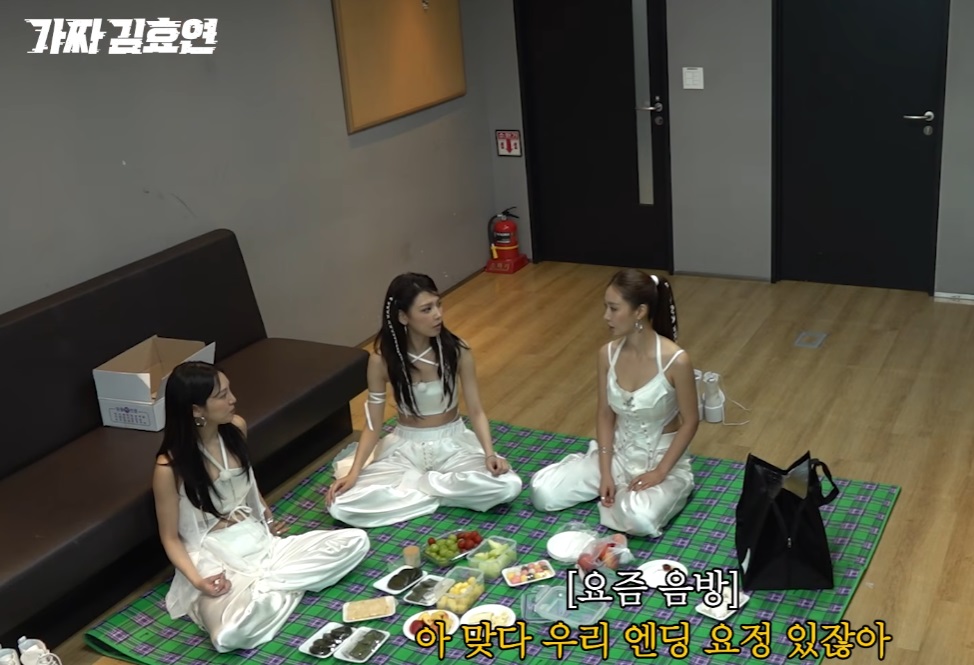
The idea first surfaced on September 24, 2025, in “Fake Kim Hyoyeon”, a mockumentary-style series on Hyoyeon’s YouTube channel, Hyo’s Level Up (효연의 레벨업). With Tiffany appearing in the episode, Hyoyeon floated a new unit that could challenge TaeTiSeo and, more importantly, give her a path toward becoming a main vocalist.
Yuri and Sooyoung were the perfect recruits. The three already shared years of onstage trust and offstage teasing, so the project did not need a manufactured origin myth. Its story could be built from their real relationship: friends who know precisely how far they can push one another.
In 2026, the concept expanded into the “HyoRiSoo Debut Project.” The trio argued over center placement, auditioned for vocal authority, practiced greetings, sought support from other Girls’ Generation members, and behaved like desperate trainees despite having debuted in 2007. A vote eventually crowned Hyoyeon the project’s main vocalist, but the position remained less a fixed musical hierarchy than a renewable source of conflict.
Audience response transformed the premise. Videos about the “vocal war,” Yoona’s pressured declaration of support, and the unit’s internal campaigning drew strong attention. Television followed: HyoRiSoo appeared on major variety programs, including You Quiz on the Block and How Do You Play?. What began as creator-led content acquired a real schedule, real songs, and official support from SM Entertainment.
This was not a conventional agency rollout with a concept trailer followed by member reveals. The characters came first, viewers became invested in the journey, and the music arrived as the payoff. HyoRiSoo effectively built its debut story backward.
HyoRiSoo’s Comedy Code Explained
The “Sixth-Generation Rookie” Contradiction
The biggest running gag is simple: HyoRiSoo calls itself a sixth-generation rookie group. K-pop fans endlessly debate where one generation ends and another begins, so three 2007 debutants claiming the newest possible label is already funny. The members then heighten the joke by acting nervous about debut evaluations, hierarchy, positions, and survival while casually revealing 19 years of industry instincts.
The humor does not mock younger idols. It targets the machinery surrounding every new debut—the labels, slogans, lore, position titles, viral challenges, and pressure to appear unprecedented. If you are following actual new acts, KCulture’s guides to RESCENE and the 2026 rookie boy-group class offer a useful contrast with HyoRiSoo’s veteran-rookie parody.
Fake Ambition, Real Commitment
The members never wink at the camera and abandon the premise too early. When they fight for the main-vocal title, they actually sing. Sooyoung’s attempts at Taeyeon’s famous high-note ad-libs are funny because the assignment is audacious, but they also remind viewers how vocally capable she is. Hyoyeon’s exaggerated training scenes work for the same reason: beneath the comic struggle is a professional prepared to practice.
One episode begins with ambitions so inflated that the staff are told to prepare passports for the Grammys. It is obvious comic overreach, but saying it with complete conviction makes it land. For a very different Grammy-related K-pop story, see why BTS is boycotting the 2027 Grammy Awards.
Position Battles Become Friendship Comedy
“Who is the center?” and “Who is the main vocalist?” can be sensitive questions for a new group. HyoRiSoo turns them into playground arguments. The members steal attention, expose one another’s weak logic, campaign for votes, and refuse to grant an easy victory. Because viewers know their friendship is durable, the aggression reads as intimacy rather than hostility.
Korean variety comedy often depends on this kind of tiki-taka: rapid back-and-forth in which one person sets a premise, another attacks it, and a third escalates the situation. Subtitles can translate the words, but the speed, facial reactions, and split-second interruptions carry much of the humor across languages.
They Parody Authority by Acting Like Veterans
At the CassCool Festival, Hyoyeon jokingly told an excited audience not to cheer or clap, as though a newly debuted group had already gained the authority to discipline its fans. The command was ridiculous in a festival setting, yet her veteran control of the crowd made the bit work. Clips spread because the joke needed almost no translation.
The project even plays with the nickname Murisu (무리수) for its followers. In everyday Korean, murisu can describe an excessive move or comic overreach; it also happens to rhyme with HyoRiSoo. A fan identity built around “taking things too far” is perfectly on-brand.
Self-Parody Without Self-Disrespect
Most importantly, the comedy never asks the audience to believe Girls’ Generation is outdated. HyoRiSoo can joke about seniority, stamina, vocal roles, and generational branding because the members remain excellent at the job. Their self-parody comes from confidence. They are not apologizing for having history; they are using that history as creative material.
“Skibidi” and “Lowkey In Love”
HyoRiSoo’s first digital single, Skibidi, was released on August 31, 2026 with two tracks. The title song begins in house territory, shifts into hip-hop, and uses Arabian-style string samples to add tension and theatrical color. Its message about making a new path fits the trio unusually well: they are not pretending their past disappeared, but they refuse to let it define the limits of their next move.
The word “skibidi” has circulated as elastic internet nonsense across meme culture, especially among younger users. Giving it to a veteran unit is deliberately cheeky. The title supports the sixth-generation rookie gag, while the music is constructed for performers with genuine control. The choreography, developed with the dance crew WeDemBoyz, emphasizes formation changes, attitude, and the members’ different textures rather than asking them merely to reproduce old Girls’ Generation moves.
The official “Skibidi” performance video is the clearest starting point. Visually, the white tops and denim can recall the accessible pop iconography of “Gee,” but the styling and movement belong to the women the members are now. The track’s genre pivots may also remind longtime listeners of Girls’ Generation’s adventurous “I Got a Boy,” without copying it.
“Lowkey In Love” is the warmer counterpart: a retro-leaning dance-pop song built from bright brass, rhythmic groove, and a catchy melody. Where “Skibidi” sells swagger and disruption, “Lowkey In Love” shows their easy chemistry and melodic charm. Listen to the official audio or watch the trio perform it on Show! Music Core.
The Pre-Debut OST: “A Night When Stars Pour Down”
Before the Skibidi single, HyoRiSoo also recorded “A Night When Stars Pour Down” (별이 쏟아지는 밤) for the short-form drama project featured on MBC’s How Do You Play?. Their June 20 broadcast performance functioned like a playful early debut and showed a softer, more melodic side of the trio before their official SM unit launch.
This song should not be confused with a third track on the August release. The formal Skibidi digital single contains only “Skibidi” and “Lowkey In Love”; “A Night When Stars Pour Down” is a separate project OST that forms part of HyoRiSoo’s pre-debut story.
The two-song structure is smart. “Skibidi” attracts curiosity; “Lowkey In Love” gives listeners a song that could sit naturally beside the bright, retro-pop side of the broader Girls’ Generation catalog. Together they prove the project has a musical identity beyond its punch lines.
HyoRiSoo’s 2026 Activity Timeline
| Date | Activity | Why It Matters |
|---|---|---|
| Early 2026 | The HyoRiSoo storyline expands through “Fake Kim Hyoyeon,” including vocal and center competition | A recurring web-variety joke becomes a viewer-supported debut campaign |
| Spring 2026 | Appearances and discussion spread to mainstream television, including You Quiz on the Block | The project moves beyond Girls’ Generation’s existing online fandom |
| June 20 | HyoRiSoo performs the project OST “A Night When Stars Pour Down” on MBC’s How Do You Play? | The separate OST becomes a musical bridge between the YouTube comedy and the later official debut |
| August 22 | First official live stage at the 2026 CassCool Festival at Seoul Land (서울랜드) in Gwacheon (과천) | “Skibidi” and “Lowkey In Love” are unveiled before release, alongside Girls’ Generation favorites |
| August 31 | The two-track digital single Skibidi and its performance video are released | This is the formal music-release debut of Girls’ Generation-HRS |
| Early September | “Skibidi” tops YouTube’s trending music chart in Korea and its performance video rapidly gathers millions of views | The response shows interest extending beyond a one-night nostalgia event |
| September 5 | “Skibidi” and “Lowkey In Love” are performed on MBC’s Show! Music Core | The mock rookie narrative completes its transformation into a real music-show debut |
| September 5 | MBC’s The Manager shows their rehearsal process with WeDemBoyz | Viewers see that the comedy-heavy project still demands serious preparation |
A useful distinction is that August 22 was the first official live appearance and pre-release performance, while August 31 was the formal digital debut. The September 5 music-show stage then gave HyoRiSoo the classic televised milestone that their “rookie” characters had been chasing.
Why HyoRiSoo Is More Than Nostalgia
A nostalgia comeback usually asks fans to remember how an artist once made them feel. HyoRiSoo uses memory differently. “Gee,” “Genie,” “Kissing You,” TaeTiSeo, old position labels, and second-generation variety culture are raw materials, not the finished product. The trio rearranges them through current YouTube pacing, meme language, short-form clips, and a creator-led narrative.
That matters for K-pop’s idea of career longevity. Female idols have often faced pressure to freeze a youthful image or disappear from the center of pop culture. HyoRiSoo chooses another option: acknowledge age and experience, exaggerate both for comedy, and then perform with enough precision to make the joke empowering.
The unit also shows how established artists can create new intellectual and emotional value without erasing their group identity. “Girls’ Generation-HRS” keeps the parent group’s name visible, but HyoRiSoo has a distinct tone, sound, and audience relationship. The members are not competing with their younger selves. They are demonstrating what younger selves could not yet possess: freedom, comic authority, and the confidence to build a release around their own chemistry.
In that sense, HyoRiSoo belongs to a wider Korean music story in which longevity takes many forms. AKMU protects a sibling-created musical identity, while The Rose built global momentum through a band-centered path. HyoRiSoo’s contribution is to show that variety storytelling itself can become the foundation for a credible pop release.
How International Fans Can Watch HyoRiSoo
- Begin with the origin. Watch the September 2025 “Fake Kim Hyoyeon” episode with Tiffany. It establishes the TaeTiSeo rivalry and Hyoyeon’s main-vocal ambition.
- Move to the debut project. Browse Hyo’s Level Up for the HyoRiSoo episodes. Many videos provide English subtitles, and the recurring jokes become funnier in sequence.
- Watch the project become real. Episode 1 of the formal debut run captures their passport-and-Grammys level of ambition, while the later festival and music-show episodes reveal how quickly the joke acquired real stakes.
- See the finished performance. Watch the official “Skibidi” performance video, followed by the Music Core stage.
- Do not skip “Lowkey In Love.” It is essential for understanding the unit’s musical range and is likely to appeal to listeners who prefer Girls’ Generation’s brighter pop side.
Search tip: Use 효리수, 효리수 데뷔 프로젝트, or 가짜 김효연 on Korean platforms. These terms usually surface more full episodes, broadcast clips, and fan discussions than the English spelling alone.
Fan tip: Watch the members’ faces when someone else is speaking. HyoRiSoo’s funniest moments often happen before the subtitle arrives: a stare, a suppressed laugh, or Sooyoung preparing to destroy an argument.
HyoRiSoo FAQ
Is HyoRiSoo an official Girls’ Generation subunit?
Yes. It began as a comic, self-produced idea on Hyoyeon’s channel, but Girls’ Generation-HRS officially released music through SM Entertainment, issued a performance video, and promoted on a national music program. Its origin is unconventional; the release is real.
Are Hyoyeon, Yuri, and Sooyoung really sixth-generation rookies?
No. All three debuted with Girls’ Generation in 2007 and are second-generation K-pop veterans. “Sixth-generation rookie” is a running joke about the industry’s obsession with generational labels. HyoRiSoo itself, however, is genuinely new in the sense that this exact trio had not previously released its own music under a dedicated unit name.
Is HyoRiSoo replacing Girls’ Generation?
No. The official credit “Girls’ Generation-HRS” emphasizes continuity with the parent group. The unit creates another route for members to work together while maintaining individual careers and the larger Girls’ Generation identity.
Does “Skibidi” Have a Precise Meaning?
Not in the way an ordinary dictionary word does. It is a flexible piece of internet slang and meme language. In HyoRiSoo’s concept, that generational absurdity is part of the appeal: three veteran idols confidently claim a hyper-current nonsense word and make it serve their own message about creating a new path.
Will HyoRiSoo Release More Music?
As of September 18, 2026, no full album or fixed long-term release schedule has been confirmed. The debut’s strong response, continuing content, and clear two-song identity make further activity plausible, but fans should distinguish enthusiasm from an official announcement.
More Korean Music Stories
HyoRiSoo is a reminder that K-pop is not a conveyor belt that replaces one generation with the next. It is an expanding ecosystem in which rookies, veteran idols, indie musicians, bands, and singer-songwriters can all build different relationships with audiences.
- Who Are CORTIS? The K-pop Group Breaking Billboard Records
- Who Is HANRORO? The Voice of Korea’s Indie Rock Wave
- Beyond K-Pop: The Timeless Music of Kim Kwang-seok
- Inside AKMU: The Inspiring Journey of K-Pop’s Genius Siblings
- The Rose Korean Band: Indie Journey to Global Stardom
HyoRiSoo’s best punch line may be that the “fake rookie” became a genuinely interesting new group. The members can make fun of the debut system because they helped build the modern K-pop stage; they can challenge their own history because they are secure inside it. The result is not a museum-piece reunion, but a living, funny, skillful argument that Girls’ Generation still has new stories to tell.
Korean Culture portal KCulture.com

The KCulture Editorial Team is dedicated to providing deep insights and accurate information about the vibrant world of Korean culture.