Unusual Korean food imports reveal a surprising side of Korean cuisine: South Korea buys British and Irish whelks for spicy pub snacks, Argentine skate for a famously pungent delicacy, Norwegian mackerel for everyday meals, and North American hagfish for Busan’s grills. Some of these ingredients are eaten elsewhere, but Korean demand is unusually important to the people who catch and export them.
For travelers, this is more than a trade story. It explains why a familiar-looking Korean meal may begin thousands of miles away—and why an ingredient rarely eaten in its country of origin can become a celebrated tradition in Korea. Here are the foods, the cultures that made them popular, and the best ways to experience them.
- Why Unusual Korean Food Imports Matter
- Hongeo: Argentine Skate and Korean Fermentation
- Golbaengi: British and Irish Whelks in Seoul
- Godeungeo: Why Korea Imports Norwegian Mackerel
- Kkomjangeo: North American Hagfish in Busan
- Jjukkumi and Pollock: Vietnam and Russia on the Menu
- Beyond Seafood: Imported Bracken and Acorns
- Where to Try These Foods in Korea
- How to Order and Check Food Origins
- What Food Imports Reveal About Korean Culture
Why Unusual Korean Food Imports Matter
Korea is surrounded by sea, has a long fishing history, and remains one of the world’s enthusiastic seafood markets. Yet domestic catches cannot supply everything Koreans want, in every season, at an affordable price. Imports help fill that gap. What makes the story especially interesting is which foods Koreans choose to import.
In 2025, Korea’s seafood imports totaled roughly 1.45 million metric tons. Among its notable suppliers were Norway, Russia, Vietnam and China. But the most revealing trade routes are sometimes those connecting a relatively obscure fish or shellfish abroad with a beloved Korean dish.
| Ingredient | Important overseas source | How Koreans commonly enjoy it |
|---|---|---|
| Skate (hongeo) | Argentina; also Japan, the U.S. and other countries | Aged or fermented, often with pork and kimchi |
| Whelks (golbaengi) | United Kingdom and Ireland | Spicy salad with wheat noodles and beer |
| Mackerel (godeungeo) | Norway | Salted and grilled with rice |
| Hagfish (kkomjangeo) | United States and Canada | Grilled with salt or spicy seasoning |
| Webfoot octopus (jjukkumi) | Vietnam, alongside other suppliers | Spicy stir-fry, often finished with fried rice |
| Alaska pollock (myeongtae) | Russia; also the United States | Soup, dried fish, and winter-dried hwangtae |
These are not all examples of Korean near-monopolies on global consumption. Mackerel and pollock are eaten widely around the world. Whelks and hagfish, by contrast, show how Korea can become an exceptionally important destination for a product with a much smaller dining audience elsewhere.
Hongeo: Argentine Skate and Korean Fermentation
Imagine fishing boats landing skate in the South Atlantic, only for that fish to find its most enthusiastic diners on the other side of the world. That is part of the story behind hongeo (홍어), the skate associated with Korea’s famously sharp-smelling fermented seafood tradition.
The most prestigious Korean skate is associated with Heuksando Island (흑산도), off the southwestern coast. But locally caught skate commands premium prices, and imports supply much of the more affordable restaurant market. Argentina has been a leading source of imported frozen skate; Japan, the United States and Chile have also supplied Korea, with their shares changing over time.
Why does fermented skate smell like ammonia?
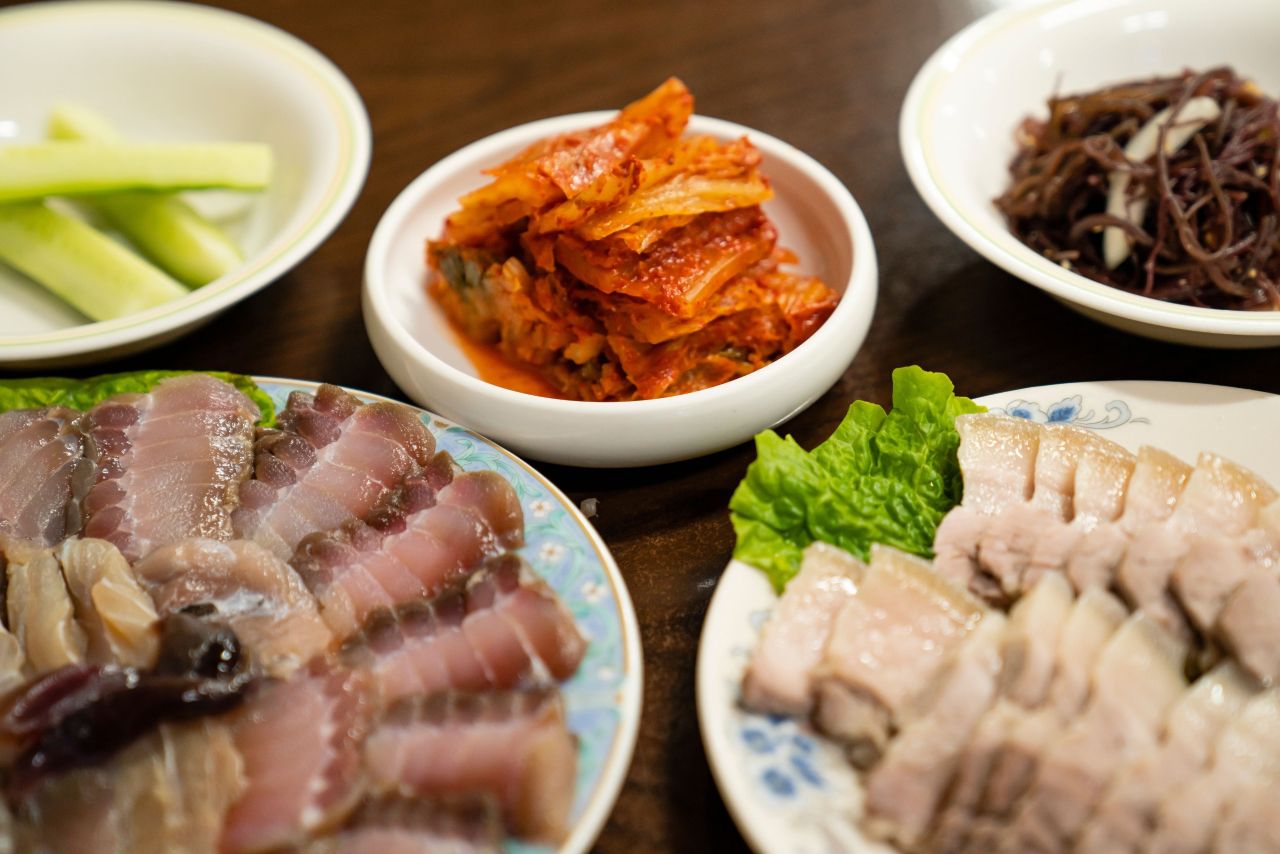
Skates are cartilaginous fish that retain substantial amounts of urea in their bodies. During controlled aging, chemical changes produce ammonia and other pungent compounds. The resulting sensation is not merely a strong fish smell: it can create a distinctive, almost nose-tingling rush. This is also why hongeo is not interchangeable with ordinary spoiled fish. It must be handled and prepared by experienced producers.
One traditional explanation traces the taste to skate transported from coastal islands inland without modern refrigeration. By the time the fish arrived, its character had changed. The precise origin story is difficult to prove, but its association with regional transportation and preservation is central to the food’s identity.
Why do Koreans eat something so challenging?
Hongeo is closely linked to celebrations and hospitality in the southwestern Jeolla region. In Yeongsanpo (영산포), part of Naju (나주), and in Mokpo (목포), a generous spread of skate can signal a special gathering. Many Koreans outside the region find the aroma challenging too; it is not a food that every Korean automatically loves.
The best-known serving style is hongeo samhap (홍어삼합): a bite of fermented skate, boiled pork and aged kimchi eaten together. The pork softens the impact, while the kimchi adds acidity and crunch. Makgeolli, Korean rice wine, is a traditional accompaniment.
Local tip: First-timers should ask for lightly aged skate rather than the strongest fermentation available. Ask whether the skate is Korean-caught or imported; the price difference can be considerable, and neither answer determines whether you will enjoy it.
If this sounds intimidating, Korean seafood culture offers gentler introductions as well. Ganjang gejang, Korea’s soy-marinated raw crab, is another deeply distinctive dish worth exploring, with its own handling and freshness considerations.
Golbaengi: British and Irish Whelks in Seoul
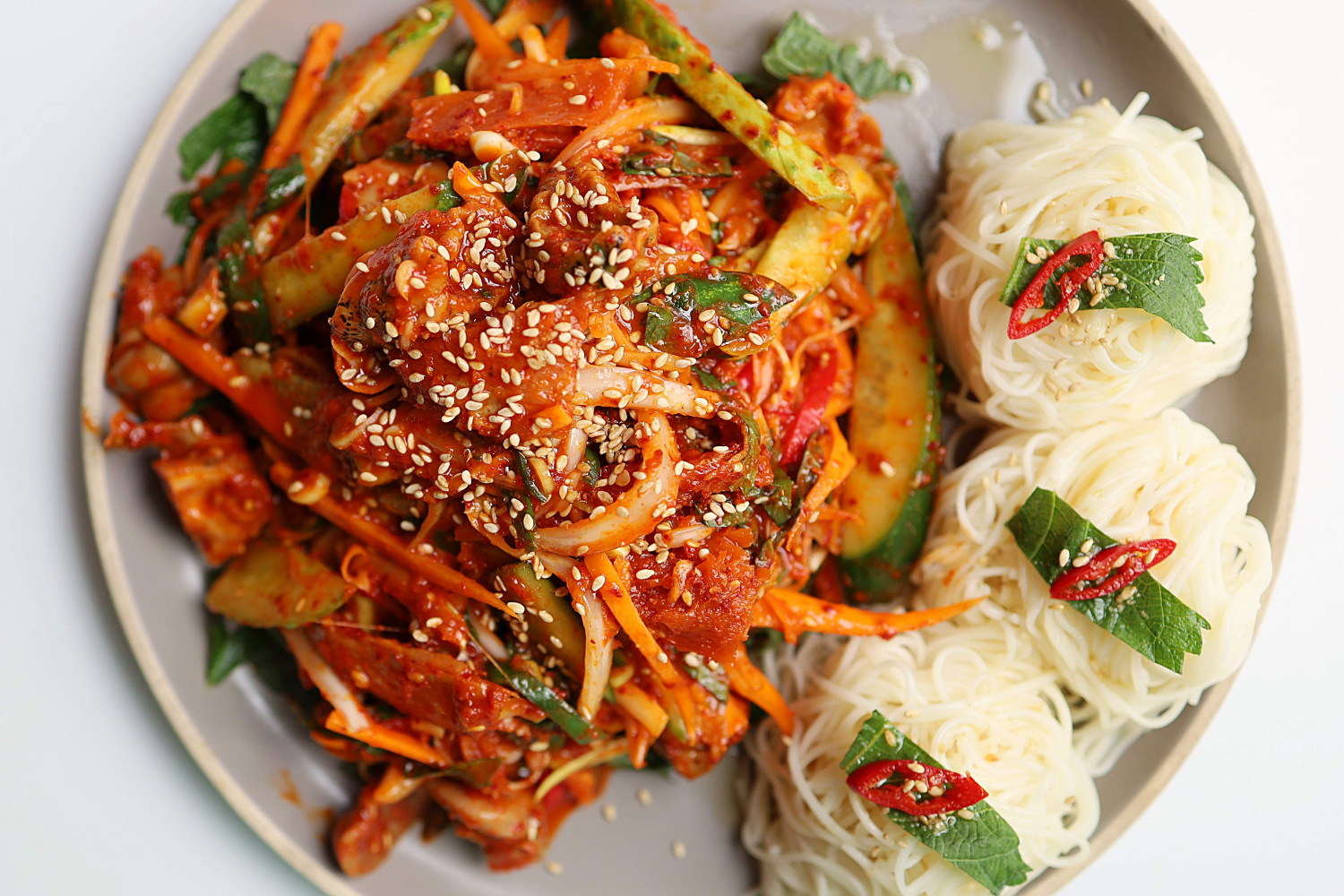
On the shores of Britain and Ireland, whelks may be harvested primarily for export. Far away, in a Seoul pub, the same type of shellfish might appear in a bright red heap of scallions, chili seasoning and thin noodles. This is golbaengi-muchim (골뱅이무침), a classic Korean drinking snack.
The word golbaengi is used loosely in Korean for several edible marine snails, not just one biological species. Different Korean coastal whelks and imported North Atlantic whelks can appear under the same everyday name. The familiar canned product used in many pub dishes is frequently made with imported whelks, particularly from the United Kingdom and Ireland.
Does Korea really eat 90% of the world’s whelks?
You may encounter the remarkable claim that Korea consumes around 90% of the world’s golbaengi. Versions of this estimate have circulated widely in Korean food reporting. It should not be treated as a verified percentage of every species of sea snail consumed worldwide. Species, product classifications and reporting periods differ, and countries such as France and Japan also eat whelks or related shellfish.
There is, however, strong evidence of Korea’s extraordinary importance to specific suppliers. British fisheries data show that at least 70% of UK whelk exports went to South Korea in each year from 2017 through 2020. The share was 49% in 2021, illustrating why a single timeless percentage is misleading. Irish industry figures also show Korea receiving half of Ireland’s reported whelk exports in 2021. The larger point remains: Korean diners help shape a fishing business thousands of miles from Seoul.
How a canned shellfish became an urban tradition
During Korea’s rapid industrialization, workers gathered after shifts in the printing shops, tool markets and factories around Euljiro (을지로), central Seoul. Canned whelks were convenient to store, and restaurant owners transformed them with sliced green onions, garlic, chili seasoning and sometimes strips of dried pollock. Served with beer, the dish became a neighborhood institution.
Today, golbaengi-muchim is often served with somyeon (소면), thin wheat noodles mixed into the spicy sauce. The whelks contribute a pleasantly firm, springy chew rather than a strong fishy taste. It is approachable for visitors who like shellfish and boldly seasoned salads.
Local tip: For an after-work experience, visit Euljiro’s traditional golbaengi pubs in the early evening. Many dishes are sized for sharing, and the sauce can be surprisingly hot. Order the noodles if they are not already included.
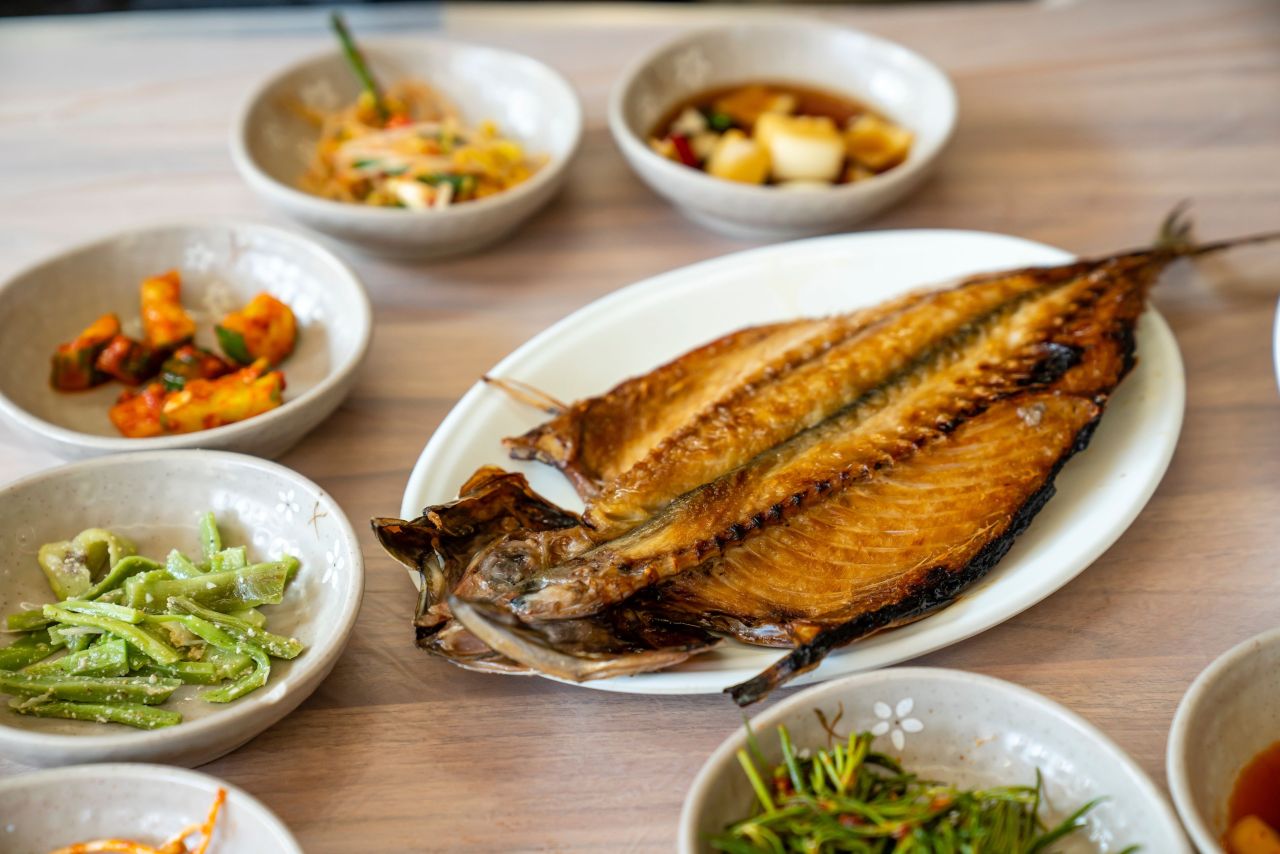
A significant portion of the mackerel consumed in Korea is imported from Norway.
Godeungeo: Why Korea Imports Norwegian Mackerel
Not every imported Korean favorite is unusual. Some are as ordinary—and as important—as a weekday dinner. Godeungeo-gui (고등어구이), grilled mackerel served with rice, soup and side dishes, is a familiar sight in Korean homes, cafeterias and modest restaurants.
Korea catches its own mackerel, but seasonal supply, fish size, consumer preferences and price also sustain a major import trade. Norway supplies Atlantic mackerel, which is distinct from the Pacific chub mackerel commonly caught in Korean waters. Both can be sold as mackerel, but their characteristics and fat content vary with species, season and handling.
The scale is striking: Korean fisheries trade data recorded about 48,300 metric tons of mackerel imported from Norway in 2025. Across all suppliers, Korea imported roughly 61,700 tons of mackerel that year. This is not a story of Korea consuming most of the world’s mackerel. It is a story of one ordinary Korean meal becoming an important market for northern European fishermen.
Grilled mackerel is often split open, salted and cooked until the skin is crisp. Diners lift pieces of rich fish from the bones and eat them with plain rice; a little grated radish or dipping sauce may accompany the plate. For a first experience of Korean seafood, this is far easier than fermented skate.
To see how fish fits into Korea’s wider everyday dining culture, explore Korean gukbap and the country’s many comforting soup traditions.
Kkomjangeo: North American Hagfish in Busan
Of all these trade routes, hagfish may be the most surprising to American and Canadian readers. In parts of North America, fishermen catch an animal that many local consumers would barely recognize as dinner. In Korea, it can be the star of an animated, smoke-filled seafood restaurant.
Kkomjangeo (꼼장어), also written gomjangeo, is the Korean culinary name for hagfish. Despite its eel-like appearance and the word jangeo (eel), it is not a true eel. Hagfish are jawless marine animals known for producing remarkable amounts of defensive slime.
Korean demand has long supported exports from North American hagfish fisheries. U.S. and Canadian products are both present in the Korean market, sometimes shipped live and sometimes frozen. For a species with limited mainstream demand in North America, that export connection is especially significant.
In Busan (부산), hagfish is typically skinned, cut into pieces and grilled. You can choose sogeum-gui (소금구이), with salt, or yangnyeom-gui (양념구이), coated in a spicy sauce. The flesh is chewy, slightly springy and far less strange-tasting than its appearance might suggest.
Local tip: If you are sensitive to seeing seafood prepared at the table, ask whether the restaurant prepares the hagfish in the kitchen. For a first tasting, salt-grilled hagfish makes its flavor and texture easier to appreciate than a heavily seasoned version.
Jjukkumi and Pollock: Vietnam and Russia on the Menu
Vietnamese jjukkumi: a spicy Korean favorite
Jjukkumi (주꾸미) is usually translated as webfoot octopus. It is a smaller type of octopus—not simply a baby version of the large octopus served elsewhere. Koreans love it stir-fried in a spicy sauce, frequently alongside bean sprouts, vegetables, pork belly or rice cakes.
In 2025, Vietnam supplied about 23,600 metric tons of jjukkumi to Korea, according to Korean fisheries trade data. That makes the dish a fascinating link between Southeast Asian seafood producers and Korean neighborhood restaurants. Domestic jjukkumi remains sought after, especially in season, but imported products help keep the dish available more widely.
A signature dining ritual follows the main course: once the spicy octopus is gone, diners often order rice to be fried on the hot pan in the remaining sauce. Some restaurants add tteok, Korea’s chewy rice cakes. Curious about that texture? Read What Is Tteok? Korea’s Chewy Rice Cake Culture.
Russian pollock: a northern fish with many Korean identities
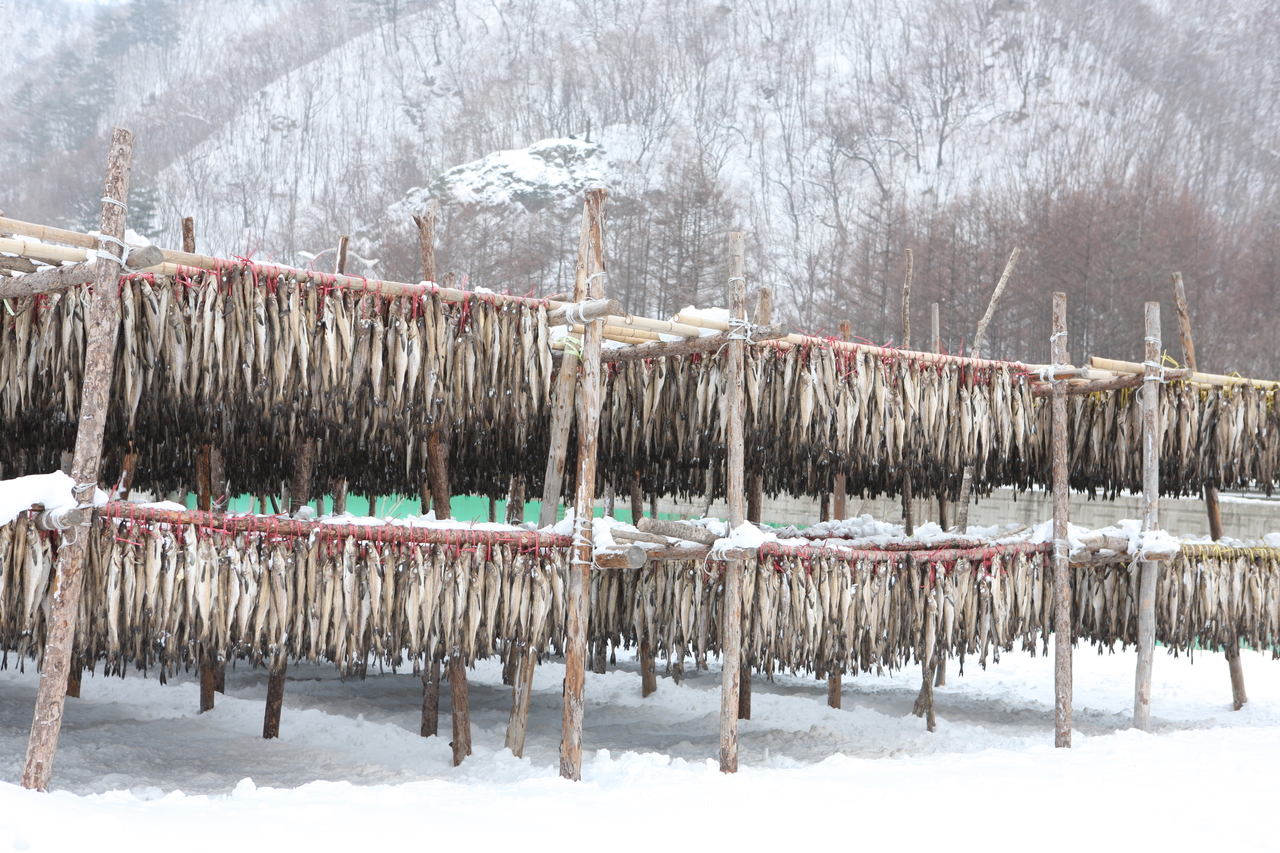
Myeongtae (명태), or Alaska pollock, is one of Korea’s most versatile fish. It appears in soups, dried snacks and seasoned dishes. Names change according to how the fish is prepared: bukeo is dried pollock, hwangtae is pollock repeatedly frozen and thawed while drying in winter, and nogari refers to young dried pollock.
Russia is a major source of Korea’s imported pollock. Korean fisheries data recorded approximately 156,300 metric tons of pollock imported from Russia in 2025. Not every imported fish becomes hwangtae, of course, but the broader connection is revealing: raw ingredients can come from distant northern seas, while their final form and cultural meaning are shaped by Korean processing traditions.
In the mountains of Gangwon Province, winter air helps transform fish into golden, airy hwangtae. A bowl of hwangtaeguk (황태국), a soothing dried-pollock soup, makes an accessible introduction. Nogari, meanwhile, belongs to the same Korean culture of beer and shared bar snacks as golbaengi.
Beyond Seafood: Imported Bracken and Acorns
The same pattern exists on land. Gosari (고사리), the cooked bracken fern found in bibimbap and vegetable side dishes, has long been gathered in Korean mountains. Yet Korea also imports processed bracken from China. A traditional ingredient can retain its place in Korean food even when the plants used to prepare it grew abroad.
Dotori (도토리), or acorns, offer another example. Koreans turn acorn starch into dotori-muk, a soft, slightly earthy jelly usually served with soy-based seasoning and vegetables. Korea has domestic acorns and also imports dried acorns, including from China. The key to the finished dish is not simply where the nut grew but the distinctly Korean technique of extracting starch and preparing the jelly.
Neither example means all gosari or acorn jelly sold in Korea is imported. And bracken should never be gathered and eaten raw without proper knowledge and processing; choose professionally prepared food.
Where to Try These Foods in Korea
Rather than searching only for a single famous restaurant, look for the neighborhoods and food traditions in which these dishes developed. They are often more rewarding—and easier to fit into a Korean trip.
- For hongeo: Visit Yeongsanpo Hongeo Street (영산포 홍어거리) in Naju, where restaurants serve fermented skate and samhap. Mokpo is another excellent destination, with choices ranging from mild preparations to full skate-focused meals. Domestic Heuksando skate is a premium option; ask before ordering if the distinction matters to you.
- For golbaengi: Explore Euljiro Golbaengi Alley (을지로 골뱅이골목) around Euljiro 3-ga Station (을지로3가역) in Seoul. Look for golbaengi-muchim or golbaengi-somyeon, and expect a convivial evening rather than a quiet tasting menu.
- For grilled mackerel: Head to Dongdaemun Grilled Fish Alley (동대문 생선구이골목) near Dongdaemun Station (동대문역), Exit 9, in Seoul. The midday rush attracts nearby workers; a slightly later lunch can be more relaxed.
- For hagfish: Explore the seafood restaurants around Jagalchi Market (자갈치시장) and the nearby Nampo area of Busan. Ask specifically for kkomjangeo-gui, as a generic eel restaurant may serve an entirely different animal.
- For jjukkumi: Visit Yongdu-dong Jjukkumi Alley (용두동 쭈꾸미골목) near Jegi-dong Station (제기동역), Exit 6, in Seoul. The signature order is spicy stir-fried jjukkumi, followed by fried rice cooked in the pan.
- For winter-dried pollock: Make a seasonal visit to Inje Hwangtae Village (인제 황태마을) in Gangwon Province to see traditional drying racks, especially in winter. For an easier introduction, search for hwangtae-gui or hwangtaeguk in Korean restaurants.
Planning tip: If you have just one evening in Seoul, golbaengi in Euljiro is especially convenient. For a simple lunch, Dongdaemun’s grilled fish alley is an easier first step. Save hongeo for a dedicated culinary adventure, ideally with another person so you can share a smaller portion.
If you enjoy exploring Korean neighborhood dishes, jajangmyeon and jjamppong reveal another story of how outside influences can become unmistakably Korean.
How to Order and Check Food Origins
Imported does not necessarily mean inferior, and Korean-caught does not always mean better for every dish. Species, freshness, handling, preparation and personal taste all matter. A few practical checks can make the experience more rewarding.
- Check the origin label. Korea requires restaurants to display origin information for designated seafood species, including mackerel, webfoot octopus and pollock, though completely dried pollock products are excluded from the restaurant rule. Not every seafood ingredient discussed here falls under the same requirement.
- Know a few useful words. Gungnaesan (국내산) means domestically produced, while suchipsan (수입산) means imported. Labels may specify Noruweisan (노르웨이산) for Norway or Areuhentinasan (아르헨티나산) for Argentina.
- Ask about preparation, not just origin. With hongeo, fermentation intensity matters more to a beginner than prestige. With golbaengi, canned imported whelks and freshly cooked Korean sea snails may be quite different experiences.
- Pay attention to shared portions. Hongeo samhap, golbaengi-muchim and grilled hagfish are frequently ordered as dishes for two or more. Solo travelers may find mackerel set meals and pollock soups much easier.
- Respect food safety and allergies. Eat fermented seafood from established businesses, not through experiments with aging raw fish at home. Seafood allergy sufferers should confirm ingredients, and travelers who avoid raw fish can choose fully cooked dishes.
For packaged food bought as a souvenir, read the actual ingredient and origin labels rather than assuming that a Korean brand means Korean-grown or Korean-caught ingredients.
What Food Imports Reveal About Korean Culture
These stories challenge a simple idea of national cuisine. A country’s food is not defined solely by where its ingredients grow or are caught. It is also defined by what people choose to eat, how they prepare it, the occasions on which they share it, and the memories attached to its flavor.
A whelk from British waters becomes a Seoul office worker’s favorite pub dish. A skate caught near Argentina becomes part of the culinary identity of southwestern Korea. Mackerel from Norway ends up beside a bowl of rice in an ordinary home. Hagfish that few North Americans would think to order becomes a specialty of Busan’s grilling culture.
Just as Korea transforms seasonal fruit into gotgam, its cherished dried persimmons, and grains and honey into traditional sweets such as yakgwa and hangwa, it gives imported ingredients unmistakably local identities.
For travelers, the most interesting question may not be simply, “Is this Korean food?” but rather, “How did this ingredient become such an important part of life in Korea?” Following that question from the fishing boat to the restaurant table offers a richer—and often more delicious—understanding of Korean culture.
Korean Culture portal KCulture.com

The KCulture Editorial Team is dedicated to providing deep insights and accurate information about the vibrant world of Korean culture.