A Refreshing Feast to Share
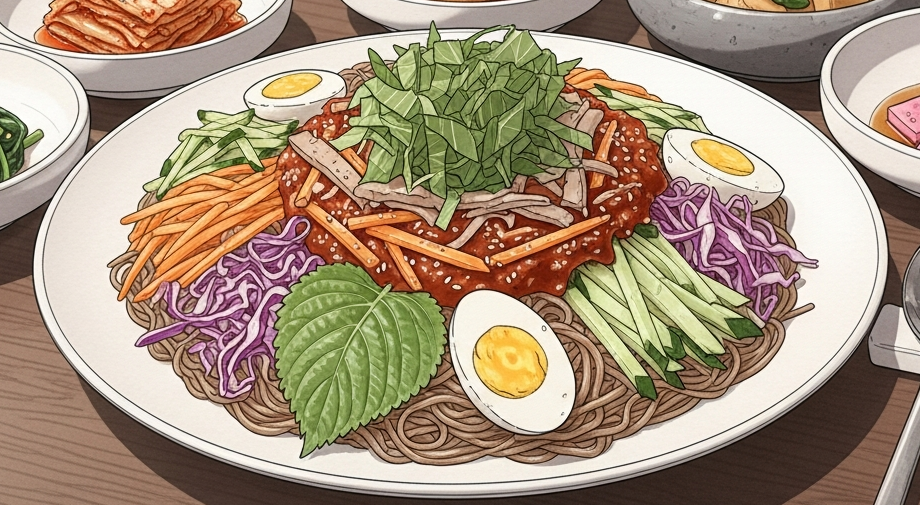
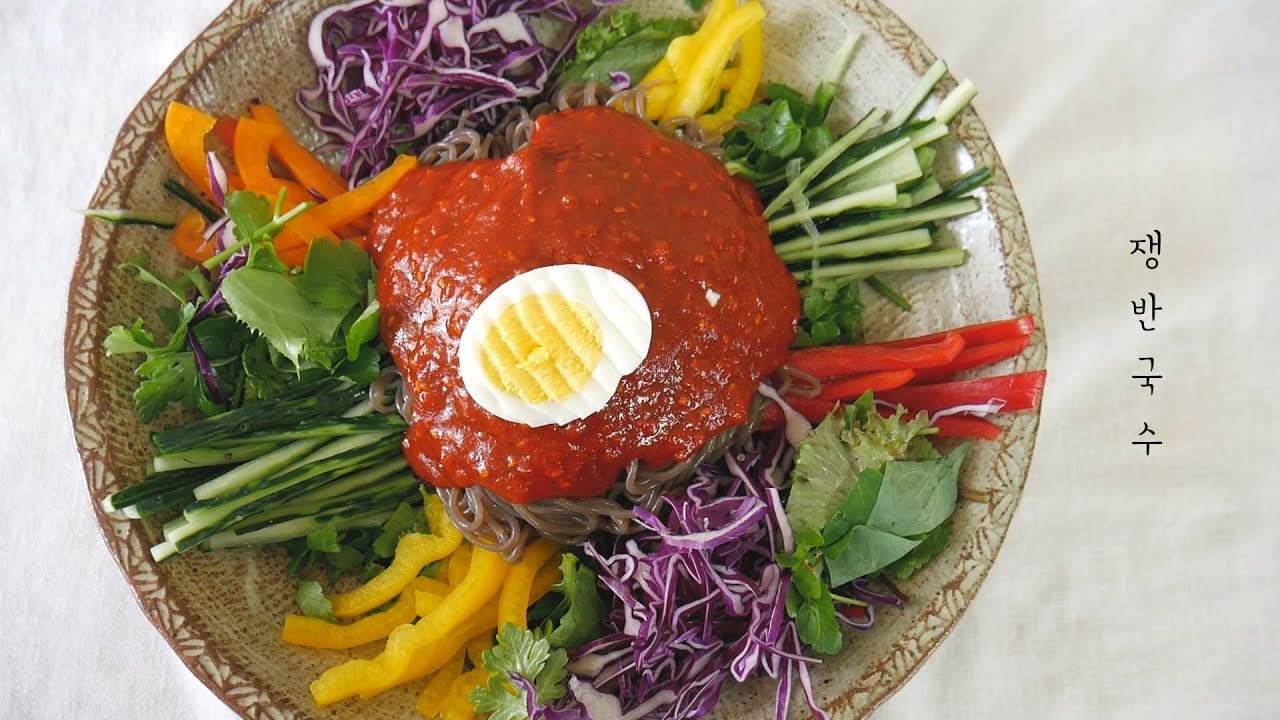
When the Korean summer heat arrives, locals turn to a vibrant and refreshing dish designed for sharing: Jaengban-guksu. The name literally translates to “platter noodles,” which perfectly describes its presentation. It’s a magnificent, large platter artfully arranged with chewy buckwheat noodles at its center, surrounded by a rainbow of fresh, crisp vegetables. This isn’t just a meal; it’s a communal experience, a centerpiece dish that brings friends and family together to mix and enjoy. The flavor profile is an electrifying dance of spicy, tangy, and sweet notes, making it the ultimate antidote to a hot day.
Ingredients & Flavor Profile
Key Ingredients
The beauty of Jaengban-guksu lies in its fresh and contrasting textures. The core components of this delightful dish include:
- Buckwheat Noodles (Memil-myeon): These noodles have a nutty, earthy flavor and a satisfyingly chewy texture that serves as the perfect base.
- Cabbage & Red Cabbage: Provide a refreshing, crunchy texture and a mild sweetness.
- Cucumber: Adds a cool, crisp, and hydrating element to the dish.
- Nuts: Often sprinkled on top for a crunchy, savory finish and an extra layer of texture.
The Secret of Taste
The soul of Jaengban-guksu is its bold and addictive sauce. The seasoning is a classic Korean combination that hits all the right notes. Gochujang (Korean chili paste) provides a deep, spicy, and savory foundation. A sharp kick from mustard awakens the palate, while vinegar adds a bright, tangy zest that cuts through the richness. Finally, a touch of sugar masterfully balances all the flavors, creating a harmonious sauce that you’ll want to drizzle on everything. When mixed together, this sauce coats every strand of noodle and vegetable, ensuring a burst of flavor in every single bite.
Dietary Information (Vegetarian/Allergy)
This dish can easily be made completely vegan. While some restaurant variations may include meat or egg as a topping, the base recipe of noodles and vegetables is plant-based.
Safety Tip: If you are vegan or have dietary restrictions, it is always best to confirm with the restaurant staff. Politely ask them to prepare the dish without any meat (“gogi bbae-juseyo”) to ensure it meets your needs.
How It’s Served
Jaengban-guksu is a visual spectacle served as a single, grand dish. The preparation is a form of culinary art. First, a colorful medley of thinly sliced fresh vegetables, like cabbage, red cabbage, and cucumber, are beautifully arranged around the outer edge of a large platter. In the very center, a generous mound of perfectly cooked and chilled buckwheat noodles is placed. The vibrant sauce is either drizzled over the top or served on the side. The true joy of the dish begins at the table, where diners use their chopsticks to mix all the components together, transforming the neatly arranged platter into a delicious tangle of noodles, vegetables, and sauce before sharing it out.
This is a standard method based on general recipes. Every restaurant has its own secret twist and unique style!
Nutritional & Health Benefits
Jaengban-guksu is as nutritious as it is delicious. Here are a few health benefits you can enjoy:
- High in Fiber: Thanks to the buckwheat noodles and abundance of fresh vegetables like cabbage and cucumber, this dish is a great source of dietary fiber, which aids in digestion.
- Rich in Vitamins & Antioxidants: The colorful array of vegetables provides a healthy dose of essential vitamins and powerful antioxidants that help support overall wellness.
- Hydrating and Cooling: With ingredients like cucumber and fresh greens, Jaengban-guksu is naturally hydrating, making it the perfect choice to help you cool down and beat the summer heat.

The KCulture Editorial Team is dedicated to providing deep insights and accurate information about the vibrant world of Korean culture.