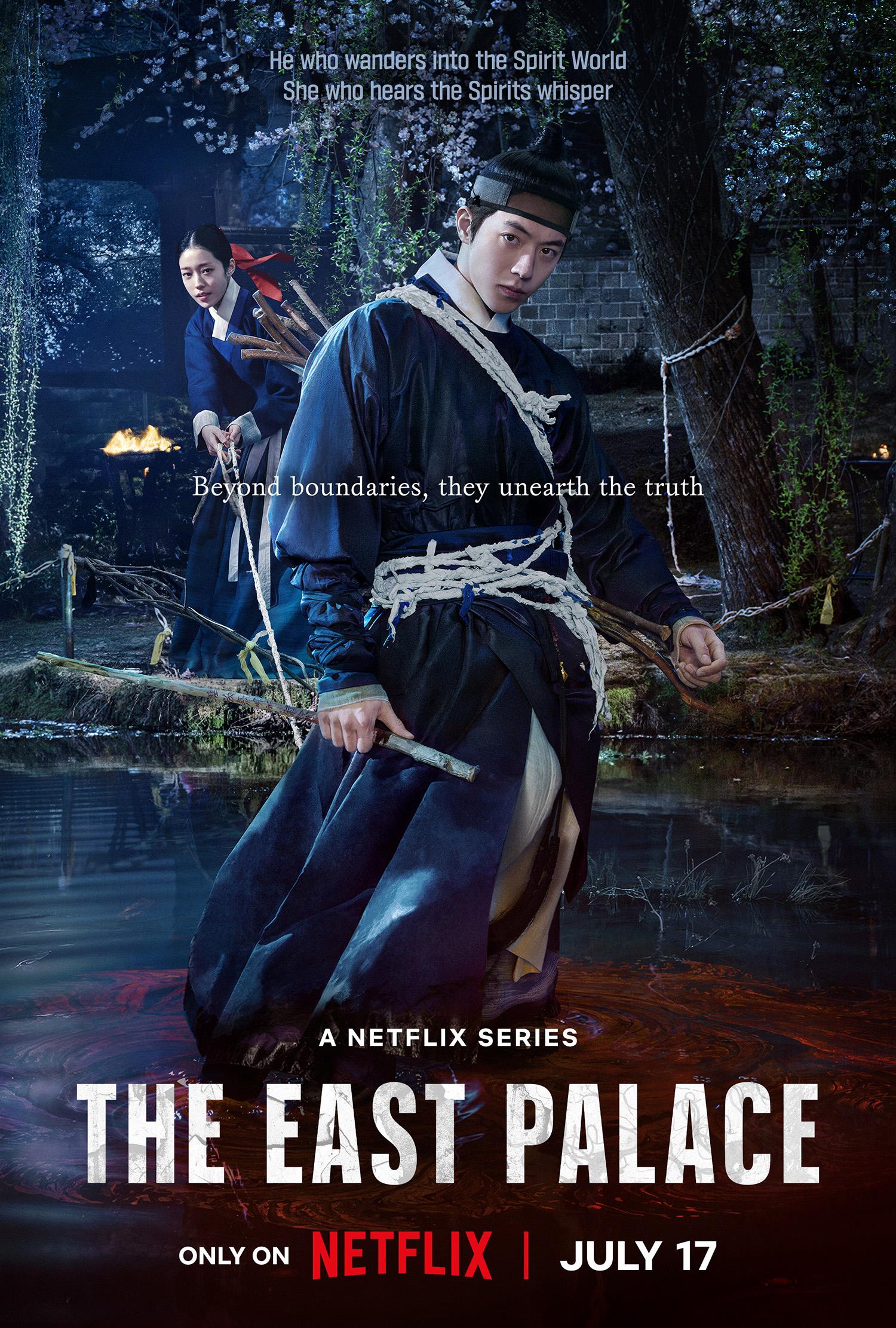
Netflix’s The East Palace (동궁) is an 8-episode original dark fantasy and occult mystery series set in a fictionalized Joseon Dynasty, completely unlinked to real Korean historical events or figures. For viewers discovering Korean historical dramas, the blend of stunning traditional palace aesthetics with terrifying supernatural horror can easily blur the line between actual history and pure imagination. This review explores the spoiler-free plot, the stellar cast, the rich Korean folklore behind the restless spirits, and why enjoying this masterpiece as an alternate universe—rather than a historical record—is the key to unlocking its full brilliance.
- Overview and Production Team
- A No-Spoiler Story
- Cast and Characters
- Fact vs. Fiction: The Alternate Universe Joseon
- Korean Folklore Reimagined: Ghosts, Han, and Shamanism
- Curiosities and Controversies: The Spirit Realm
- The True Monsters: Why The East Palace Feels Different
- Explore More K-Drama Reviews
Overview and Production Team
At first glance, The East Palace looks like a traditional Korean historical period drama. However, it quickly reveals itself as a rare combination of palace politics and dark occult fantasy. Unlike many recent hit K-dramas, this series is not based on a popular webtoon or novel; it is a completely original screenplay crafted specifically for television.
| Category | Information |
|---|---|
| Title | The East Palace (동궁) |
| Platform | Netflix Original Series |
| Release Date | July 17, 2026 |
| Genre | Dark Fantasy, Mystery, Occult, Palace Thriller |
| Director | Choi Jung-kyu (The Devil Judge) |
| Writers | Kwon So-ra & Seo Jae-won (The Guest, Bulgasal) |
The screenwriters, renowned for pioneering the modern Korean occult genre, have built an elaborate mythology where supernatural events are directly connected to human guilt and political violence. Director Choi Jung-kyu masterfully balances this psychological tension, using palace architecture and deep silence to create a persistent feeling of dread without relying heavily on cheap jump scares.
A No-Spoiler Story
When several crown princes mysteriously fall victim to unexplained illnesses and deadly accidents, terror grips the royal court. Rumors spread that an ancient curse or a demonic entity has possessed the pond inside the Crown Prince’s quarters. Desperate to protect his throne and uncover the truth, King Lee Yeon secretly summons two extraordinary individuals into the heavily guarded palace.
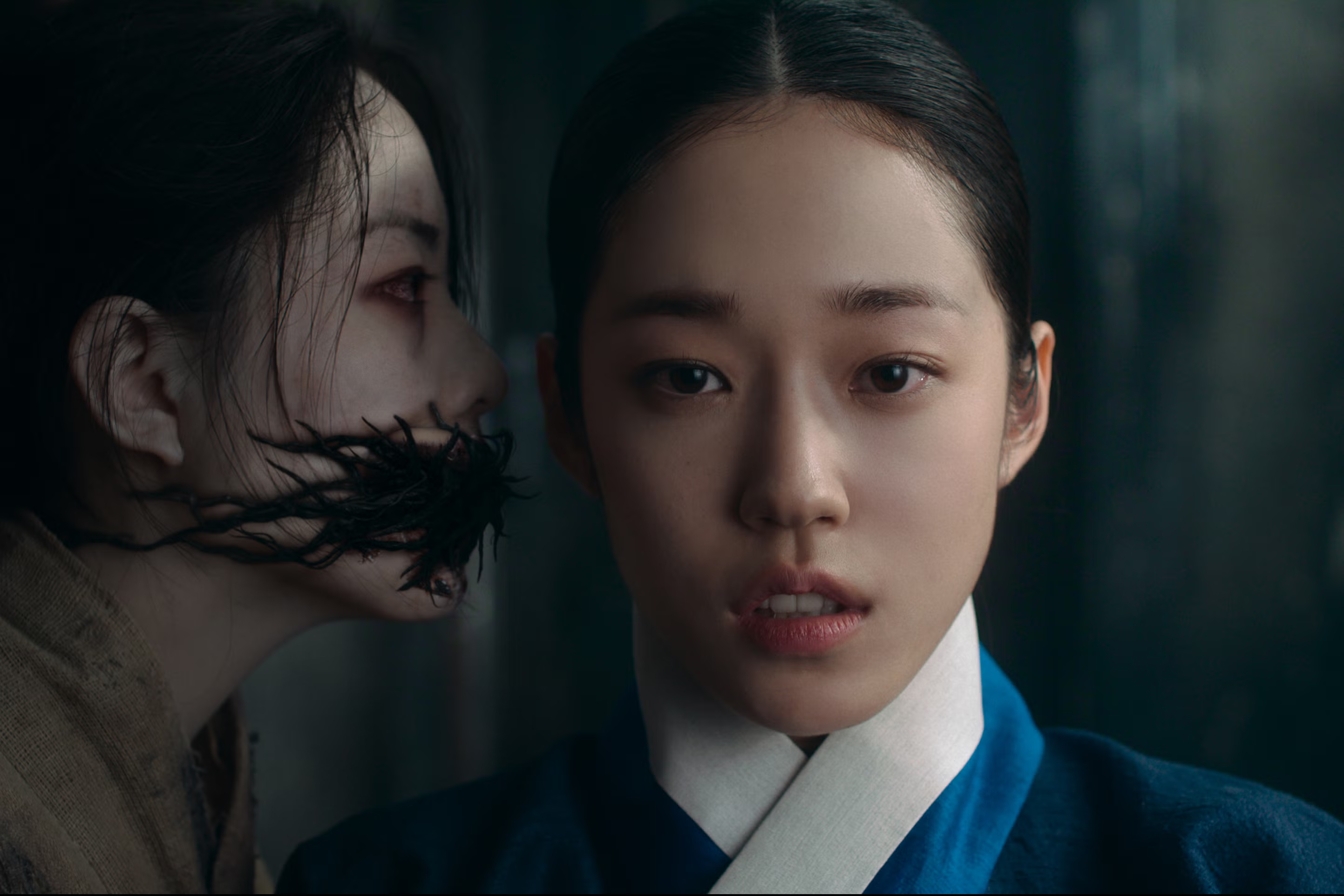
Gu-cheon is an exorcist capable of crossing between the human world and the dark realm of spirits, while Saeng-gang is a brilliant court lady blessed—or cursed—with the ability to hear the voices of the dead. Together, they investigate the disturbing supernatural events hidden behind the beautiful palace walls. As they peel away the layers of mystery, they uncover not only restless spirits but also deadly secrets buried beneath generations of ruthless political ambition.
Cast and Characters
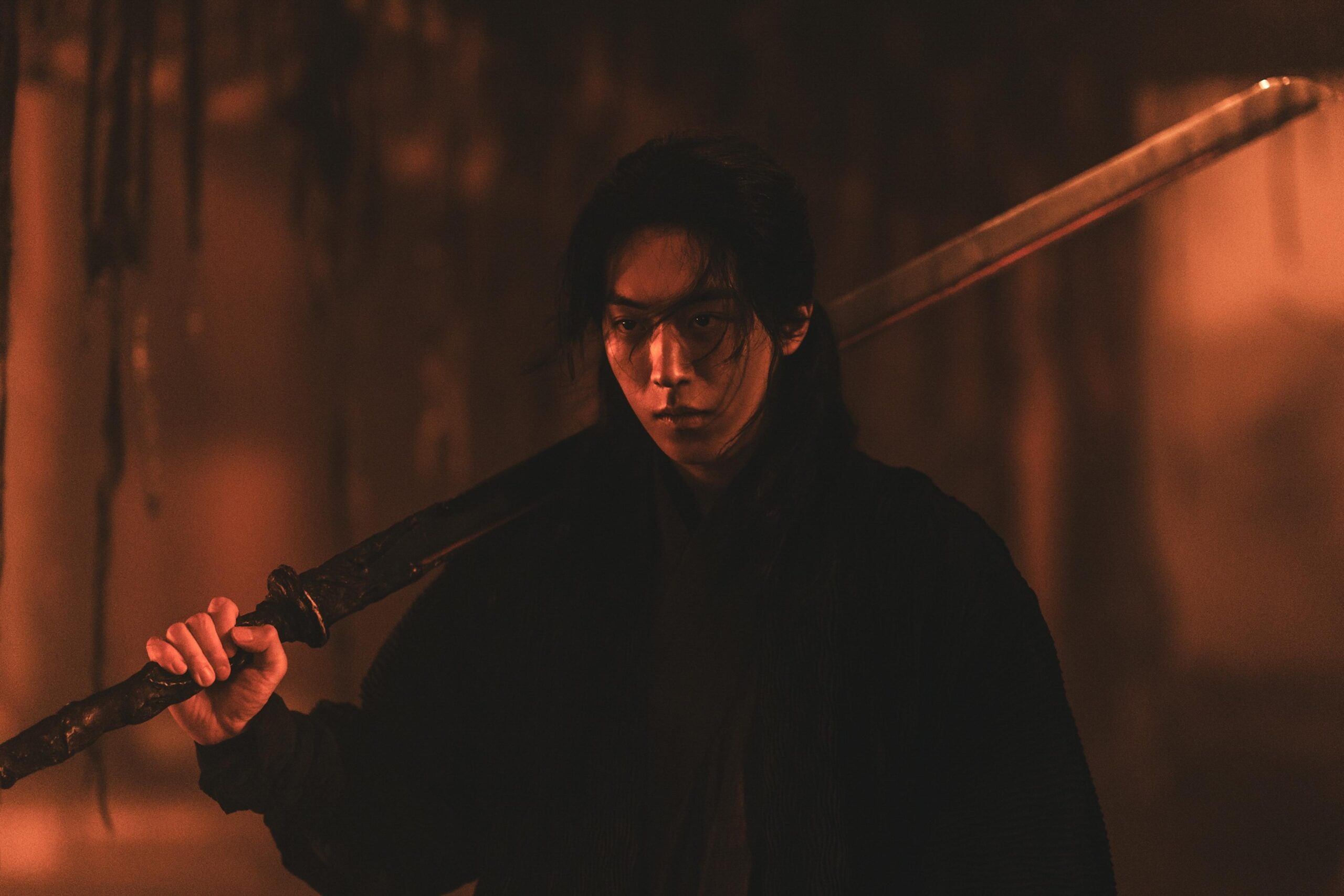
- Nam Joo-hyuk as Gu-cheon: Delivering one of his darkest action-oriented roles to date, Gu-cheon is a dimensional-crossing exorcist. He is not a conventional swordsman but a warrior who physically enters the spirit realm to battle ghosts. Much of his character’s emotional weight is conveyed through intense silence rather than dialogue.
- Roh Yoon-seo as Saeng-gang: An intelligent palace maid who possesses the unsettling ability to hear spirits. Hiding a royal secret of her own, she is an essential partner in solving the mysteries through keen observation and emotional insight.
- Cho Seung-woo as King Lee Yeon: The veteran actor brings immense gravitas to a ruler trapped between political responsibility and supernatural terror, giving the story an emotional depth that grounds the fantasy spectacle.
Fact vs. Fiction: The Alternate Universe Joseon
One of the most critical aspects for international viewers to understand is that The East Palace is not a historical drama. Although it utilizes the visual beauty of the Joseon Dynasty—magnificent palaces, royal robes, and official government ranks—the story itself is 100% fictional.
There is no historical king, prince, or documented palace incident that inspired this specific plot. It is best enjoyed as an “Alternate Universe Joseon.”
| Historical Reality | The East Palace Universe |
|---|---|
| Real Joseon kings and historical records | Entirely fictional royal family lineage |
| Documented political court conflicts | Original supernatural palace conspiracy |
| Traditional shamanic beliefs and rituals | Expanded into a dark fantasy exorcism action genre |
| Historical Gyeongbokgung Palace (경복궁) architecture | Used faithfully to enhance immersion and aesthetic horror |
💡 Pro Tip: Think of The East Palace in the same way viewers approach fantasy worlds inspired by medieval Europe. The castles and clothing look historically accurate, but the mythology and characters belong entirely to the realm of fiction.
Korean Folklore Reimagined: Ghosts, Han, and Shamanism
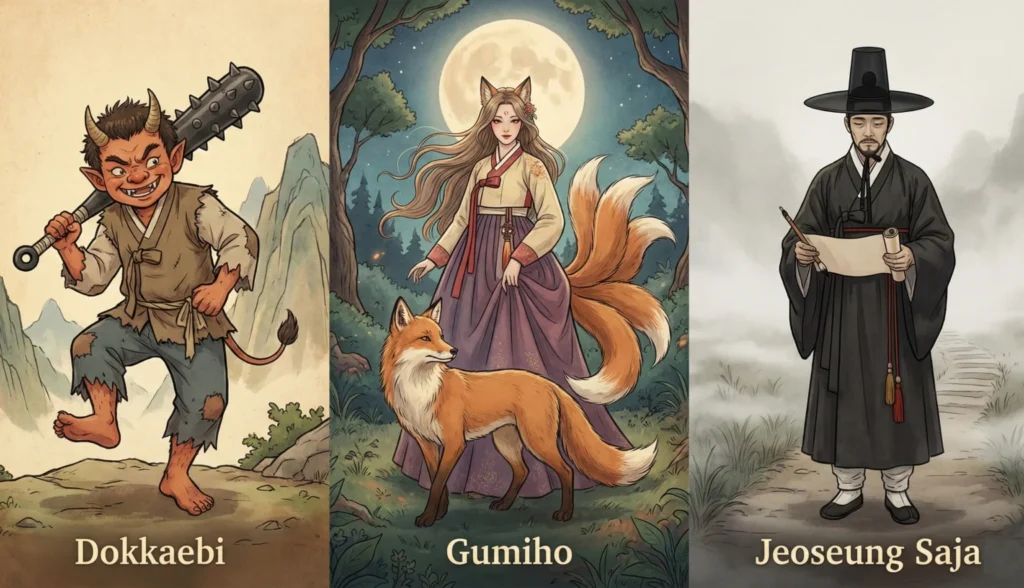
The ghosts in this series are deeply inspired by traditional Korean folklore, which is heavily tied to the concept of Han (한)—a profound, accumulated sense of unresolved sorrow, injustice, and resentment. In classic folklore, ghosts wander the human world because their Han prevents them from finding peace. The traditional solution is often a Gut (굿), a dynamic ritual performed by shamans to comfort the spirit and resolve its grievances.
However, The East Palace takes a much darker, action-driven approach:
- From Sorrow to Monsters: The spirits haunting the royal pond are not just sad souls; they have mutated into violent entities fueled by the royal family’s dark ambitions.
- Physical Exorcism: Instead of merely comforting spirits, Gu-cheon actively battles them using specialized weapons, including a Peach Blossom Branch. In East Asian folklore, peach wood possesses protective spiritual energy capable of driving away evil—a tradition the drama turns into a thrilling visual weapon.
- Historical Context: While Joseon was officially governed by rational Neo-Confucian philosophy, historical records show that supernatural fears were real. Palace servants and even royalty secretly feared Jujeo—the dark practice of burying cursed items to bring misfortune to political rivals. The drama amplifies this historical paranoia into actual supernatural monsters.
Curiosities and Controversies: The Spirit Realm
Since its release, global fans have passionately discussed the drama’s depiction of the ghost realm—a pitch-black, mirror-like dimension existing alongside the physical world. This has drawn inevitable comparisons to the “Upside Down” from Netflix’s Stranger Things.
While the visual execution might feel familiar to Western audiences, the underlying concept is entirely different. The supernatural world in The East Palace is deeply rooted in the East Asian philosophy of Yin and Yang, visualizing a space where the living and the dead occupy the exact same physical location but on different dimensional frequencies. It uses familiar cultural motifs to build an entirely original cinematic mythology.
The True Monsters: Why The East Palace Feels Different
Although the series is filled with chilling ghosts and supernatural battles, its central message is surprisingly grounded. Like many acclaimed Korean thrillers, the series posits a terrifying thought: the real monsters are not the ghosts, but the humans.
The claustrophobic palace intrigue—the vicious succession battles, deceptive concubines, and the Queen Dowager’s schemes—shows that the supernatural evil is merely a reflection of boundless human greed. People willingly sacrificing their own bloodlines for power is far more horrifying than any spirit emerging from the pond.
If you are looking for a historically accurate period drama, this may not be the right choice. But if you want a stylish, atmospheric mystery that successfully blends K-occult traditions with intense political thriller elements, The East Palace stands as one of the most ambitious and rewarding series on Netflix today.
Explore More K-Drama Reviews
Dive deeper into the fascinating world of Korean entertainment with our detailed cultural reviews and guides:
- Review: ‘Why Agent Kim Reactivated’ is Netflix’s Best Action Hit
- A Shop for Killers Season 2: Babylon Goes Global
- ‘Teach You a Lesson’ Netflix Review: The Debate Over Student Rights
- The WONDERfools Netflix Review: Korea’s Most Unusual Heroes
- Why My Royal Nemesis is Netflix’s Best Time-Slip K-Drama
- We Are All Trying Here Netflix Review: Deep Cultural Meaning
- 10 Million Viewer Club Korean Movies: Box Office Legends
Korean Culture portal KCulture.com

Founder of Kculture.com and MA in Political Science. He shares deep academic and local insights to provide an authentic perspective on Korean history and society.