The Hidden Meaning of Doltap: Why Koreans Stack Stones on Mountain Trails
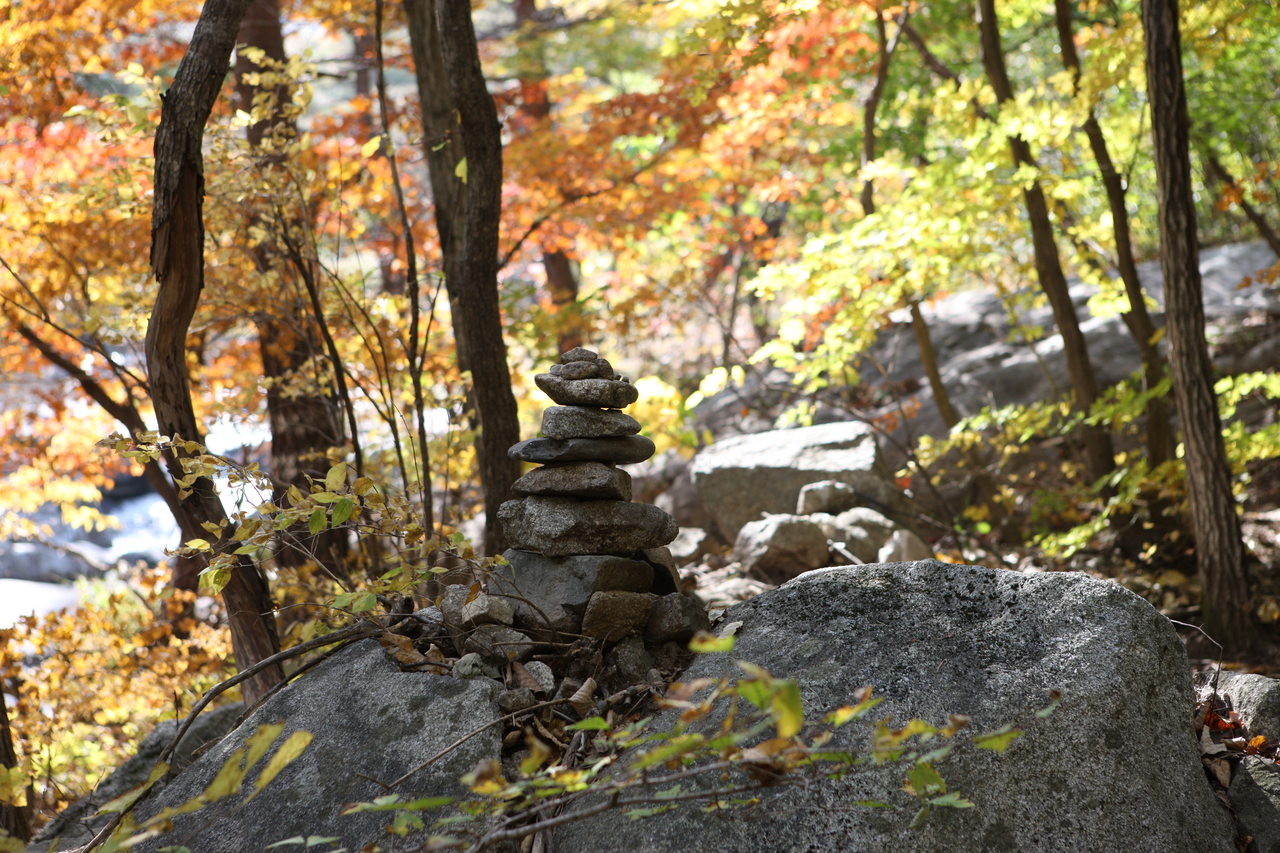
When hiking through the dense forests of South Korea or exploring ancient Buddhist temple grounds, travelers frequently encounter beautifully balanced piles of rocks nestled against trees or resting on large boulders. As a local living in Korea, I often see visitors marveling at these structures, wondering if they are simple trail markers or something deeper. The primary reason why Koreans stack stones—a traditional practice known as Doltap (돌탑)—is to make a personal wish, accumulate spiritual merit, and honor ancient local deities for safe passage. This collective, silent ritual transforms ordinary nature trails into spaces of communal hope and spiritual mindfulness, inviting anyone to participate by adding a single pebble to the structure.
- What Is a Korean Doltap?
- Historical Roots of the Korean Stone Stacking Tradition
- Buddhist Influence and the Act of Accumulating Merit
- Feng Shui and the Protective Power of Bibo
- Modern Reasons Why Koreans Stack Stones
- Where Travelers Can See Famous Stone Towers
- Essential Etiquette for Encountering Doltap in South Korea
What Is a Korean Doltap?
A doltap literally translates to “stone tower.” In practice, it can range from a single modest stack of pebbles to a massive structure built collectively by generations of visitors. You will commonly find them along mountain trails, at steep mountain passes, beside ancient temples, near sacred trees, and at village entrances.
Most Koreans place a stone on a tower while making a silent wish. The wish may concern health, academic success, family happiness, safe travel, or simply peace of mind. The physical act itself is often more important than the specific wish—it is a small, mindful ritual connecting modern individuals to a cultural tradition that stretches back thousands of years.
📌 Local Note: Many Korean hikers quietly add one stone to an existing tower rather than building an entirely new one from scratch. This reflects the deep-seated cultural idea that many people can contribute to the same shared hope.
Historical Roots of the Korean Stone Stacking Tradition
The practice of piling rocks in Korea is not a modern hiking trend or a casual pastime; it is an ancient custom with deep roots in shamanism, animism, and folk religion. Long before foreign religions arrived on the peninsula, ancient Koreans believed that spirits resided in all natural objects, including mountains, trees, and large rocks. Piles of stones, historically referred to as Nuseokdan (누석단), were constructed at village entrances, mountain passes, and borders to serve as altars honoring these local protective deities.
Travelers leaving their hometowns would stop at these stone altars to pray for a safe journey, adding a stone from the path to appease the mountain spirits. Over time, these locations often evolved into Seonangdang (서낭당), which were sacred shrines composed of a large rock pile, a holy tree wrapped in colorful fabrics, and a small shrine house. Passersby would throw a stone onto the pile to ward off evil spirits and bad luck before continuing their journey.
This cultural phenomenon has been documented by prominent Korean scholars. In his influential 1948 research paper, pioneering folklorist Son Jin-tae compared Korea’s stone-stacking customs with the traditional Ovoo structures found across the Mongolian steppes. He concluded that this practice belongs to a broader, ancient Northern Asian belief system centering on sky and mountain worship. Furthermore, the renowned poet and scholar Cho Ji-hoon published a comprehensive study in 1963, illustrating how these humble stone piles functioned as sacred boundary markers that spiritually protected local communities from external disasters and disease.
Buddhist Influence and the Act of Accumulating Merit
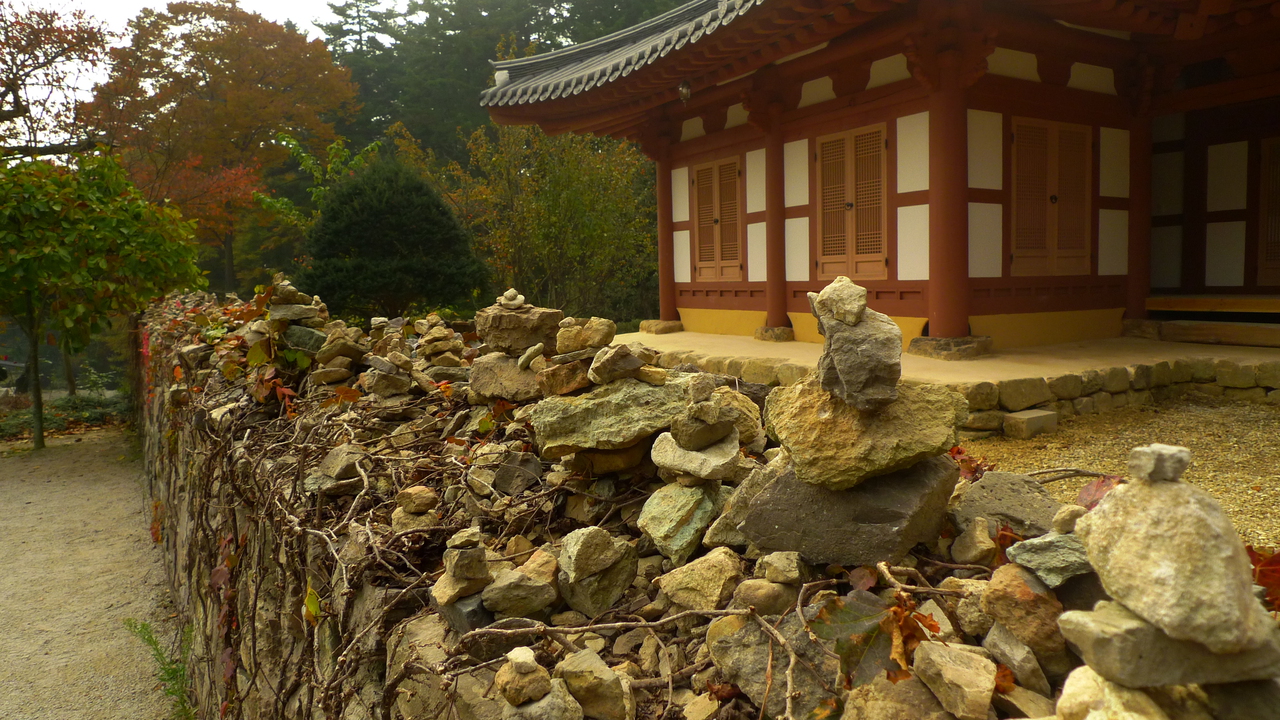
While the origin of stone stacking lies in indigenous folk beliefs, the structures visitors see today around historic temples are heavily influenced by Korean Buddhist traditions. In Buddhism, a pagoda or stupa is a highly sacred architectural structure built to enshrine the relics of the Buddha or holy monks. Constructing or circumambulating a pagoda is widely recognized as an exceptional way to accumulate spiritual merit, known as Gongdeok (공덕).
Historically, building a grand stone pagoda required tremendous wealth and skilled labor, meaning only royal families and wealthy aristocrats could afford to commission them. Ordinary peasants and devout commoners who lacked financial means adapted this practice by gathering small, unpolished pebbles from surrounding riverbeds and hillsides. By carefully balancing these stones one on top of another, they constructed miniature, rustic pagodas that served as personal altars for prayer and devotion.
According to the book Tap Sinang, published by the National Intangible Heritage Center and authored by cultural expert Kang Seong-bok, the traditional practice of stone stacking seamlessly merged with Buddhist circumambulation rituals over the centuries. The act of placing a stone with pure intention became a highly accessible form of active prayer for the masses.
Feng Shui and the Protective Power of Bibo
Another fascinating aspect of why Koreans stack stones relates to the traditional practice of Pungsu Jiri, the Korean counterpart to Chinese Feng Shui. A core concept within this tradition is Bibo (비보), which refers to the practice of artificially complementing or correcting weaknesses in the natural landscape to balance the flow of spiritual energy. If a village or temple was believed to have an exposed direction that allowed negative energy to enter, a large stone mound would be erected to block the path of harm.
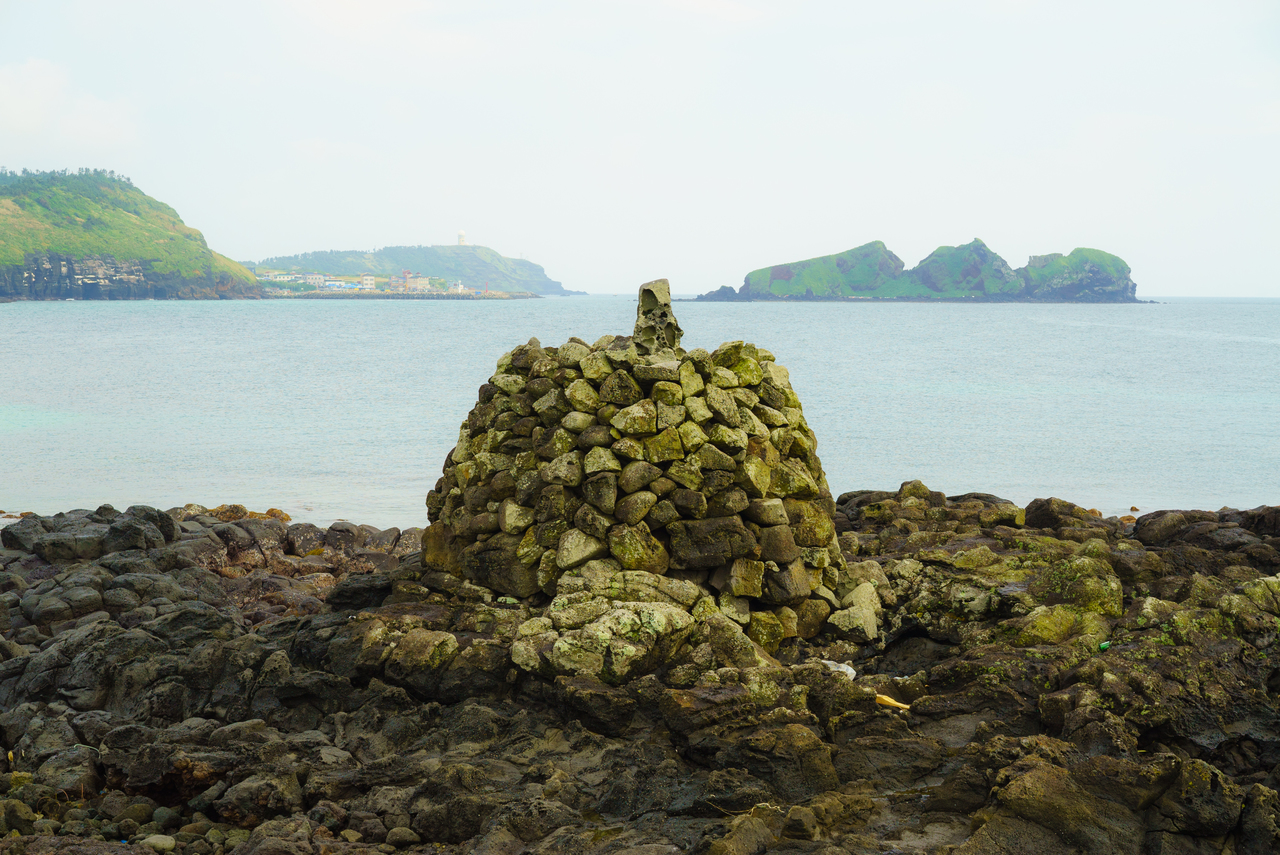
A striking regional manifestation of this concept can be found on Jeju Island (제주도), where residents constructed unique stone towers known as Bangsatap (방사탑). Built using coarse, black volcanic stones, these round structures were strategically placed along coastlines or at village boundaries to ward off disasters, preventable illnesses, and evil fortunes.
| Traditional Term | Historical/Cultural Context | Primary Purpose & Function |
|---|---|---|
| Nuseokdan (누석단) | Ancient Shamanism & Animism | Honoring mountain deities and praying for safe travel at high mountain passes. |
| Seonangdang (서낭당) | Korean Folk Religion | Protecting village boundaries from malevolent spirits and disease. |
| Doltap (돌탑) | Buddhist & Folk Fusion | Accumulating spiritual merit (Gongdeok) and expressing personal wishes. |
| Bangsatap (방사탑) | Jeju Island Geomancy (Bibo) | Ward off coastal disasters, bad fortunes, and environmental vulnerabilities. |
Modern Reasons Why Koreans Stack Stones
While the religious and geomantic necessity of building stone towers has evolved, the tradition remains deeply embedded in the modern Korean lifestyle. Today, hikers of all backgrounds continue to participate in this quiet ritual for reasons that extend into contemporary psychology and secular mindfulness.
Anonymous Collaboration and Community Spirit
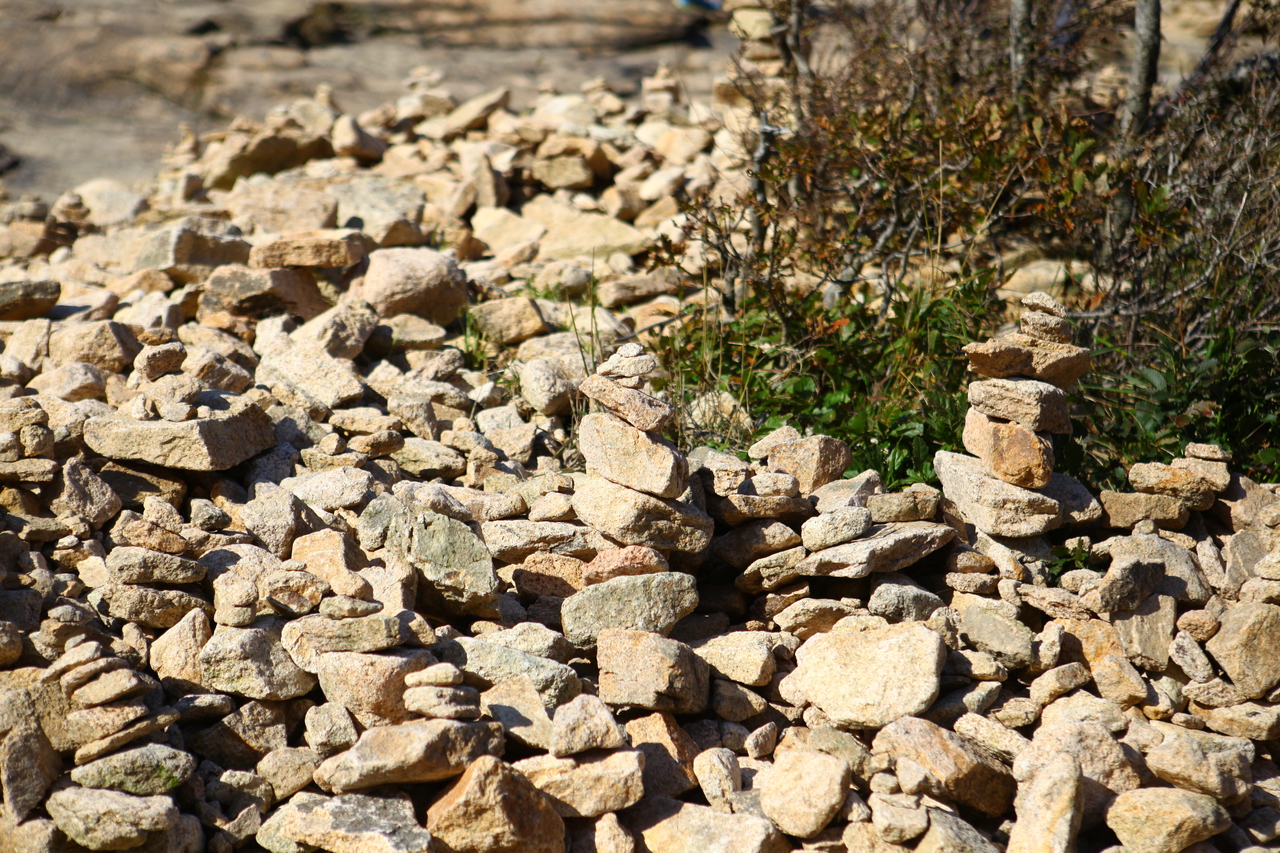
One of the most beautiful characteristics of a typical Korean mountain cairn is that it is rarely the work of a single individual. Instead, a doltap represents an act of anonymous collaboration spanning months or even years. One traveler might lay down three steady foundation stones, a second hiker adds a few more to form a base, and dozens of subsequent visitors carefully place individual pebbles on top. The result is a collaborative work built by strangers who never meet, leaving behind a collective monument of goodwill.
Mindfulness and Active Meditation
Balancing an uneven, unpolished stone on top of a narrow, weathered pile requires immense concentration, physical steadiness, and mental stillness. To prevent the existing structure from collapsing, one must look closely at the rock’s contours, feel its weight, and locate its exact center of gravity. For modern city dwellers, this brief moment on the trail functions as an accessible form of mindfulness or active meditation, encouraging stillness in a fast-paced world.
The Aesthetics of Impermanence
From an artistic standpoint, these stone structures stand entirely on the natural laws of gravity and friction. Because they are exposed to the elements, a heavy summer typhoon or an accidental brush from a hiker can cause them to tumble down at any moment. This vulnerability reflects the core Buddhist philosophy of impermanence—the understanding that nothing in life lasts forever. Yet, when a tower falls, passing hikers inevitably begin the process of rebuilding it, demonstrating the resilient endurance of human hope.
Where Travelers Can See Famous Stone Towers
While small stone towers can be found on almost any local hiking trail, several locations across South Korea are particularly famous for their spectacular, large-scale displays of this cultural heritage:
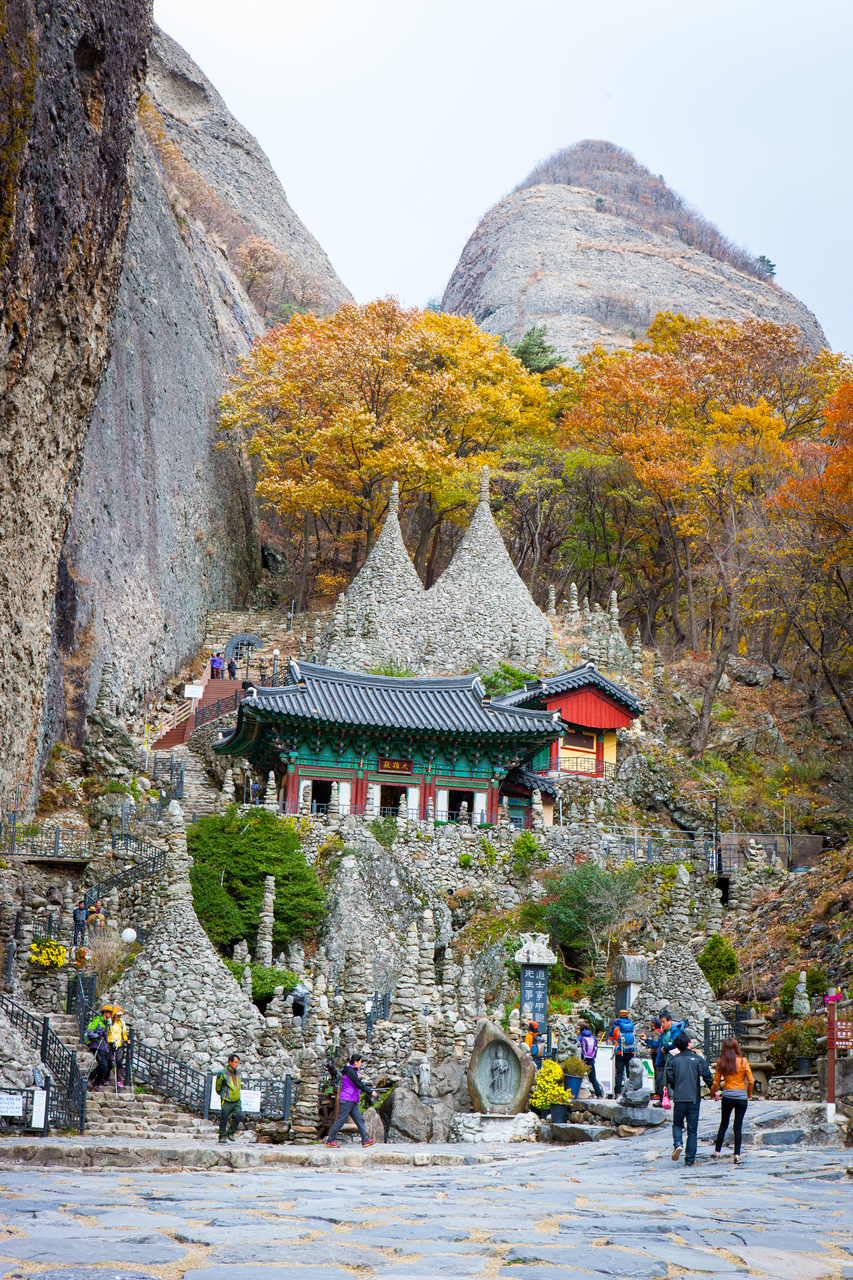
- Mai-san Tapsa Temple (마이산 탑사): Located in Jinan, this temple is famous for over 80 massive, gravity-defying stone pagodas built entirely without mortar by the mystic hermit Yi Gap-yong in the late 19th century.
- Bukhansan National Park (북한산국립공원): Just outside of Seoul, many popular hiking trails feature countless visitor-built stone towers nestled among the pine trees and boulders.
- Seoraksan National Park (설악산국립공원): A common sight along the rugged mountain routes and scenic viewpoints in the East Coast region.
- Jeju Island (제주도): Home to the traditional Bangsatap, offering travelers a glimpse into how islanders used stones to protect their coastal villages from fierce winds and misfortune.
Essential Etiquette for Encountering Doltap in South Korea
Participating in this timeless tradition can be a memorable and culturally enriching experience. However, it is important to observe a few basic principles of respect and safety to ensure these meaningful structures are preserved.
- Do Not Disturb Existing Structures: Never touch, lean on, or pull stones away from an established cairn. Causing a stone tower to collapse is traditionally viewed as destroying the accumulated prayers and wishes of those who came before you.
- Select Loose Stones Safely: If you wish to contribute to a pile, look for loose stones that are already lying flat on the ground. Avoid removing stones from historical structures, temple walls, or environmentally sensitive riverbanks.
- Find the Center of Gravity: Take your time when placing your stone. Gently test the stability of the rock before releasing your grip to ensure it will not cause the top sections to slide off.
- Make a Silent Wish: Follow the local custom by closing your eyes for a brief moment after successfully balancing your stone, clearing your mind, and sending a silent wish for health or safe travels into the universe.
💡 Pro Tip: A small stone carries a big story. The next time you encounter a doltap while hiking through Korea’s mountains, take a closer look. What you are seeing is an ongoing conversation between nature, memory, and hope. If local regulations permit, place a small pebble of your own and become part of that centuries-old conversation.
Explore More Lifestyle & Trends in Korea
- Why Koreans Escape to Mountain Valleys in Summer
- Why Tourists Buy Sesame Oil at Korean Traditional Oil Shops
- How to Order Food in Korea: Kiosks, Tablets & Robots
- Why Koreans Are So Sensitive to Historical Distortion
- The Paradox of Peace: South Korea Military Readiness Explained
Korean Culture portal KCulture.com

Founder of Kculture.com and MA in Political Science. He shares deep academic and local insights to provide an authentic perspective on Korean history and society.