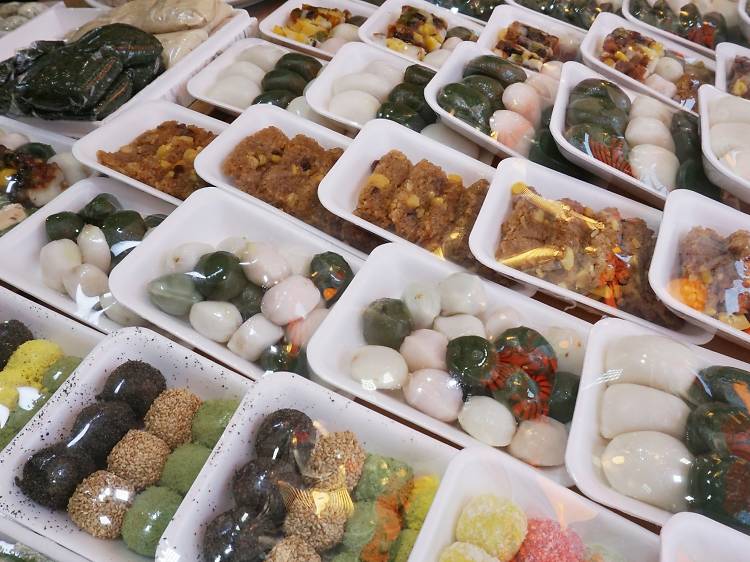
This Korean rice cake tteok guide begins with the essential answer: tteok is not one dessert but a vast family of Korean foods made mainly from rice or other grains by steaming, pounding, shaping, boiling, or pan-frying. It can be subtly sweet, savory, ceremonial, snack-sized, or substantial enough to replace a meal.
That breadth is what makes tteok so fascinating—and why translating it simply as “rice cake” can be misleading. A snowy cube of baekseolgi, a soybean-dusted piece of injeolmi, and a flower-decorated modern tteok cake may share rice as a starting point, yet they look, taste, and behave like entirely different foods.
The clearest way to understand tteok is to follow it through Korean life: from a baby’s hundredth day and Chuseok songpyeon to neighborhood rice-cake shops, fashionable dessert courses, and individually wrapped cream-filled creations. This guide covers that story, the main varieties, how tteok is made, where to try it, and what first-time buyers should know.
- What Is Tteok—and Is It Always Dessert?
- Korean Rice Cake Tteok Guide: From Ancient Steamers to Modern Cafes
- Stories, Symbols, and Rituals Hidden in Tteok
- How Tteok Is Made: Four Traditional Methods
- Essential Types of Tteok to Try
- A Regional Tteok Map of Korea
- Tteok vs. Western Desserts: What Is Different?
- Why Tteok Is Trending Again in 2026
- Famous Tteok Cafes and Shops in Seoul
- How to Buy, Store, and Eat Tteok
- Tteok FAQ for First-Time Visitors
- More Korean Food Stories to Explore
What Is Tteok—and Is It Always Dessert?
Tteok (떡, roughly pronounced “dduk”) is an umbrella term. Most varieties begin with short-grain rice, but millet, sorghum, buckwheat, potato starch, beans, nuts, mugwort, pumpkin, fruit, and flowers can all enter the recipe. Some are plain and restrained; others contain sweet sesame, red-bean paste, chestnuts, jujubes, honey, or syrup.
Not every tteok is dessert. Garaetteok becomes the main ingredient in tteokguk and tteokbokki. Plain seolgi can serve as breakfast, and a generous slice of injeolmi can quiet hunger more like bread than a petit four. In traditional Korean eating, tteok often sits between a staple, a celebration food, and a sweet. This article concentrates on the varieties commonly enjoyed as snacks and desserts.
Local Note: When Koreans say “Let’s eat tteok,” context matters. They might mean a sweet rice cake with tea, a tray for a family ceremony, or a full spicy tteokbokki meal.
Korean Rice Cake Tteok Guide: From Ancient Steamers to Modern Cafes
No surviving recipe can tell us exactly when Koreans made the first tteok. Archaeologists have, however, found perforated earthenware steamers called siru (시루) at Bronze- and Iron-Age sites. A siru also appears in the kitchen scene painted inside fourth-century Anak Tomb No. 3, now located in North Korea. These finds support a careful conclusion: grain steaming, the foundation of many tteok traditions, was established on the peninsula long before written Korean cookbooks. They do not, however, establish a precise year for the invention of tteok.
During the Three Kingdoms period, grain agriculture expanded and tteok became closely connected to offerings, seasonal observances, and communal feasts. Under Goryeo, Buddhist influence and an elaborate tea culture encouraged meatless ceremonial foods and refined grain confections. Tteok appeared not only at rites but as a special food enjoyed by the elite and, in simpler forms, by ordinary households.
Joseon turned variety into an art. Better agricultural production, milling, steaming, shaping, and written culinary knowledge produced an extraordinary range of recipes. A Korea Heritage Service overview counts 198 kinds of tteok appearing across Joseon-era culinary records. Court and aristocratic kitchens developed labor-intensive varieties with nuts, fruit, beans, honey, and decorative garnishes, while regional households adapted recipes to whatever their fields and mountains supplied.
Modernization changed production. Mechanical mills and extruders reduced work once done with a mortar and wooden mallet, urban tteok shops took over tasks previously shared by neighborhoods, and refrigeration changed distribution. Yet the social practice survived. In 2021, Korea designated “Tteok Making and Sharing” as a National Intangible Cultural Heritage—not one secret recipe owned by a single master, but knowledge and customs carried collectively by communities.
Stories, Symbols, and Rituals Hidden in Tteok
A Rice Cake That Helped Choose a King
One of Korea’s oldest written tteok stories appears in the Samguk Sagi. When Yuri and Talhae were deciding who should succeed to the throne of Silla, the story says they bit into a rice cake. Yuri left more tooth marks, supposedly proving that he was older and wiser, and became King Yuri Isageum. Historians treat the tooth-mark explanation as a royal-origin legend rather than a literal succession procedure, but the tale shows that tteok was familiar enough to carry political symbolism in later historical memory.
The Calligrapher and the Perfectly Sliced Tteok
Another beloved story concerns Joseon calligrapher Han Seok-bong. After returning home too confident in his skill, he was challenged by his mother: in darkness, she would slice tteok while he wrote characters. When the lamp was relit, her slices were even and his writing was not. Whether biography or moral legend, the episode turns the repetitive craft of cutting rice cake into a lesson about humility, practice, and mastery.
“Give Me One Tteok and I Won’t Eat You”
In the folktale The Sun and the Moon, a tiger repeatedly demands the tteok carried by a mother traveling home to her children. The famous line remains instantly recognizable in Korea. Tteok is not decorative background here: it is portable food, a mother’s labor, and something precious enough to bargain over.
A Food for Every Turning Point
| Occasion | Typical Tteok | Meaning |
|---|---|---|
| A baby’s 100th day | Baekseolgi and susupatteok | White baekseolgi suggests purity and a bright life; red beans and sorghum traditionally repel misfortune. Families once shared the tteok widely in hopes that communal goodwill would protect the child. |
| First birthday | Baekseolgi, colorful layered tteok, and red-bean tteok | Health, longevity, protection, and a prosperous future. |
| Lunar New Year | Long white garaetteok sliced for tteokguk | The white color evokes a clean beginning; the long cylinder suggests longevity, while oval slices are often compared to old coins. |
| Chuseok | Songpyeon | Families shape half-moons filled with sesame, beans, or chestnuts and steam them over pine needles to celebrate the harvest. |
| Wedding gifts | Bongchitteok, a red-bean glutinous-rice sirutteok | Sticky rice symbolizes a couple holding together; the red color is protective. |
| Moving or opening a business | Red-bean sirutteok | Sharing slices with neighbors introduces the household or shop and turns good fortune into a communal act. |
How Tteok Is Made: Four Traditional Methods
Tteok texture begins with starch. Ordinary short-grain rice, mepssal, contains more amylose than glutinous rice, chapssal. Chapssal contains almost entirely amylopectin, the highly branched starch responsible for its exceptional elasticity. “Glutinous” describes stickiness; the rice itself does not contain wheat gluten.
Traditionally, rice is washed, soaked, drained, and wet-milled—often with a little salt—into damp flour. That soaked-rice flour behaves differently from ordinary dry flour: it hydrates and steams evenly, helping seolgi develop a moist, tender structure instead of a dry, sandy crumb. Water is adjusted by hand, the flour may be sweetened or layered with beans, and heat gelatinizes the starch. Pounding or extrusion then compresses and works the cooked mass, creating the smooth pull associated with chewy tteok.
| Family | Core Method | Examples | What to Expect |
|---|---|---|---|
| Steamed tteok | Damp grain flour is steamed in a siru, either as one mass or in layers. | Baekseolgi, sirutteok, mujigaetteok, jeungpyeon | From soft and crumbly to moist and springy; beans, pumpkin, mugwort, or fruit may be added. |
| Pounded tteok | Steamed rice is pounded, kneaded, or mechanically extruded while hot. | Injeolmi, garaetteok, jeolpyeon | Dense, smooth, and chewy; often coated with soybean powder or stamped with patterns. |
| Shaped or boiled tteok | Dough is filled or formed by hand; some pieces are boiled before coating. | Gyeongdan, danja, songpyeon | Small forms with varied fillings and coatings. Songpyeon is shaped first, then steamed, showing that categories can overlap. |
| Pan-fried tteok | Grain dough is cooked with a small amount of oil. | Hwajeon, bukkumi, juak | Crisp or caramelized outside and tender or chewy inside; hwajeon is decorated with edible flowers. |
Pro Tip: A hands-on class makes the logic of tteok much clearer than a display case does. The Tteok Museum posts irregularly scheduled individual workshops online, so reserve rather than assuming a walk-in class is available.
Essential Types of Tteok to Try
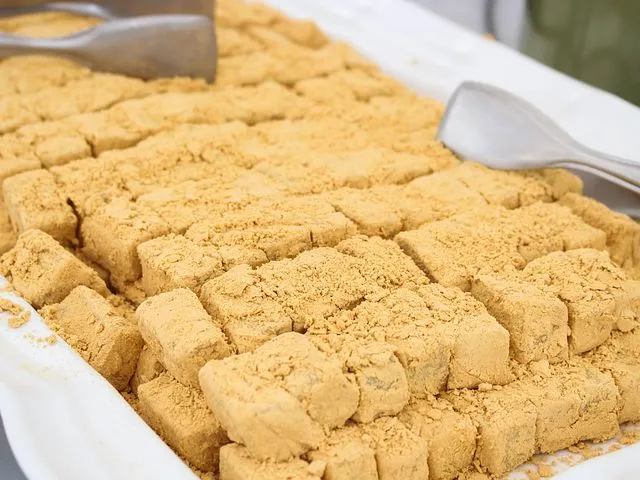
- Injeolmi (인절미): Soft, pounded glutinous-rice cake covered in roasted soybean powder. Its nutty coating and gentle saltiness make it an ideal first tteok.
- Baekseolgi (백설기): A white steamed rice cake with a tender, slightly crumbly structure. The classic version is restrained rather than sugary; modern shops add strawberry, pumpkin, chocolate, or sweet-potato layers.
- Songpyeon (송편): Half-moon rice cakes associated with Chuseok, commonly filled with sesame and sugar, beans, or chestnut. Their pine-needle aroma is as important as their sweetness.
- Kkultteok (꿀떡): Small, glossy, chewy pieces with a liquid or paste-like sweet center. Despite the name, the filling is not always pure honey.
- Sirutteok (시루떡): A broad steamed family, often layered with red beans. Some versions are celebratory; others are hearty enough for breakfast.
- Jeolpyeon (절편): Pounded non-glutinous-rice cake pressed with carved patterns and lightly brushed with sesame oil. Look for mugwort-green versions in spring.
- Gyeongdan (경단): Bite-sized rice balls boiled and rolled in coatings such as black sesame, soybean powder, crushed nuts, or bean crumbs.
- Jeungpyeon (증편): A lightly fermented, steamed rice cake made with makgeolli. Air pockets make it softer and less dense than many other tteok.
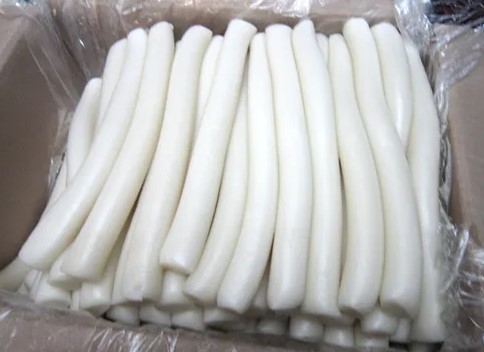
- Garaetteok (가래떡): Long, white cylinders made from non-glutinous rice. Grilled and dipped in honey or grain syrup, fresh garaetteok becomes a wonderfully simple snack.
Do not confuse dessert tteok with every dish containing rice cakes. If spicy cylinders in red sauce are what brought you here, that is tteokbokki: a savory preparation using tteok as an ingredient, much as bread can become either toast or bread pudding.
A Regional Tteok Map of Korea
Korea’s regional tteok reflects landscape and agriculture. “Traditional” never meant that every province used the same rice and filling.
| Region | What Shaped Its Tteok | What to Look For |
|---|---|---|
| Seoul (서울) and Gyeonggi (경기) | Royal-court and aristocratic food culture encouraged small, polished forms and elaborate fillings. | Duteop-tteok with sweet bean, nuts, jujube, and citron; decorative royal-style assortments. |
| Gangwon (강원) | Mountain agriculture made potatoes, corn, buckwheat, and hardy greens important alternatives to rice. | Translucent gamjatteok made with potato starch and local buckwheat or corn specialties. |
| Jeolla (전라) | Rich plains and access to varied ingredients supported generous garnishing and bold contrasts. | Yeonggwang mosi-songpyeon colored and scented with ramie leaves, often sold in large gift boxes. |
| Jeju (제주) | Volcanic soil and limited historical rice cultivation favored millet and buckwheat. | Omegi-tteok, originally millet-based and now commonly made with glutinous rice or a mixture, coated generously with red beans. |
| Gyeongsang (경상) | Local leaves and grains became both ingredients and natural wrappers. | Uiryeong manggae-tteok, filled rice cake wrapped in fragrant smilax leaves. |
Regional ingredients also connect tteok to Korea’s wider plant culture. For more on how seasonal leaves become food, see 5 Korean Spring Greens You Can Forage Locally and How Korea Turns Invasive Weeds into Delicious Namul.
Tteok vs. Western Desserts: What Is Different?
| Point of Comparison | Traditional Tteok | Typical Western Cake or Pastry |
|---|---|---|
| Main structure | Gelatinized rice or grain starch | Wheat-flour crumb or laminated pastry |
| Primary techniques | Steaming, pounding, shaping, boiling, and pan-frying | Baking, creaming, whipping, laminating, and oven browning |
| Common fats | Often little added fat, although sesame oil, frying oil, nuts, and modern cream fillings appear | Butter, cream, eggs, chocolate, or shortening commonly provide richness |
| Sweetness | Often subtle, drawing flavor from grains, beans, mugwort, pumpkin, jujube, honey, or grain syrup | Often built around sugar, butter, dairy, chocolate, or fruit, though styles vary widely |
| Ideal freshness | Frequently best within hours of production | Many baked products remain pleasant for several days |
| Cultural role | Dessert, portable meal, ritual offering, seasonal symbol, and gift | Usually a sweet course, snack, or celebration centerpiece |
Tteok is therefore not automatically “healthier.” A plain steamed slice may contain less fat and sugar than frosted cake, but sweetened fillings, syrup, nuts, and portion size can change the comparison. Dense rice starch also makes even small pieces filling. The more useful distinction is sensory: Western baking often prizes an airy crumb, buttery flake, or crisp shell, while tteok prizes moisture, grain fragrance, and chalgi—a satisfying elastic chew.
Korea’s traditional sweet world is also much broader than tteok. For the fried, puffed, and syrup-coated side of the story, continue with Korean Traditional Desserts: Yakgwa, Yugwa & Hangwa History. For a revealing modern contrast, compare it with Korea’s contemporary bread-pilgrimage culture.
Why Tteok Is Trending Again in 2026
Tteok never disappeared, but its image has changed dramatically. Older generations may remember it as obligatory ceremony food or a market breakfast. Younger consumers now encounter it as a photogenic cafe plate, a reservation-only tasting course, a birthday cake, or a freezer-friendly snack.
The Halmaennial Taste
The Korean term halmaennial blends “halmeoni,” meaning grandmother, with “millennial.” It describes younger people rediscovering flavors once considered old-fashioned: black sesame, mugwort, red bean, misugaru, yakgwa, and tteok. The appeal is not nostalgia alone. These flavors are less relentlessly sweet than many cream-heavy desserts and look distinctive in contemporary packaging.
Tteok Cakes Become Celebration Centerpieces
Modern studios build birthday and wedding cakes on steamed seolgi instead of wheat sponge. Some use piped bean paste to create flowers that resemble buttercream decoration; others add fruit, chocolate, cheese, or dairy cream. They photograph beautifully, travel as gifts, and let makers customize color and message. Because many are made to order, booking several days ahead is normal.
Tradition Moves into the Dessert-Course Format
Premium shops now plate seasonal tteok and hangwa with tea, ceramics, flowers, and storytelling. Gaeseong juak—a fermented glutinous-rice confection that is fried and glazed—has become a symbol of this revival. Its classification can overlap between tteok and hangwa, which is precisely why it works as a bridge between Korea’s grain-cake and traditional-confectionery worlds.
Freezers Solve Tteok’s Oldest Problem
Individually wrapped cream tteok, filled chapssaltteok, and rapid-frozen products have extended the short life of fresh rice cake. Better cold-chain distribution also makes Korean rice-cake products easier to sell abroad. Global tteokbokki and viral combinations such as kkultteok with milk or cereal have introduced the texture to consumers who did not grow up with it.
Fast-Moving Fusion Reaches Convenience Stores
In early 2026, “Shanghai butter tteok” became one of Korea’s fastest-moving social-media desserts. Korean versions generally bake a batter containing glutinous-rice flour—and sometimes tapioca starch—with milk and butter, producing a browned exterior and a dense, elastic center. Cafes, bakery chains, and convenience stores rapidly launched variations; retail data reported in March 2026 also showed sharp increases in sales of glutinous-rice flour and tapioca starch after the trend took off.
Despite the Korean name, this is not an old Korean regional tteok. It reached Korea through a recent Chinese and Shanghai bakery trend and is sometimes marketed as butter mochi. Its importance lies elsewhere: the craze shows how strongly consumers now seek a crisp-chewy contrast and how readily the language and texture of tteok travel across borders. It also demonstrates how quickly a viral dessert can move from specialty bakeries into mass retail—and how necessary it is to distinguish enduring tteok culture from a short product cycle.
Trend Check: “Made with rice” does not guarantee traditional ingredients, low sugar, or gluten-free production. Fusion tteok may contain wheat, dairy, cookies, malt, or flavoring mixes. Read the label if you have an allergy or dietary restriction.
Famous Tteok Cafes and Shops in Seoul
The following places were operating as of September 2026, but independent shops can change hours, reservation rules, and seasonal menus without much notice. Check the linked official or tourism page on the day you visit.
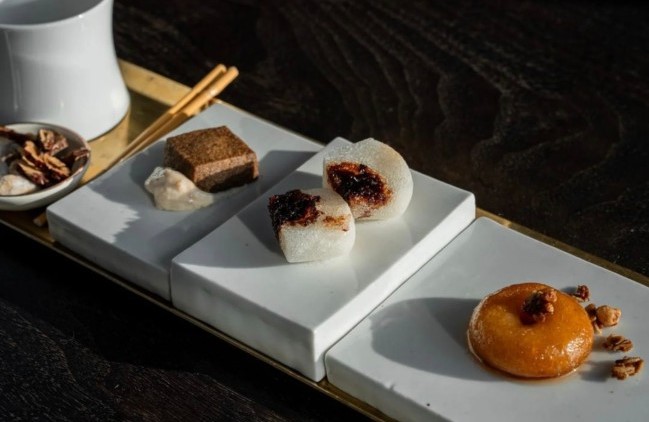
| Place | Neighborhood and Style | Why Go | Before You Visit |
|---|---|---|---|
| Jaha Seoul (자하 서울) | Naesu-dong (내수동), near Gwanghwamun (광화문); specialty coffee and contemporary filled tteok | A mother makes the rice cakes and her son handles the coffee. Seasonal fruit and bean-filled pieces arrive with thread that guests loop around the tteok and pull to make a clean cut. | The small daily selection can change or sell out. Check the latest post before climbing to the fourth-floor cafe. |
| Haap Wonseo (합 원서점) | Wonseo-dong (원서동), beside Changdeokgung Palace (창덕궁); refined Korean confectionery shop and cafe | Seasonal tteok and traditional sweets presented with a modern design sensibility. It fits naturally into a palace-and-Bukchon (북촌) day. | The shop’s current page lists tteok sales from late morning and cafe service from noon; popular items can sell out. |
| Siroocake Hapjeong (시루케이크 합정) | Hapjeong (합정); contemporary rice-cake cafe | A friendly introduction to seolgi cakes, tteok cake, and playful drinks. It shows how a traditional steamed base can occupy the visual world of a modern bakery. | Whole cakes normally require advance ordering. Confirm the weekly closing day through the shop’s latest post. |
| Kimssibooin (김씨부인) | Seorae Village (서래마을); curated Korean dessert and tea setting | Seasonal tteok, jeonggwa, hangwa, and tea arrive on an elegant soban tray, making this closer to a composed dessert experience than a quick snack stop. | Reservation is strongly recommended; verify the current set, service time, and price when booking. |
| Hangwa Meeuisik (한과미의식) | Cheongdam (청담); artisan Korean sweets in a contemporary space | Traditional technique, seasonal rice cakes, glazed confections, and tea offer a polished view of the halmaennial trend. It is also a good place to compare tteok with gaeseong juak. | Menus rotate. Check the shop’s current channel before making a special trip. |
| Biwon Tteokjip (비원떡집) | Gahoe-dong (가회동) in Bukchon; traditional shop established in 1949 | Known for a focused collection that includes duteop-tteok, ssanggaepi, pine-nut seolgi, yakshik, and mugwort chapssaltteok. It is one of the clearest places to compare old Seoul craftsmanship with modern retail presentation. | Go early. The shop closes when the day’s production sells out, and signature items can disappear before late afternoon. |
| Gyeonggi Tteokjip (경기떡집) | Mangwon-dong (망원동); long-running neighborhood shop with modern packaging | Its signature ET-tteok is an unusual northern-style injeolmi whose soft rice-cake center is covered outside with coarse white-bean paste rather than hiding the filling within. | White, mugwort, and black-sesame versions may sell at different speeds. Earlier visits offer a better chance of finding the full range. |
| Apgujeong Gongju Tteokjip (압구정공주떡집) | Sinsa-dong (신사동); destination shop for traditional gift tteok | The deeply nutty black-sesame injeolmi is the signature purchase, alongside yeongyang-tteok with jujubes, chestnuts, and other garnishes, plus formal gift assortments. | This is primarily a takeout and ordering destination rather than a leisurely cafe stop. |
| Nakwon Tteokjip (낙원떡집) | Nakwon-dong (낙원동); historic rice-cake shop rather than a sit-down cafe | A century-scale family story and classic assortments in the neighborhood historically associated with Seoul’s tteok trade. | Go earlier in the day for the widest choice and ask which item was made most recently. |
For culture as well as tasting, pair the Tteok Museum near Jongmyo Shrine (종묘) with Nakwon-dong and Ikseon-dong (익선동). The museum explains utensils, ceremonial tables, and regional customs; hands-on sessions are scheduled separately and require advance checking.
How to Buy, Store, and Eat Tteok
Where to Buy It
- Traditional markets: Gwangjang Market (광장시장), Namdaemun Market (남대문시장), and Tongin Market (통인시장) offer an approachable, inexpensive cross-section. Selection is usually best in the morning.
- Neighborhood tteokjip: These are best for everyday freshness, ceremony trays, and preordered gift boxes. Search a Korean map app for “떡집,” since local coverage is often better than international map listings.
- Department-store food halls: Convenient for neatly packaged premium assortments and refrigerated gifts.
- Modern studios and online shops: Best for custom tteok cakes, cream-filled tteok, and regional products shipped frozen. Order dates become tight before Seollal, Chuseok, weddings, and school-exam season.
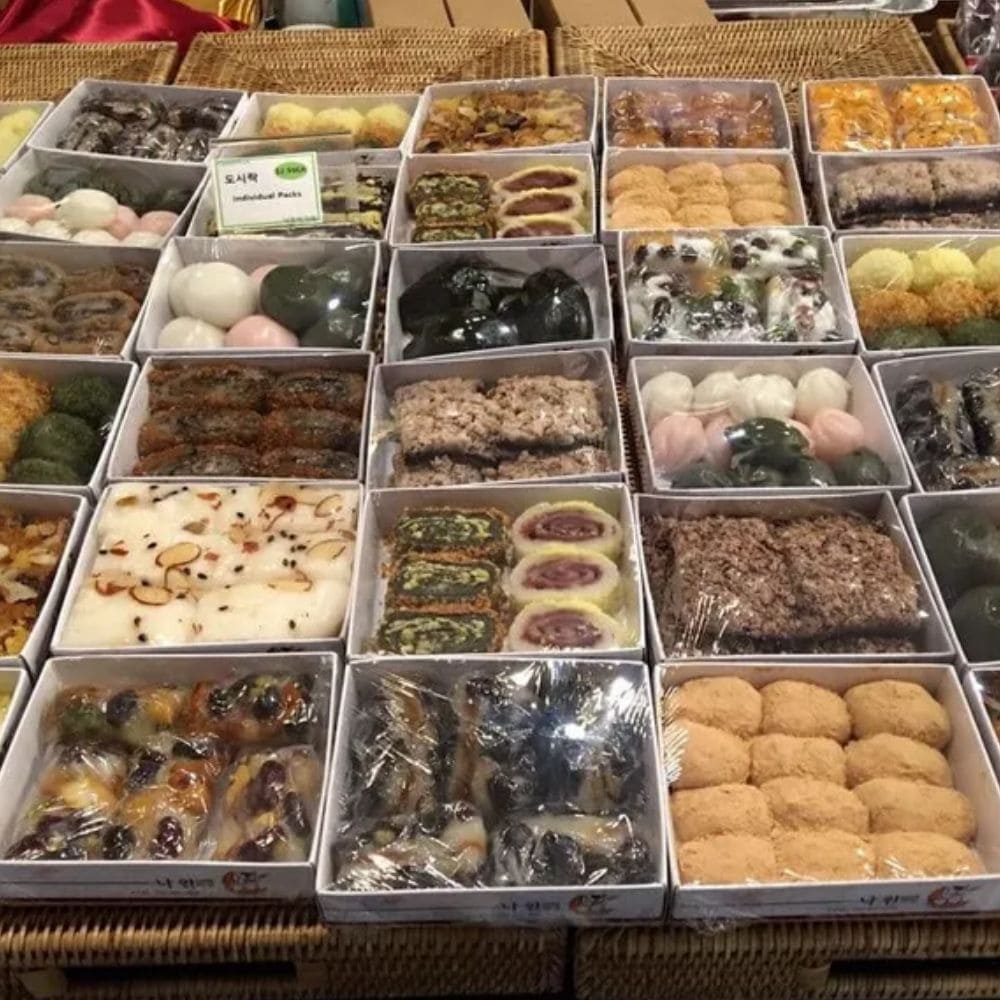
Choose by Freshness, Not Just Appearance
Ask what was made that morning. Fresh tteok should smell cleanly of grain, beans, sesame, or mugwort—not stale oil or artificial perfume. A smooth, elastic surface is desirable for pounded tteok, but steamed seolgi is supposed to be softer and more crumbly. Buy small amounts if you cannot freeze the remainder.
Store It Correctly
Most fresh tteok tastes best on the day it is made. As cooked starch cools, its molecules reorganize in a process called retrogradation, pushing the texture from tender to firm. Refrigeration often speeds the disappointing hardening. For leftovers, wrap individual portions tightly and freeze them as soon as possible. Reheat according to type: steaming is gentle, while a short microwave burst under a damp cover works for many pieces. Fried, cream-filled, or shop-packaged tteok may need different handling, so follow the maker’s instructions.
Do not leave moist rice cakes at room temperature for long periods, especially in summer. Refrigerate or freeze as directed, and discard products with an off smell, visible mold, or damaged packaging.
Eat Slowly
Chewy tteok can be a choking hazard. Take small bites, chew thoroughly, and supervise young children or older adults. Firm or very sticky pieces should be cut into manageable sizes rather than swallowed in one celebratory bite.
Tteok FAQ for First-Time Visitors
Is tteok gluten-free?
Plain tteok made only from rice, water, salt, and sugar contains no gluten, and glutinous rice is gluten-free despite its name. But not all commercial tteok is safe for someone with celiac disease. Soy sauce, barley malt, wheat-containing crumbs, cookie fillings, flavor mixes, and shared equipment can introduce gluten. Ask the shop about both ingredients and cross-contact.
Is tteok the same as Japanese mochi?
No. They are related East Asian grain-food traditions and some chewy varieties are similar, but tteok is a much broader Korean category. It includes crumbly steamed rice-flour cakes, layered red-bean cakes, patterned non-glutinous-rice cakes, fermented cakes, flower pancakes, and millet or potato-based regional foods—not only pounded glutinous rice.
Is tteok vegan?
Many classic varieties are naturally vegan, but never assume. Modern fillings may contain milk, butter, cream cheese, eggs, gelatin, or honey. Ask before ordering, particularly at fusion cafes.
Does tteok contain alcohol?
Most does not. Fermented varieties such as jeungpyeon and gaeseong juak traditionally use makgeolli in the batter. Cooking reduces alcohol, but someone who avoids it strictly for religious, medical, or personal reasons should ask the maker and choose another variety.
Is tteok very sweet?
Classic tteok is often less sweet than frosted cake, but there is no universal rule. Plain baekseolgi and jeolpyeon are mild; kkultteok, syrup-glazed juak, cream-filled tteok, and some red-bean fillings can be distinctly sweet. A mixed box is the easiest way to find your preferred level.
Which tteok is best for a beginner?
Start with fresh injeolmi for nuttiness, baekseolgi for a clean rice flavor, sesame-filled songpyeon for contrast, and grilled garaetteok for a warm crisp-chewy experience. Add omegi-tteok if you enjoy red beans and jeungpyeon if you want something lightly fermented.
What allergens should I check?
Soybean, sesame, peanuts, tree nuts, dairy, and wheat are common concerns. Mugwort and other herbs also deserve caution for people with specific plant allergies. Fillings are not always visible, so ask rather than judging by color.
Can I take tteok home on an international flight?
Factory-sealed frozen or shelf-stable products travel better than fresh market tteok, but the destination country’s customs rules control what may enter. Products containing fresh fruit, beans, nuts, dairy, or other agricultural ingredients can face restrictions. Check the official rules for your destination before buying, keep labels and original packaging, and declare food when required.
More Korean Food Stories to Explore
Tteok makes the most sense as part of Korea’s larger relationship with grain, seasonality, preservation, and communal eating. After the sweets, move to everyday comfort food with Korean Gukbap Varieties, Why Jajangmyeon & Jjamppong Are Korea’s True Soul Food, and Korean Summer Cold Noodles.
For older preservation traditions, read What Is Jeotgal?. For an unusually luxurious seasonal gift, explore Mudeungsan Watermelon, Korea’s Giant Puraengi. Together, these foods reveal the same principle found in tteok: Korean cuisine keeps reinventing local ingredients without severing them from memory.
Final Local Tip: Do not wait until your last night in Korea to buy fresh tteok. Taste it early in the trip, discover the texture you like, and then return for a small same-day batch or a properly frozen gift. With tteok, timing is part of flavor.
Korean Culture portal KCulture.com

The KCulture Editorial Team is dedicated to providing deep insights and accurate information about the vibrant world of Korean culture.