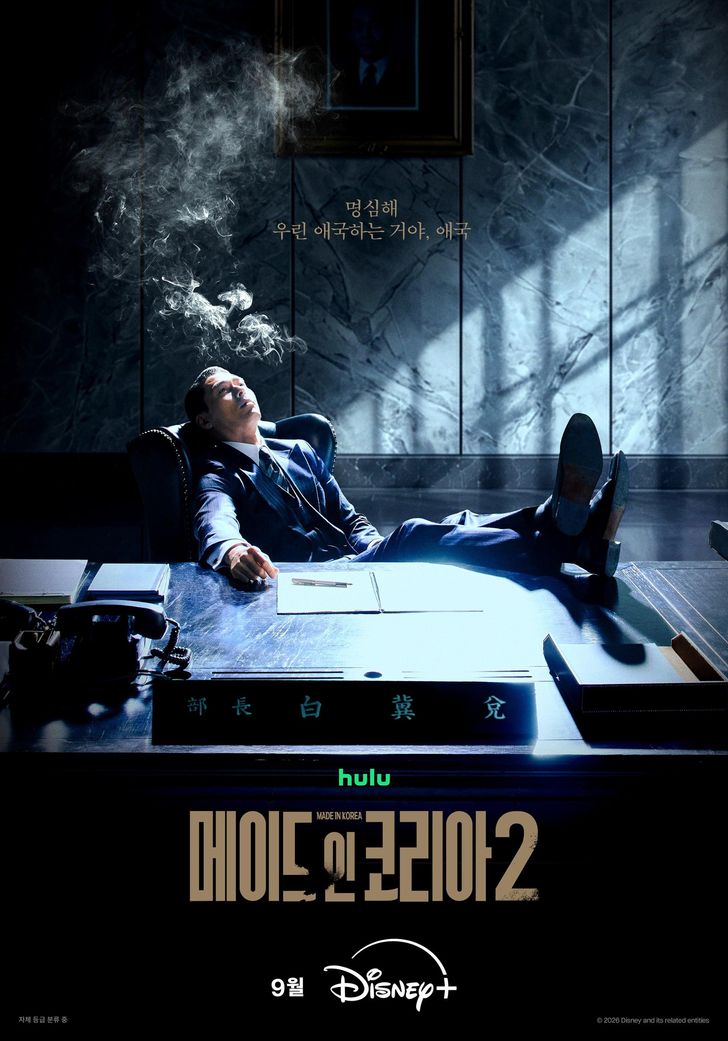
Season 1 left Baek Ki-tae standing closer than ever to the power he wanted, while Jang Geon-young lost almost everything trying to stop him. Made in Korea Season 2 reunites them nine years later, but neither man has simply been waiting for a rematch. They have grown older, more powerful, and much less certain that justice and ambition can still be separated.
That emotional change is what makes this sequel work. Set in the political turmoil of 1979, the drama is larger and darker than before, yet its most gripping scenes are often about something very personal: an older brother who confuses love with control, a defeated prosecutor who may now want revenge more than justice, and a younger brother desperate to make one decision that truly belongs to him. This spoiler-free Made in Korea Season 2 review covers Episodes 1–4, the new cast, and what the teasers suggest about the finale.
- The Story Season 1 Left Unfinished
- Made in Korea Season 2 Release Guide
- The Spoiler-Free Story Through Episode 4
- Why Season 2 Feels Different
- Characters, New Cast, and Performances
- Made in Korea Season 2 Review: Episodes 1–4
- The Real History Without the Homework
- What the Teasers Suggest About the Finale
- Made in Korea Season 2 FAQ
- More Korean Drama Reviews
The Story Season 1 Left Unfinished
The first season was powered by the collision between two stubborn men. Ki-tae, played by Hyun Bin, treated the state as a business opportunity and climbed through the Korean Central Intelligence Agency while building an illegal network behind it. Geon-young, played by Jung Woo-sung, believed that enough evidence and persistence could bring him down.
The ending made that belief look painfully naïve. Ki-tae understood how power protected itself; Geon-young learned that being right did not mean he would win. Season 2 begins with the emotional consequences of that defeat. Ki-tae has spent nine years turning survival into authority, while Geon-young has spent the same period living with humiliation and preparing to return.
This makes their reunion more interesting than a simple second round. Ki-tae has more to lose, and Geon-young has fewer moral limits left. The question is no longer merely which man is stronger. It is what each has become while trying to defeat the other.
Made in Korea Season 2 Release Guide
Season 2 is a six-episode conclusion released in pairs. As of September 20, 2026, Episodes 1–4 are available. The final two episodes arrive on September 23. The series streams on Disney+ in Korea and most international markets and on Hulu in the United States.
| Episodes | Release Date |
|---|---|
| Episodes 1–2 | September 9, 2026 |
| Episodes 3–4 | September 16, 2026 |
| Episodes 5–6 | September 23, 2026 |
Watching Season 1 first is strongly recommended. The political story can be followed without it, but the hurt between Ki-tae and Geon-young, the complicated loyalty of Pyo Hak-su, and the relationships within the Baek family carry far more weight when their history is understood.
The Spoiler-Free Story Through Episode 4
Episodes 1–2: Everyone Has Moved Up, but No One Is Safe
The story jumps from 1970 to 1979. Ki-tae is now a major figure inside the Korean Central Intelligence Agency (중앙정보부), no longer the ambitious field operative seen in Season 1. His criminal business has expanded, his political connections are stronger, and he appears to have achieved almost everything he wanted.
Then the president’s sudden death destabilizes the entire order protecting him. Intelligence officials, Blue House insiders, military commanders, and investigators immediately begin searching for the next source of authority. Ki-tae’s success suddenly looks less like a fortress and more like a high place from which he could fall.
Geon-young returns through the new military-led investigative system. His calmness is more unsettling than his anger because it suggests that nine years of defeat have taught him how to use power instead of merely challenging it. Meanwhile, Baek Ki-hyun—Ki-tae’s younger brother—is now a lieutenant colonel in the Defense Security Command. His position places him directly between the two rivals.
Episodes 3–4: The Power Struggle Becomes a Family Drama
By Episode 3, the political funds, drug business, and international smuggling network begin to connect. Geon-young’s counterattack becomes clearer, and Oh Ye-jin, now a prosecutor, starts acting on her own judgment rather than simply following his lead.
Episode 4 is where the season finds its emotional center. The drama looks more closely at Ki-tae’s relationship with Ki-hyun and asks whether a brother can protect someone so completely that the protection itself becomes a prison. Ki-tae believes his control is an expression of love. Ki-hyun increasingly experiences it as a denial of his adulthood.
Spoiler-free takeaway: The first four episodes are not really asking which side Ki-hyun will join. They are asking whether he can finally make a choice that is not controlled by his brother, his commanders, or Geon-young.
Why Season 2 Feels Different
Season 1 moved through several operations and criminal schemes before bringing its rivals together. Season 2 is one continuous six-episode story. Every conversation feels connected to the approaching political rupture, and choices made early in the season continue to tighten around the characters.
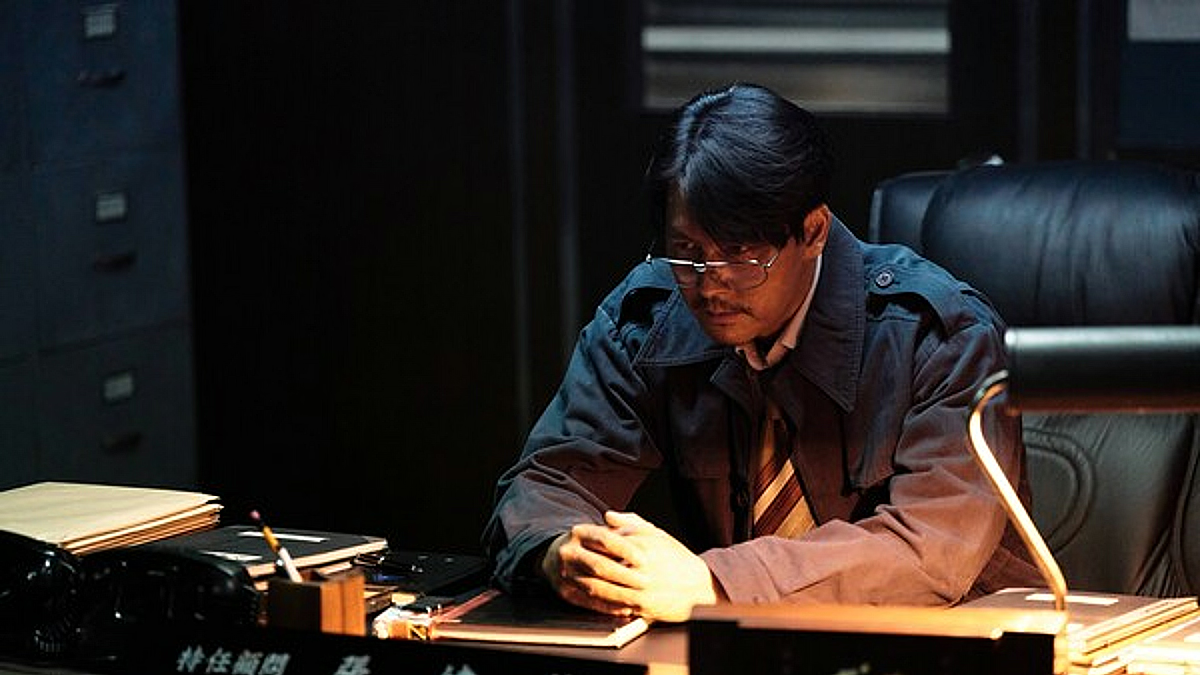
Director Woo Min-ho described the difference by calling Season 1 a “kids’ fight” and Season 2 an “adults’ fight.” The phrase is blunt but accurate. Ki-tae and Geon-young are no longer fighting only through evidence, threats, and private deals. Their conflict now runs through intelligence agencies, the military command, political advisers, and an emergency investigation body.
Yet the sequel does not become more entertaining simply because the scale is larger. It improves because the larger conflict puts more pressure on intimate relationships. Political institutions determine who has authority, but love, shame, jealousy, and old family wounds determine how that authority is used.
Characters, New Cast, and Performances
Hyun Bin Makes Ki-tae’s Confidence Feel Fragile
Hyun Bin plays Ki-tae with the composure of a man accustomed to entering a room and finding that everyone already knows his importance. The pleasure of the performance comes from watching that composure develop small cracks. Ki-tae can be charming, threatening, protective, and cruel without treating those qualities as contradictions.
His affection for his family appears sincere, which makes his behavior more disturbing. He does not think he is controlling Ki-hyun; he thinks he is saving him. Hyun Bin keeps enough warmth in the character to prevent him from becoming a simple villain.
Jung Woo-sung Turns Justice Into Obsession
Geon-young is quieter than before, but not calmer. Jung Woo-sung gives him the stiffness of someone who has carried the same defeat for nine years and built his identity around correcting it. The performance leaves an uncomfortable question hanging over every success: is Geon-young still pursuing justice, or has justice become the respectable name he gives to revenge?
Woo Do-hwan Becomes the Season’s Emotional Center
The headline rivalry still belongs to Hyun Bin and Jung Woo-sung, but Woo Do-hwan may have the most important role. Ki-hyun is a disciplined officer, a grateful younger brother, and an ambitious man who resents being treated like a child. Those feelings do not fit neatly together, and Woo lets that conflict remain visible even when Ki-hyun says very little.
Jang Hye-jin and Heo Jung-do Change the Atmosphere
Jang Hye-jin joins the cast as Madam Shin, an unofficial adviser who mixes political intelligence with the language of fortune-telling. She is intriguing because her influence exists outside any formal office. Her scenes suggest a world in which powerful people trust private whispers as much as official reports.
Heo Jung-do’s Hwang Dae-sik is a rising military strongman who clearly evokes Chun Doo-hwan without being presented as a literal biography. Heo avoids broad villainy. Hwang is most threatening when he makes ambition sound like common sense and a power grab sound like a necessary response to national chaos.
Seo Eun-soo also gives Oh Ye-jin greater independence, while Won Ji-an’s Ikeda Yuji has grown from an aspiring successor into a figure with authority of her own. Yuji’s relationship with Ki-tae remains deliberately difficult to label: friendship, partnership, complicity, and emotional intimacy all exist at once.
Made in Korea Season 2 Review: Episodes 1–4
The opening episodes require patience. Nine years of change must be explained, new military figures enter quickly, and several institutions compete for attention. Viewers who only vaguely remember Season 1 may initially struggle with names and loyalties.
Once that setup is complete, the drama becomes much more absorbing. Episodes 3 and 4 turn political information into emotional pressure. A ledger matters because of whom it can destroy. A military appointment matters because it places one brother across the table from another. A drug investigation matters because pursuing it may require Ye-jin to resist the very people who claim to support justice.
The series is also visually colder than before. Season 1 had more swagger—nightclubs, contraband, travel, and the excitement of watching Ki-tae improvise. Season 2 favors offices, corridors, guarded rooms, and conversations in which everyone suspects that the balance of power may change before morning. The mood is less adventurous but more tense.
Its greatest strength is that no central character occupies a comfortable moral position. Ki-tae is compelling but dangerous. Geon-young has a legitimate case but increasingly troubling methods. Ki-hyun wants independence but is also tempted by the authority offered by the military. The drama becomes enjoyable not because one person is clearly right, but because every possible alliance carries an emotional cost.
Review verdict: Season 2 is more focused, more emotionally complicated, and better acted as an ensemble drama. Its political plot demands attention, but the family conflict is what makes the first four episodes memorable.
The Real History Without the Homework
Only three historical facts are necessary to understand the pressure surrounding the characters. On October 26, 1979, Korean Central Intelligence Agency director Kim Jae-gyu assassinated President Park Chung-hee. Chun Doo-hwan, then commander of the Defense Security Command, subsequently headed the Joint Investigation Headquarters (합동수사본부). On December 12, the military faction led by Chun forcibly seized control of the armed forces’ command structure.
Season 2 takes place in the dangerous space between those events. The audience may know which institution rises historically, but the fictional characters do not know what the new order will mean for them.
- Baek Ki-tae, Jang Geon-young, Baek Ki-hyun, and the central criminal conspiracy are fictional.
- Hwang Dae-sik resembles Chun Doo-hwan in position and appearance but is not an exact portrayal.
- Oh Ye-jin is the drama’s fictional pioneering woman prosecutor in 1979. South Korea’s first women prosecutors were appointed in 1982.
- The Man Standing Next and 12.12: The Day cover adjacent historical periods but are not part of the same fictional universe.
What the Teasers Suggest About the Finale
The promotional footage emphasizes military movement, confrontations between the brothers, Geon-young pressuring Ki-hyun to choose a side, and Ki-tae warning that the conflict will end only when one side falls. Those images do not reveal the ending, but they point toward four likely areas of tension.
- Ki-hyun’s decision will reshape the rivalry. Too much emotional weight has been placed on his independence for him to remain a passive piece.
- Geon-young may approach victory while losing his moral advantage. Bringing down Ki-tae could require him to become more like Ki-tae.
- Ki-tae’s family may become his greatest vulnerability. His instinct to protect everyone by controlling them could finally push them away.
- History will probably remain fixed while personal destinies stay open. The military’s rise is known; who survives it emotionally, politically, or physically is not.
Ikeda Yuji, Oh Ye-jin, Pyo Hak-su, and Madam Shin remain important because each controls something the three men cannot easily replace: an outside network, evidence, uncertain loyalty, or private knowledge about where power is moving.
Made in Korea Season 2 FAQ
Is Made in Korea Season 2 based on a true story?
It is historical fiction placed around real political events. The national crisis is historical, but the main characters and their criminal conflict are fictional.
Do viewers need to watch Season 1 first?
It is strongly recommended. The sequel explains the political situation, but it expects viewers to understand why Ki-tae, Geon-young, Ki-hyun, Yuji, and Hak-su do not trust one another.
Is Hwang Dae-sik supposed to be Chun Doo-hwan?
He is a fictional military figure clearly modeled in part on Chun’s historical role and image, not a precise biographical portrayal.
Are Ki-tae and Ikeda Yuji a couple?
Through Episode 4, the drama leaves their relationship intentionally undefined. Their bond includes business, loyalty, complicity, and genuine emotional intimacy without confirming a simple romantic label.
Will there be a Made in Korea Season 3?
Season 2 has been billed as the second and final season, so a third season should not be expected without a new official announcement.
More Korean Drama Reviews
Viewers drawn to conspiracy and action can continue with Why Agent Kim Reactivated, A Shop for Killers Season 2, or the expanding superhero world of Moving Season 2.
For other recent Korean dramas, read the reviews of Our Sticky Love, Teach You a Lesson, and The WONDERfools. Lighter and more reflective alternatives include My Royal Nemesis and We Are All Trying Here.

The KCulture Editorial Team is dedicated to providing deep insights and accurate information about the vibrant world of Korean culture.