
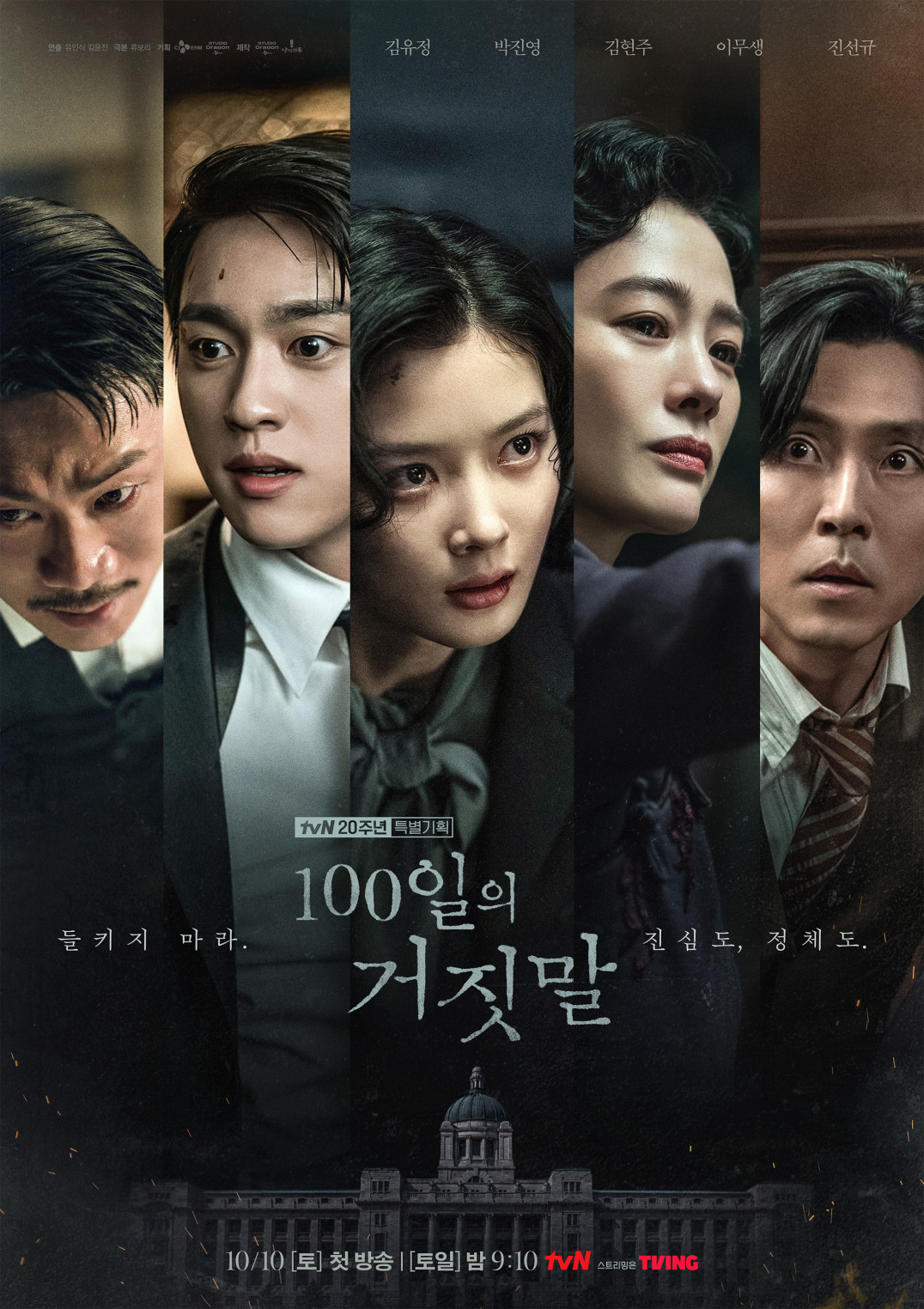
100 Days of Deception is a romantic spy drama set in Japanese-occupied Korea in 1932, where survival, loyalty, and love can demand conflicting choices. This 100 Days of Deception review explores how its opening episodes make colonial history personal: through a thief who wants to leave, a young interpreter caught between identities, and resistance members whose courage coexists with grief and mistrust.
Streaming on Netflix under the English title 100 Days of Deception, the series is also known by the literal translation 100 Days of Lies. Its appeal begins with an uncomfortable question: how much freedom does an individual really have when someone else controls the country they live in? The answer unfolds through dangerous encounters, persuasive performances, and people who cannot yet know how history will end.
This spoiler-light review covers the opening phase of the series, with four episodes released as of October 19, 2026. Early rankings are dated snapshots.
- 100 Days of Deception Review: A Thief Enters History
- Colonial Korea as a Place People Had to Live
- The Human Cost of Fighting for Independence
- The Cast and the Performances That Matter
- The Filmmakers and the Drama’s Emotional Balance
- Japanese Reactions and Early Netflix Rankings
- Is 100 Days of Deception Worth Watching?
- Continue Exploring Korean History and Drama
100 Days of Deception Review: A Thief Enters History
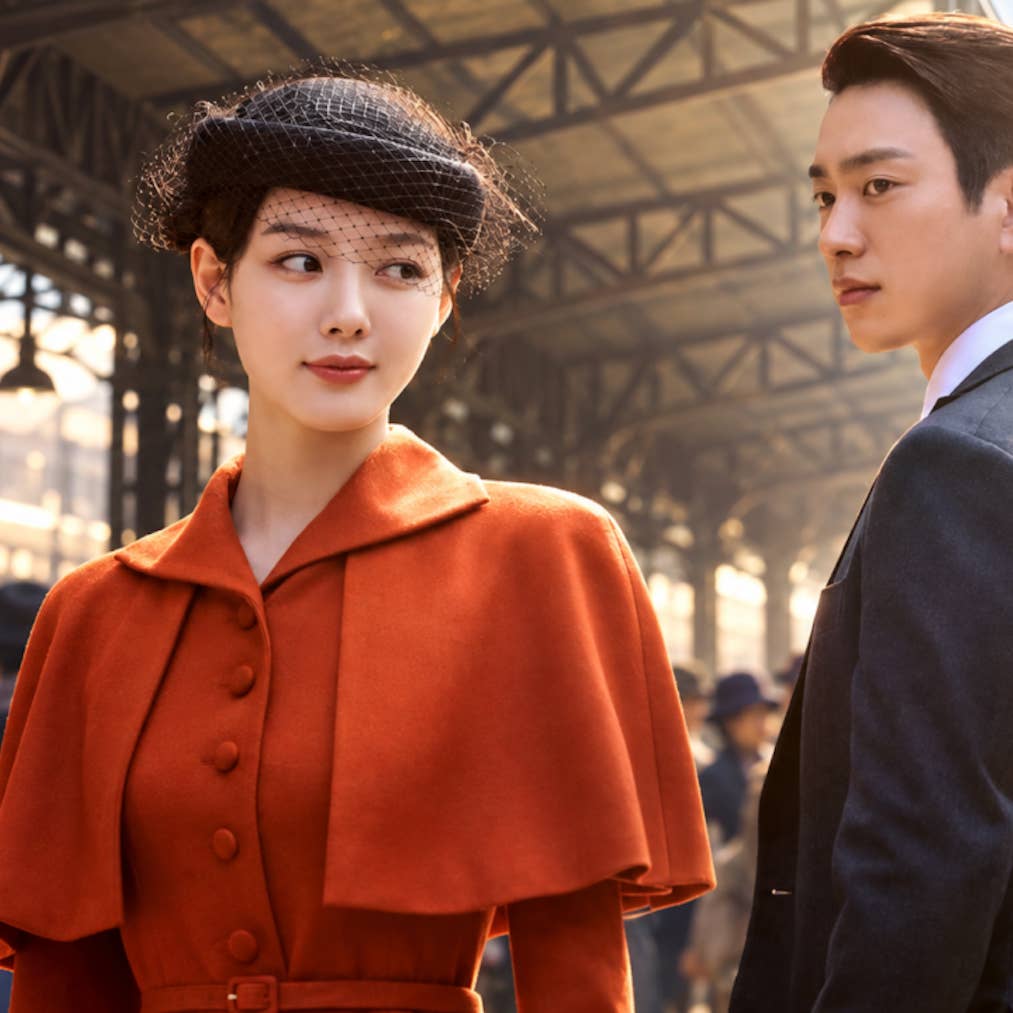
Lee Ga-kyung, played by Kim Yoo-jung, has a practical ambition: earn enough money to reach America. A gifted pickpocket in Gyeongseong (경성), the colonial-era name for Seoul (서울), she initially measures her future in escape routes and boat fare. National liberation feels distant from the immediate business of staying alive.
That starting point gives the story its human scale. Ga-kyung has wit, appetite, and self-interest. Her usefulness to the resistance comes from abilities she already possesses, including a quick ear for languages and a talent for reading people. An arrangement with the underground group Gugukdan draws her into a hundred-day infiltration of the Government-General of Korea.
Inside the colonial administration, she encounters elite interpreter Kim Tae-ung, also known as Sato Hideo, played by Park Jin-young. Korean-born and adopted by a powerful Japanese official, he occupies an uneasy position between personal history and institutional privilege. Suspicion and attraction develop together: becoming interested in another person also creates opportunities for exposure.
The opening at Gyeongseong Station (경성역) brings these intersecting lives into motion before an assassination plot raises the stakes. The details are best discovered onscreen. What matters is the premise’s emotional logic: Ga-kyung hopes to buy an individual future, while the people recruiting her believe that any lasting future requires collective freedom.
Colonial Korea as a Place People Had to Live
Japan formally annexed Korea in 1910, and colonial rule continued until 1945. By the drama’s setting in 1932, occupation had already shaped a generation’s opportunities. For the steps leading to that loss of sovereignty, Fall of the Korean Empire: Eulsa Treaty to 1910 Annexation provides useful background.
The drama’s world is busy with journeys, work, money, and social performance. Its railway platforms, Western clothing, and official interiors establish an urban society with recognizable modern ambitions. Those surfaces coexist with a political order that distributes security and authority unequally.
That combination helps explain why ordinary interactions carry tension. A conversation with an official can become an examination of someone’s identity. Employment can offer access while requiring obedience. Knowledge of Japanese can improve a person’s prospects and place them closer to the machinery governing their compatriots.
Making the central characters interpreters is particularly effective. Translation involves deciding what another person hears, how a statement sounds, and which meaning survives. In a spy story, those decisions become dangerous. Historically, language proficiency alone cannot establish someone’s political allegiance; the drama’s divided identities make that distinction worth remembering.
The Government-General also had a physical presence in Korea’s former royal landscape. Its headquarters occupied the grounds of Gyeongbokgung Palace (경복궁), turning imperial authority into an unavoidable architectural statement. How Japan Systematically Destroyed Joseon Royal Palaces explains that transformation.
Historical viewing note: Keep the year 1932 in mind. Colonial policies changed over time. The campaign commonly associated with pressuring Koreans to adopt Japanese-style family names began in 1940; it should not automatically explain every Japanese name in this earlier story. Tae-ung’s adoption supplies his particular context.
The Human Cost of Fighting for Independence
Viewers know that Korea eventually regained independence. The people living in 1932 had no such assurance. A failed operation could mean imprisonment or death, and success could provoke an intensified search for everyone involved. That uncertainty gives the drama’s resistance story much of its weight.
The broader historical movement faced surveillance, disrupted communications, financial insecurity, and disagreements over strategy. Activists worked across borders and relied on networks that could be difficult to protect. After Yun Bong-gil’s 1932 attack in Shanghai, Japanese pursuit helped force the Korean Provisional Government into a prolonged period of movement and refuge. Freedom was a goal pursued without a reliable timetable.
The series brings that predicament down to the problem of trust. Recruiting someone with Ga-kyung’s talents also means depending on a person whose immediate priorities differ from the organization’s. The opening episodes allow resistance members to be suspicious and capable of troubling judgments. Their cause does not supply perfect information or remove their capacity to hurt one another.
This creates a meaningful ethical question: what may an underground organization demand from someone who has barely agreed to help? Urgency can explain coercion without making its human consequences disappear. Such friction gives the resistance characters room to exist as frightened, fallible people.
The early church-massacre backstory has a historical foundation. The drama’s fictional Gyeam-ri incident draws on the Jeam-ri (제암리) massacre of April 1919, when Japanese troops killed villagers gathered in a church and burned the building. The fictional officials and personal connections belong to the drama. The atrocity behind the imagery belongs to history.
That distinction matters when watching Yoo So-ran, the resistance sniper played by Kim Hyun-joo. Private grief and political commitment can become inseparable. A person may continue fighting while struggling to imagine a life after the fighting ends.
The foreign-correspondent storyline also opens a window onto the importance of international contacts and reporting. For the real people who helped make Korea’s struggle visible abroad, see Foreign Heroes of Korea’s Independence Movement.
The Cast and the Performances That Matter
Kim Yoo-jung: the energy of someone determined to survive
Kim Yoo-jung gives Ga-kyung the liveliness the premise needs. Her opportunism is engaging because it feels attached to an urgent, understandable desire. Quick changes in expression and manner make lying part of the character’s daily equipment.
The role also requires those defenses to become less reliable as the stakes rise. Ga-kyung’s movement between cheekiness, calculation, and alarm gives the espionage story an accessible emotional center. Her initial reluctance makes the question of commitment interesting: the audience has reasons to care about her before she embraces a larger cause.
Park Jin-young: the strain beneath an interpreter’s composure
Park Jin-young, also known as GOT7’s Jinyoung, works through Tae-ung’s reserve. His formal bearing suits someone trained to function near power, while his Korean origins and relationship with his adoptive father complicate that confidence.
The character’s desire for recognition makes his divided loyalties personal. Park’s controlled delivery gives small shifts in attention and warmth significance. Opposite Kim Yoo-jung, his guarded manner also establishes a useful romantic rhythm: her improvisation keeps disturbing his efforts to maintain control.
Kim Hyun-joo and Lee Mu-saeng: affection under pressure
Kim Hyun-joo gives So-ran a sense of emotional exhaustion beneath her practical resolve. Her skill with a weapon is only one part of the character. Grief can narrow her vision, and the performance makes that intensity understandable without making it comfortable.
Lee Mu-saeng plays Korean-American correspondent Yoo Philip, whose relationship with So-ran introduces a quieter register of longing. An early moment in which he hesitates to offer physical comfort captures the distance between wanting to help and knowing how. His gentleness and operational caution do not always lead in the same direction.
Together, they give the older characters an emotional life beyond their usefulness to the younger couple’s story.
Jin Sun-kyu: authority made unsettlingly plausible
As senior colonial official Sato Shinichi, Jin Sun-kyu makes watchfulness a source of menace. Courtesy can coexist with calculation, allowing an apparently civil exchange to remain threatening. The character’s ambition and distrust give his cruelty a recognizable connection to power.
His Japanese dialogue has attracted particular attention. Jin said he spent about two months in Japan preparing for the role, practicing his script for roughly seven hours a day and continuing lessons during production. That effort helps his conversations carry the scene’s tension.
The ensemble’s ability to sustain meaning through pauses, posture, and withheld reactions connects with a wider strength explored in The Stage Behind Korea’s Best Drama Performances.
The Filmmakers and the Drama’s Emotional Balance
100 Days of Deception premiered on tvN on October 10, 2026, as a special project marking the channel’s twentieth anniversary. It is produced by Studio Dragon and Nangman Crew, with Netflix providing international streaming distribution. The planned run is sixteen episodes, airing in Korea on Saturdays and Sundays at 9:10 p.m. KST.
Yoo In-sik, known for Extraordinary Attorney Woo and Dr. Romantic, directs alongside Kim Yoon-jin. The script is by Ryu Bo-ri, whose earlier work includes Do You Like Brahms? At the production presentation, Yoo explained that the longer format allowed space to follow how people change under historical pressure and why they make particular choices.
That emphasis provides a useful way to understand the drama’s emotional balance. Its strongest dramatic questions concern the motives behind a decision: why someone leaves, obeys, seeks approval, or risks another person’s life.
Its restraint is selective. The series includes atrocity, sacrifice, suspense, and openly patriotic feeling, with a clear commitment to Korean independence. What gives it texture is the attention paid to contradictory motives within that commitment.
This approach may help overseas audiences engage with unfamiliar history. Character-based storytelling gives viewers a way into the experience before requiring extensive background knowledge. The resulting sense of fairness can come from understanding how people reach their decisions, while the historical imbalance of power remains clear.
Its romance follows the same logic. As in Netflix’s The Scandal: Love as a Dangerous Game, intimacy acquires consequences from the surrounding social order. Here, trusting a lover can also expose a name, a cover story, or a network.
Japanese Reactions and Early Netflix Rankings
Released in Japan as 100日の嘘, the drama entered Netflix Japan’s daily series Top 10 at No. 10 on October 13, 2026. Japanese entertainment outlet CinemaCafe recorded that position, and FlixPatrol’s country chart corroborates it. This establishes early audience interest, although it does not reveal why each viewer pressed play.
| Market or measure | Date | Early result |
|---|---|---|
| Netflix Japan daily TV chart | October 13, 2026 | No. 10 |
| FlixPatrol worldwide Netflix TV chart | October 13, 2026 | No. 5 |
| Korean television premiere | October 10, 2026 | 5.3% nationwide average |
| Korean television episode four | October 18, 2026 | 9.0% nationwide average |
The Korean figures are nationwide paid-platform household ratings reported by Nielsen Korea. FlixPatrol’s worldwide position aggregates daily country-chart points; it is separate from Netflix’s official weekly ranking by views.
Individual Japanese responses offer more detail than the rankings. In an October 14 Filmarks review, user mooo praised the production design, cast, and language preparation while acknowledging that some Japanese dialogue remained imperfect or difficult to catch. Appreciation of the effort clearly coexisted with criticism.
Another reviewer, marby, praised the music, acting, and production craft and challenged descriptions of the show as anti-Japanese, welcoming its attention to colonial violence. These are examples of particular viewers’ responses, rather than a representative survey.
They suggest a more interesting possibility than a simple claim that Japan has embraced the drama because it is less emotional. Viewers can admire its craft, feel discomfort about the history, and still want to continue. The colonial setting remains part of the attraction and the difficulty.
Is 100 Days of Deception Worth Watching?
The opening episodes make a persuasive case through Kim Yoo-jung’s resourcefulness, Park Jin-young’s guarded presence, and the older cast’s ability to give history an intimate emotional cost. The espionage plot provides momentum; the characters’ incompatible ideas of safety give it substance.
There are limits to its realism. A remarkably gifted thief, a perilous romance, and a hundred-day undercover assignment are heightened dramatic devices. Elaborate sets and convincing language preparation support the period atmosphere, while individual events and characters still require separate historical scrutiny.
The challenge for the remaining episodes is to preserve the friction that makes the beginning compelling: courage mixed with doubt, affection mixed with suspicion, and a desire for freedom shaped by the immediate need to survive.
For now, its most affecting idea is that people had to choose before they knew whether their choices would matter. Ga-kyung wants a way out. Others have already risked too much to leave. Bringing them together makes the struggle for independence feel close enough to disturb an ordinary dream.
Continue Exploring Korean History and Drama
For more context on the upheavals preceding colonial rule:
- Ganghwa Island Battles: The Fall of Joseon’s Isolation
- The 1894 Donghak Peasant Revolution: Joseon’s Great Awakening
- Eulmi Incident 1895: Empress Myeongseong’s Assassination
For more Korean drama coverage:
- Made in Korea Season 2 Review: Family, Power, Revenge
- Moving Season 2: Kang Full Universe and New Cast Revealed
Korean Culture portal KCulture.com

The KCulture Editorial Team is dedicated to providing deep insights and accurate information about the vibrant world of Korean culture.
