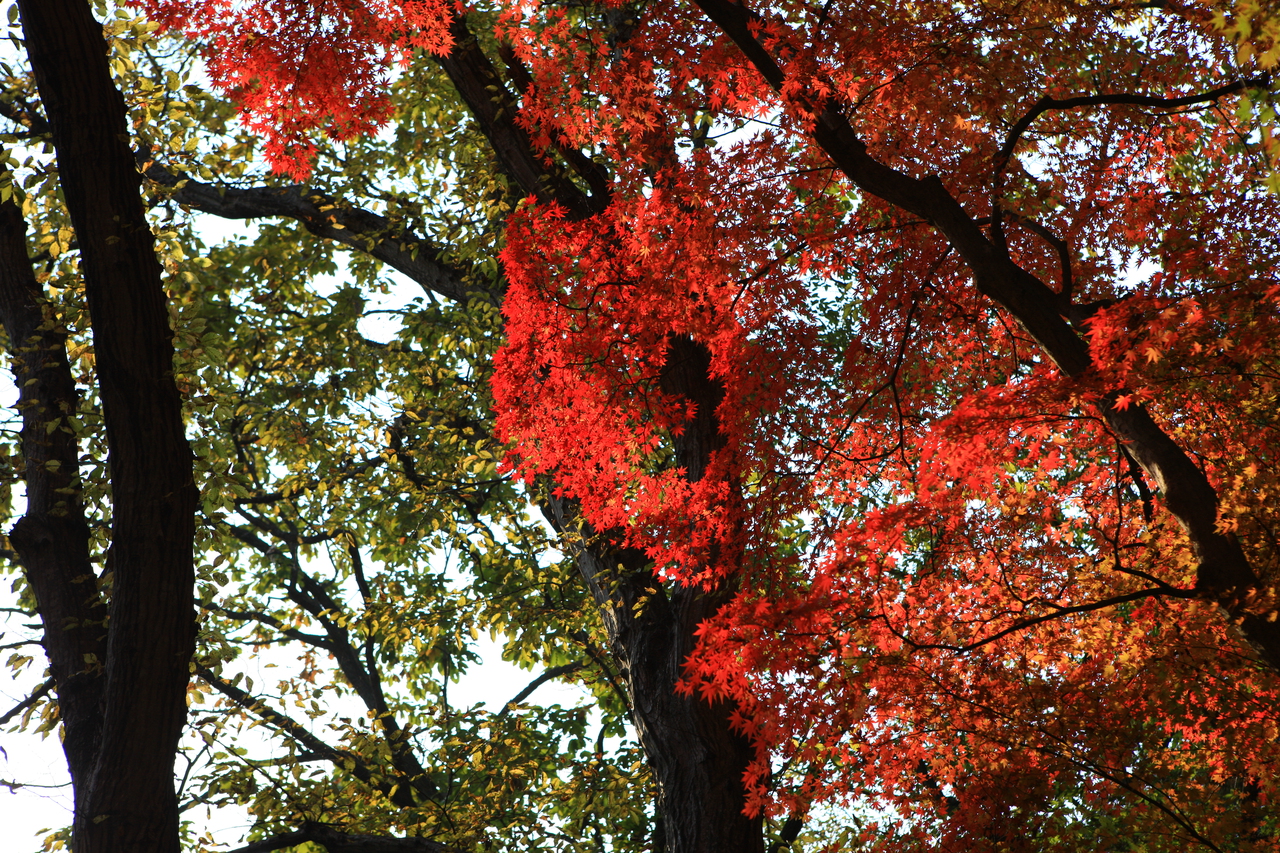
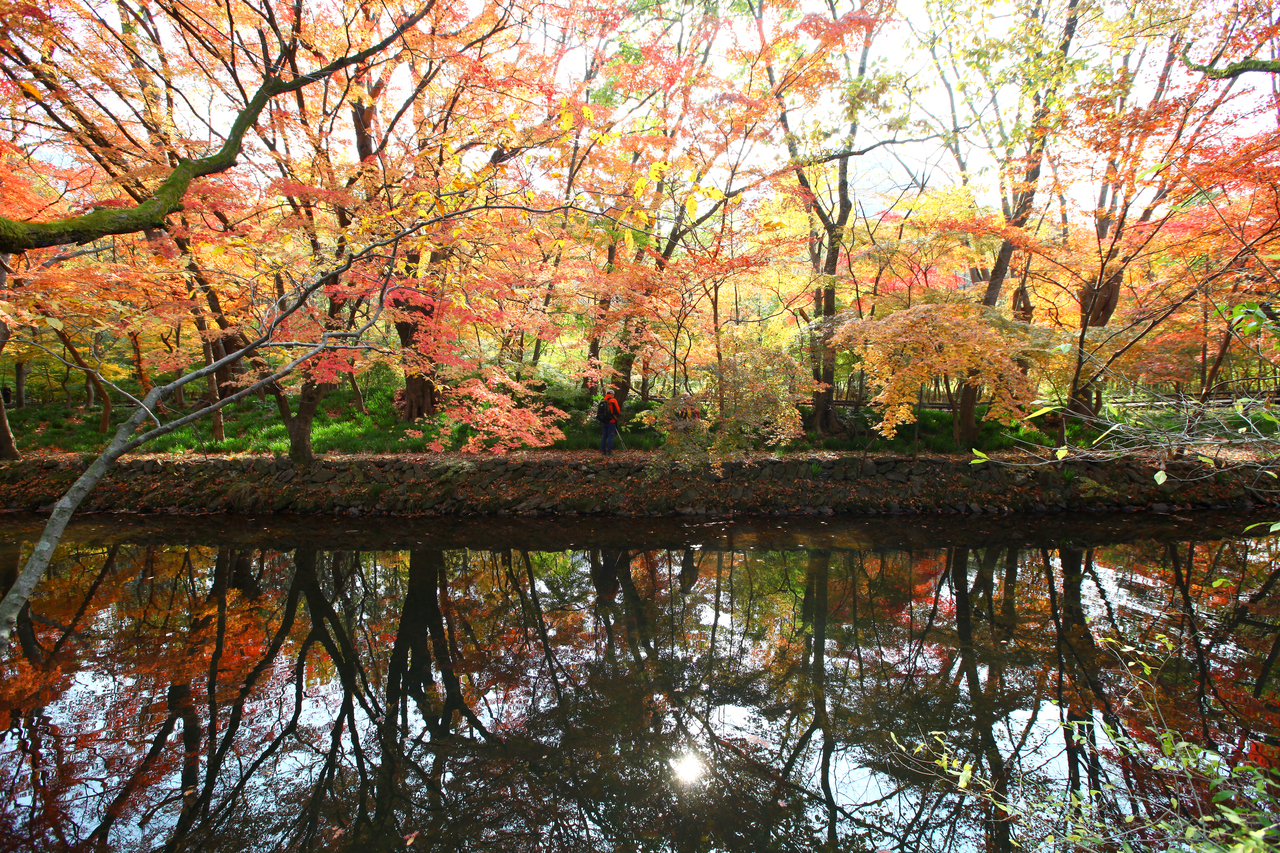
Seonunsa Temple autumn foliage is usually at its most rewarding in early to mid-November, when red and gold leaves frame an ancient Buddhist temple and reflect in Dosolcheon Stream (도솔천). In Gochang (고창), southwestern Korea, this is an autumn outing that combines an easy valley walk with historic buildings, a remarkable cliff-carved Buddha, and the flavors of the nearby coast.
The appeal of Seonunsa Temple (선운사) begins before you reach its gates: branches lean over the water, fallen leaves gather beside the path, and tiled roofs appear through the trees. Give the temple an unhurried morning, continue toward Dosolam Hermitage (도솔암) if time allows, then head to Gomso (곰소) for a jeotgal set meal. Together, they make a particularly satisfying introduction to this corner of Korea.
- Best Time for Seonunsa Temple Autumn Foliage
- Seonunsa History and the Gift of Salt
- Autumn Highlights at Seonunsa
- Dosolam’s Cliff Buddha and Its Donghak Story
- Make Time for a Gomso Jeotgal Set Meal
- Places to Visit Near Seonunsa
- Seonunsa Day Trip and Overnight Itineraries
- Getting to Seonunsa and Practical Tips
Best Time for Seonunsa Temple Autumn Foliage
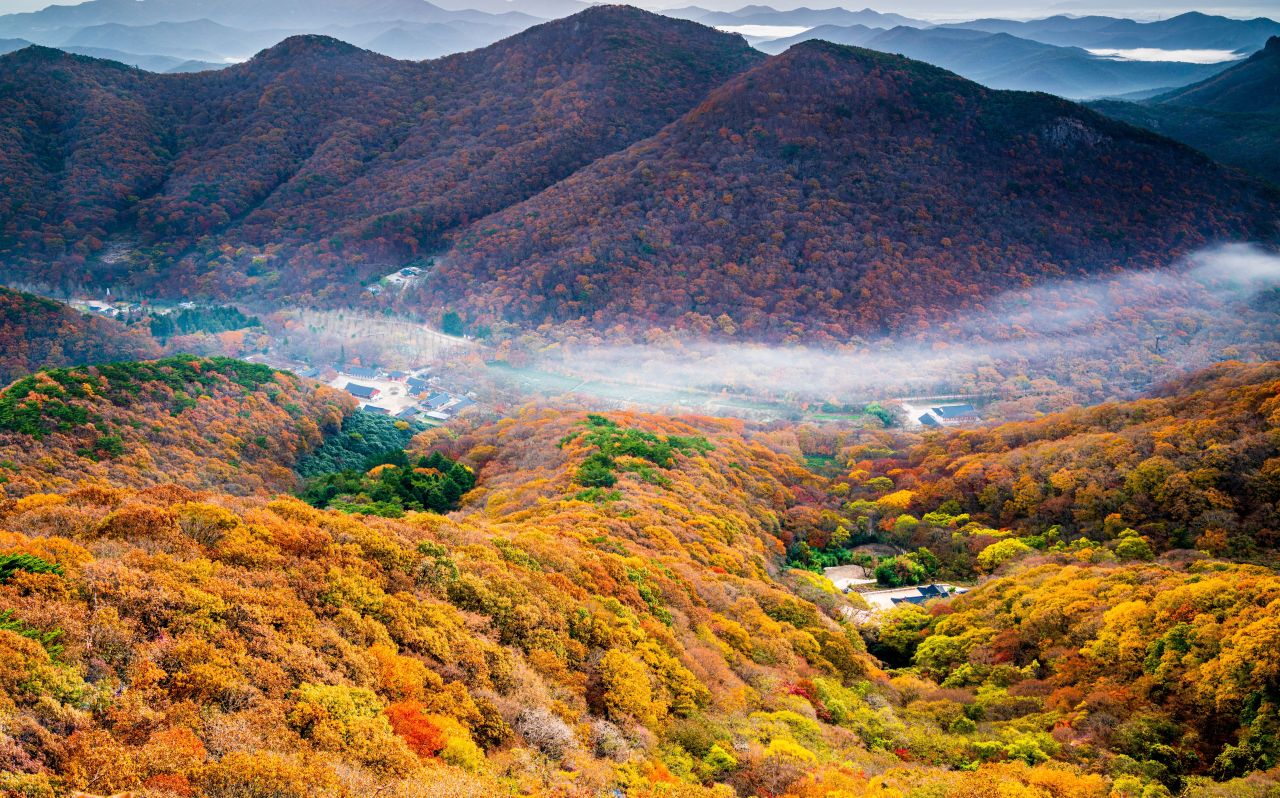
Early to mid-November is a useful planning window, rather than a fixed annual peak. Color develops unevenly across the valley, and autumn temperatures, rain, and wind can move the best days forward or back. Late October can already be attractive, while sheltered trees sometimes retain color beyond mid-November.
What makes the scene special is its closeness. You can enjoy leaves overhead, their reflection below, and a carpet of fallen foliage beside your feet. The calm stretches of the stream often provide the most memorable views, especially when red branches hang over dark water.
Local planning tip: Check recent photographs of Dosolcheon in the few days before your visit. Look at when the photographs were taken, rather than when a travel post was published. A general mountain foliage forecast may not describe conditions along this particular stream.
For quieter paths, aim for a weekday morning. On busy autumn weekends, arriving around 8 a.m. gives you a better chance of enjoying the approach before the main sightseeing crowds. Early light can be lovely; morning mist is an occasional bonus, never a certainty.
Planning a longer foliage journey? Compare this gentle valley outing with Seoraksan National Park’s autumn trails, and explore other landscapes in Best Korea Autumn Foliage Destinations.
Seonunsa History and the Gift of Salt
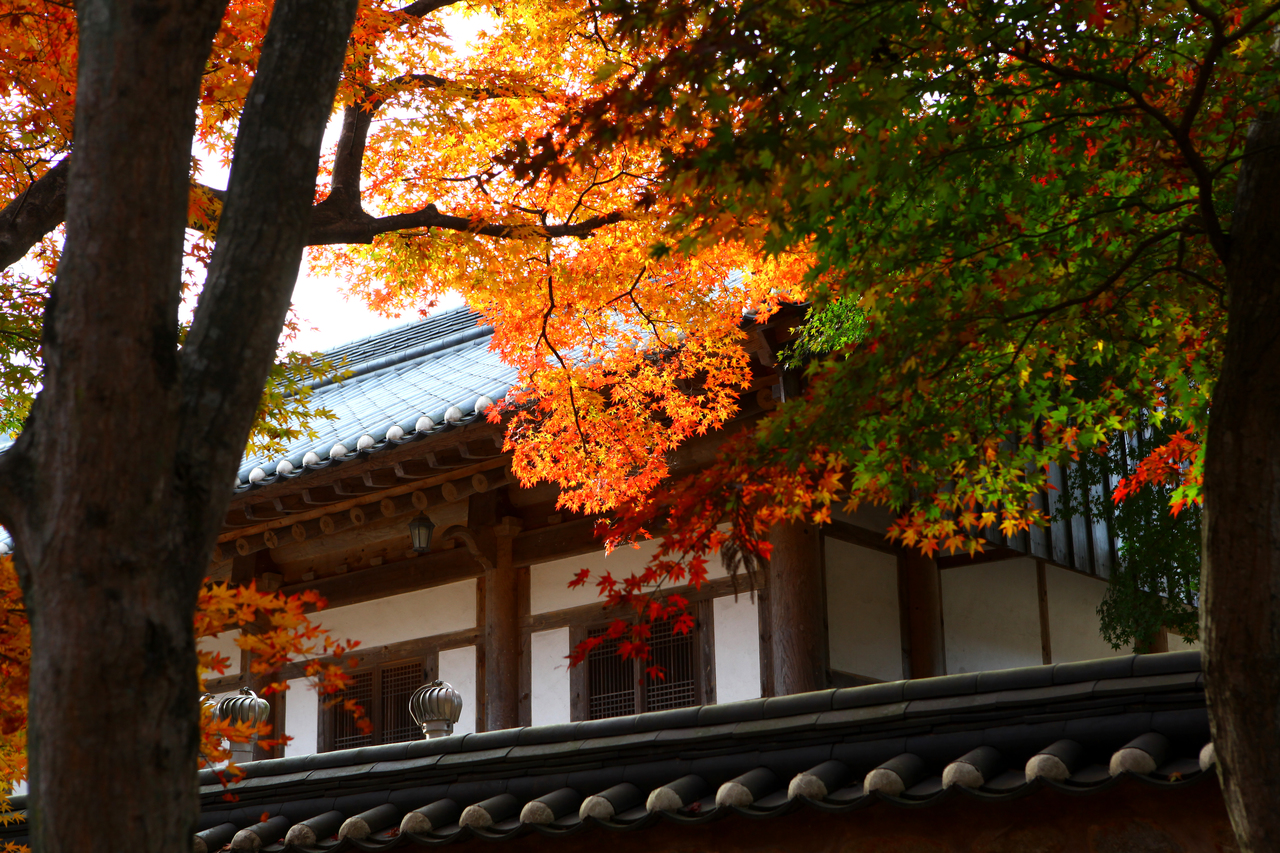
Seonunsa stands within Seonunsan Provincial Park (선운산도립공원), a landscape also associated with the name Dosolsan. Its traditional founding account dates the temple to 577, during the Baekje kingdom, and credits the monk Geomdan. That gives the site a history reaching back almost 1,500 years, although its surviving buildings belong to much later periods.
The temple grew into an important Buddhist center, suffered destruction during the Japanese invasions of the late sixteenth century, and was rebuilt. Its present main hall dates to 1613. Walking through the courtyard therefore brings together different layers of history: an ancient foundation, Joseon-period architecture, and a religious community that continues to use the grounds today.
The monk who taught people to make salt
One of Seonunsa’s most engaging traditions connects the mountain temple with the coast. According to the founding legend, Geomdan helped people living by banditry establish a stable livelihood by teaching them to produce salt. Their descendants offered salt to the temple in gratitude, a custom remembered as boeunyeom, or “salt repaying kindness.”
The story is best understood as temple tradition, rather than a fully documented biography. Its meaning, however, is wonderfully practical: helping people live differently began with giving them a way to earn a living. The salt-offering tradition has also been celebrated through modern cultural events.
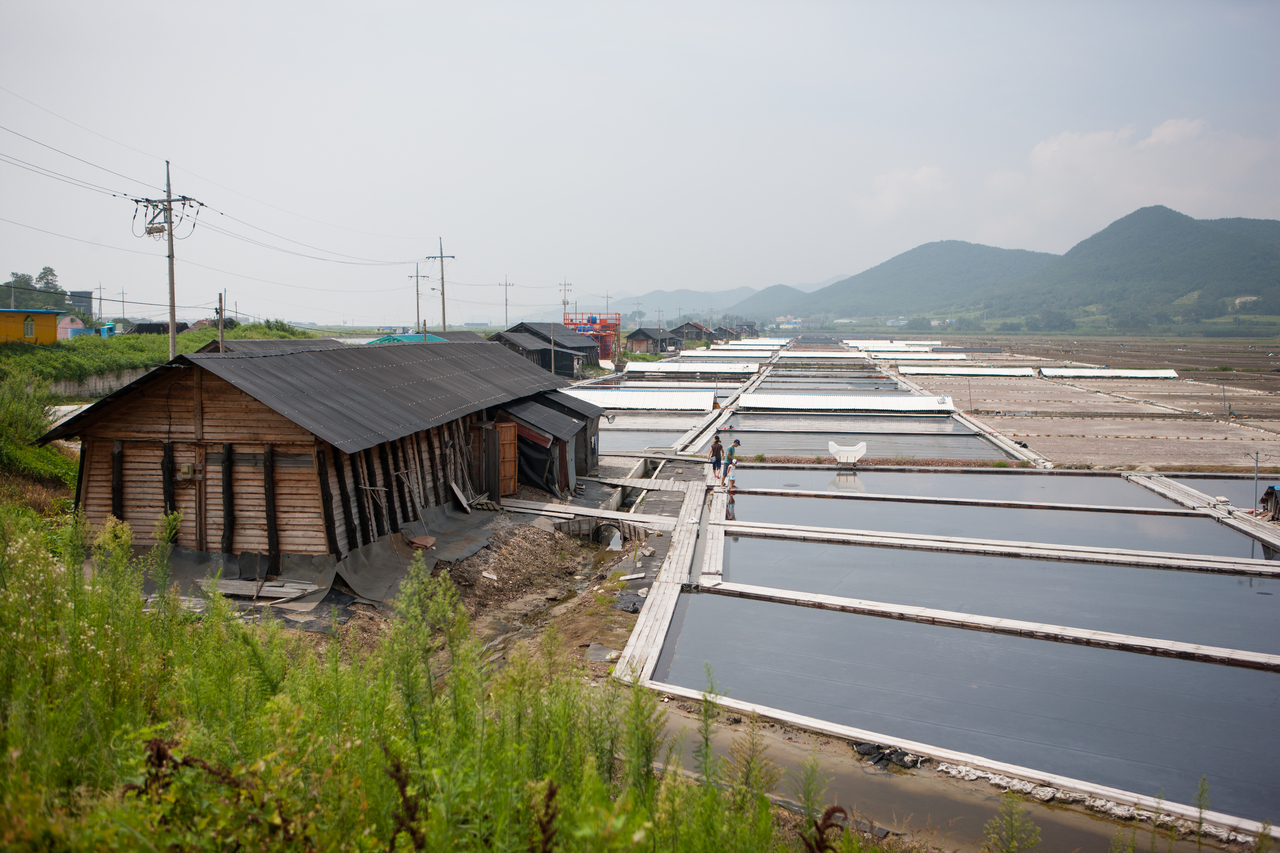
Keep that story in mind when you visit the salt fields and seafood shops around Gomso. The legend belongs to the Gochang community, rather than being an origin story for Gomso itself, but both reveal how closely this region’s everyday life has been tied to the sea and salt.
Autumn Highlights at Seonunsa
Dosolcheon: the autumn scene to linger over
Make the streamside approach your first priority. Pause at bridges and beside still pools, where the leaves and their reflections seem to meet. A low viewpoint can capture the water beneath the canopy, while a wider view brings together the path, tree trunks, and passing walkers.
The atmosphere changes with the weather. Sunlight makes individual leaves glow; an overcast day brings out softer colors and reduces harsh reflections. Even after some trees have shed their leaves, the water and leaf-covered banks can remain beautiful. Stay on established paths and keep the narrow bridges clear while taking photographs.
Daeungbojeon: look beyond the autumn backdrop
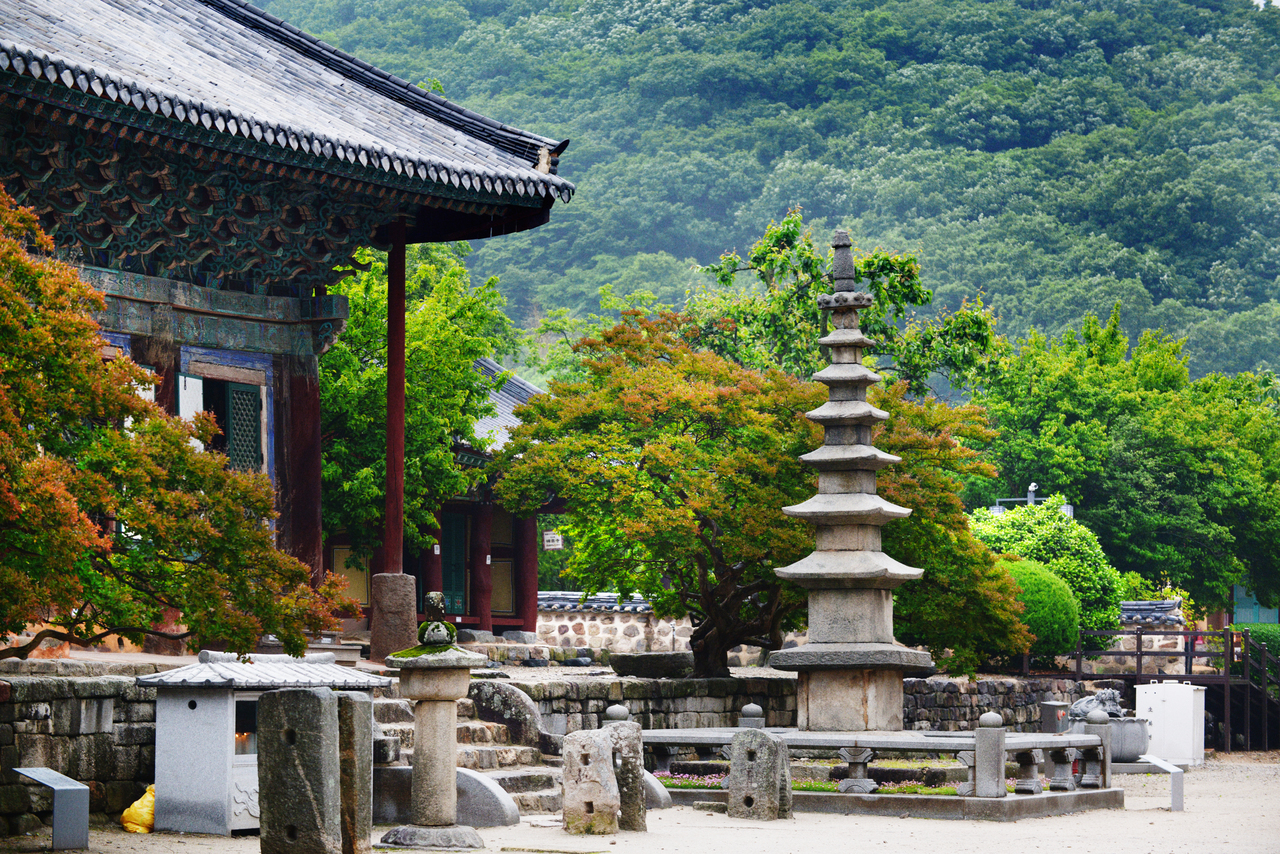
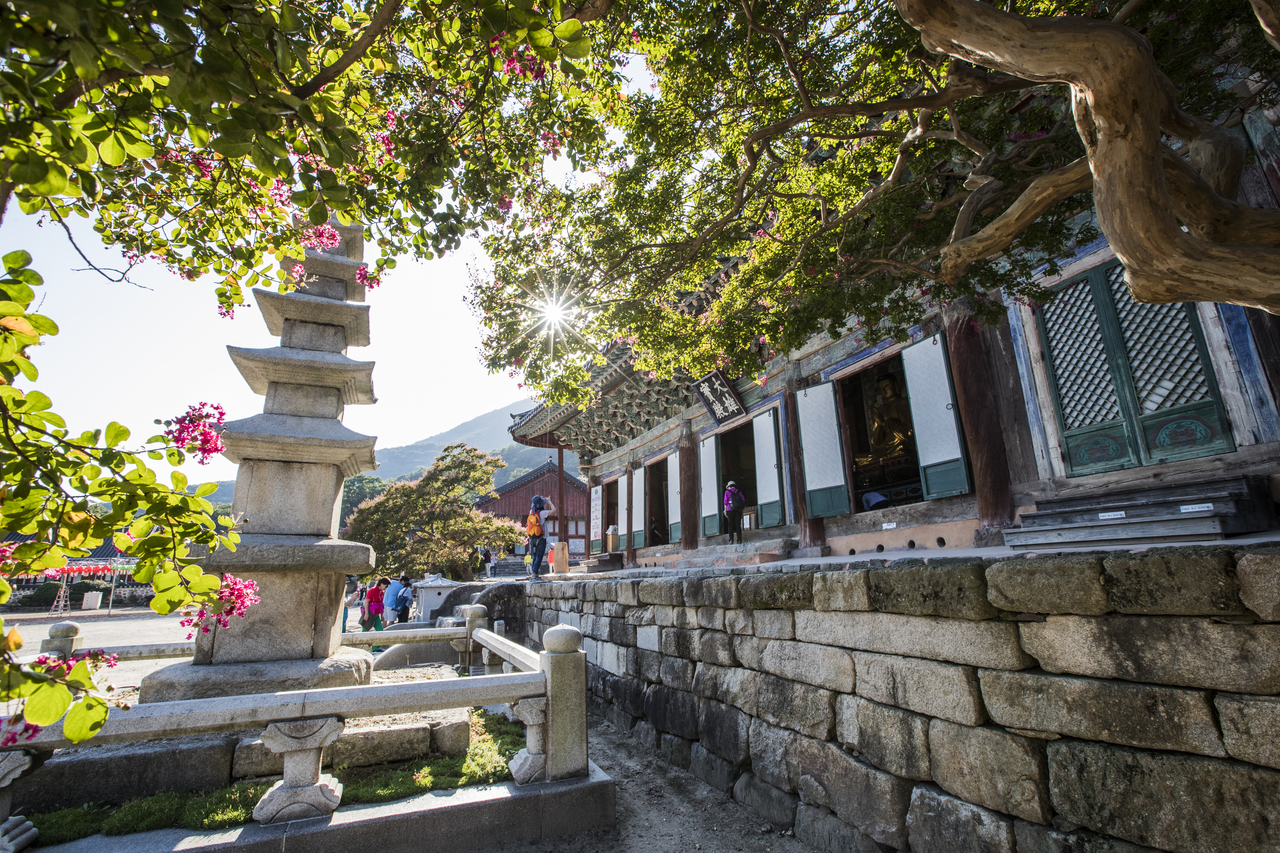
Daeungbojeon Hall (대웅보전), listed in heritage records as Daeungjeon, is the temple’s main Buddha hall and a nationally designated Treasure. Rebuilt in 1613 after wartime destruction, it rewards a closer look at the elaborate wooden brackets beneath its eaves. Inside, a large clay Buddha triad gives the hall a solemn presence.
Allow a few quiet minutes here. The courtyard is also a place of worship, and visitors may encounter people praying while others admire the architecture. Follow signs about entry and photography, and remove your shoes wherever required.
Manseru: an unusually broad wooden pavilion
Facing the main hall, Manseru Pavilion (만세루) has a low, expansive shape that feels different from the tall gate pavilions visitors often associate with Korean temples. The present building dates to 1752 and stretches across nine architectural bays.
Look closely at its timber. Curved pieces and joined components show how builders worked creatively with the wood available to them. Those irregularities give the structure much of its character. Manseru is also a nationally designated Treasure; any tea service, exhibition, or visitor activity depends on the day’s arrangements.
The camellia grove and the path toward Dosolam
Behind the main hall lies the protected camellia grove. In November, its evergreen foliage provides a rich contrast to the changing deciduous trees. The famous red camellia flowers belong to the spring season; the red spider lilies seen in many photographs bloom in early autumn, before the main November foliage display.
For a longer outing, follow the valley toward Dosolam. Along the way, look for Jangsasong Pine (장사송), a protected old pine near Jinheunggul Cave (진흥굴). The cave takes its name from a local legend connecting the site with Silla’s King Jinheung.
The walk from Seonunsa to Dosolam is approximately 3.2 kilometers each way. Allow about an hour each way for walking, plus time for photographs and the hermitage. Much of the valley approach is gentle, but steps and uneven surfaces around the religious sites mean the full excursion should not be treated as a completely step-free stroll.
If temple forests are a highlight of your travels, Woljeongsa Temple’s forests and historic treasures offer another rewarding journey.
Dosolam’s Cliff Buddha and Its Donghak Story
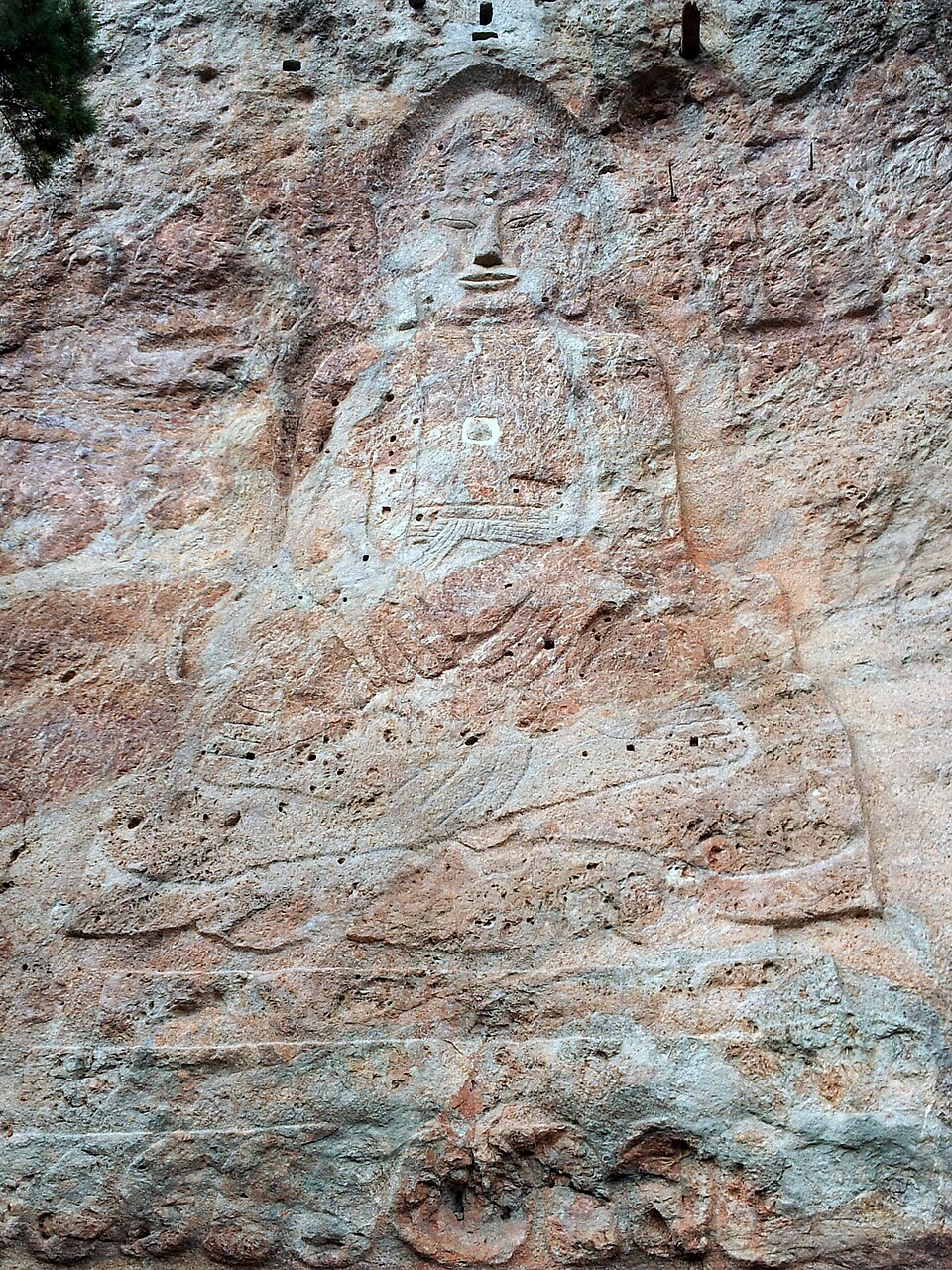
Near Dosolam, a monumental seated Buddha is carved into a cliff. Officially designated the Rock-carved Seated Buddha at the Dongburam Hermitage Site (동불암지 마애여래좌상), it dates to the Goryeo period and is popularly associated with Maitreya, the Buddha of the future.
Its setting is striking enough to justify the walk, but the history adds another dimension. A belief circulated that a secret text concealed within the Buddha would herald the end of the existing order and the arrival of a new world.
In 1892, two years before the Donghak Peasant Revolution, an episode involving Donghak followers associated with the leader Son Hwa-jung brought that belief into regional politics. Accounts describe the opening of the image’s concealed compartment, while reports that Son had obtained the secret text helped increase his prestige and following. If you’d like to learn more about the Donghak Peasant Revolution, please refer to ‘The 1894 Donghak Peasant Revolution: Joseon’s Great Awakening‘.
The prophecy belongs to popular belief; the episode’s connection to the growth of the Donghak movement belongs to the historical record. Seen with that background, the Buddha carries memories of people hoping for a fairer society as well as centuries of Buddhist devotion.
Walking tip: The valley walk to Dosolam and the mountain routes beyond it require different plans. Continuing toward Cheonmabong Peak (천마봉) or Nakjodae Viewpoint (낙조대) adds steeper terrain and more time. Choose your route before setting out, wear suitable footwear, and leave enough daylight for the return.
Make Time for a Gomso Jeotgal Set Meal
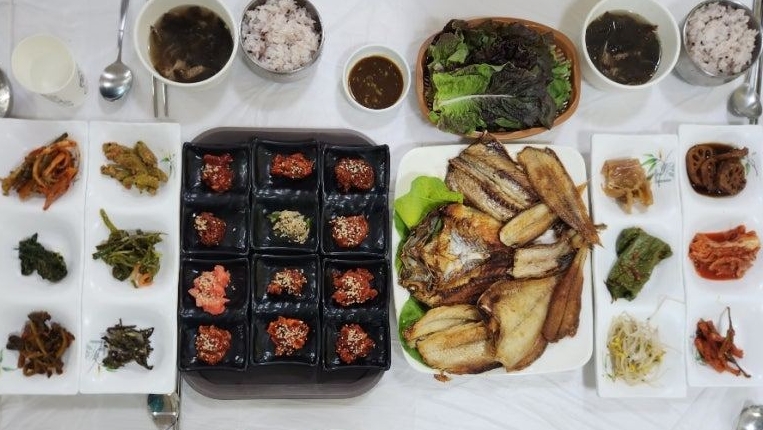
After a morning beneath the maples, head toward the coast for one of the region’s most distinctive meals. Gomso, in neighboring Buan County, is known for its salt fields and jeotgal: seafood preserved through salting and fermentation.
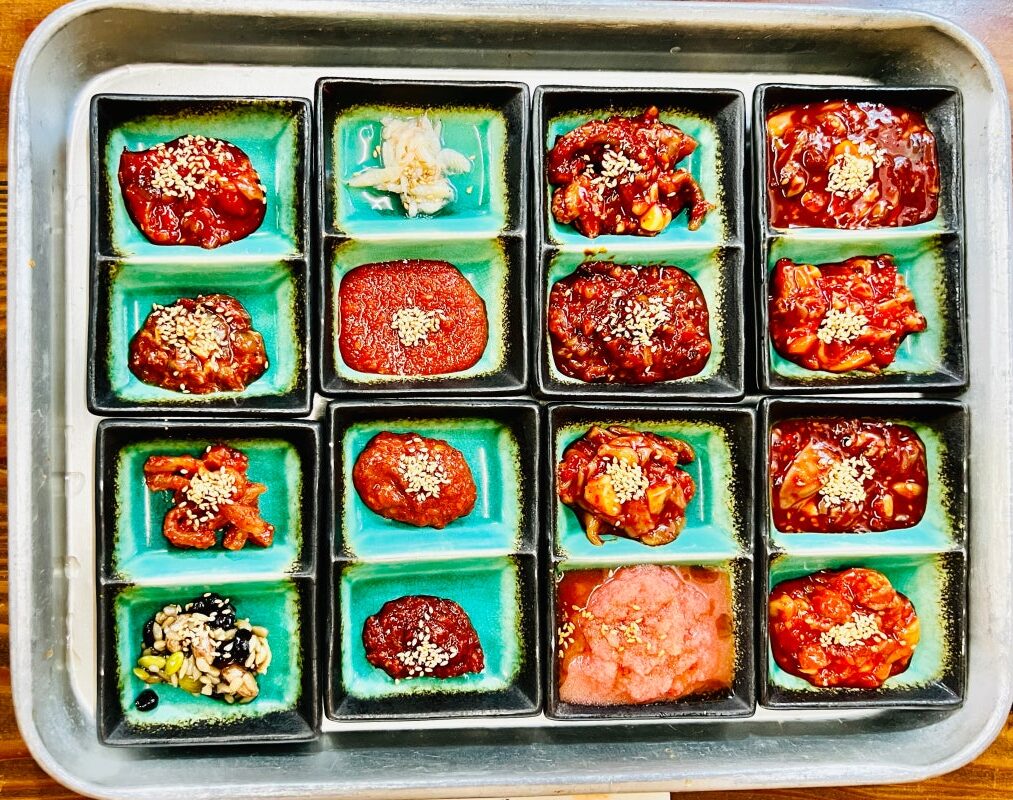
A Gomso jeotgal jeongsik, or fermented seafood set meal, is particularly worth trying. Small dishes of different jeotgal arrive with rice, soup or stew, and other side dishes. Depending on the restaurant, the selection may include squid, octopus, clams, fish roe, or other seafood preparations. Some menus add grilled fish, marinated crab, or a separate main dish.
The pleasure lies in tasting the differences. Start with a little seafood on a spoonful of plain rice, then try the next dish. Some varieties are chewy and spicy; others are soft, deeply savory, or noticeably stronger in aroma. Rice is essential to the balance, since these are concentrated accompaniments intended to be eaten in small amounts.
The important catch: most sets require at least two servings
Most Gomso restaurants offering a full jeotgal set require an order for at least two people, and a single serving is often unavailable. A price displayed “per person” does not necessarily mean one person can order the set.
Solo travelers should ask before sitting down whether a one-person set is available. If it is not, ask about individually available dishes such as noodles, soup, or a simpler rice meal. Ordering and seating policies vary, so confirm whether paying for two servings would be acceptable if that is your preference.
Before ordering: Check the minimum number of servings, which dishes are included, and whether refills cost extra. Mention seafood allergies clearly. If buying jeotgal to take away, ask the seller about refrigeration and packing for your onward journey.
Allow roughly an hour for the drive from the Seonunsa parking area to Gomso when planning your day, with extra time for autumn traffic. Treat this as a planning allowance and check the live route. A meal followed by a short harbor or salt-field stop makes a satisfying afternoon.
Places to Visit Near Seonunsa
The nearby attractions work best as two small clusters: Gochang’s historical sites inland, and Gomso with the southern side of the Byeonsan Peninsula (변산반도) along the coast. Choose a cluster according to your interests and available time.
| Place | Why visit? | How to fit it in |
|---|---|---|
| Gomso Salt Farm (곰소염전) | Salt pans and storage buildings give context to the region’s famous fermented seafood. | Combine with lunch in Gomso. This is a working landscape; use permitted viewing areas and do not enter production beds. |
| Naesosa Temple (내소사) | A beautiful fir-lined approach and historic wooden temple buildings make it an appealing second temple visit. | Pair with Gomso after a shorter Seonunsa visit, or save it for the next morning. |
| Gochang Dolmen Site (고창 고인돌 유적) | Bronze Age stone tombs form part of the UNESCO-listed Gochang, Hwasun and Ganghwa Dolmen Sites. | Choose this for prehistoric history and an open landscape. Allow additional time if visiting the museum. |
| Gochang Eupseong Fortress (고창읍성) | Joseon-period stone walls, wooded grounds, and views over town provide a different kind of autumn walk. | A useful stop when staying in or returning through Gochang town. Some wall sections involve uneven footing. |
For a coastal extension, consider Chaeseokgang Cliffs (채석강) near Gyeokpo. This requires more driving beyond Gomso and suits an overnight trip particularly well. Shore access depends on tides and sea conditions; check conditions before approaching the rock platforms.
Seonunsa Day Trip and Overnight Itineraries
A relaxed day: temple, autumn reflections, and Gomso
- Morning: Arrive early, walk beside Dosolcheon, and explore Seonunsa’s main courtyard, Manseru, and the camellia grove. Allow around two to three hours from the parking area, depending on your pace.
- Lunch: Drive to Gomso for a jeotgal set meal. Confirm the restaurant’s minimum order and last lunch order before leaving the temple area.
- Afternoon: Browse the seafood shops and see the salt farm. If time and energy allow, continue to Naesosa for its forest approach and temple grounds.
A fuller walking day: include Dosolam
Reserve roughly four to five hours for Seonunsa, the return valley walk, and Dosolam, allowing longer for frequent photography stops. Follow with a later Gomso meal at a restaurant whose kitchen hours you have checked. Keep the remaining afternoon flexible; the cliff Buddha and the forest walk already make a substantial outing.
A comfortable overnight escape
Day 1: Explore Seonunsa and Dosolam, then visit Gochang’s dolmen site or fortress according to your remaining daylight. Stay in Gochang town or near the temple.
Day 2: Head to Gomso for the salt farm, seafood shops, and a jeotgal meal, then continue to Naesosa. Travelers staying around the Byeonsan coast can extend the day toward Gyeokpo and Chaeseokgang.
For travelers coming from Seoul, an overnight stay makes an early temple visit much easier. If you want to add seasonal events, consult Korea Autumn Festivals by Travel Style: 2026 Guide and Chrysanthemum Festivals in Korea: The Queen of Autumn, checking each event’s dates against your itinerary.
Getting to Seonunsa and Practical Tips
- Temple address: 250 Seonunsa-ro, Asan-myeon, Gochang-gun, Jeonbuk.
- Visitor inquiries: +82-63-561-1422. Published tourism guidance lists visiting hours as 6 a.m. to 7 p.m.; plan autumn walks during daylight and check any temporary restrictions.
- By public transport: Reach Gochang Bus Terminal (고창공용버스터미널), then use a local bus toward Seonunsa or take a taxi. Check the current departure and return times at the terminal; rural services need more planning than city buses.
- By car: Navigate to the visitor parking area at Seonunsan Provincial Park. Leave time for the walk from the parking area to the temple. Parking arrangements and charges should be checked separately from temple access.
- Combining Seonunsa and Gomso: A car makes this cross-county route much easier. Public-transport travelers should check connections carefully or arrange a taxi transfer in advance.
- What to wear: Bring layers for a cool morning and shoes with good grip. Wet leaves, streamside stones, and shaded steps can be slippery.
- Temple etiquette: Keep voices low around worship halls, follow photography signs, and respect areas reserved for the religious community.
Local tip: Before entering the valley, photograph the return bus timetable and save your parking location. Mobile map apps such as Naver Map or KakaoMap are useful for checking the onward route, but confirm infrequent rural departures locally.
Seonunsa’s autumn beauty rewards a little spare time: another pause beside the water, a closer look beneath an old roof, or a detour to see the cliff Buddha. Follow that morning with rice and Gomso’s intensely savory seafood, and the journey brings the region’s forest, history, and coast together.
More KCulture journeys for another trip
- Haneul Park in Seoul: From Landfill to Beautiful Eco-Park — an autumn landscape within the capital.
- Why You Must Visit Tongyeong: Korea’s Hidden Coastal Gem — more ideas for a journey shaped by the sea.
- Exploring Donggureung: Korea’s Largest Royal Tombs — a wooded historical outing near Seoul.
Korean Culture portal KCulture.com

Founder of Kculture.com and MA in Political Science. He shares deep academic and local insights to provide an authentic perspective on Korean history and society.