
At some Korean hanjeongsik restaurants, the rice, soup, and side dishes arrive in surprisingly heavy, golden-colored bowls. They are often examples of Korean yugi brassware (유기), traditional copper-alloy tableware prized for its craftsmanship, durability, and ceremonial associations. Not made of gold, these vessels have a history that stretches from ancient Korean metalworking through the royal and household dining cultures of the Goryeo and Joseon periods—and through the dramatic losses of the twentieth century. Here is why they once filled Korean cupboards, why they nearly disappeared, and why they are returning to the table.
- What Is Korean Yugi Brassware?
- How Did Yugi Become Part of Korean Dining?
- How Is Yugi Made? Bangjja, Cast, and Semi-Bangjja
- Anseongmatchum: The Town That Made Custom Brassware Famous
- Colonial Requisitions and the Age of Stainless Steel
- Why Korean Restaurants Still Serve Food in Yugi Bowls
- Care, Antimicrobial Claims, and Other Common Questions
- Where to See Yugi and How to Appreciate It Today
What Is Korean Yugi Brassware?
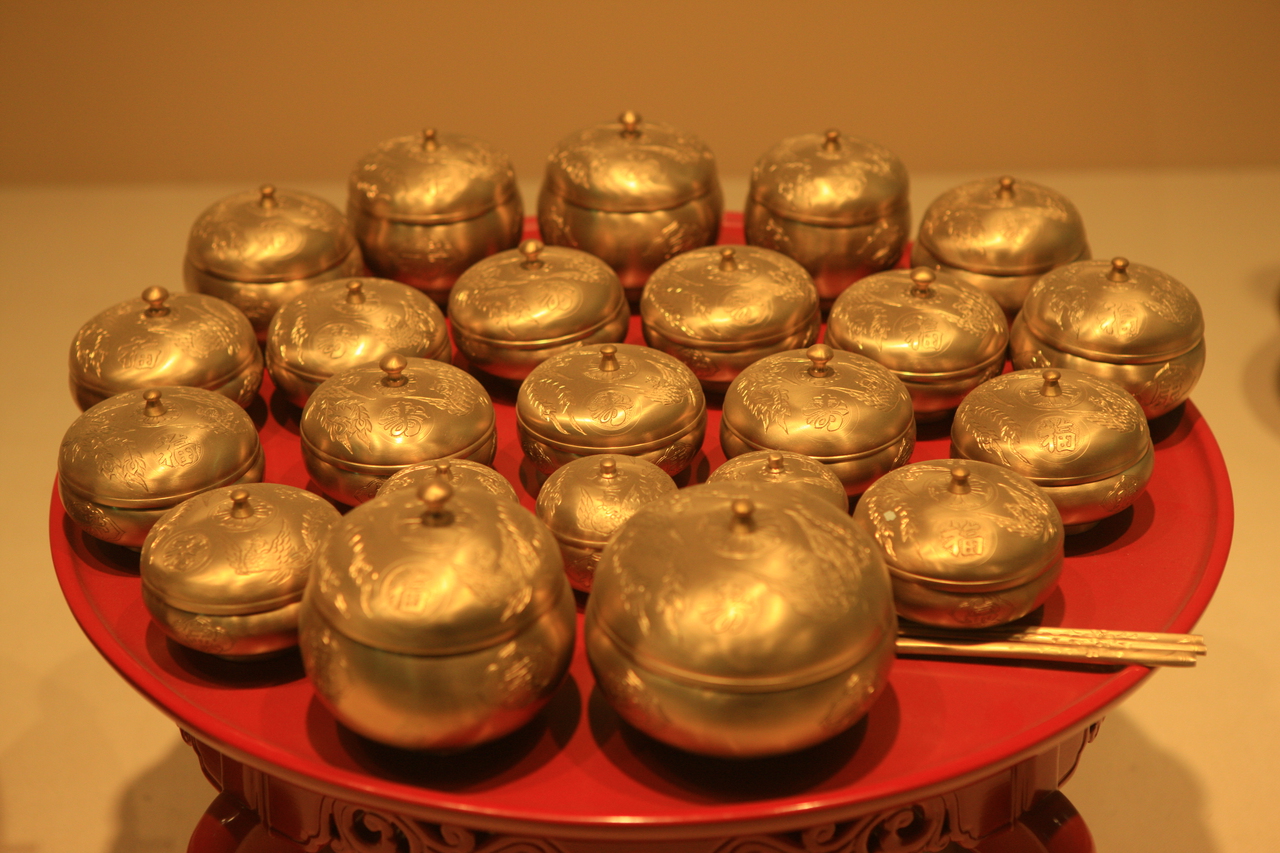
In everyday Korean, yugi refers to traditional vessels and objects made from copper-based alloys. Notgeureut (놋그릇) is the familiar term for brass or bronze bowls and dishes. The English label brassware is convenient, but it can hide an important technical difference: brass is generally copper mixed with zinc, while bronze is generally copper mixed with tin. Both kinds of alloy have appeared within Korea’s broader yugi tradition.
The famous bangjja yugi (방짜유기) is typically a high-tin bronze made with approximately 78% copper and 22% tin. Other yugi vessels, especially certain cast pieces, may have different alloy compositions. That means not every golden bowl is bangjja, and not every piece sold as yugi has exactly the same ingredients or manufacturing method.
What visitors notice first is the appearance: warm yellow-gold surfaces, substantial weight, smooth contours, and often close-fitting lids. What distinguishes yugi from ordinary decorative metalware, however, is that these were made to be used—on dining tables, in kitchens, during ancestral rites, and in Buddhist and other ceremonial settings.
Korean households also relied on very different materials for different jobs. The porous clay jars known as onggi, for instance, were indispensable for storing and fermenting foods, while yugi was especially associated with serving, eating, and ritual presentation.
How Did Yugi Become Part of Korean Dining?
Ancient origins, but not one unchanged tradition
Korea has a long history of bronze working dating back to the Bronze Age. That does not mean the modern yugi rice bowl has existed unchanged since prehistoric times. The recognizable tradition developed over many centuries as metalworking techniques, trade, courtly tastes, and domestic habits evolved.
By the Silla period, specialized government organization for metalware production existed. During the Goryeo dynasty (918–1392), copper-alloy objects were used in Buddhist worship, elite households, and everyday activities among people who could afford them. This was also an era in which Korean artisans produced refined religious art in several media, including the works explored in our guide to Goryeo Buddhist paintings.
From elite households to wider use in Joseon
During the Joseon dynasty (1392–1897), particularly as production and commerce expanded in the later centuries, yugi became more accessible beyond the court and wealthy families. Rice bowls, soup bowls, spoons, chopsticks, trays, and serving dishes could all be made from copper alloys. But access was never uniform: a complete polished set still represented a considerable investment for many families.
Yugi also carried social meaning. Formal sets were wedding gifts and household possessions that might pass from one generation to another. Special vessels were brought out for ancestral memorial rites, when the arrangement of food and the condition of the tableware mattered as much as the meal itself.
The contrast between ordinary and formal use helps explain why these bowls are still associated with respect and hospitality. It also explains a practical detail sometimes overlooked in romantic accounts of tradition: keeping a large set of metal dishes polished took real time and work, often within the household.
How Is Yugi Made? Bangjja, Cast, and Semi-Bangjja
The word yugi describes a family of objects, not one manufacturing technique. Korean artisans developed several approaches, each with its own appearance, tools, skills, and regional history.
| Type | How it is made | Traditional association |
|---|---|---|
| Bangjja (forged) | Metal is repeatedly heated, hammered, shaped, and quenched; the best-known tradition uses a copper–tin alloy. | Finely worked tableware, basins, and percussion instruments; historically famous in Napcheong. |
| Cast yugi | Molten alloy is poured into molds, then trimmed, turned, and polished. | Detailed and consistent forms, especially the celebrated vessels of Anseong. |
| Semi-bangjja | Casting and hammering are combined. | A distinctive hybrid approach preserved in regional craft traditions. |
The sound of hammering metal
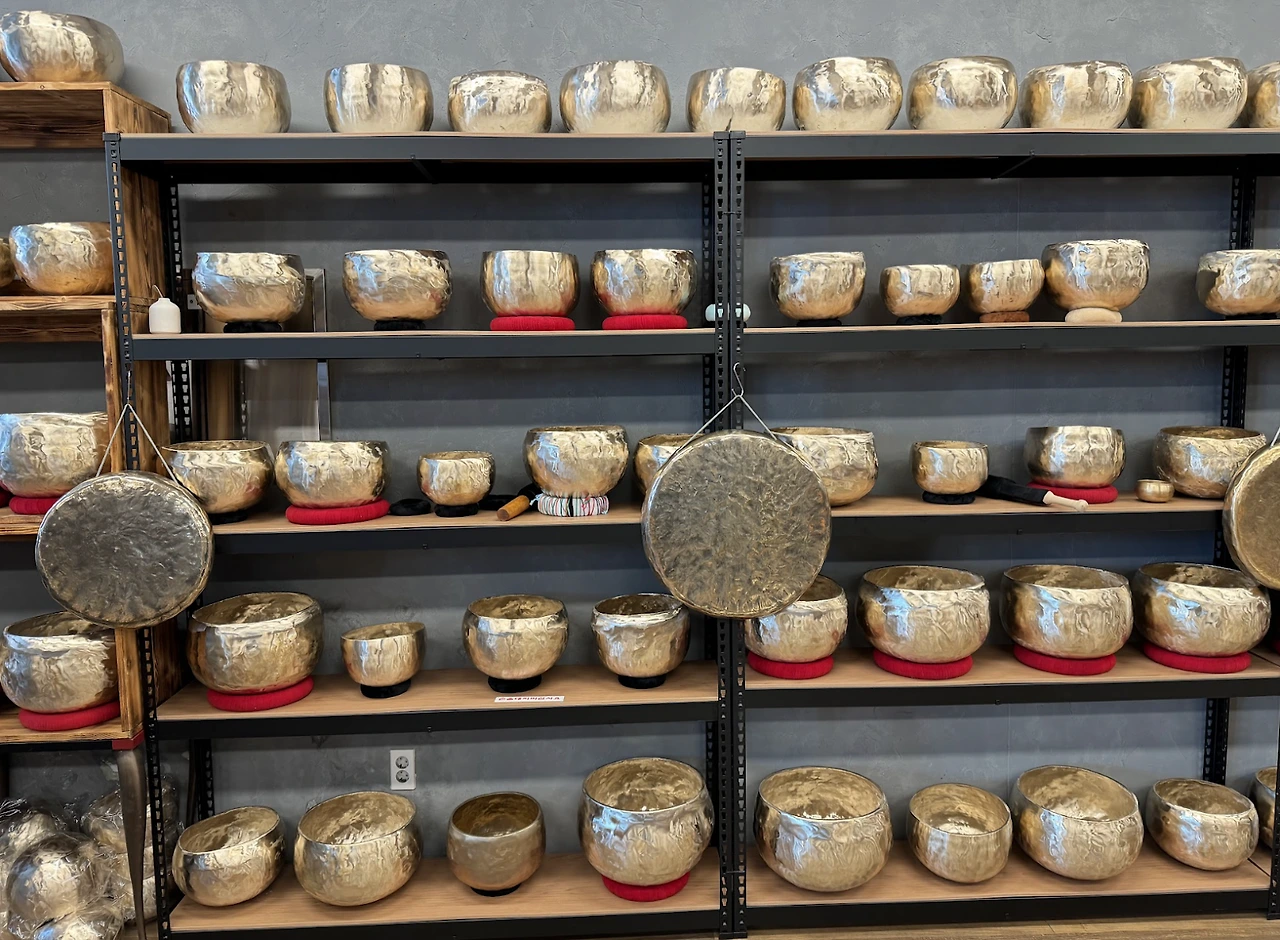
For bangjja, the craft begins with a metal blank rather than a finished bowl. Artisans heat it, work it with hammers, and repeatedly control its shape and temperature. High-tin bronze is challenging to work, so success depends on techniques developed through generations of practice. Traditional workshops could involve several craftspeople striking in carefully coordinated rhythms.
That same expertise was not limited to food vessels. Forged copper-alloy techniques were also important for Korean gongs and other instruments. To explore the wider world of metal, sound, and ceremony, see The Acoustic Philosophy of Joseon: Royal Court Instruments of Korea.
Local note: A heavy golden restaurant bowl is not automatically hand-hammered bangjja. If the production method interests you, ask whether the restaurant uses bangjja yugi or jumul yugi (cast yugi). Both belong to the broader tradition.
Anseongmatchum: The Town That Made Custom Brassware Famous
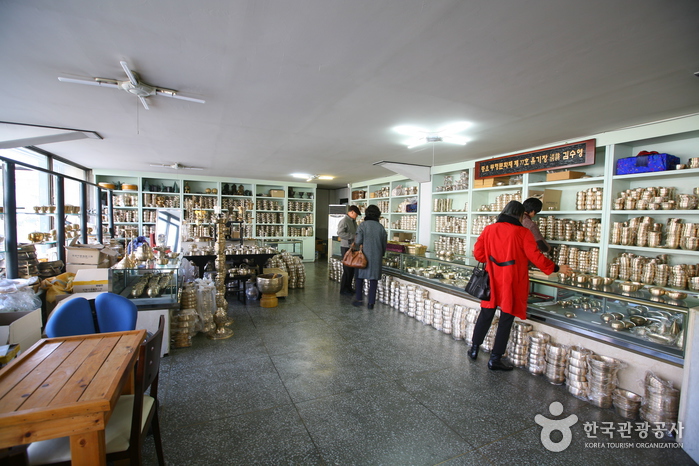
One of the most revealing chapters in yugi history comes from Anseong (안성), in today’s Gyeonggi Province. The town developed a strong reputation for cast brassware during the Joseon period, benefiting from its craft workshops and its place in regional commercial networks.
Wealthier customers could order vessels made to their specifications instead of buying only standard wares at the market. The term anseongmatchum (안성맞춤)—now commonly used to mean something that fits perfectly or is just right—is traditionally associated with the quality and custom-made reputation of Anseong products, especially its yugi.
Another important center was Napcheong (납청), in what is now North Korea, famous for the hammered bangjja tradition. The contrast matters: Korean metalworkers did not follow one uniform national recipe. Regional workshops specialized, traded, and built distinct reputations.
Yugi belongs to the same larger story as Korea’s other celebrated craft objects. Just as najeonchilgi mother-of-pearl lacquerware transformed everyday boxes and furniture into works of art, master metalworkers turned useful bowls into objects of extraordinary finish and proportion.
Colonial Requisitions and the Age of Stainless Steel
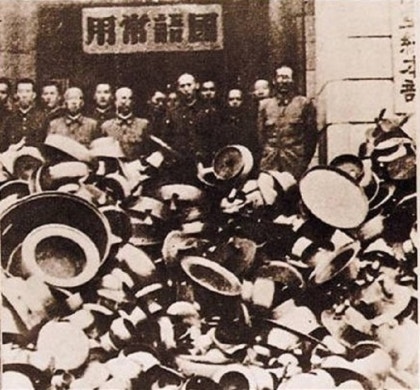
When family tableware became wartime metal
Under Japanese colonial rule (1910–1945), Korea’s metalware industry experienced both commercial activity and increasing disruption. The greatest rupture came during Japan’s wartime mobilization in the late 1930s and early 1940s. As the imperial war effort demanded copper, colonial authorities organized the collection and requisition of household metal objects, including yugi bowls, utensils, and ceremonial vessels.
These campaigns were not simply a matter of old dishes going out of fashion. They drew privately owned objects into a state-directed system of wartime material collection. Some arrangements involved payment or replacement with ceramic ware, but the broader result was the removal of large quantities of copper-alloy tableware from Korean homes and the disruption of a deeply established material culture.
Imagine a family losing not just an eating utensil but a wedding set or vessels used to honor ancestors. The metal could be melted down; its household history could not be replaced.
After liberation: a brief recovery, then a different kitchen
Liberation in 1945 did not immediately end demand for yugi. Workshops continued making it, and in some places postwar customers again sought brassware for marriages and formal households. But the Korean War, changing living conditions, and rapid industrialization transformed the market.
From the 1960s onward, stainless steel, aluminum, plastic, and affordable mass-produced ceramics steadily displaced traditional metal sets in daily life. These alternatives were cheaper, lighter, and generally less demanding to maintain. A busy urban household could stack and wash stainless bowls without the same polishing routine expected of gleaming yugi.
Many workshops closed, and valuable skills were at risk. In 1983, South Korea designated Yugijang (유기장), the traditional craft of brassware making, as a nationally recognized intangible cultural heritage practice. The designation helped protect specialized knowledge, although preservation depended—and still depends—on artisans, apprentices, and customers willing to keep the craft in use.
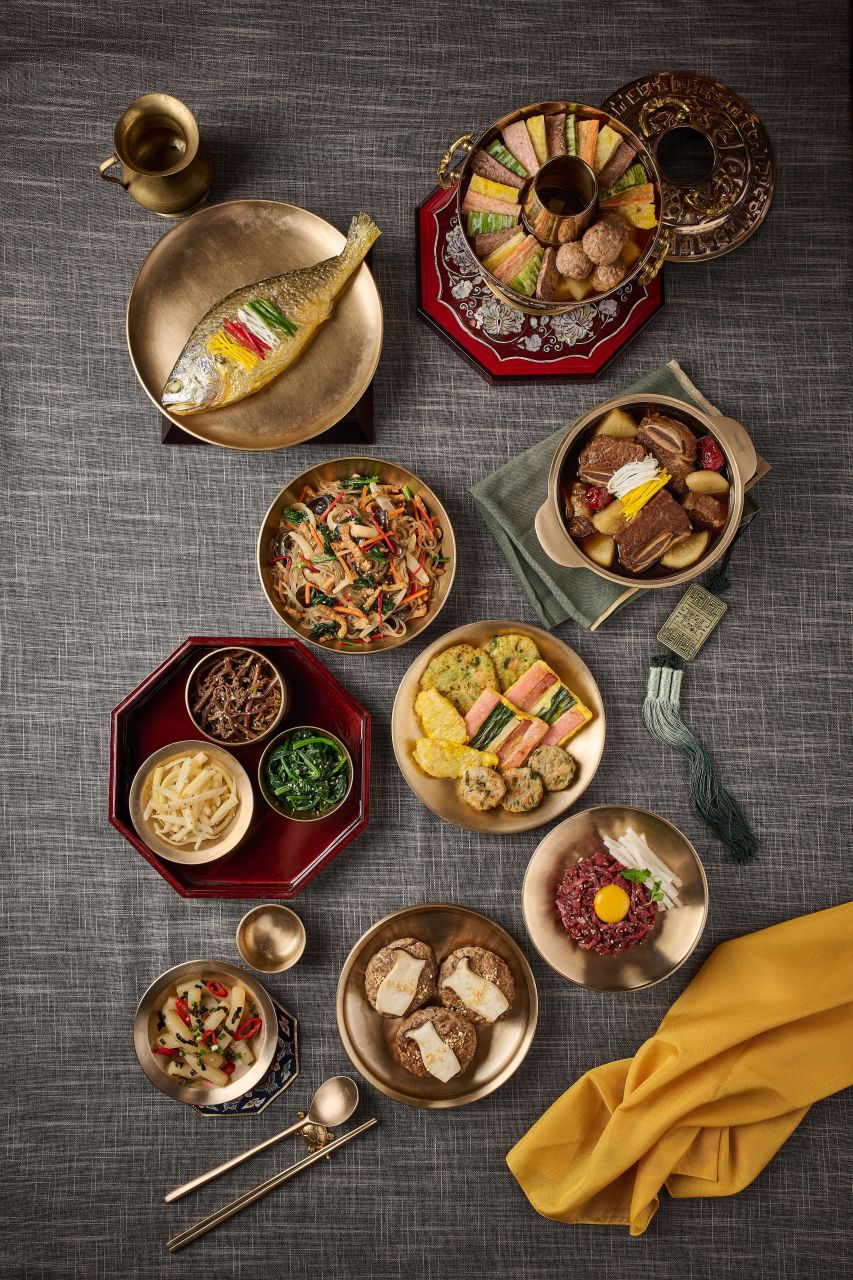
Why Korean Restaurants Still Serve Food in Yugi Bowls
If yugi once declined because it was inconvenient, why would a restaurant choose it today? Because a memorable meal is about more than convenience.
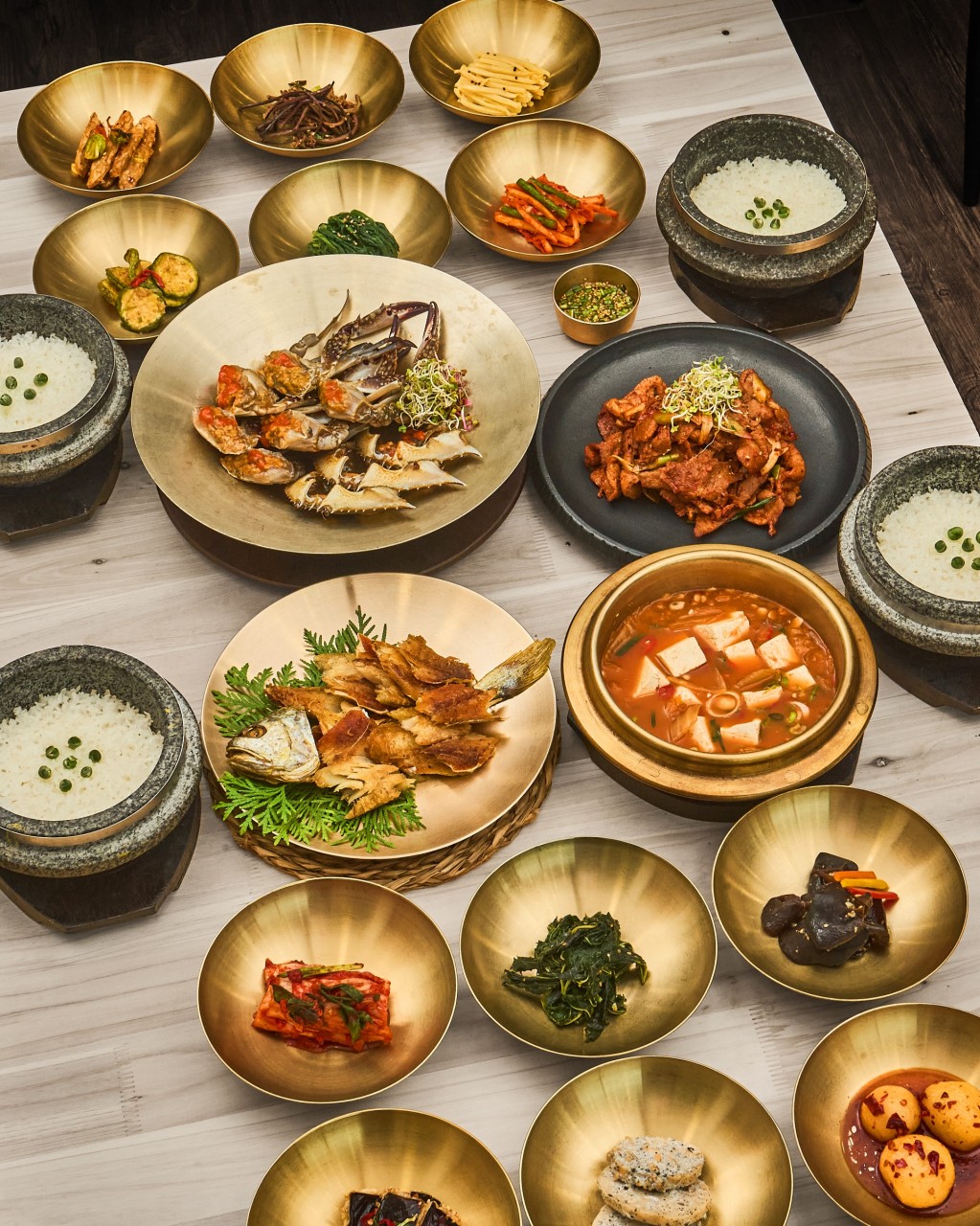
In a hanjeongsik (한정식) restaurant, a succession of small dishes may arrive in matching gold-colored bowls: rice with its own lid, soup beside it, and colorful vegetables or braised foods arranged across the table. The metal’s warm tone makes the setting feel deliberate and ceremonial. Its weight adds a tactile impression that ceramic or stainless steel rarely reproduces.
For restaurants specializing in traditional Korean cuisine, yugi can signal hospitality, craftsmanship, and a connection to earlier ways of serving food. It also appears in some modern fine-dining settings, ceremonial meals, and gifts for important occasions. Yet most Koreans do not eat every meal from yugi today; stainless steel and ceramic dishes remain far more common in ordinary households.
Sometimes restaurants use full matching sets; sometimes they select just one or two yugi dishes as accents. Neither approach should be mistaken for an exact recreation of a single historical royal table. Korean dining customs, like Korean tableware, have always varied by period, wealth, region, and occasion.
And when a Korean meal is paired with traditional drinks, the vessels become part of the experience. Our Traditional Korean Alcohol Guide offers a useful introduction to the drinks that may accompany such a meal.
Care, Antimicrobial Claims, and Other Common Questions
Does yugi really kill germs or detect poison?
Copper and certain copper alloys can inhibit some microorganisms under tested conditions, which is one reason antimicrobial qualities are frequently mentioned in yugi marketing. But a yugi bowl does not sterilize food, replace normal washing, or make unsafe food safe to eat. The effects depend on the alloy, surface conditions, the organism, and contact time.
Another familiar story says that metal bowls could reveal poison by changing color. Copper-alloy surfaces can indeed darken through chemical reactions with substances such as sulfur compounds. That is not a reliable test for poisoning, and a bowl’s color change should never be interpreted as proof that food is dangerous—or safe.
What should you know before buying or using it?
| Question | Practical answer |
|---|---|
| Why is it so heavy? | Copper alloys are dense, and traditional bowls are often substantial in thickness. |
| Will the surface change color? | Yes. Tarnish, water marks, and a developing patina are normal possibilities for copper-alloy ware. |
| How should it be washed? | Use mild detergent and a soft sponge, rinse thoroughly, and dry promptly. Follow the maker’s polishing instructions for its particular finish. |
| Can it go in the dishwasher? | Do not assume so. Many makers recommend hand-washing; check the care guidance for that exact product. |
| Can food be stored in it? | Use it primarily for serving unless the maker specifies otherwise. Avoid prolonged storage of acidic or salty foods in unlined copper-alloy vessels. |
| How do you check authenticity? | Ask whether the piece is forged or cast, what alloy it contains, who made it, and whether it is certified for food contact. |
Pro tip: If you want to bring home a piece of Korean yugi, a pair of spoons and chopsticks, a small dish, or a single rice bowl is often a more practical introduction than an elaborate full dining set. The craftsmanship is easier to appreciate when the object is actually used.
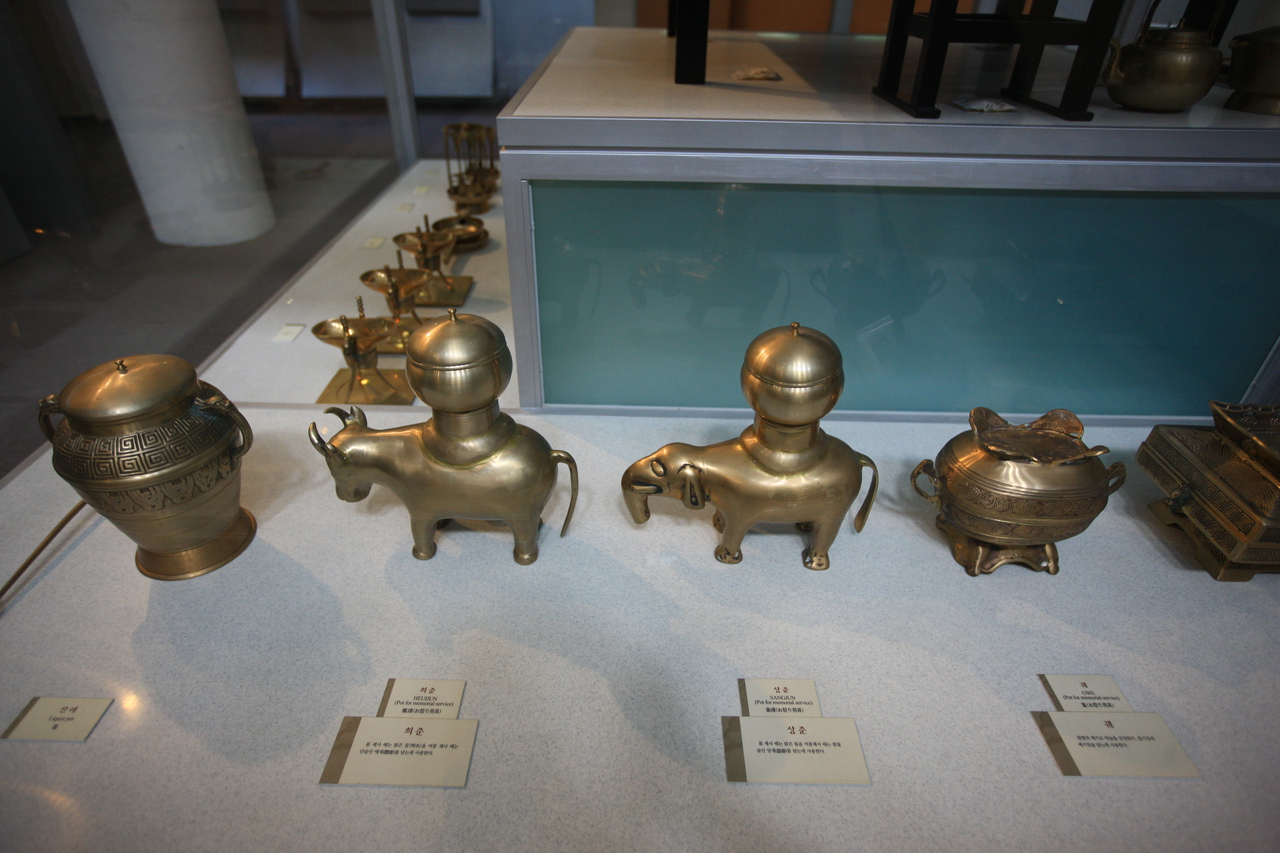
Where to See Yugi and How to Appreciate It Today
One particularly worthwhile destination is the Anseong Machum Museum (안성맞춤박물관) in Anseong, which has a dedicated exhibition on local yugi history, casting techniques, and traditional uses. According to the city’s published visitor information, admission is free, normal hours are 9 a.m. to 6 p.m. (last admission at 5 p.m.), and the museum is generally closed on Mondays and certain public holidays. Check the official museum website before traveling.
You can also discover yugi without visiting a workshop or museum. At a traditional restaurant, notice how the bowls sit together, whether the rice and soup have fitted lids, and how their golden surfaces frame the colors of the food. If you encounter handcrafted pieces at a gallery or craft shop, look closely at their proportions and finishing. Different tools and traditions leave different traces.
Yugi’s return does not mean Korea is abandoning modern tableware. Rather, a craft that survived colonial requisitions, industrial manufacturing, and changing household habits has found new places in contemporary life. Those heavy golden bowls are not simply a luxury restaurant flourish. They are living examples of a culture that once valued practical objects enough to make them beautiful—and is finding reasons to value them again.
For a deeper understanding of this remarkable craft, visit the Daegu Bangjja Yugi Museum (대구방짜유기박물관), located near Palgongsan Mountain (팔공산) in Daegu. Opened in 2007, it is Korea’s only museum dedicated specifically to traditional bangjja brassware. The museum was established around a remarkable collection of approximately 1,489 objects made and collected by master craftsman Lee Bong-ju, a nationally recognized holder of the traditional yugi-making craft.
Its exhibitions introduce the history of Korean brassware, the demanding process of producing hammered bangjja, and the many ways these metal objects were used in everyday life and traditional ceremonies. Particularly interesting are the reconstructed workshops and displays showing how artisans transformed copper and tin into beautiful vessels through coordinated hammering and repeated heating. Visitors can also discover the connections between traditional metalworking and Korean percussion instruments.
The museum is an excellent cultural stop for travelers exploring the Palgongsan area. Admission is free, and regular opening hours are 9 a.m. to 6 p.m., with last admission at 5:30 p.m. It is generally closed on Mondays and certain public holidays. Check the official Daegu Bangjja Yugi Museum website for current exhibitions, educational programs, and visitor information.
Explore more Korean traditional crafts and aesthetics:
- Chaekgeori and Chaekgado: Korea’s Painted Libraries — how treasured objects became subjects of painting.
- Najeonchilgi: The Art of Korean Mother of Pearl Lacquerware — another craft that combines usefulness with luxurious surfaces.
- Korean Gardens and Chagyeong: Nature Beyond the Walls — the thoughtful sense of balance behind Korean traditional design.
Korean Culture portal KCulture.com

Founder of Kculture.com and MA in Political Science. He shares deep academic and local insights to provide an authentic perspective on Korean history and society.