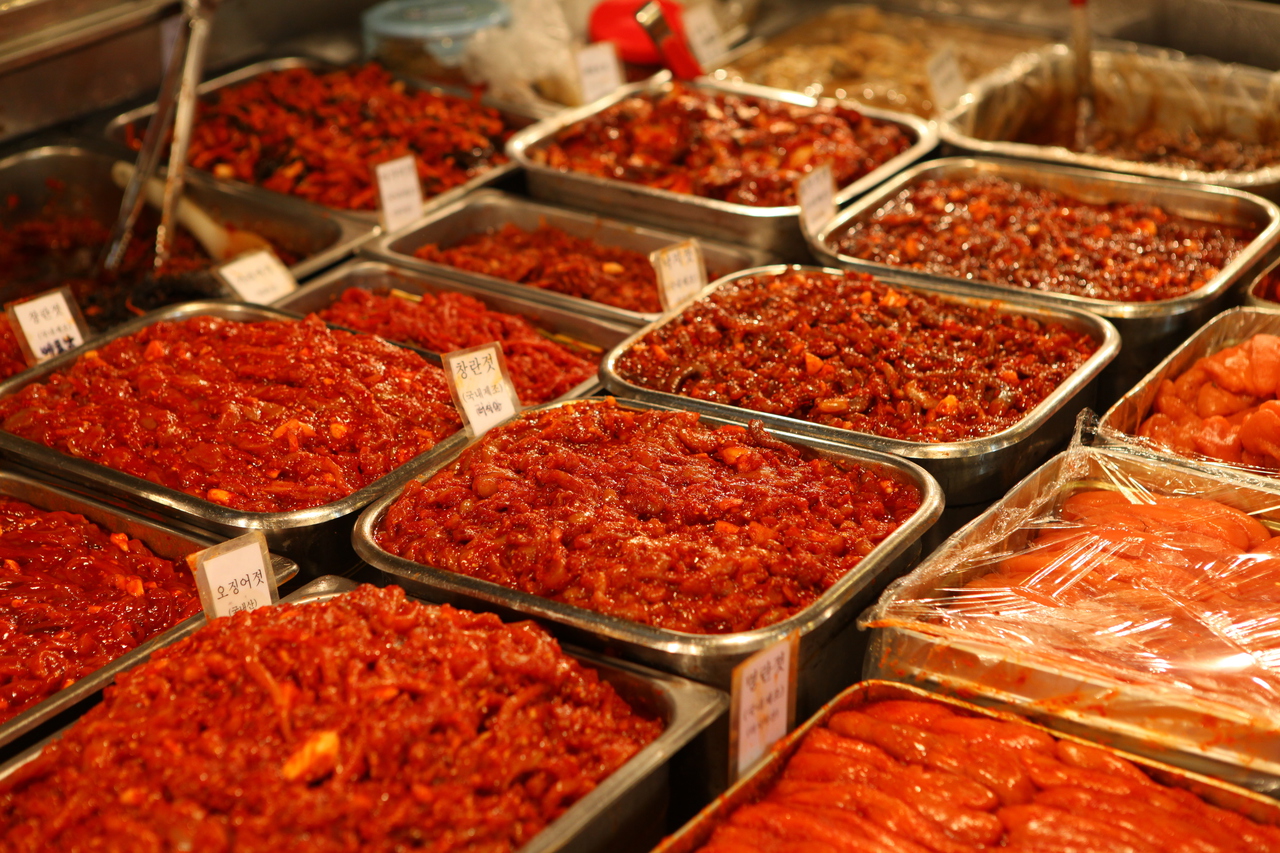
Jeotgal (젓갈), Korea’s traditional salted and fermented seafood, is one of the oldest and most influential ingredients in Korean cuisine. More than a side dish, it is the hidden foundation of Korean flavor, Many Korean food historians describe jeotgal as the “silent director” behind the deep umami that defines traditional kimchi. providing the deep umami that defines everything from kimchi to everyday home cooking. For anyone interested in Korean food culture, understanding jeotgal is essential to understanding how Korean cuisine developed its distinctive taste.
At first glance, jeotgal may seem like a simple preserved seafood product. In reality, it represents centuries of culinary knowledge, fermentation science, regional traditions, and cultural identity. This guide explores its history, varieties, nutritional value, cultural significance, and why it is attracting renewed attention among food enthusiasts around the world.
- The History of Jeotgal
- Major Types of Jeotgal
- How Jeotgal Is Made
- The Science and Nutrition of Jeotgal
- How Koreans Eat Jeotgal
- Jeotgal in Korean Food Culture
- Why Jeotgal Is Gaining Attention Again
- A Beginner’s Guide to Trying Jeotgal
The History of Jeotgal
Jeotgal has more than 1,500 years of documented history. Long before refrigeration existed, communities along the Korean Peninsula developed sophisticated methods for preserving seafood using salt. What began as a practical solution gradually evolved into a culinary tradition that shaped the flavor of an entire nation.
The earliest known written record appears in the Samguk Sagi (History of the Three Kingdoms), compiled in 1145. The text records that in 683, during the Silla Kingdom, jeotgal was included among royal wedding gifts presented to King Sinmun. This is significant because it demonstrates that jeotgal was already regarded as a valuable delicacy rather than merely a survival food.
During the Goryeo Dynasty, production expanded beyond fish to include shrimp, squid, octopus, shellfish, and crab. By the Joseon Dynasty, cookbooks and agricultural encyclopedias documented increasingly sophisticated recipes and regional variations.
The introduction of chili peppers transformed Korean cuisine and led to the development of seasoned jeotgal varieties. At the same time, jeotgal became deeply integrated into kimchi-making traditions. The rich, savory complexity associated with modern kimchi would be difficult to achieve without fermented seafood.
📌 Cultural Note: UNESCO recognized Gimjang—the communal tradition of making and sharing kimchi—as an Intangible Cultural Heritage of Humanity. Jeotgal plays a crucial role in many traditional kimchi recipes, making it an important part of this cultural practice.
Major Types of Jeotgal
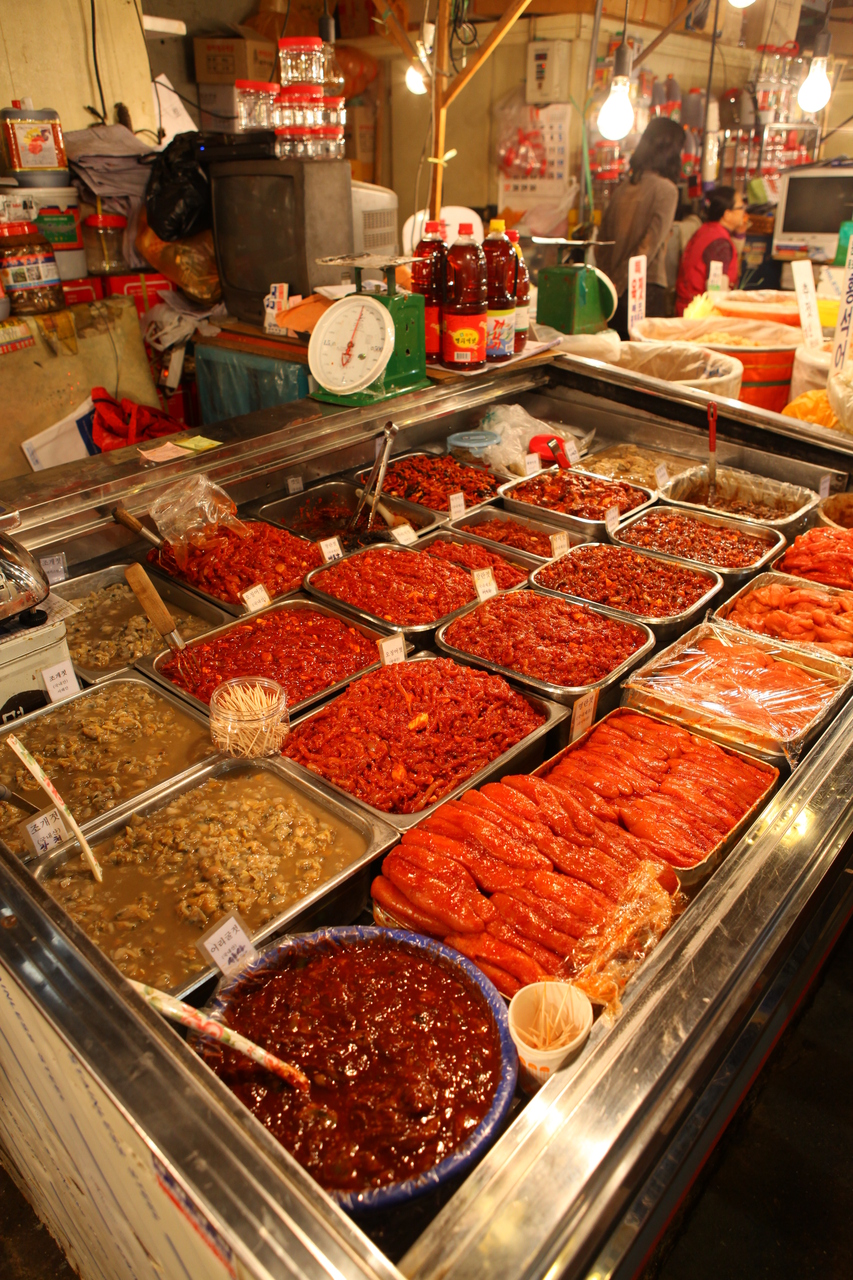
Koreans generally classify fermented seafood products into three major categories.
Although a handful of varieties such as Saeu-jeot and Myeongran-jeot are the most widely known today, they are only the tip of the iceberg. Food historians estimate that Korea has developed dozens of regional jeotgal traditions using virtually every type of seafood available along the peninsula’s coastline. This remarkable diversity reflects both Korea’s rich marine resources and centuries of accumulated fermentation knowledge.
| Category | Description | Representative Examples |
|---|---|---|
| Jeotgal | Whole or chopped seafood fermented with salt | Salted shrimp, pollock roe, anchovy jeotgal |
| Aekjeot | Liquid fish sauce created through extended fermentation | Anchovy fish sauce, sand lance fish sauce |
| Sikhae | Seafood fermented with grains and seasonings | Pollock sikhae, flounder sikhae |
Saeu-jeot (Salted Shrimp)
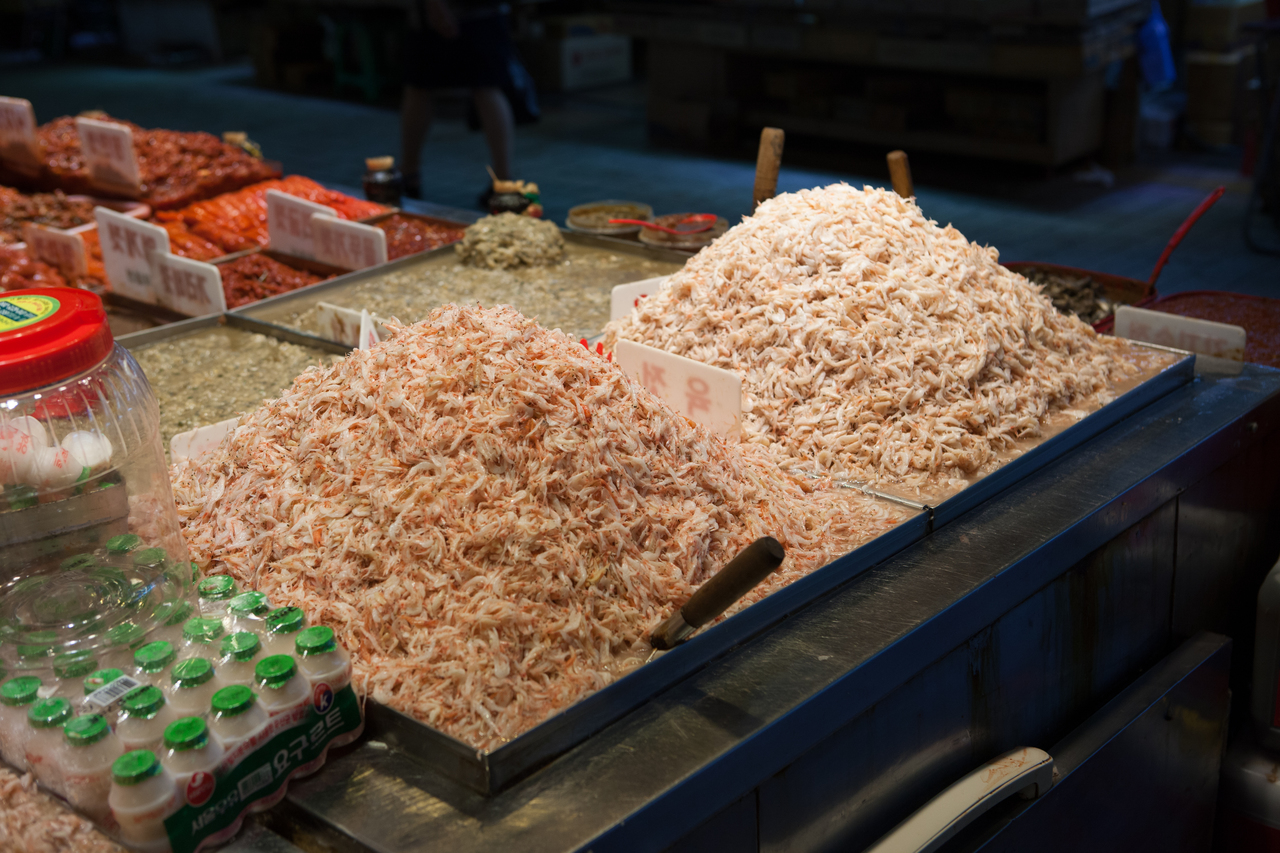
Perhaps the most important jeotgal in Korean cooking, salted shrimp provides the signature depth found in many kimchi recipes. It is also commonly served alongside boiled pork dishes.
Among the many varieties of salted shrimp, Yukjeot (육젓) is considered the most prized. Made from shrimp harvested in June, it is valued for its plump texture, clean flavor, and balanced salinity. Many experienced kimchi makers specifically seek out Yukjeot for premium kimchi because of the depth and clarity of flavor it provides.
Myeongran-jeot (Pollock Roe)
Made from pollock roe seasoned with chili powder, garlic, and other aromatics, this variety offers a balance of savory, spicy, and briny flavors. It has become increasingly popular internationally and is closely related to the Japanese delicacy known as mentaiko.
Myeolchi-jeot (Salted Anchovy)
Known for its strong aroma and intense umami, anchovy jeotgal is frequently used in southern Korean kimchi styles and traditional cooking.
Aekjeot (Fish Sauce)
When salted fish ferments for a year or more, proteins break down completely into liquid form. The resulting fish sauce is widely used as a seasoning for soups, stews, vegetables, and kimchi.
Sikhae
Popular in colder eastern and northern regions, sikhae combines seafood with rice, millet, malt, and chili flakes. The result is a fascinating combination of savory, tangy, mildly sweet, and spicy flavors.
How Jeotgal Is Made
The production of jeotgal relies on a remarkably simple formula: seafood, salt, time, and carefully controlled fermentation.
- Fresh seafood is cleaned and sorted.
- Salt is added, often at concentrations ranging from 20% to 30%.
- The mixture is placed in containers and left to ferment.
- Natural enzymes and salt-tolerant microorganisms gradually break down proteins and fats.
- Depending on the variety, fermentation may continue from several months to several years.
Contrary to a common misconception, jeotgal is not spoiled seafood. The high salt concentration suppresses harmful microorganisms while encouraging beneficial fermentation processes. The result is a stable, safe, and highly flavorful food.
The Science and Nutrition of Jeotgal
Modern food science has helped explain why jeotgal contributes such extraordinary flavor.
Researchers have found that fermentation breaks large proteins into free amino acids, including glutamic acid and aspartic acid, two of the primary compounds responsible for umami. Beneficial microorganisms and naturally occurring enzymes participate in this transformation.
Several Korean food scientists have highlighted the importance of these biochemical processes. Professor Kun-Young Park, one of Korea’s most widely cited fermentation researchers, has emphasized the health-promoting potential of traditional Korean fermented foods. Dr. Park Chae-lin of the World Institute of Kimchi has also written extensively about the historical and cultural role of jeotgal in Korean food traditions. Researchers at the institute have documented how fermented seafood ingredients influence microbial activity during kimchi fermentation.
According to studies published in food science journals, fermented seafood products may provide:
- Highly bioavailable protein and amino acids
- Vitamin B12
- Calcium and essential minerals
- Omega-3 fatty acids including EPA and DHA
- Bioactive peptides with antioxidant properties
💡 Food Science Insight: The traditional pairing of salted shrimp with bossam (boiled pork belly) is not accidental. Fermented seafood contains enzymes that help break down proteins and fats, which may aid digestion.
How Koreans Eat Jeotgal
Many first-time visitors assume jeotgal is eaten only as a side dish. In reality, Koreans use it in a variety of ways.
As a Kimchi Ingredient
For many Koreans, this is the most important role of jeotgal. It provides nutrients for fermentation microbes and contributes the savory depth that distinguishes traditional kimchi.
With Rice
Premium varieties such as pollock roe jeotgal are often served in small portions with freshly steamed rice. A tiny amount is enough because the flavor is highly concentrated.
💡 Local Tip: If the flavor of raw Myeongran-jeot feels too intense, try lightly grilling it. Many Koreans enjoy grilled pollock roe because the heat softens its oceanic aroma while enhancing its rich, buttery texture.
With Pork Dishes
Salted shrimp is a classic accompaniment to bossam and boiled pork slices. The combination balances richness with salinity and umami.
As a Modern Seasoning
Many contemporary Korean chefs use fish sauce and fermented seafood in pasta sauces, salad dressings, and fusion dishes. Rather than overpowering a dish, small amounts create subtle complexity.
Jeotgal-jeongsik: Korea’s Fermented Seafood Feast
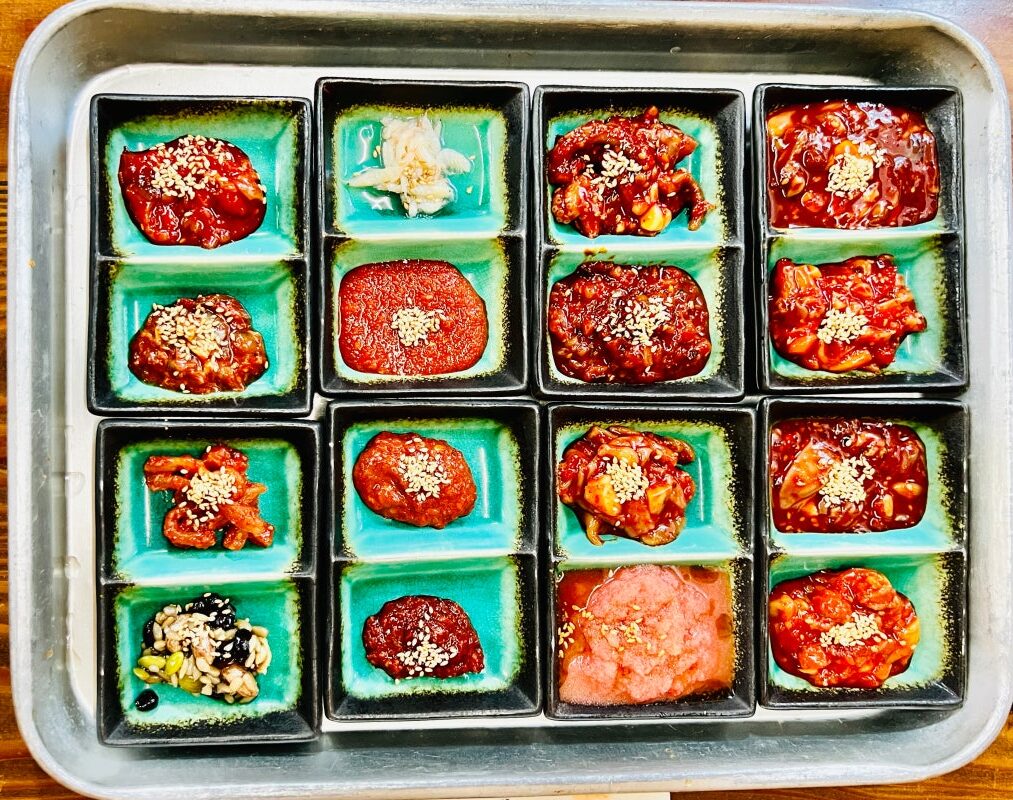
Many visitors are surprised to learn that Korea even has restaurants dedicated almost entirely to jeotgal. Known as Jeotgal-jeongsik (젓갈정식), these meals feature a wide assortment of fermented seafood served alongside rice, soup, vegetables, and seasonal side dishes.
The tradition is especially famous in coastal regions along Korea’s west coast, particularly around Gomsoman Bay (곰소만) in Buan County (부안군), North Jeolla Province. A typical meal may include pollock roe, salted shrimp, anchovy jeotgal, squid jeotgal, oyster jeotgal, and other regional specialties, allowing diners to experience the remarkable diversity of Korea’s fermentation culture in a single sitting.
For a deeper look at this unique dining experience, see Jeotgal-jeongsik (젓갈정식): A Journey into Korea’s Savory World of Fermented Seafood.
Some specialty restaurants serve more than twenty different kinds of jeotgal in a single meal, offering one of the easiest ways for visitors to appreciate the extraordinary diversity of Korea’s fermented seafood culture.
Jeotgal in Korean Food Culture
Jeotgal occupies a unique place in Korean culinary identity. While rice is the foundation of the meal and kimchi is its most famous symbol, jeotgal often serves as the invisible bridge connecting ingredients together.
Its importance reflects several key characteristics of Korean food culture:
- Respect for seasonal ingredients
- Resourceful preservation techniques
- Deep understanding of fermentation
- The pursuit of balance between flavor and nutrition
- Community traditions surrounding food preparation
In many ways, jeotgal represents the Korean philosophy of transforming simple ingredients through patience and craftsmanship.
Why Jeotgal Is Gaining Attention Again
Interest in jeotgal has grown significantly in recent years for several reasons.
First, global fascination with Korean cuisine continues to expand. As international audiences move beyond familiar dishes such as bibimbap and Korean barbecue, they naturally become curious about the ingredients that create authentic Korean flavors.
Second, fermentation has become one of the most influential trends in modern gastronomy. Chefs and food researchers increasingly recognize fermented foods as valuable sources of flavor complexity and culinary innovation.
Third, consumers are paying closer attention to traditional foods with long cultural histories. Jeotgal fits perfectly within this movement because it combines heritage, craftsmanship, and scientific interest.
This broader trend is reflected in emerging discussions about traditional ingredients and sustainability within Korean cuisine. Readers interested in the future of Korean food may also enjoy 2026 K-Food Trend Forecast.
A Beginner’s Guide to Trying Jeotgal
If you are new to Korean fermented seafood, starting with milder varieties is often the best approach.
- Myeongran-jeot (pollock roe) for a balanced introduction
- Saeu-jeot with bossam for a traditional pairing
- Aekjeot in soups and stews for subtle umami
- Sikhae for a more complex fermented flavor experience
To better understand how jeotgal fits into Korea’s broader food culture, these related guides may be helpful:
- Korean Seaweed: A Local’s Guide to Gim, Miyeok & More
- Korean Summer Cold Noodles: Naengmyeon & Kongguksu Guide
- 5 Korean Spring Greens You Can Forage Locally
- How Korea Turns Invasive Weeds into Delicious Namul
- [Bomnamul] How to Find and Cook Korean Spring Greens
- [Bomnamul] How to Safely Eat Toxic Korean Spring Greens (Gosari)
Jeotgal may not be the most visually striking Korean food, and its aroma can surprise newcomers. Yet behind that first impression lies one of Korea’s greatest culinary achievements—a fermentation tradition refined over centuries that continues to shape the flavor of Korean cuisine today.
Korean Culture portal KCulture.com

The KCulture Editorial Team is dedicated to providing deep insights and accurate information about the vibrant world of Korean culture.