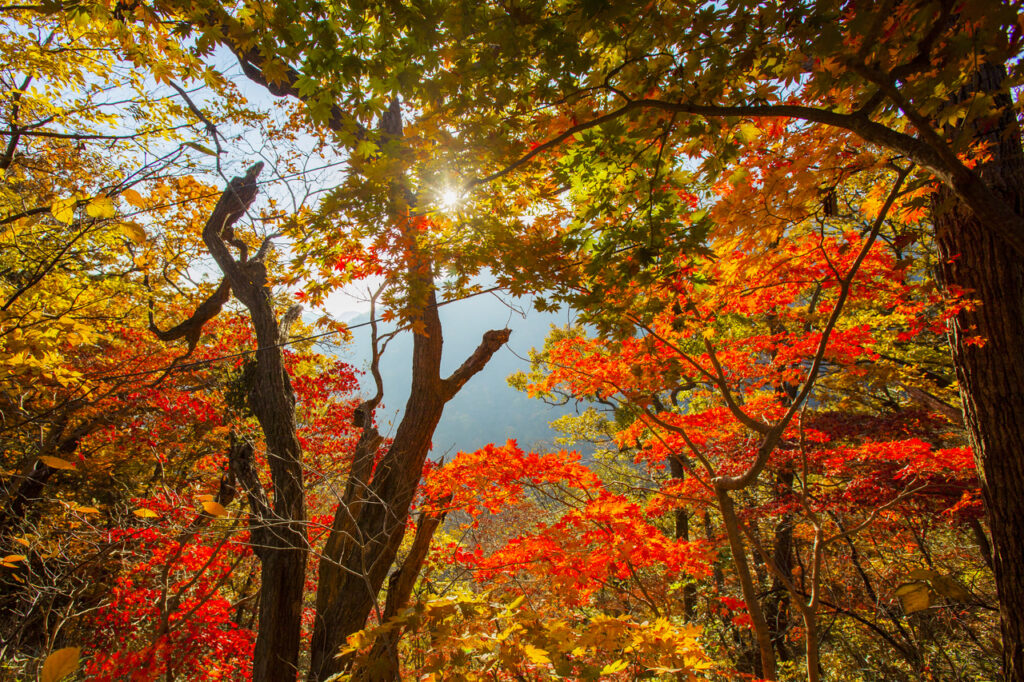
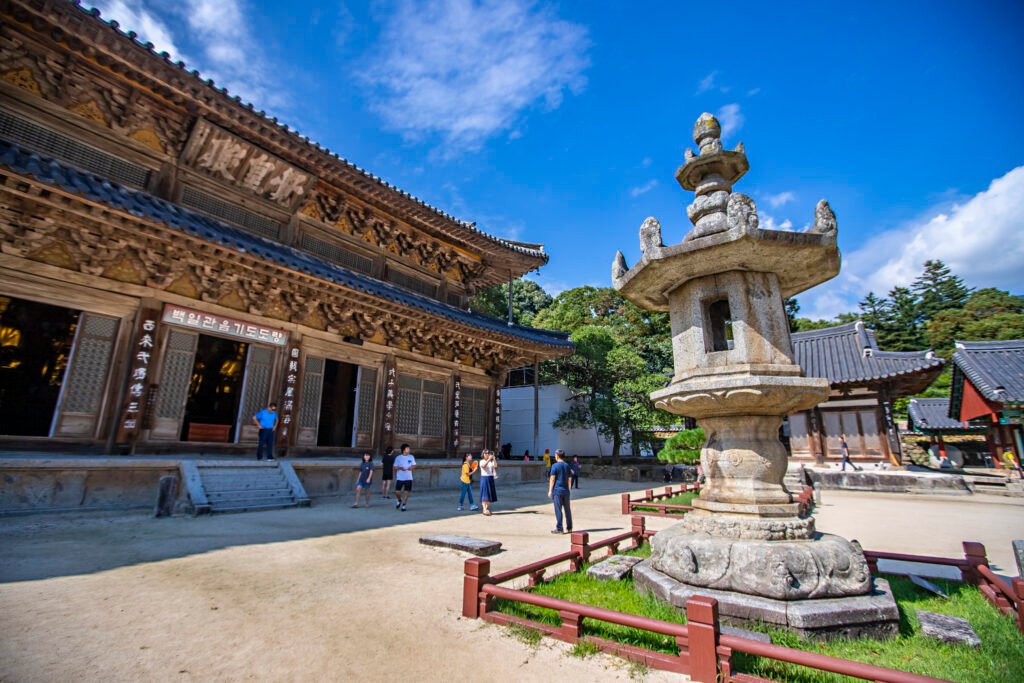
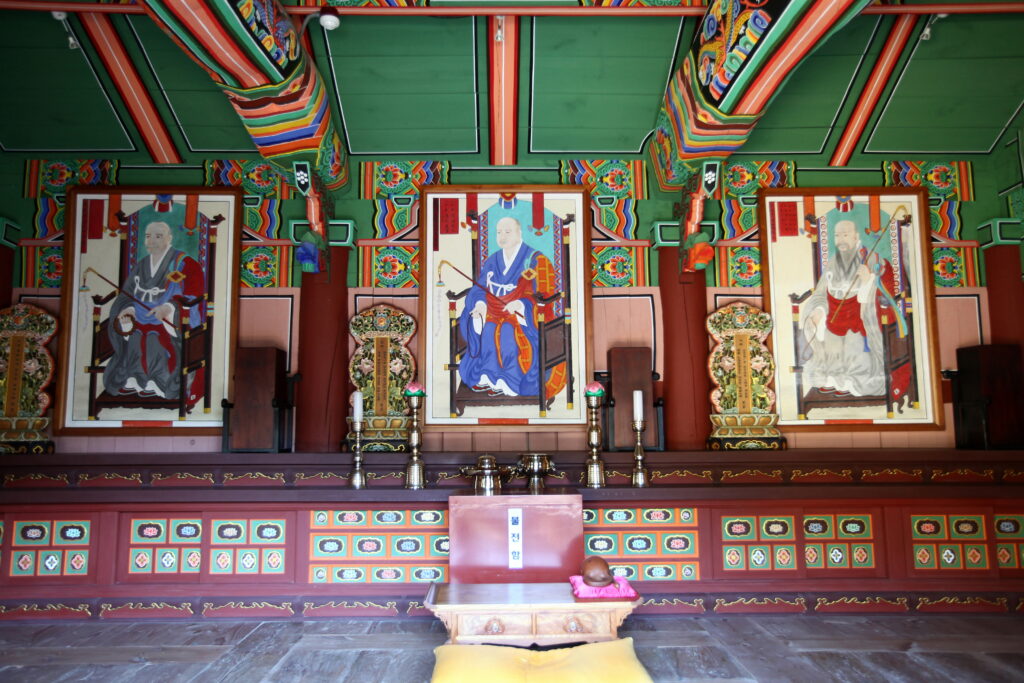
If you are exploring the mountainous beauty of Pyeongchang and seeking a serene cultural escape, this comprehensive Woljeongsa Temple guide is exactly what you need. Woljeongsa Temple (월정사), nestled deep within Odaesan National Park (오대산 국립공원), is South Korea’s premier millennial Buddhist sanctuary renowned for its authentic Buddha relics, national treasures, and a breathtaking ancient forest. Living in Korea, I often find that visitors get overwhelmed by the bustling cities and look for a quiet retreat; this temple offers the perfect blend of deep spiritual history and untouched nature.
In this article, I will walk you through everything you need to know before visiting. We will explore the temple’s 1,300-year history, the unique meaning of its relic shrine, the must-see cultural highlights, practical transportation tips, and how to safely interact with the wild squirrels along the famous fir tree trail.
- Why Visit Woljeongsa Temple?
- The 1,300-Year History of Woljeongsa
- Jeokmyeolbogung: Korea’s Sacred Buddha Relic Shrine
- Must-See Highlights at Woljeongsa Temple
- The Healing Fir Tree Forest Trail
- The Monk Who Saved the Temple During the Korean War
- How to Get to Woljeongsa Temple
- Nearby Attractions Worth Visiting
- Visitor Tips & FAQ
Why Visit Woljeongsa Temple?
Located in Pyeongchang, Gangwon-do, Woljeongsa Temple is the head temple of the 4th District of the Jogye Order of Korean Buddhism. Unlike many famous temples that attract visitors mainly for their architecture, Woljeongsa combines three remarkable experiences: a history stretching back nearly 1,400 years, one of Korea’s most sacred Buddhist pilgrimage sites, and one of the country’s most beautiful forest walks.
The temple is especially significant because it is dedicated to Manjusri, the Bodhisattva representing wisdom. For centuries, monks have believed that Odaesan is the earthly dwelling place of Manjusri, making it one of Korea’s foremost centers for Buddhist practice.
📌 Local Note: Many of my friends visiting from abroad expect a simple temple complex but end up spending an entire day enjoying the forests, museums, mountain scenery, and nearby hiking trails. I highly recommend clearing your schedule for a full-day experience.
The 1,300-Year History of Woljeongsa
According to historical records, Woljeongsa was founded in 643 AD during the Silla Kingdom by the celebrated Monk Jajang (자장율사). After studying Buddhism in Tang China, Jajang returned with authentic Buddhist relics. He established several important temples throughout Korea, with Woljeongsa becoming one of the country’s greatest spiritual centers.
Over the following centuries, the temple expanded during both the Goryeo and Joseon dynasties. Although parts of the complex were destroyed during the Korean War, careful restoration has preserved its historic atmosphere while maintaining its role as an active monastery.
| Period | Major Event |
|---|---|
| 643 AD | Founded by Monk Jajang |
| Goryeo Dynasty | Construction of the famous Octagonal Nine-Story Stone Pagoda |
| Joseon Dynasty | Continued as one of Korea’s leading Buddhist temples |
| 1951 | Partially destroyed during the Korean War and later restored |
Jeokmyeolbogung: Korea’s Sacred Buddha Relic Shrine
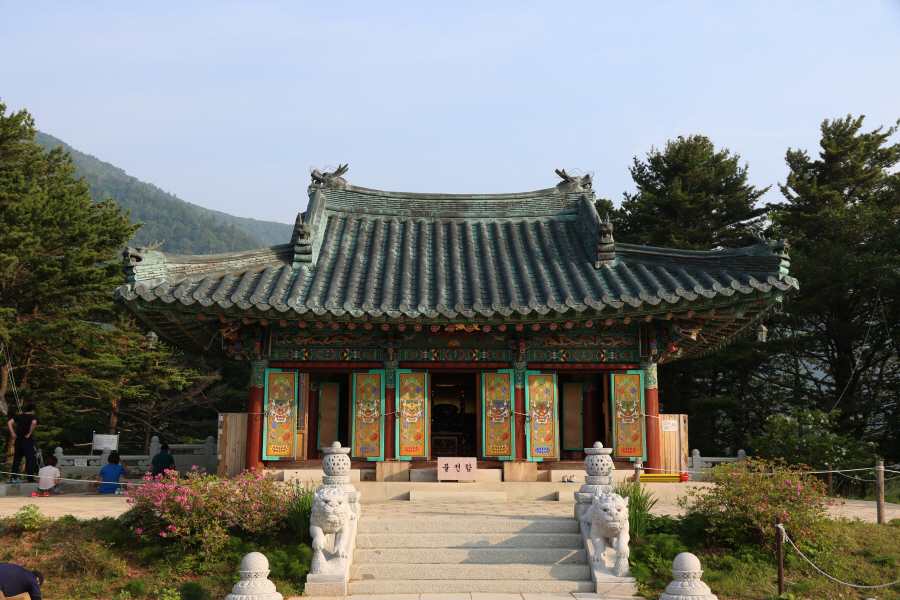
One of Woljeongsa’s greatest treasures is its connection to Jeokmyeolbogung (적멸보궁), often translated as the “Jewel Palace of Tranquil Extinction.”
Unlike ordinary Buddhist halls, a Jeokmyeolbogung does not contain a Buddha statue. Instead, worship is directed toward a beautifully decorated altar because the authentic physical remains of the Buddha are enshrined just outside or beneath the structure. This unique arrangement symbolizes that the Buddha’s true presence exists through the relics themselves rather than through a carved image. Korea has only five great Jeokmyeolbogung temples established by Monk Jajang, and Odaesan is regarded as one of the most paramount pilgrimage destinations among them.
Must-See Highlights at Woljeongsa Temple
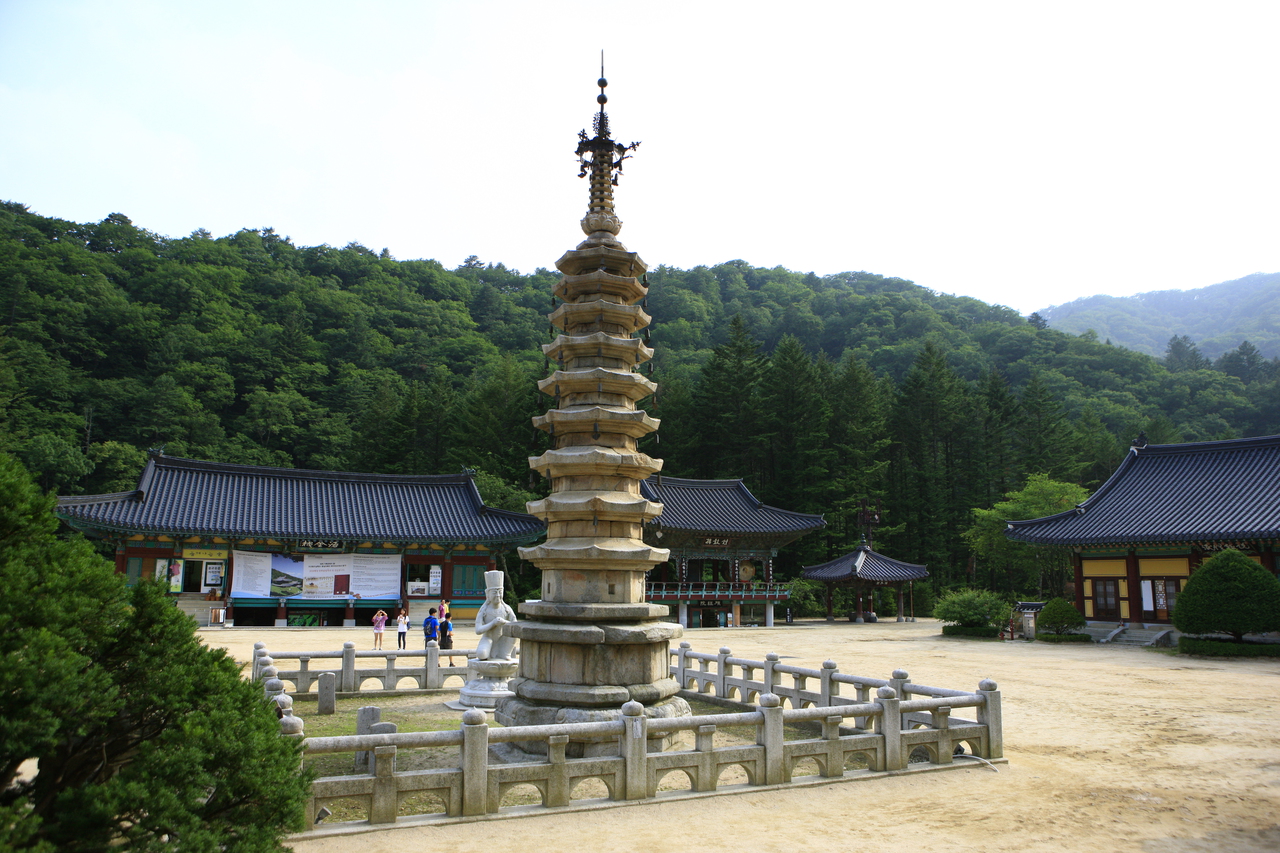
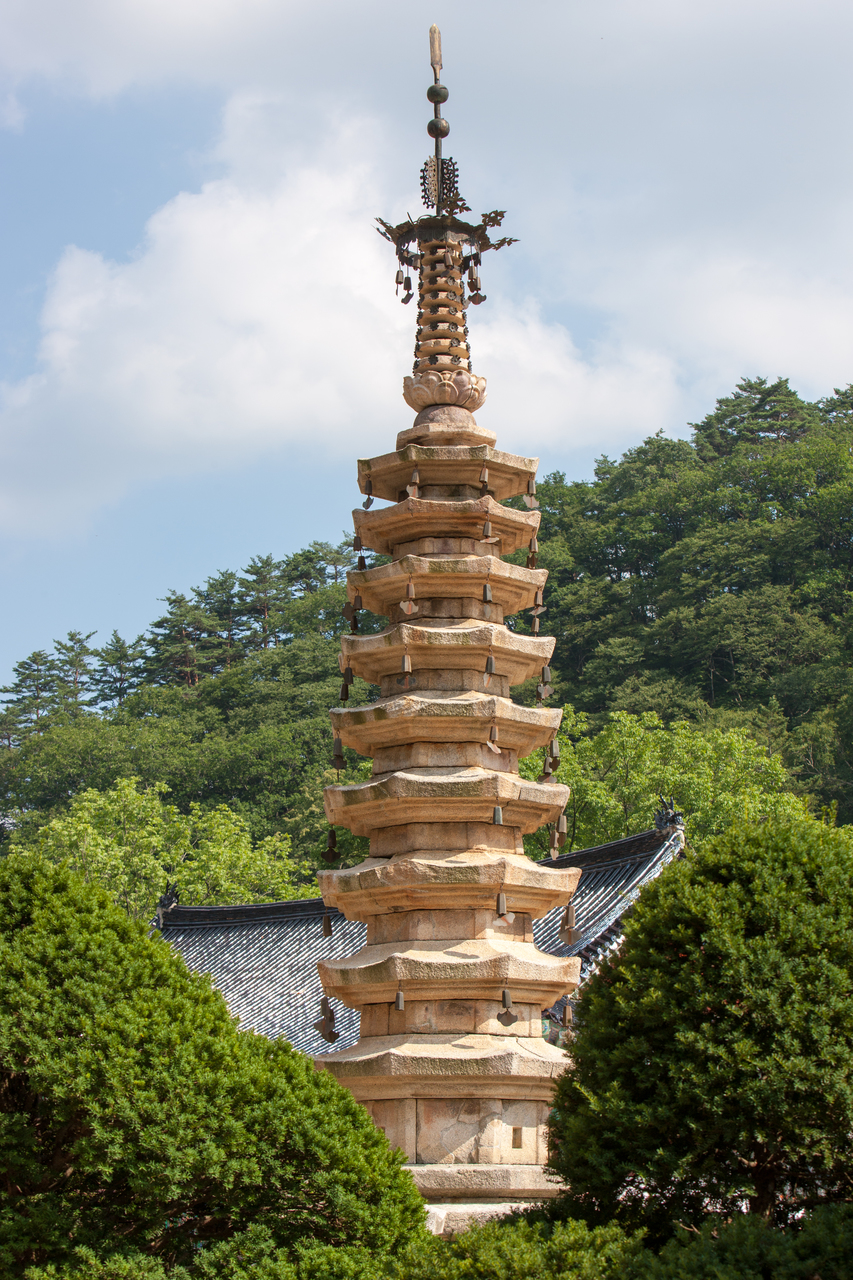
Octagonal Nine-Story Stone Pagoda (팔각구층석탑)
Designated as National Treasure No. 48, the elegant Octagonal Nine-Story Stone Pagoda is one of the finest examples of Goryeo stone craftsmanship. Its graceful proportions, intricate design, and delicate wind bells create a resonant, peaceful chime that echoes through the courtyard.
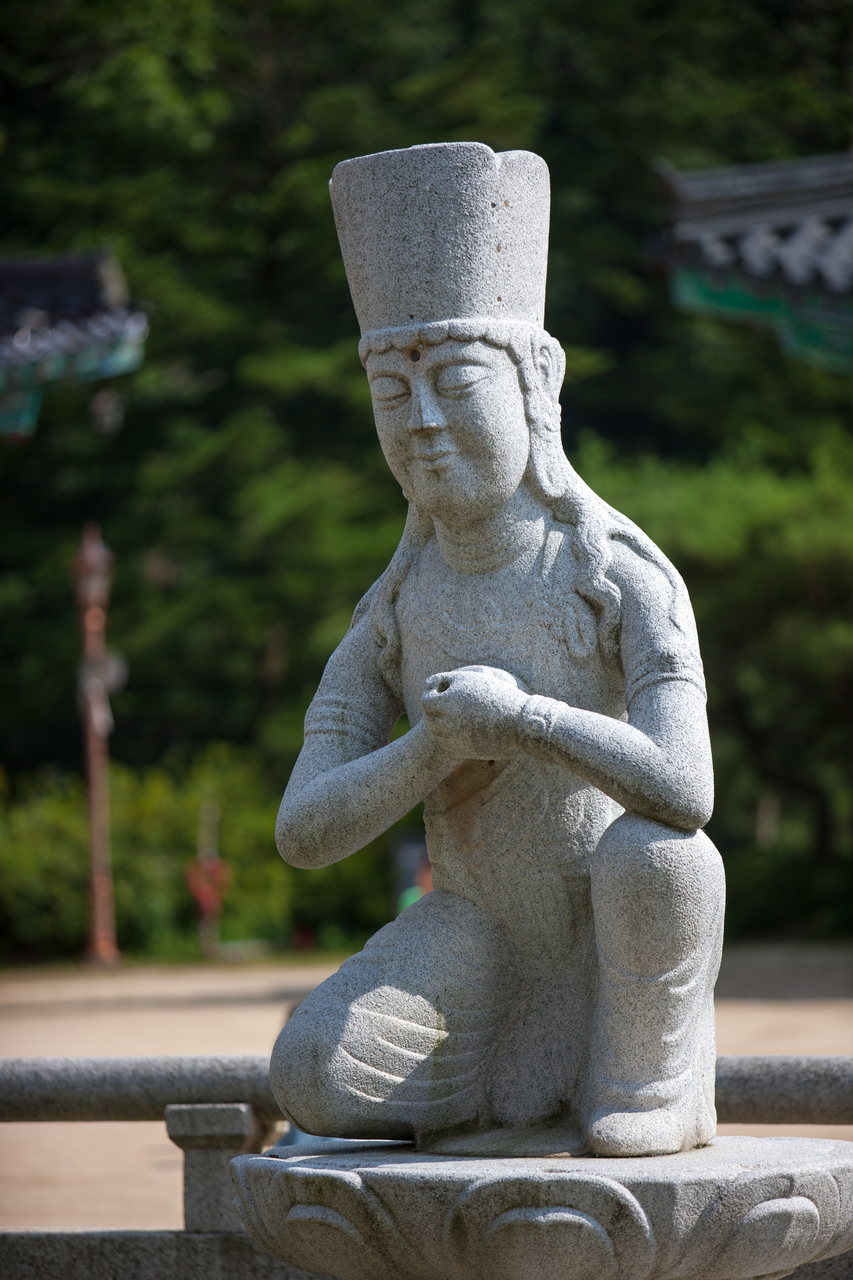
Seated Stone Bodhisattva (석조보살좌상)
Facing the pagoda is a beautifully sculpted Bodhisattva shown kneeling in prayer, seemingly offering a tribute to the sacred relics. The original sculpture (also a National Treasure) is preserved inside the temple’s museum, while an exceptionally detailed replica stands beside the pagoda.
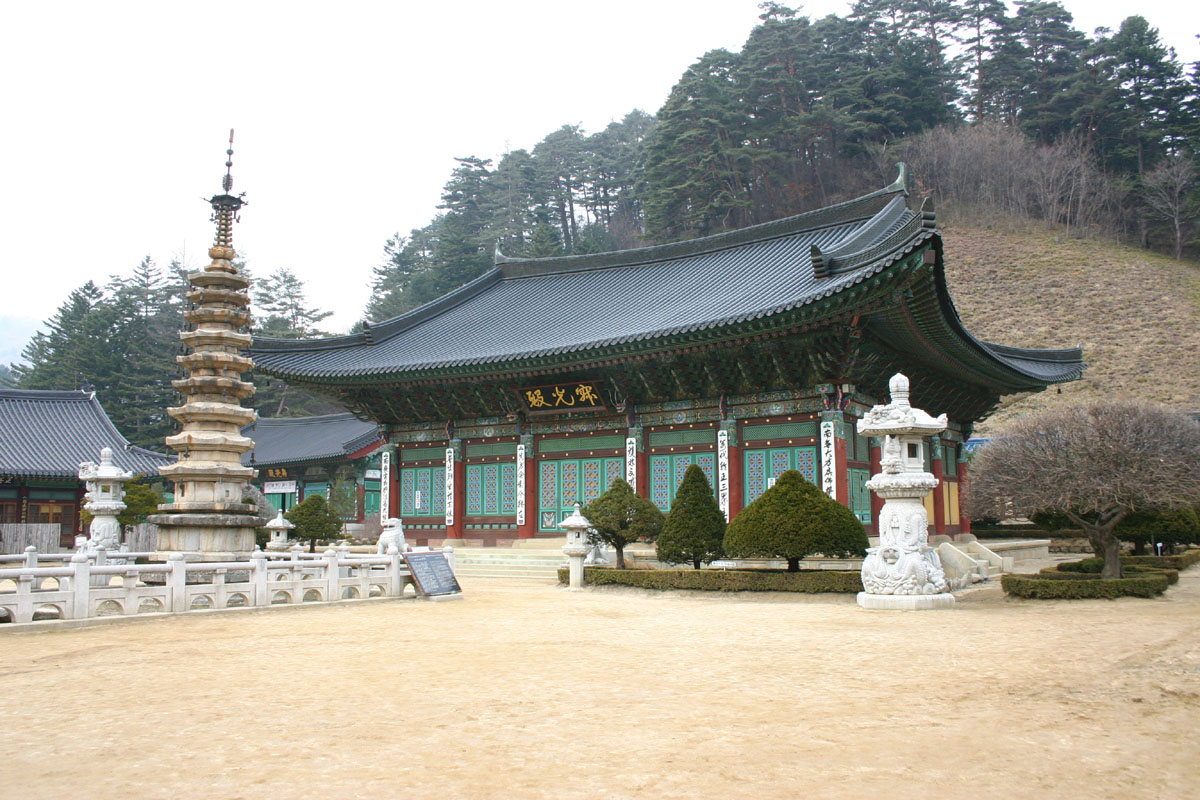
Jeokgwangjeon Hall (적광전)
The temple’s main worship hall contains an interesting surprise. While Jeokgwangjeon halls elsewhere in Korea usually enshrine the Vairocana Buddha, Woljeongsa exceptionally houses the Shakyamuni Buddha.
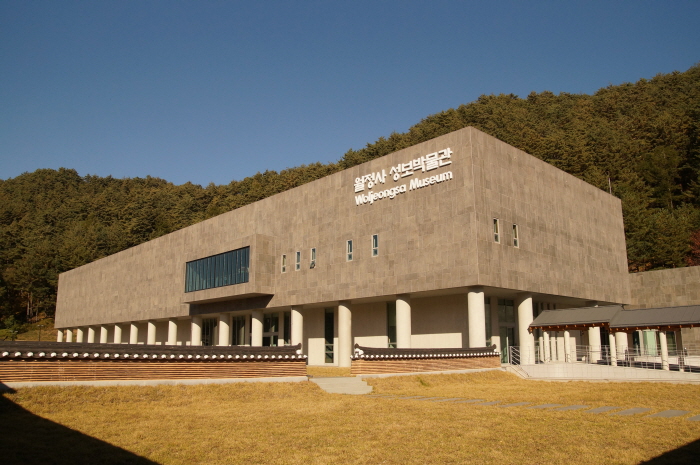
Seongbo Museum (성보박물관)
The museum displays Buddhist paintings, sculptures, ancient scriptures, and historical artifacts spanning the Goryeo and Joseon periods. For international visitors, it is an excellent introduction to Korean Buddhist art before exploring the temple grounds.
The Healing Fir Tree Forest Trail
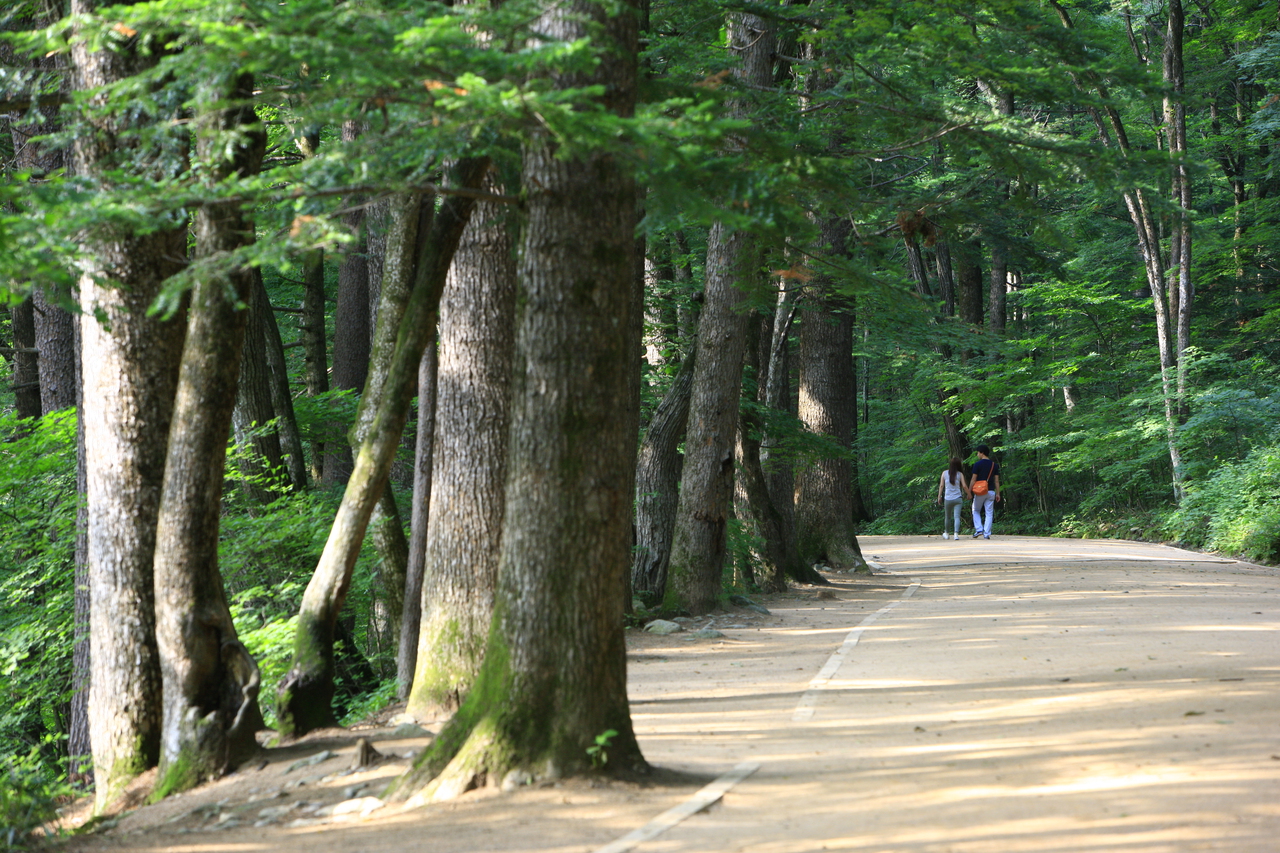
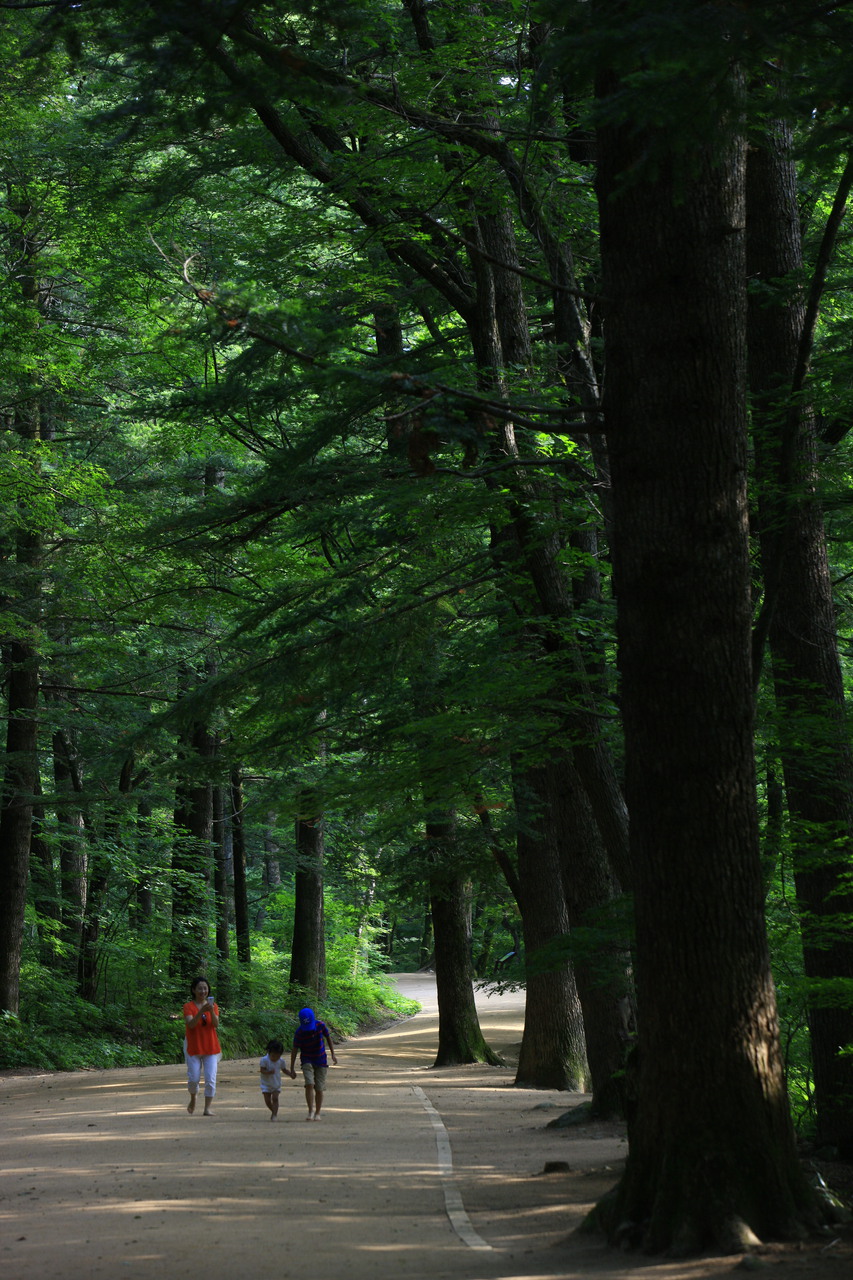
Many travelers consider the walk to the temple just as memorable as the temple itself. The Fir Tree Forest Trail (전나무 숲길) stretches roughly one kilometer from Iljumun Gate (일주문) to Geumganggyo Bridge beneath over 1,700 towering fir trees, many over 80 years old.
The soft earth path has become incredibly popular among visitors practicing “Earthing” (barefoot walking). The cool mountain air and rich phytoncides make it one of Korea’s most refreshing forest walks throughout the year.
💡 Pro Tip: Earthing & Wildlife Etiquette
If you decide to walk barefoot, there is a designated foot-washing station near the end of the trail!
Also, the trail is home to wild squirrels that are highly accustomed to people. If you wish to interact with them, bring only unsalted, raw peanuts or pine nuts. Never offer bread, cookies, or salted snacks, as human processed foods will severely damage their digestive systems and threaten their health.
The Monk Who Saved the Temple During the Korean War
One of the most moving stories connected with Odaesan occurred during the 1.4 Retreat of the Korean War in 1951. Military commanders ordered several mountain temples to be burned to prevent enemy forces from using them as guerrilla bases.
At nearby Sangwonsa Temple (상원사), an important branch temple further up the mountain, Master Hanam (한암스님) refused to abandon the main hall. Wearing his formal monk’s robes, he sat calmly in deep meditation. When the soldiers arrived, he reportedly told them: “Your duty as soldiers is to burn the temple. My duty as a monk is to protect the Buddha’s hall. Burn me together with it.”
Deeply moved by his solemn dignity and determination, the commanding officer chose another solution. Instead of burning the temple, the soldiers removed only the wooden doors and burned them outside to create smoke, making it appear they had followed orders. Thanks to this brave decision, Sangwonsa and its priceless cultural treasures survived the war.
How to Get to Woljeongsa Temple
Because the temple is deep in the mountains, planning is essential. I always recommend using the Naver Map app for real-time transit and driving routes in Korea.
| Transportation Method | Travel Time & Instructions |
|---|---|
| Rental Car (Recommended) | 2.5–3 hours from Seoul. Driving is the easiest way to explore Odaesan. It allows you to visit Sangwonsa Temple and Daegwallyeong without worrying about limited bus schedules. |
| KTX + Taxi | About 2 hours. Take the KTX Gangneung Line from Seoul Station to Jinbu Station (진부역). From there, a taxi to the temple takes 15–20 minutes (approx. 20,000 KRW). |
| KTX + Local Bus | About 2.5 hours. From Jinbu Station, go to Jinbu Bus Terminal and board a local bus (like Bus 226). Buses run at roughly one-hour intervals. |
Nearby Attractions Worth Visiting
- Sangwonsa Temple (상원사): Located about 9 km higher into Odaesan, Sangwonsa houses Korea’s oldest bronze temple bell and the National Treasure Wooden Seated Child Manjusri.
- Seonjae-gil Trail (선재길): This scenic 10 km walking trail follows mountain streams between Woljeongsa and Sangwonsa, making it one of the most beautiful trekking courses in Korea.
- Daegwallyeong (대관령): Within a 30–40 minute drive, visitors can enjoy the rolling grasslands of Daegwallyeong Sheep Farm or Samyang Roundhill for an exotic, alpine-like landscape.
If you’re planning a broader cultural journey through Korea, check out my other local guides to help you build an unforgettable itinerary:
- Exploring Donggureung: Korea’s Largest Royal Tombs
- Ganghwa Island Day Trip Guide: Korea’s Historic Time Machine
- Top 10 Autumn Festivals in South Korea to Experience in 2026
- Maekmundong: The Secret Purple Flowers of Korean Summer
- Best Korean Souvenirs: Authentic & Practical Gifts
Visitor Tips & FAQ
Is Woljeongsa worth visiting if I’m not Buddhist?
Absolutely. You do not need to be religious to appreciate the temple. It is loved equally for its stunning traditional architecture, peaceful atmosphere, and spectacular natural surroundings.
How much time should I spend there?
At a minimum, half a day is recommended. However, dedicating a full day allows you enough time for the museum, walking the Fir Tree Forest Trail, exploring Seonjae-gil, and driving up to Sangwonsa Temple.
When is the best season to visit?
Autumn is famously popular for its colorful foliage. However, summer offers a cool escape from the city heat, winter transforms the area into a beautiful snow-covered wonderland, and spring features fresh mountain greenery.
Korean Culture portal KCulture.com

Founder of Kculture.com and MA in Political Science. He shares deep academic and local insights to provide an authentic perspective on Korean history and society.