
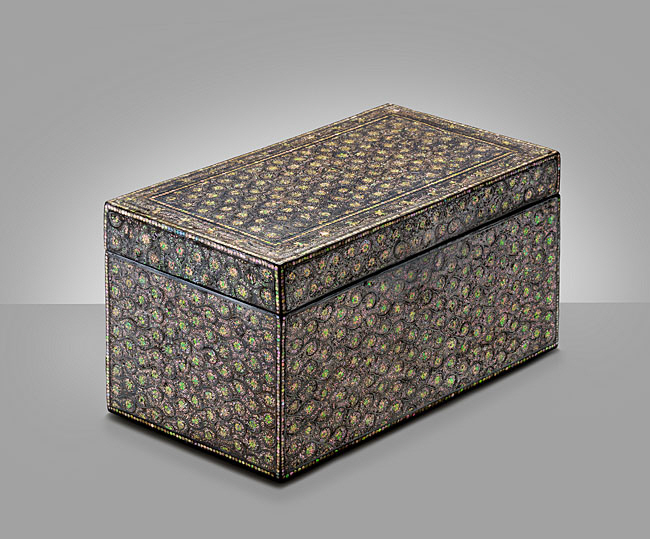
Najeonchilgi (나전칠기) is Korea’s centuries-old art of inlaying iridescent mother-of-pearl into wooden objects coated with natural lacquer. If you have ever paused a Korean historical drama to admire a glowing black chest beside a queen’s bed, or noticed a shimmering rainbow-hued wardrobe in a modern film, you have already witnessed this craft. Beyond its use as a beautiful prop, it represents a thousand-year-old tradition that combines natural seashells, tree sap, and extraordinary human patience.
This craft rarely gets its own spotlight, sitting quietly in the corner of a set or on the lid of a jewelry box. Yet, it carries one of the longest continuous craft traditions in East Asia. This guide explores the history of Najeonchilgi, how it differs from Chinese and Japanese lacquerware, the cultural irony of the “grandmother’s wardrobe,” and where visitors can find authentic pieces today.
- What is Najeonchilgi and Why Does It Shine?
- A Thousand Years of History: From Royal Treasures to Everyday Life
- A Tale of Three Nations: Mother-of-Pearl in Korea, China, and Japan
- The Masterful Process: An Art of Extreme Patience
- The Irony of the “Grandmother’s Wardrobe” and Modern Revival
- Handmade vs. Factory: How to Tell and Where to Buy
- Frequently Asked Questions
What is Najeonchilgi and Why Does It Shine?
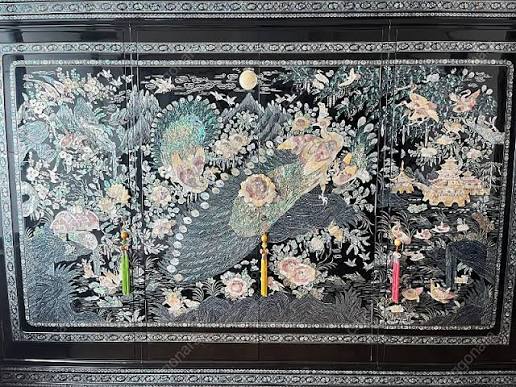
The name perfectly explains the craft. Najeon combines the characters for spiral shell and sea snail, referring to mother-of-pearl. Chilgi means lacquerware, specifically objects finished with the sap of the lacquer tree. Together, Najeonchilgi is the art of cutting thin pieces of shell from abalone, turban shell, or pearl oysters, and setting them into the surface of a lacquered wooden object.
What makes it unmistakable is not just the shell itself, but what happens to it under light. Mother-of-pearl is made of microscopically thin layers of calcium carbonate and aragonite. As light bounces between these layers, it creates optical interference, scattering into a shifting rainbow that changes with every viewing angle. A single flat panel can look silver-blue from one side of a room and shift to green, pink, and gold as you walk past it.
| Natural Material | Visual Effect in Lacquerware |
|---|---|
| Abalone Shell | Rich, deep blue, green, and vivid violet reflections. |
| Turban Shell | Soft silver and pale, luminous green tones. |
| Pearl Oyster | Bright white base with subtle rainbow highlights. |
Traditional Korean craftsmen intentionally selected shells with different hues to create depth within a single flower petal, crane feather, or bamboo leaf. Rather than simply decorating a surface, they painted with light itself.
A Thousand Years of History: From Royal Treasures to Everyday Life
Lacquer inlay techniques reached the Korean peninsula through contact with Tang-dynasty China. By the Unified Silla era, Korean artisans had already developed the skill to a masterful level. Fragments of shell inlay recovered from Donggung Palace and Wolji (동궁과 월지) in Gyeongju (경주) prove that the technique was flourishing on Korean soil over a millennium ago.
The First Golden Age (Goryeo Dynasty)
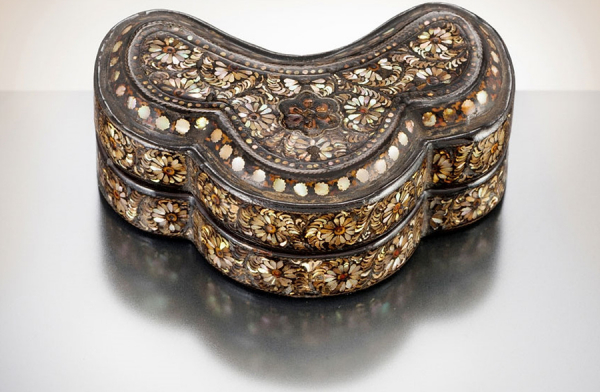
The craft reached its first true peak under the Goryeo Kingdom. Deeply influenced by Buddhist culture, artisans produced sutra boxes and incense stands of extraordinary intricacy. The work was so fine it is often compared to embroidered silk in its density. Today, only about twenty complete examples of Goryeo Najeonchilgi survive worldwide, held in institutions like the Metropolitan Museum of Art, where they are treated as priceless cultural treasures.
The Second Golden Age (Joseon Dynasty)
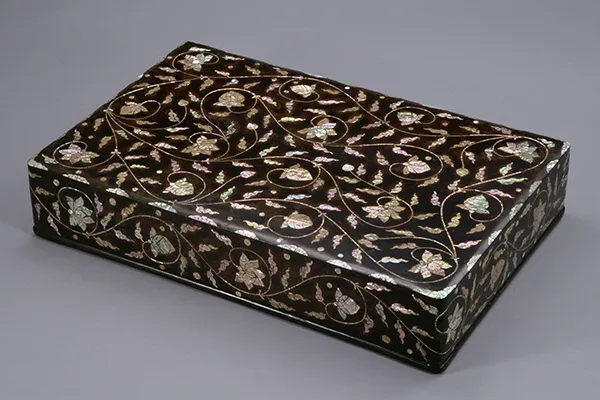
During the Joseon Dynasty, the aesthetic shifted. Confucian scholar-officials prized restraint over ostentation. Najeon design moved away from dense, jewel-like patterning toward open, painterly compositions featuring pine trees, bamboo, cranes, and plum blossoms—motifs carrying moral meaning and wishes for longevity.
📌 Local Note: The Luxury Bans
The Confucian government actively tried to restrain Najeonchilgi. Whenever aristocratic families grew too fond of extravagant furnishings, kings would issue sumptuary regulations limiting luxury goods. Rather than killing the craft, these restrictions pushed artisans to create even more refined, technically demanding work to satisfy an elite clientele.
A Tale of Three Nations: Mother-of-Pearl in Korea, China, and Japan
Because the underlying technique spread from China across East Asia, visitors sometimes assume Korean, Chinese, and Japanese mother-of-pearl works are variations of the same thing. In reality, hundreds of years of independent development produced three distinct artistic philosophies.
| Country | Signature Technique | Overall Aesthetic |
|---|---|---|
| China (Lacquer with Mother-of-Pearl) | Uses thicker shell pieces, often carved and combined boldly with gold, silver, jade, and precious stones. | Majestic, richly layered, and grand in scale, reflecting imperial authority and wealth. |
| Japan (Raden) | Focuses on slicing shells incredibly thin and setting them with mosaic-like geometric accuracy. | Technically flawless, minimal, and meticulous. |
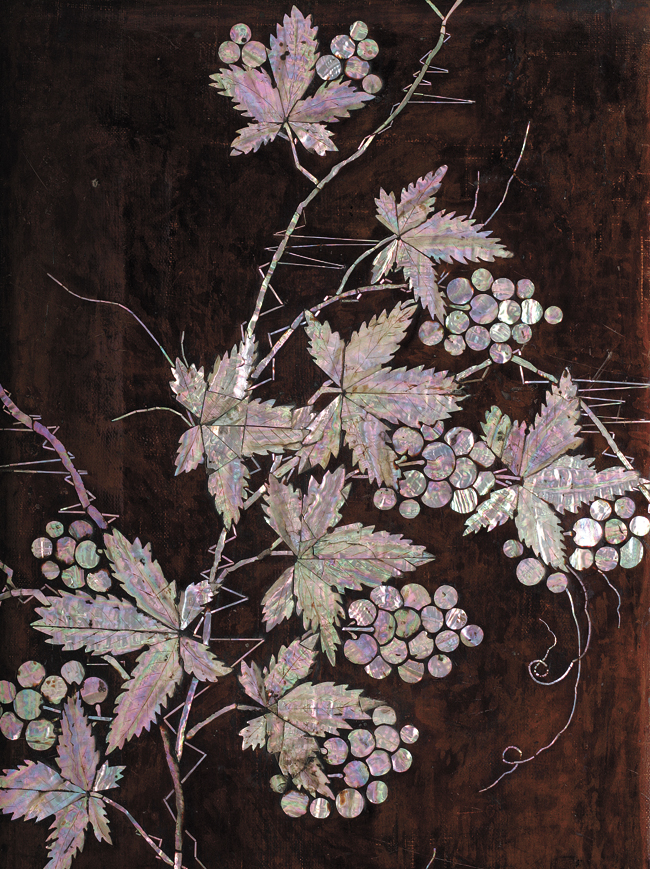
| Korea (Najeonchilgi) | Uses Kkeuneumjil (hair-thin threads) and Sangsajil (sawn pictorial shapes) to compose flowing nature scenes. | Painterly, free-flowing, and restrained, projecting a noble scholarly elegance. |
The clearest way to spot Korean work is the Kkeuneumjil (끊음질) technique, where the shell is sliced into strands finer than human hair and used almost like brushstrokes. This painterly freedom is the most distinctive quality of Korean Najeonchilgi.
The Masterful Process: An Art of Extreme Patience
Producing a single high-quality piece can involve grinding shell down to a fraction of a millimeter, applying dozens of layers of lacquer, and repeating that cycle for months. It is genuinely one of the slowest surviving handicrafts in Korea.
- Wood Framing (Gol-tae): A sturdy wooden skeleton is crafted from pine or paulownia wood.
- Lacquering (Chil-gi): Hemp cloth is pasted over joints to prevent warping, followed by multiple base coats of natural Ottchil (옻칠) lacquer to seal and stabilize the wood.
- Shell Processing (Ja-gae): Shells are boiled, hammered flat, and ground down to paper-thin sheets.
- Inlaying (Kkeuneumjil & Sangsajil): The sawn shapes or hair-thin strands are glued directly onto the lacquered surface to form the intricate design.
- Finishing: Additional coats of lacquer are applied over the entire surface. The piece is then repeatedly sanded down with charcoal and stone powder until only the shell pattern emerges against a glass-smooth, glossy black background.
The Irony of the “Grandmother’s Wardrobe” and Modern Revival
For most of the 20th century, a massive Najeonchilgi wardrobe, known affectionately today as Halmeoni Jangnong (할머니 장롱, grandmother’s wardrobe), was the ultimate symbol of household dignity and an essential bridal dowry. Because these wardrobes were built to be indestructible, they succeeded almost too well—surviving generation after generation.
However, as Korea rapidly urbanized in the 1980s, apartment living became the norm. These massive, room-dominating wardrobes no longer fit the floor plans or the minimalist aesthetics of younger residents. Lightweight Western furniture made of MDF took over, and a wave of cheap imitations damaged the traditional industry’s reputation. Many workshops were forced to close, and the once-prized wardrobes were discarded as heavy clutter.
The twist arrived only in the past several years. As the old wardrobes grow scarcer, surviving examples and the artisans capable of making new ones have become genuinely rare. Driven by a “Newtro” (New Retro) movement, a renewed interest in Korean heritage has pushed Najeon into small-format products. Contemporary designers are collaborating with master artisans to create modern jewelry boxes, stylish serving trays, phone cases, and interior lighting, bringing the thousand-year-old light back into modern daily life.
Handmade vs. Factory: How to Tell and Where to Buy
Not every “mother-of-pearl” item sold in Korea today is made the traditional way. Knowing the difference matters if you are looking for an heirloom.
- Factory-Made: Often uses synthetic adhesives and sometimes printed films that mimic the look of shell. They are mass-produced, lightweight, and budget-friendly—perfect as casual souvenirs.
- Traditional Handcrafted: Uses natural lacquer, animal-hide glue, and individually hand-cut shells. The true magic of hand-crafted Najeonchilgi is that its iridescence becomes brighter and more profound as the years pass.
💡 Pro Tip: How to Spot Authentic Handiwork
If you want to test whether a piece is genuinely hand-inlaid, look closely at a curved line, like a crane’s neck or a bent bamboo stalk. Machine-applied sheets have uniform, slightly mechanical curves. Hand-cut Kkeuneumjil threads show tiny, organic irregularities up close, much like handwriting differs from a printed font.
Where to Buy in Seoul
For High-Quality Souvenirs and Small Items:
- National Museum of Korea (국립중앙박물관) Museum Shop: Offers beautifully modernized items like business card holders, hand mirrors, and trays.
- KH Mall: Operated by the Korea Heritage Service Foundation, offering certified traditional crafts.
- Insadong (인사동) and Bukchon Hanok Village (북촌한옥마을): Traditional districts lined with accessible craft shops perfect for tourist browsing.
For Serious Artworks and Mastercrafts:
- Seoul Museum of Craft Art (서울공예박물관) Art Shop: Features unique art pieces and limited editions by contemporary craft artists.
- National Intangible Cultural Heritage Venues: Places like the Unhyeongung Traditional Craft Gallery host exhibitions where you can purchase directly from recognized living masters.
Frequently Asked Questions
Is Najeonchilgi made from real seashells?
Yes. Traditional works use genuine abalone, pearl oyster, or turban shells. Their iridescence comes entirely from nature rather than artificial coloring.
Is it safe to use or get wet?
Natural lacquer is remarkably durable and highly water-resistant. Wiping a piece with a dry or slightly damp microfiber cloth is perfectly fine. However, avoid dishwashers, microwaves, and prolonged soaking, as extreme heat and harsh chemicals will destroy the natural finish.
Why are handcrafted works so expensive?
The price reflects time, not just materials. Months of meticulous hand-cutting, inlaying, lacquering, polishing, and curing in controlled humidity by highly trained artisans cannot be reproduced through industrial manufacturing. You are investing in hundreds of hours of a master’s life.
Can foreigners buy antique Najeonchilgi?
Contemporary works and most vintage pieces can be purchased and exported easily. However, items officially designated as National Treasures or protected cultural heritage cannot be exported. When purchasing a highly expensive antique, always ask the dealer about overseas export regulations.
Explore More Korean Traditional Arts
To deepen your understanding of Korea’s rich cultural heritage and artistic history, explore these related guides:
- History of Modern Korean Traditional Painting & Masters
- Understanding Muninhwa and Korea’s Scholar Artists
- Minhwa: The Guide to Korea’s “Pop Art” Tradition
- Hanji: The Science Behind Korea’s 1,000-Year Paper
- The Beauty of Soban: Traditional Tables and Modern Uses
- Traditional Korean Fans: History, Art, and Cultural Meaning
- The Acoustic Philosophy of Joseon: Royal Court Instruments of Korea
- Jeongganbo Explained: How Korean Traditional Music Is Written
- Pansori Five Epics: Guide to Korea’s Masterpiece Storytelling
- The Real Sword of K-Pop Demon Hunters: Saingeom History
- The Art Inside Korean Won Banknotes
Korean Culture portal KCulture.com

Founder of Kculture.com and MA in Political Science. He shares deep academic and local insights to provide an authentic perspective on Korean history and society.
