Beyond the Beauty: The Systematic Japanese Destruction of Joseon Royal Palaces
The Japanese destruction of Joseon royal palaces between 1910 and 1945 was not the accidental collateral damage of war, but a highly calculated, government-led campaign to erase Korea’s national identity and dismantle royal authority. By demolishing over 90% of Gyeongbokgung Palace to build a colonial headquarters, downgrading Changgyeonggung Palace into a public zoo, and deliberately severing the sacred geographical connection to Jongmyo Shrine, the Japanese colonial administration weaponized urban planning and architecture as propaganda. Today, South Korea is undergoing a monumental, decades-long restoration project—stretching toward 2045—to rebuild these lost structures, demolish colonial remnants, and reclaim the historical landscape of Seoul. This article details the methodical dismantling of the three major palaces and guides visitors on how to read the historical scars that remain today.
- Architecture as Propaganda: A Deliberate Colonial Strategy
- Gyeongbokgung Palace: Silencing the Heart of Joseon
- Changgyeonggung Palace: A Royal Residence Reduced to a Zoo
- Severing the Sacred Vein: The Road Disconnecting Jongmyo Shrine
- Changdeokgung Palace: The Survivor and Its Hidden Scars
- Reading the Scars: What to Look For Today
- Korea’s Century-Long Restoration Project
- FAQ
- Explore More Korean History
Architecture as Propaganda: A Deliberate Colonial Strategy
To understand the devastation of Korea’s palaces, it is crucial to distinguish between the destruction that occurred during the Japanese invasions of 1592–1598 (the Imjin War) and the dismantling that took place during the 20th-century colonial era. The former was catastrophic war damage; the latter was systematic, institutional erasure.
The groundwork for this erasure began even before formal annexation. Following the Eulmi Incident of 1895, when Japanese agents assassinated Empress Myeongseong inside the palace grounds, the psychological dismantling of the Joseon court was already underway. Once Japan officially annexed Korea in 1910, this logic was applied to the physical structures of the state.
The methods of destruction were consistent and deeply symbolic. Palaces were opened for massive public exhibitions, requiring the demolition of “inconvenient” royal halls. Entire wooden structures were dismantled and sold to Japanese officials and businessmen to be repurposed as restaurants, temples, or private homes. Colonial authorities practiced what historians refer to as an architectural “palimpsest”—deliberately leaving fragments of the old palaces in the shadow of massive modern colonial buildings to visually demonstrate the subjugation of the “old” Korea by the “new” Japanese empire.
Gyeongbokgung Palace: Silencing the Heart of Joseon
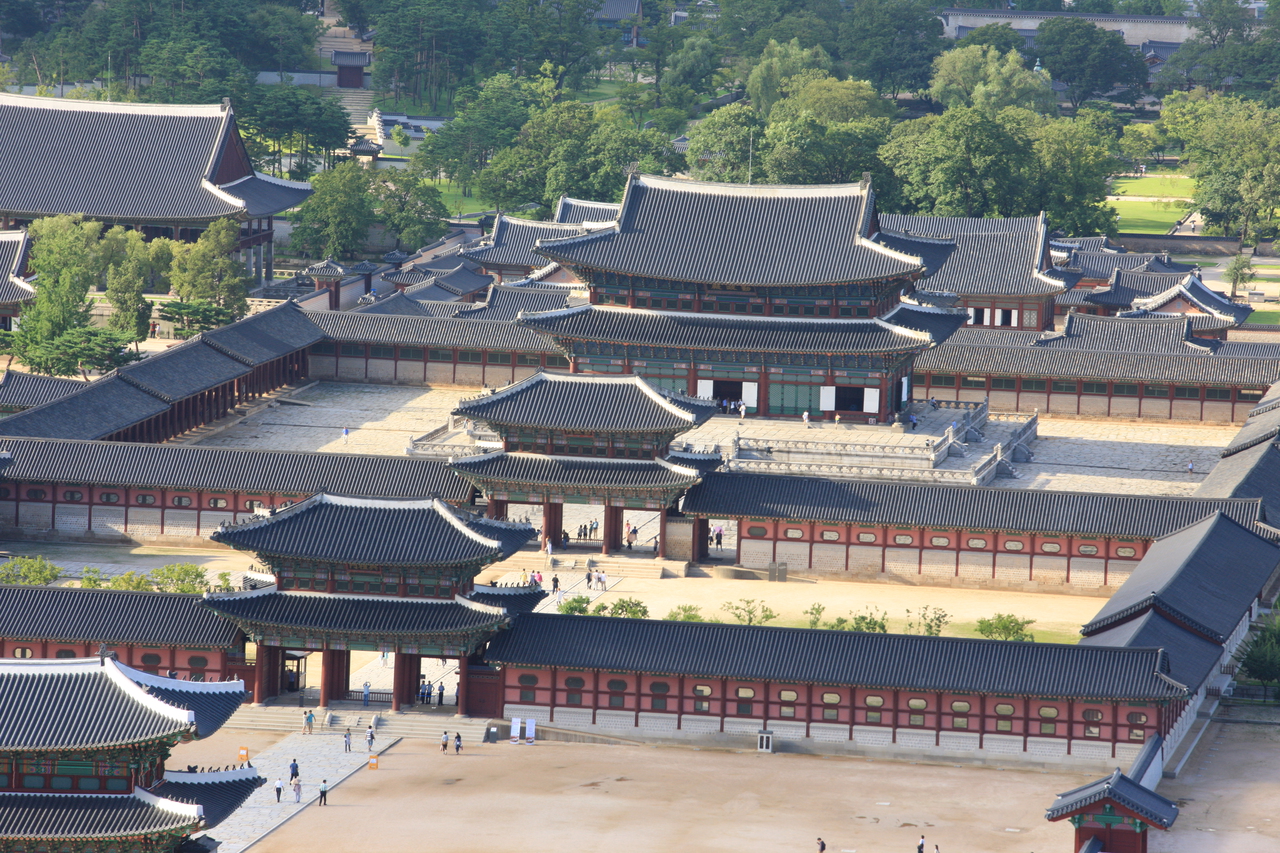
Gyeongbokgung Palace (경복궁) was the primary legal residence and symbolic heart of the Joseon Dynasty. Rebuilt on a magnificent scale in the 1860s after sitting in ruins for centuries, it housed over 500 buildings. Because of its supreme importance, it suffered the most thorough and humiliating dismantling.
The 1915 Joseon Industrial Exhibition
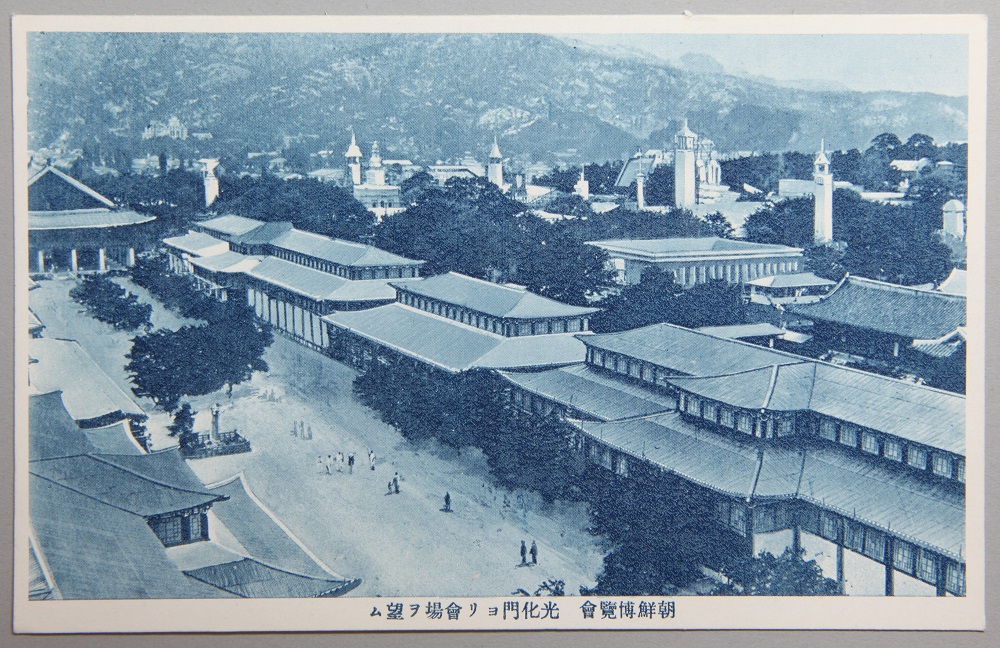
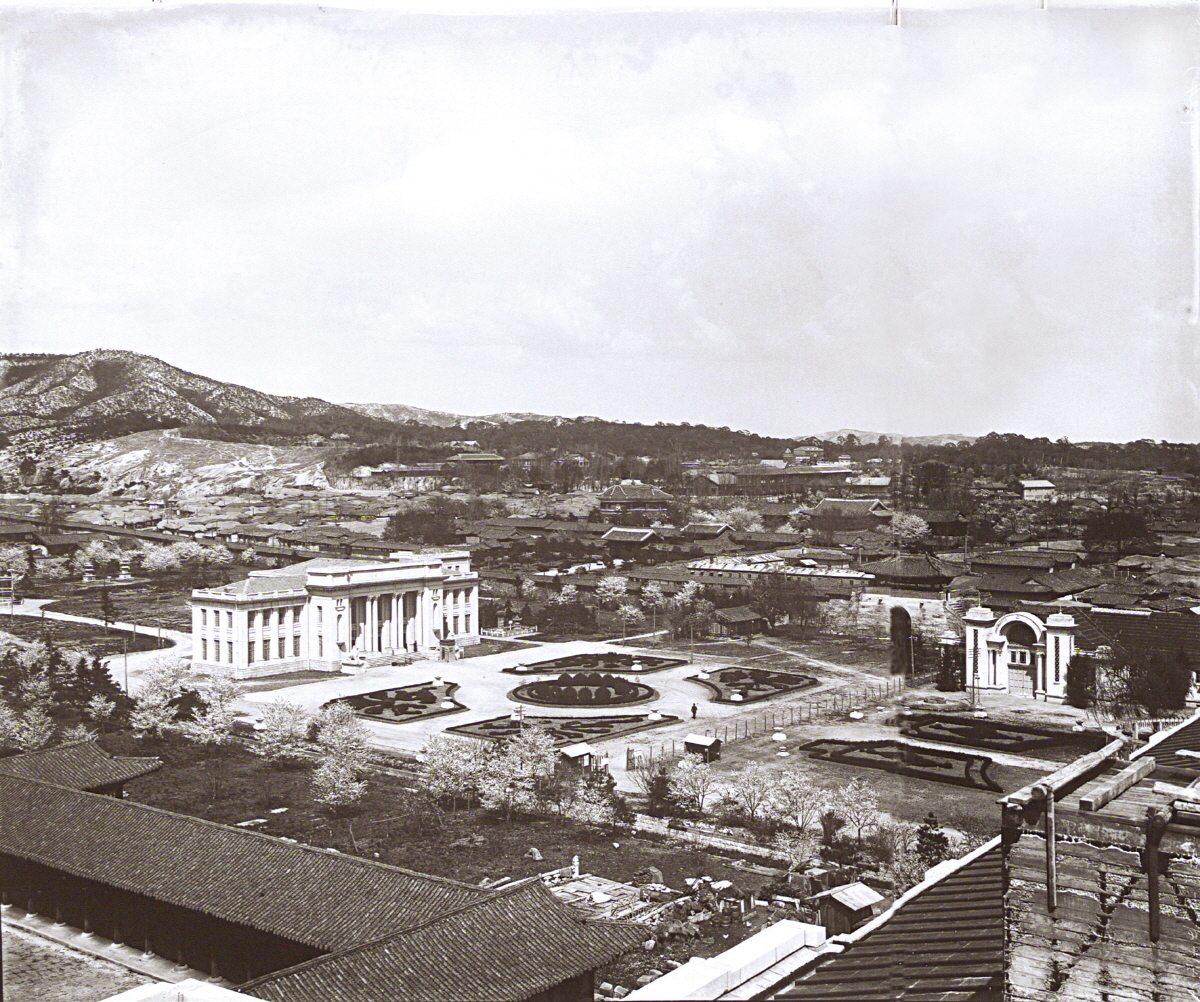
In 1915, colonial authorities used the pretext of the “Joseon Industrial Exhibition”—an event designed to mark the fifth anniversary of annexation and showcase colonial modernization—to decimate the palace. Over 90% of the original royal pavilions were torn down to make way for temporary Western-style exhibition halls. By the time the event ended, the dense, majestic city of royal architecture had been wiped out, leaving only a handful of structures like the Geunjeongjeon throne hall and the Gyeonghoeru pavilion.
The Japanese General Government Building
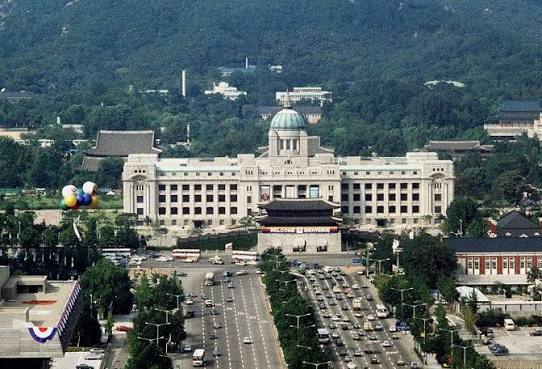
Between 1916 and 1926, the empire delivered its ultimate architectural insult. The massive, neo-classical Japanese General Government Building was constructed directly in front of the main throne hall. This colossal structure intentionally blocked the view of the palace from the city. Gwanghwamun Gate (광화문), the iconic main entrance, was dismantled and moved to the eastern wall, while Heungnyemun Gate was entirely destroyed. The visual and physical axis of Korean sovereignty was completely suffocated.
Changgyeonggung Palace: A Royal Residence Reduced to a Zoo
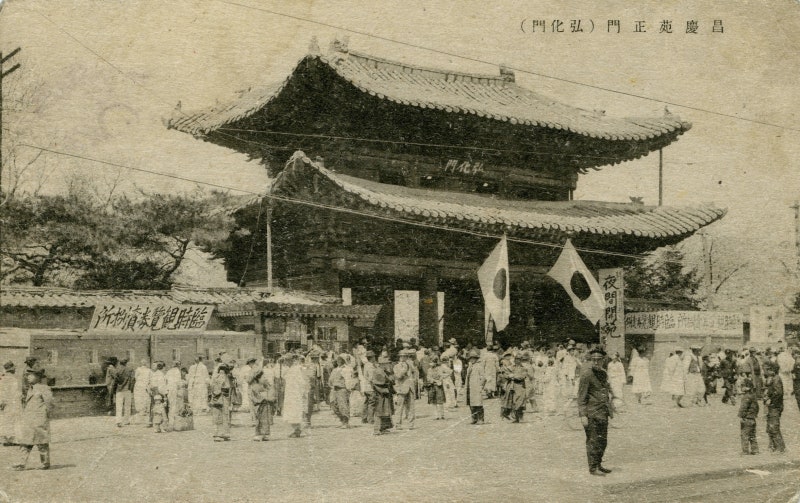
If the destruction of Gyeongbokgung was an act of political silencing, the fate of Changgyeonggung Palace (창경궁) was an exercise in public humiliation. Built in 1484 as a tranquil residence for queens and royal elders, it was systematically degraded.
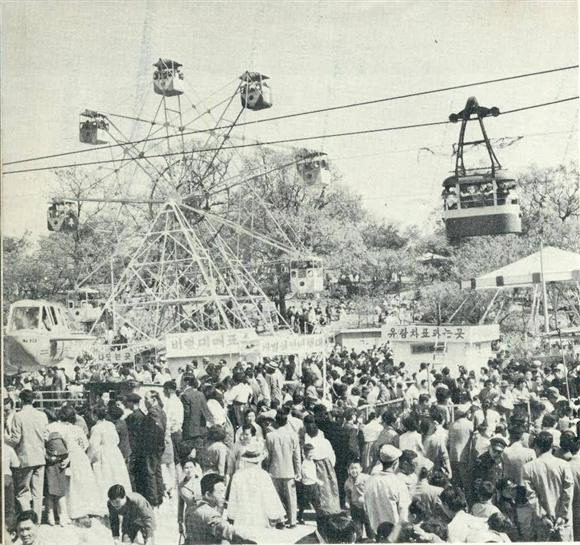
Beginning in 1907, Japanese authorities demolished royal living quarters to construct Korea’s first modern zoo and a Western-style botanical garden right on the palace grounds. Opening in 1909, the sacred royal courtyards where kings once ruled were filled with animal cages and thousands of Japanese cherry blossom trees.
To finalize the degradation, the colonial government officially stripped the site of its royal title in 1911, renaming it “Changgyeongwon”—changing the suffix from “Gung” (Palace) to “Won” (Park). It was transformed into a noisy, public amusement park where citizens rode cable cars and viewed exotic animals, completely obliterating the solemnity of the Joseon royal family.
Severing the Sacred Vein: The Road Disconnecting Jongmyo Shrine
One of the most insidious acts of colonial urban planning did not involve tearing down a building, but rather building a road. In traditional Korean geomancy (Pungsu), the royal palaces and the ancestral resting places must be connected by an unbroken flow of natural, auspicious energy.
For centuries, a continuous forest physically and spiritually linked Changgyeonggung Palace to Jongmyo Shrine (종묘), the supreme ancestral shrine of the Joseon kings. In 1932, colonial authorities carved a massive road—today’s Yulgok-ro (율곡로)—directly through this forested ridge. This road physically severed the palace of the living from the shrine of the dead. It was widely perceived by Koreans not just as modern infrastructure, but as a deliberate attempt to cut the “national energy” and symbolic integrity of the dynasty.
Changdeokgung Palace: The Survivor and Its Hidden Scars
Changdeokgung Palace (창덕궁) is often celebrated as the best-preserved palace in Seoul, largely because it served as the actual residence for the last remaining members of the royal family, including Emperor Sunjong, until his death in 1926. Because it was actively inhabited, it escaped the large-scale leveling seen at Gyeongbokgung.
However, it did not survive completely untouched. In 1917, a massive fire destroyed the palace’s main residential halls, including Daejojeon. The colonial response to this disaster highlights the tragic interconnectedness of the palaces’ ruin: to rebuild Changdeokgung, Japanese authorities dismantled perfectly intact royal buildings from Gyeongbokgung (such as Gangnyeongjeon and Gyotaejeon) and used their materials. Thus, the survival of one palace came at the literal expense of another.
Despite these scars, Changdeokgung’s core layout—designed to harmonize asymmetrically with the natural mountain topography rather than forcing a rigid grid—survived. This unparalleled preservation of Korean architectural philosophy earned it designation as a UNESCO World Heritage site in 1997.
Reading the Scars: What to Look For Today
Visiting Seoul’s palaces is a profound experience if one knows how to read the landscape. Historical evidence is often found not in what has been rebuilt, but in what is missing or out of place.
- The Empty Lawns of Gyeongbokgung: Visitors often assume the vast grassy areas between buildings are traditional gardens. They are not. They are the physical footprints of hundreds of demolished buildings that have yet to be reconstructed. They represent the sheer scale of colonial erasure.
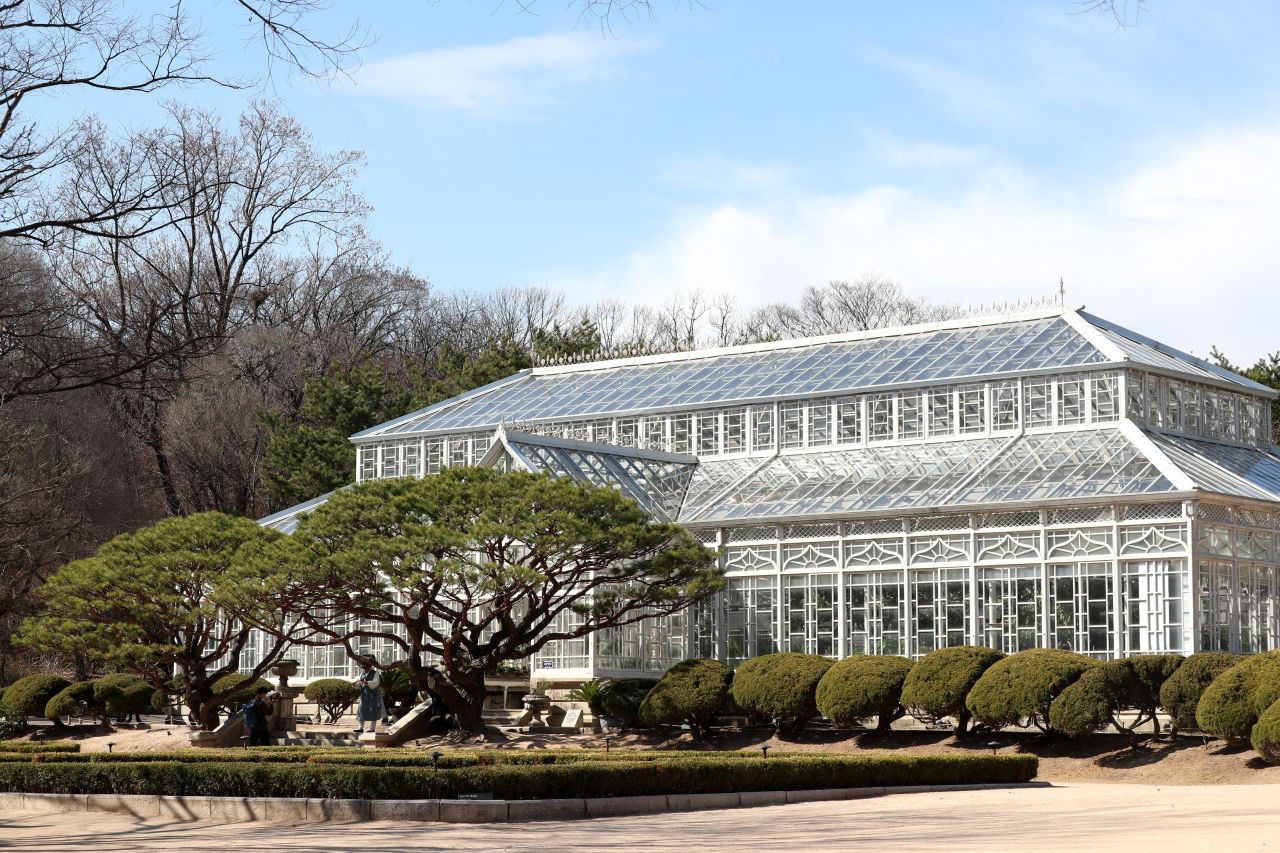
- The Grand Greenhouse at Changgyeonggung: Deep inside the palace sits an elegant, white glass greenhouse (Daeonsil). While highly photogenic, it is a direct relic of the 1909 conversion of the royal palace into a botanical garden. It is a striking symbol of beauty born from humiliation.
- The Yulgok-ro Tunnel Connection: When walking between Changdeokgung and Jongmyo Shrine, notice the newly forested pedestrian path. This is the result of a massive 2022 urban engineering project that pushed the colonial-era road underground, finally restoring the 503-meter historical wall and reconnecting the severed sacred vein after 90 years.
💡 Pro Tip: When exploring Changdeokgung, book a guided tour for the Secret Garden (Huwon) well in advance. However, do not miss the Nakseonjae complex near the entrance. Its unpainted, austere wooden architecture offers an intimate glimpse into the tragic final days of Korea’s last royal family.
Korea’s Century-Long Restoration Project
Korea’s liberation in 1945 did not instantly heal these scars. Amidst the Korean War and rapid industrialization, historical restoration took a backseat until the late 20th century, when the government began a dedicated movement to “rectify history.”
| Milestone Year | Major Restoration Event | Historical Significance |
|---|---|---|
| 1983 | Relocation of the Changgyeonggung Zoo | Animals were moved to Seoul Grand Park; Japanese cherry trees were removed, and the royal name was officially restored. |
| 1995 | Demolition of the General Government Building | On the 50th anniversary of Liberation, the colonial headquarters blocking Gyeongbokgung was torn down, reopening the palace axis. |
| 1990–2045 | Gyeongbokgung Master Restoration Plan | A continuous, half-century project to meticulously rebuild the lost 90% of the palace using historical records. |
| 2022 | Reconnection of Jongmyo Shrine | The colonial road was buried underground, physically reuniting the ancestral shrine with the palace grounds. |
The restoration of Seoul’s palaces is not merely a construction program; it is a slow, meticulous process of reclaiming national memory. Every reconstructed roof tile and relocated gate is a step toward healing a wound that was systematically inflicted over a century ago.
FAQ
Why did Japan build a massive government building inside Gyeongbokgung?
It was a calculated act of symbolic and visual domination. Placing the Japanese General Government Building directly in front of the throne hall physically blocked the historic sightline of the palace from the city, replacing the symbol of Korean sovereignty with the headquarters of colonial rule.
When was the colonial General Government Building finally destroyed?
Demolition officially began on August 15, 1995—exactly 50 years after Korea’s liberation from Japanese rule. The removal started with the cutting of the central dome and continued until the structure was completely cleared, allowing Gwanghwamun Gate to eventually be restored to its rightful place.
What happened to the zoo animals at Changgyeonggung Palace?
The zoo operated within the palace grounds from 1909 until 1983. In 1983, the Korean government relocated all the animals to the newly constructed Seoul Grand Park in Gwacheon, allowing the palace grounds to be respectfully restored.
Will Gyeongbokgung Palace ever be fully restored to its original size?
The Korean government’s current master restoration plan runs through the year 2045. While it aims to rebuild the most historically and symbolically significant structures based on meticulous historical records, a 100% return to the dense 19th-century footprint remains a monumental, ongoing challenge.
Explore More Korean History
To deepen your understanding of Korea’s dramatic history, from royal secrets to modern civic miracles, explore these detailed historical guides:
- The 800-Year History of Ganghwa Island Land Reclamation
- Singijeon & Hwacha: Joseon Dynasty’s Secret Rocket Artillery
- Ganghwa Island Battles: The Fall of Joseon’s Isolation
- Foreign Heroes of Korea’s Independence Movement
- The Uigwe: A Window into King Jeongjo’s 8-Day Royal Journey
- Eulmi Incident 1895: Empress Myeongseong’s Assassination
- The Hidden History of Korea’s Reforestation Success
- The 1997 Asian Financial Crisis: South Korea’s Civic Miracle
Korean Culture portal KCulture.com

Founder of Kculture.com and MA in Political Science. He shares deep academic and local insights to provide an authentic perspective on Korean history and society.