Korean Mountain Rock Inscriptions: Stories Carved in Stone
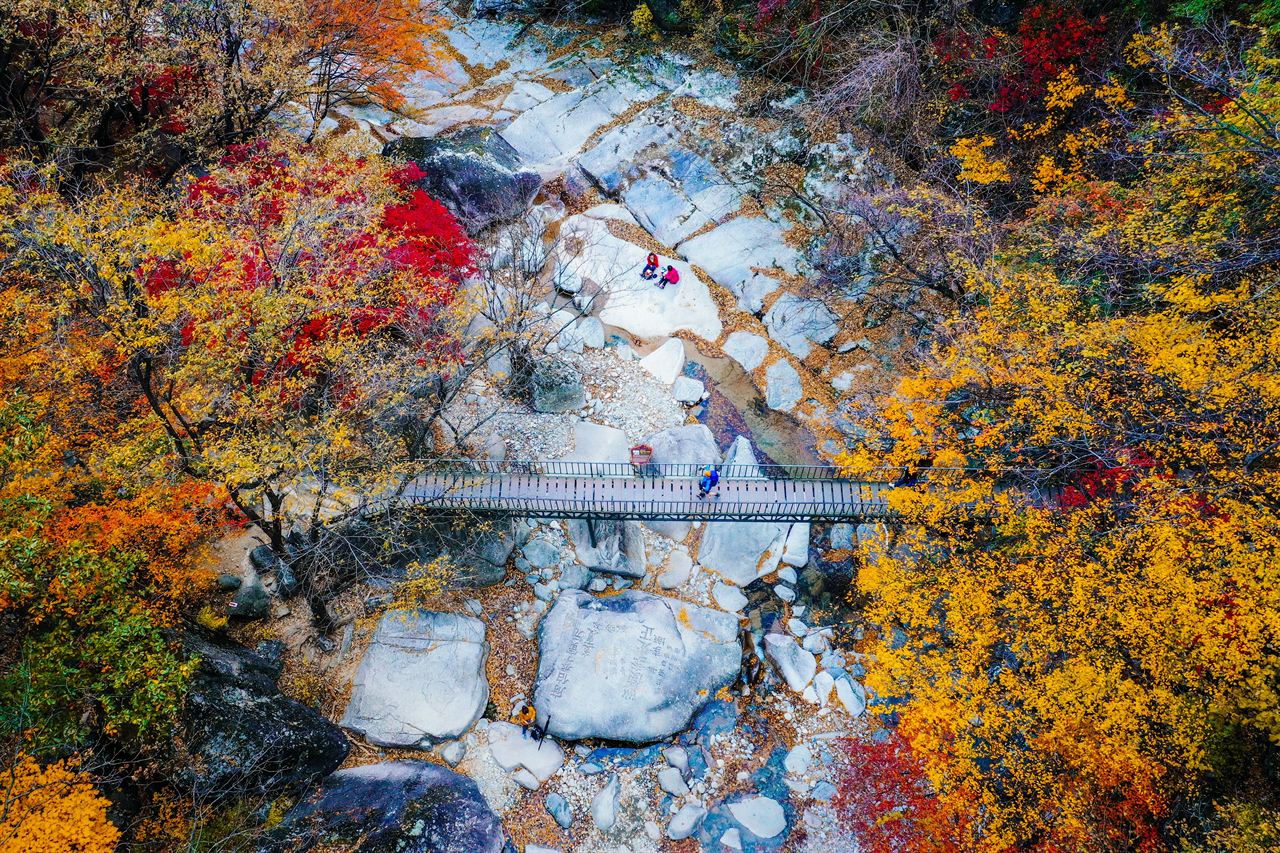
You follow a stream into a Korean mountain valley, stop beside a beautiful rock, and notice Chinese characters cut into its surface. Korean mountain rock inscriptions preserve names, poems, scenic titles, and commemorations, often connected with the scholars who visited these landscapes during the Joseon dynasty. They offer clues to how people enjoyed nature, remembered friendships, honored earlier generations, and hoped to be remembered themselves.
But who actually held the chisel? And why put writing on a mountain at all? The answers lead from ancient royal outings to Joseon poetry gatherings—and to working stonecarvers whose skill made a visitor’s passing moment last for centuries.
- What Do Korean Mountain Rock Inscriptions Mean?
- From Silla to Joseon: When Did the Custom Begin?
- How Joseon Scholars Enjoyed the Mountains
- Who Carved the Characters, and How?
- Memory, Reputation, and the Question of Vanity
- Where to See Rock Inscriptions in Korea
- How to Read the Landscape Today
- Explore More Traditional Korean Culture
What Do Korean Mountain Rock Inscriptions Mean?
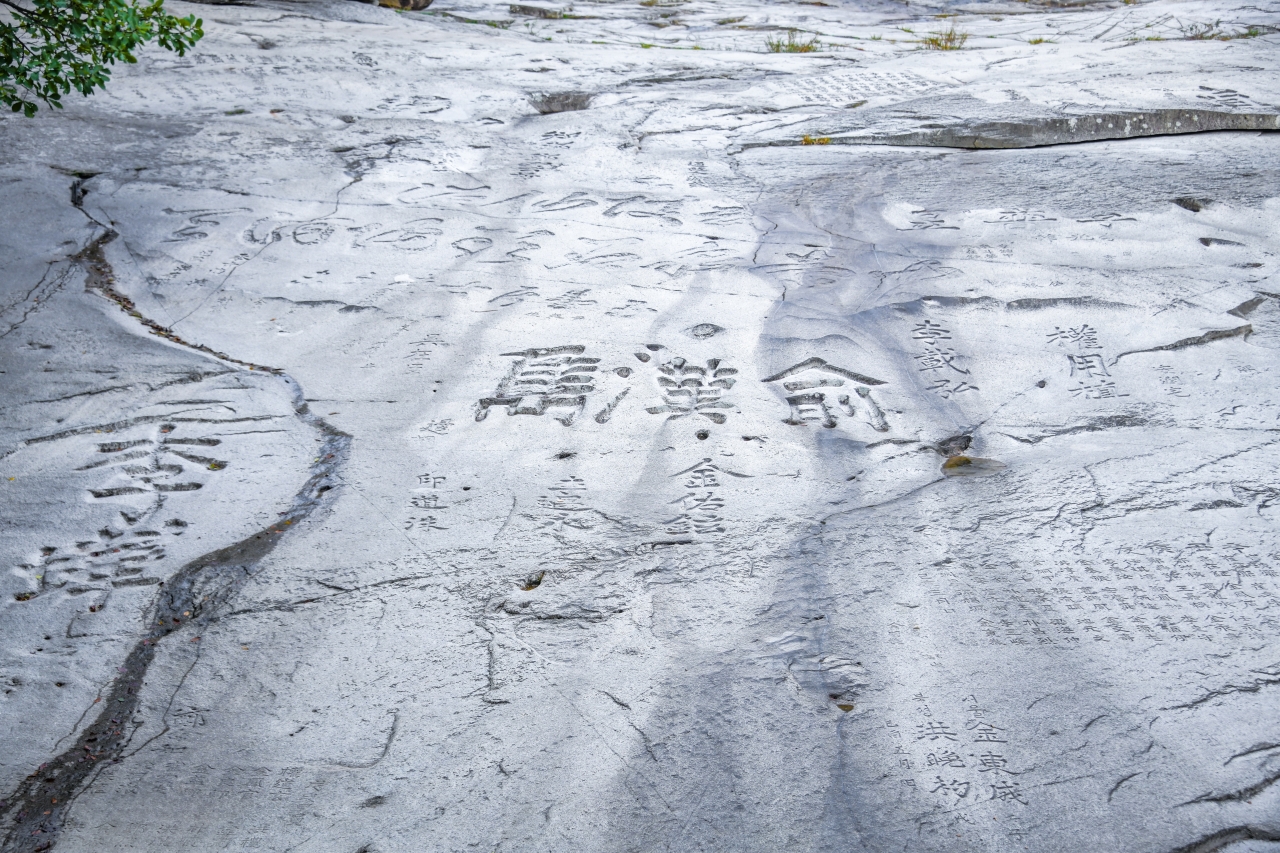
The broad term gakja means carved lettering. You may also encounter jemyeong, recording a name, or descriptions referring to inscriptions on exposed rock faces. Most examples discussed here are incised: the strokes are cut below the stone’s surface.
The script needs a little explanation. Chinese characters, called hanja in Korea, were used by Korean writers for centuries. Many inscriptions use hanmun, Literary Chinese, the written language of much premodern scholarship and official life. Their presence does not identify the visitor as Chinese. Even after the Korean alphabet was promulgated in 1446, Literary Chinese remained central to elite education.
Nor does every group of characters say “someone was here.” A rock can carry several kinds of message:
| Type of inscription | What it might record | What it reveals |
|---|---|---|
| A name or group of names | Visitors, companions, a gathering, sometimes a date or official title | A personal or shared claim to remembrance |
| A scenic name | A pool, cliff, retreat, or particularly admired stretch of valley | How people interpreted and organized the landscape |
| A poem or short phrase | A response to the scenery, a literary allusion, or a moral ideal | The meeting of landscape, literature, and calligraphy |
| A commemorative text | An admired teacher, ruler, historical event, or later act of remembrance | The beliefs and affiliations of those who commissioned it |
A famous person’s name also does not automatically mean that person personally carved—or even commissioned—the surviving inscription. Authorship, handwriting, carving, and later commemoration can belong to different people and different dates.
From Silla to Joseon: When Did the Custom Begin?
Ancient precedents, long before the Joseon scholars
There is no single founding date for this custom. At Cheonjeon-ri (천전리) in Ulju, Ulsan, inscriptions dated 525 and 539 record visits involving Silla royalty. The rock also carries other inscriptions associated with Silla visitors, including members of its elite. Writing on a memorable natural surface was therefore established in Korea many centuries before Joseon.
These ancient royal and religious contexts should be understood on their own terms. They provide early precedents for commemorating visits, rather than proof that one unchanged tourist custom continued for fifteen hundred years. Landscape inscriptions also belong to a broader East Asian literary tradition.
An established practice by early Joseon
A more direct connection with scholar travel appears in Kim Jong-jik’s account of his 1472 journey through Jirisan (지리산). In his Yuduryurok, he describes having his companion Yu Ho-in clear moss from a rock and place names on it. The episode shows that recording a visit on a natural surface already formed part of early Joseon mountain travel; it does not establish that Kim invented the practice.
By later Joseon, particularly along celebrated routes, earlier visitors’ names had become attractions themselves. Kim Chang-hyeop’s seventeenth-century Dongyugi describes his interest in finding predecessors’ names and writing, as well as leaving a record of his own. Famous scenery drew writers, their writing increased its reputation, and later travelers arrived looking for both.
The seventeenth through nineteenth centuries are especially important for understanding many surviving examples, but the practice also continued into the twentieth century. A crowded rock face may contain several historical layers.
How Joseon Scholars Enjoyed the Mountains
For a Joseon seonbi, a person devoted to scholarly learning and cultivated conduct, a mountain journey could combine pleasure, study, friendship, and reflection. The ideal of pungnyu embraced cultivated enjoyment: appreciating scenery, exchanging poetry, sharing conversation, and sometimes drinking or listening to music.
A streamside outing might involve settling on a broad rock, discussing an older poem, composing a response, and deciding which feature deserved a name. Other journeys were strenuous expeditions. Surviving travel accounts describe temple stays, conversations with monks, visits to historical places, and repeated pauses to write.
One particularly lively diary passage by the sixteenth-century official Hwang Yeo-il recalls companions arranging food and liquor and enjoying the company of monks. Such records restore the sociable warmth easily lost when scholars appear only as solemn figures in portraits. For the broader drinking culture, see the Traditional Korean Alcohol Guide; the specific drink served at a historical gathering should still be established from its own record.
Nature as a place to cultivate the mind
Looking at scenery could also become an exercise in learning how to live. A clear pool might suggest clarity of mind; a sheltered valley could evoke withdrawal from political conflict. Earlier teachers’ associations with a mountain gave later disciples another reason to visit.
The gugok, or nine-bend landscape, made this relationship particularly visible. Inspired by the Chinese Neo-Confucian thinker Zhu Xi’s Wuyi landscape and poetry, Korean scholars and their followers identified sequences of named scenes along streams. Poems, names, retreats, and teaching gave the valley an intellectual structure.
This helps explain the connection with Korean gardens and borrowed scenery. A pavilion, a rock inscription, and a named pool could direct attention toward a landscape’s meanings. Its apparently effortless beauty might be accompanied by a very deliberate cultural arrangement.
Who Carved the Characters, and How?
Often, the scholar supplied the words or handwriting, while a skilled stonecarver did the cutting. The Korean Studies Institute’s account of Joseon travel describes both professional stonemasons and monks skilled in carving. A specialist carving monk could be called a gakseung.
From brush to stone
- Choose the text and surface. A patron or visitor selected a name, phrase, or poem and a place for it.
- Provide the calligraphy. Writing could be brushed directly onto the rock or supplied on paper for the carver to follow.
- Cut the strokes. Using chisels and a hammer, the carver removed stone while translating the brushwork into recessed lines.
- Complete the commission. The time and arrangements depended on the rock, lettering, scale, and difficulty of access. Large cliff inscriptions required much more preparation than a small name on an accessible boulder.
The finished lettering therefore preserves two kinds of skill: the calligrapher’s control of the brush and the carver’s ability to give those strokes shape in stone.
A real transaction: five coins for three characters
Ha Jin-tae’s Yugayarok, recording a 1790 journey, supplies an unusually concrete example. He describes having his three-character name written out and ordering it carved at Hongnyudong Valley (홍류동계곡), associated with the earlier scholar Choe Chi-won. He identifies the stonecarver as a monk named Junhwa and records paying five coins for the three characters.
Jeong Sik’s 1725 Gayasanrok names another carving monk, Haehwan. Kim Sang-jeong describes a monk asking whether he wanted his name carved. Travelers could thus encounter the service locally, without necessarily bringing a mason from home.
The five-coin payment belongs to that particular commission. It is not a nationwide price list, and translating it into a modern cash equivalent would suggest a precision the record cannot support. Nor should every inscription be imagined as something ordered and completed during a brief stop.
Memory, Reputation, and the Question of Vanity
A name cut into stone could preserve the happiness of a shared journey. Near an admired predecessor’s writing, it could also suggest participation in an intellectual lineage. For a local association, a list of names recorded belonging.
There was an element of self-promotion too—and Joseon writers recognized it. In his account of traveling through Jirisan, the sixteenth-century scholar Jo Sik criticized people who expected a name carved on durable rock to grant lasting fame. His argument was that reputation should come from a worthy life and remembered deeds.
That disagreement matters. Earlier Koreans did not all regard inscribing scenery as harmless, beautiful, or necessary. The rocks preserve affection and ambition, while the travel accounts preserve arguments about what deserved to endure.
The leisure itself also rested on unequal resources. Long journeys could depend on servants, local assistance, and monks’ labor. A scholar’s elegant afternoon and the physical work supporting it were parts of the same historical scene.
Where to See Rock Inscriptions in Korea
Mureung Valley, Donghae: a gathering place written into stone
At Mureung Valley (무릉계곡) in Donghae, Gangwon, the broad Mureungbanseok Rock (무릉반석) offers a striking introduction. Names and larger calligraphic texts share the surface, including celebrated lettering associated with the sixteenth-century calligrapher Yang Sa-eon.
Its history extends beyond individual scholars. Research identifies inscriptions recording local associations, including twentieth-century gatherings. Nearby, an inscription bearing the painter Jeong Seon’s name links the valley with Korea’s landscape-painting tradition, explored further in the history of Korean traditional painting and its masters.
Visitor tip: Start with Mureungbanseok and nearby Samhwasa Temple (삼화사). Seeing the main inscribed rock does not require climbing to the mountain summit. Use the interpretation displays to distinguish prominent texts from the dense fields of smaller names.
Hwayang Nine Bends, Goesan: words with philosophical weight
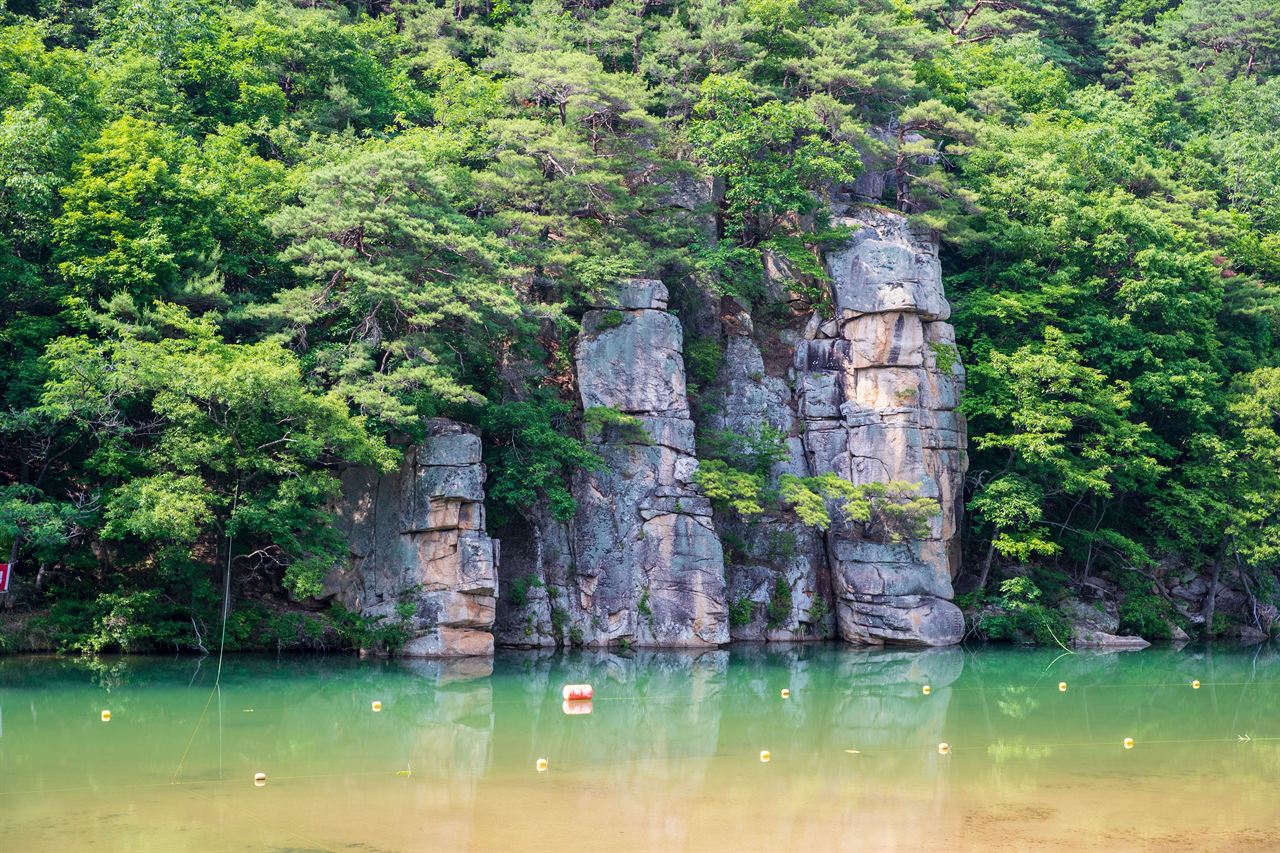
Hwayang Nine Bends (화양구곡), in Chungcheongbuk-do, is closely associated with the seventeenth-century scholar Song Si-yeol and his followers. Named cliffs, pools, and retreats make it an especially clear example of a landscape understood through learning.
Below Cheomseongdae Rock (첨성대), look for the four characters birye budong, 非禮不動: do not act contrary to ritual propriety. The lettering reproduces calligraphy attributed to the Ming Chongzhen emperor and was carved here in 1674. In Song’s circle, reverence for the fallen Ming dynasty expressed ideals of legitimate rule and loyalty. The inscription does not mean that the emperor visited this Korean valley.
Visitor tip: Follow the sequence of named scenes and allow time around Geumsadam Pool (금사담) and Amseojae Retreat (암서재). The historical relationships become easier to understand when the inscriptions are seen beside the water and buildings.
Suseungdae, Geochang: a name bestowed from a distance
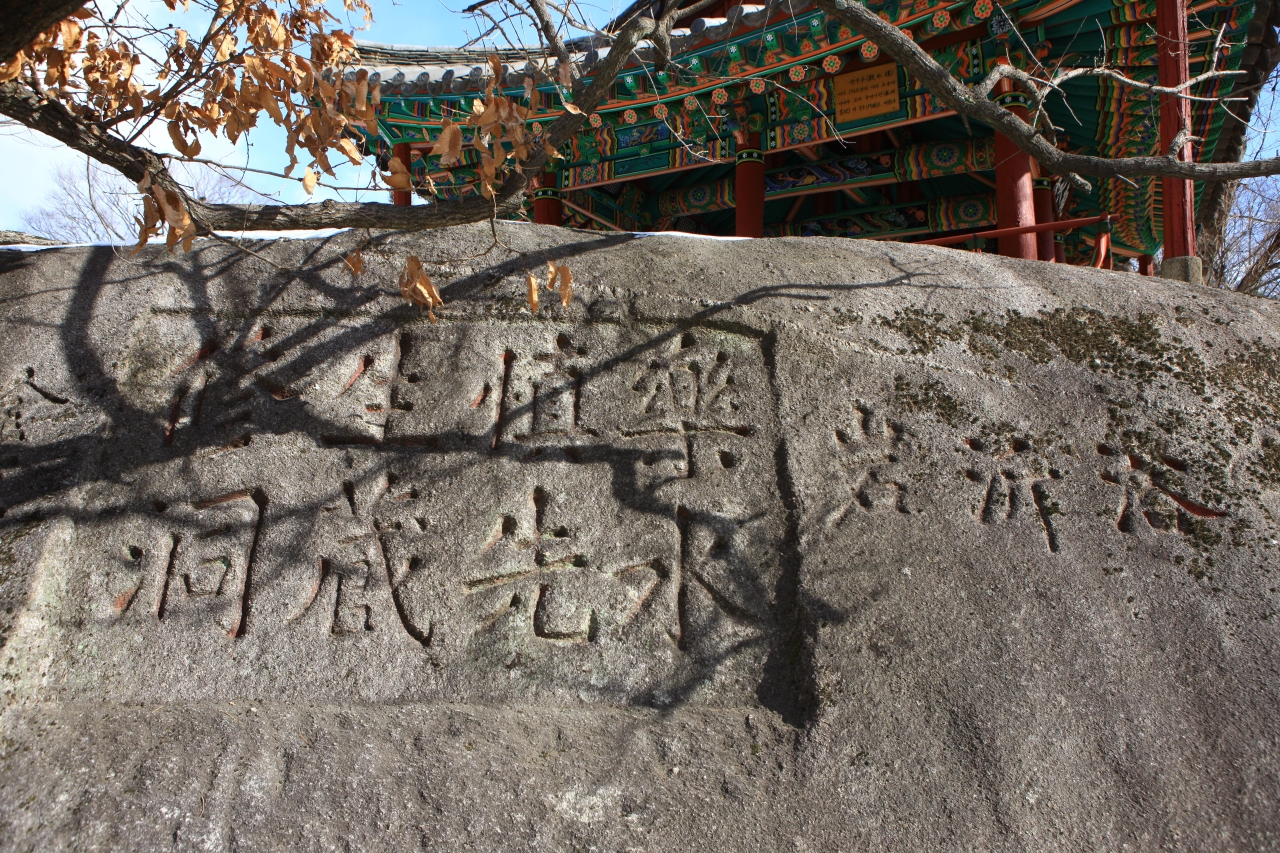
At Suseungdae (수승대) in Gyeongsangnam-do, a turtle-shaped streamside rock carries dense layers of writing. Its naming history offers a useful surprise: in 1543, Yi Hwang, also known as Toegye, sent a poem proposing the name Suseungdae without actually reaching the site on that journey. Local scholar Sin Gwon had the poem inscribed.
The place demonstrates how a respected scholar’s words could become part of a landscape through correspondence and local action.
Visitor tip: Look at the inscribed rock together with Yosujeong Pavilion (요수정) and Guyeonseowon Confucian Academy (구연서원). Together they explain the setting for teaching, gathering, and remembrance.
Hongnyudong, Hapcheon: poetry, monks, and remembered predecessors
Hongnyudong, also commonly romanized Hongryudong, runs toward Haeinsa Temple (해인사) in Gayasan (가야산). It is the valley behind Ha Jin-tae’s recorded commission, and its literary identity centers on Choe Chi-won.
Here, distinguish the age of a poem from the age of its surviving carving. Joseon travel accounts discuss the weathering of lettering associated with Choe and a later inscription of his poem in Song Si-yeol’s calligraphy. The words, handwriting, and stone surface can have different histories.
Visitor tip: The Gayasan Sorigil Trail (가야산 소리길) follows the valley through literary landmarks including Nongsanjeong Pavilion (농산정). Choose a manageable section and check national park access notices before traveling.
Baekseokdongcheon, Seoul: a scenic title near a scholar retreat
In Seoul’s Buam-dong (부암동), Baeksasil Valley (백사실계곡) contains the historic retreat landscape known as Baekseokdongcheon (백석동천). Large rocks bear the characters 白石洞天 and 月巖, the latter meaning “Moon Rock.” Nearby building foundations and a pond site help place the lettering within a former retreat.
The expression dongcheon evokes a secluded, beautiful realm. Here, words help mark out a special landscape within the surrounding hills.
Visitor tip: Search for the heritage site as well as the valley when planning your walk. This is a protected ecological setting: remain on the paths and keep out of the stream.
How to Read the Landscape Today
You do not need to read Literary Chinese to begin. First ask what kind of inscription you are seeing. A few monumental characters may name the scenery; a compact cluster may list companions. These are clues, not rules, so check the interpretation panel before deciding.
- Look for dates and smaller lettering. These may identify a writer, donor, commissioner, or later addition.
- Separate composition from carving. A poem can be centuries older than the inscription carrying it.
- Photograph the setting too. The relationship between writing, water, and a nearby pavilion often explains more than a tight crop of the characters.
- Treat automatic translation cautiously. Weathered strokes, cursive script, and classical phrasing can defeat ordinary phone translation tools.
Local Note: Photograph the interpretation sign before continuing along the trail. It gives you a reliable place name and reading to compare with your photographs later. Angled daylight can make shallow cuts easier to see without touching the rock.
Leave existing inscriptions undisturbed. Do not apply chalk, ink, or water to improve a photograph, make an unauthorized rubbing, or add a new name. Historical carvings are evidence to preserve. If other arrangements of stones catch your attention, the meaning behind Korean stone stacks introduces another tradition with its own purposes and history.
Beside a stream, an inscription can make a distant traveler unexpectedly close. Someone noticed this water, admired this rock, and wanted the encounter to last. Understanding the words—and the people who cut them—adds another dimension to the view.
Explore More Traditional Korean Culture
Continue exploring the objects, images, and performances through which Koreans shaped everyday life and cultural memory:
- Onggi: The Science Behind Korea’s Traditional Breathing Pottery
- Goryeo Buddhist Paintings: Korea’s Rarest Art Treasures
- Najeonchilgi: The Art of Korean Mother of Pearl Lacquerware
- The Acoustic Philosophy of Joseon: Royal Court Instruments of Korea
- Pansori Five Epics: Guide to Korea’s Masterpiece Storytelling
Korean Culture portal KCulture.com

Founder of Kculture.com and MA in Political Science. He shares deep academic and local insights to provide an authentic perspective on Korean history and society.