Chrysanthemum Festivals in Korea: The Queen of Autumn
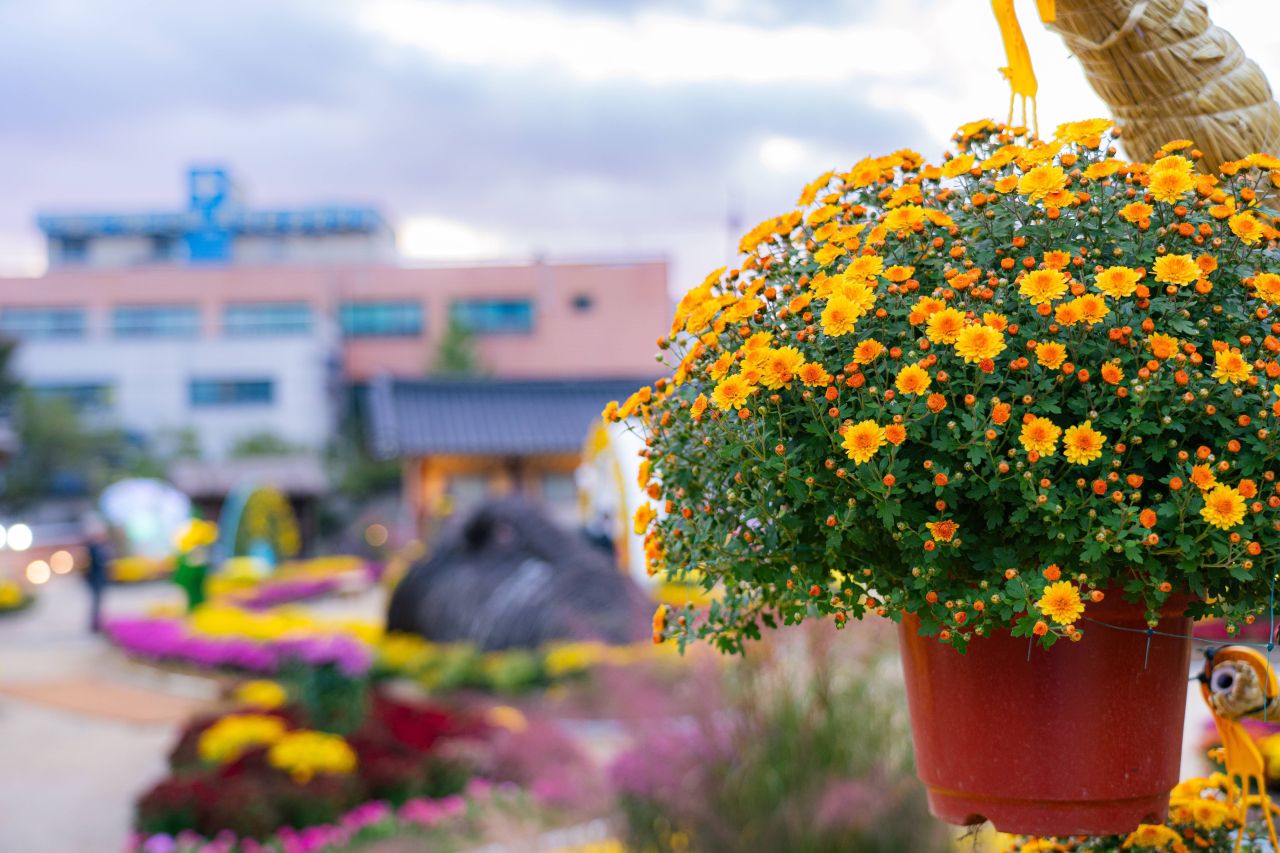
If May is the season of roses, October and November belong to chrysanthemums in Korea. Long admired in poetry and painting, these autumn flowers now fill parks, temple courtyards, and waterfronts with color. Chrysanthemum festivals in Korea are especially rewarding from late October to early November, while the earlier gujeolcho festival in Jeongeup (정읍) offers a different kind of beauty beneath the pines.
“Queen of Autumn” feels like a fitting nickname for a flower that takes center stage as the weather cools. Yet its appeal goes beyond spectacular displays: the chrysanthemum carries stories about integrity, seasonal pleasures, and even a king who turned a flower gift into a poetry challenge.
- Why Chrysanthemums Became Korea’s Noble Autumn Flower
- Chrysanthemums in Joseon: A Royal Gift and a King’s Painting
- A Little Flower Knowledge for Your Autumn Walk
- Chrysanthemum Festivals in Korea: Where to Go in 2026
- Chrysanthemum Exhibitions and Other Autumn Displays
- Tasting Autumn: Chrysanthemum Tea, Rice Cakes, and Wine
- How to Plan a Comfortable Flower Festival Visit
- FAQ: Chrysanthemums and Autumn Travel in Korea
Why Chrysanthemums Became Korea’s Noble Autumn Flower
There is something reassuring about a flower that blooms when the year is beginning to fade. In the literary imagination, chrysanthemums facing autumn’s first chill suggested a person who keeps their principles through difficult times.
That association helps explain their place among the Four Gentlemen, also called the Four Noble Plants: plum blossom, orchid, chrysanthemum, and bamboo. This shared East Asian tradition linked plants with admirable human qualities. Korean scholars and artists developed it through poetry, brush painting, and decorative arts.
The chrysanthemum’s particular virtue was steadfastness. The expression osang gojeol evokes integrity that stands firm against frost. It is a poetic ideal rather than a promise that every chrysanthemum survives freezing weather.
The flower also traveled beyond the scholar’s brush. Chrysanthemum motifs appear on Goryeo inlaid celadon and Joseon ceramics. Once you recognize the petals, a museum bowl or vase can become another way of encountering autumn. For a wider introduction to Korea’s literary imagination, explore five famous Korean poets and their translated books.
Chrysanthemums in Joseon: A Royal Gift and a King’s Painting
King Myeongjong’s unexpected poetry challenge
Imagine receiving flowers from the king—and discovering that a poem is expected in return.
An anecdote preserved in Jibong yuseol, an early seventeenth-century compilation by scholar Yi Su-gwang, tells how King Myeongjong picked yellow chrysanthemums from the palace garden and sent them to court scholars, asking for a song. The unexpected command left the recipients unsure how to respond. Song Sun, who was on duty, composed a sijo, Korea’s concise three-line poetic form, and received a generous royal reward.
The poem associated with this royal gift praises chrysanthemums blooming amid wind and frost. Read against the flower’s established symbolism, the gift becomes more than a pleasant seasonal gesture: it can be understood as an invitation to reflect on steadfast character.
King Jeongjo put the flower on paper
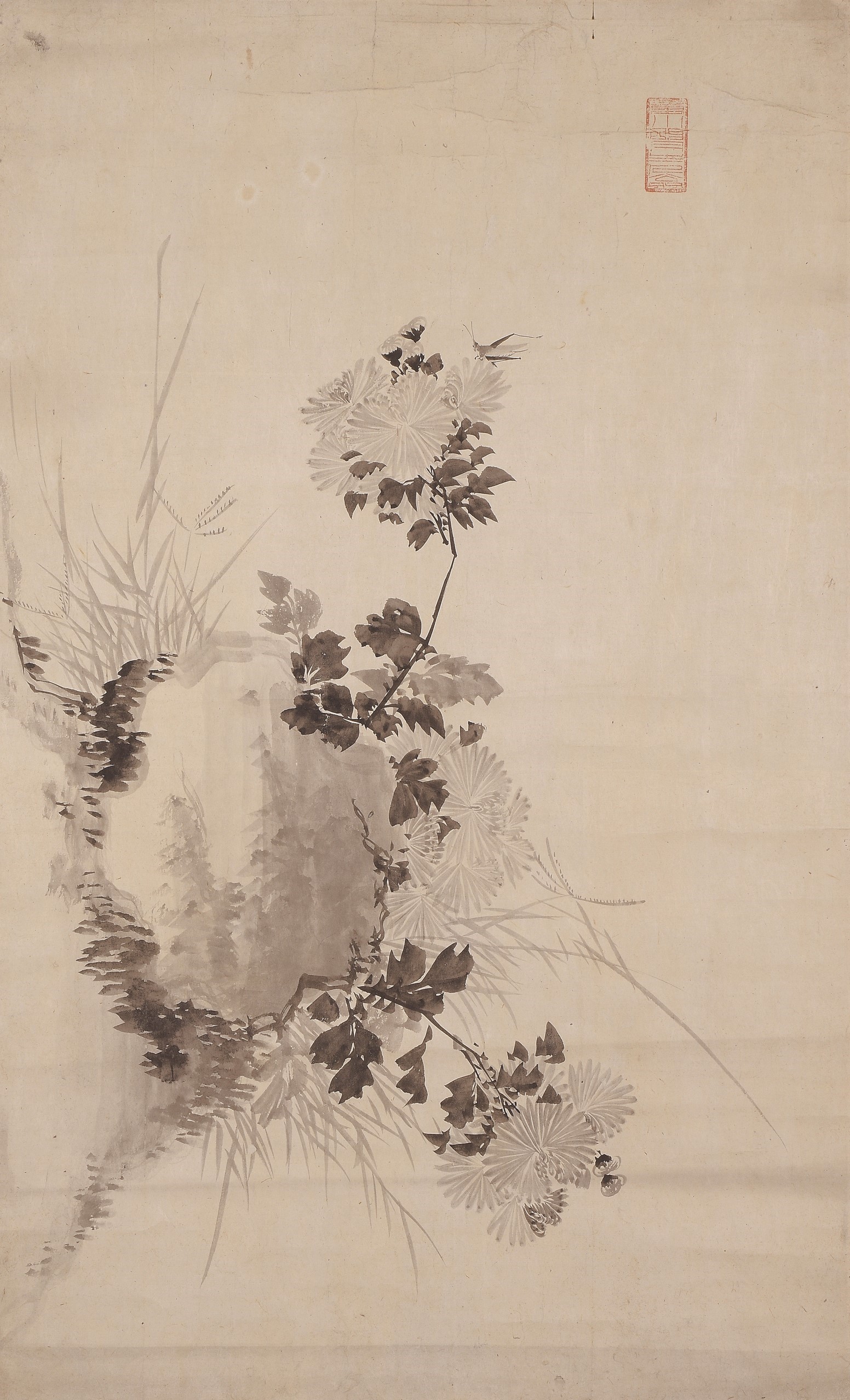
Another royal connection survives as an actual artwork. Eighteenth-century King Jeongjo painted Chrysanthemums in ink on paper. Flowers rise beside rocks and grasses, with generous empty space giving the composition room to breathe. The painting was designated a Korean Treasure in 1982.
Keep that restrained image in mind when you encounter a modern festival’s towering flower sculptures. The scale has changed dramatically, but the pleasure of looking closely remains. The painting is associated with Dongguk University Museum (동국대학교박물관); check its current exhibitions before planning a visit specifically to see the original.
A Little Flower Knowledge for Your Autumn Walk
You do not need to memorize botanical names to enjoy the season. A few distinctions simply make the displays more interesting.
Most festival chrysanthemums are cultivated varieties, often grouped under Chrysanthemum × morifolium. Years of breeding have produced enormous layered blooms, small daisy-like flowers, rounded pompoms, and narrow, curling petals. White and yellow are only the beginning; pink, purple, orange, and coppery shades also appear.
Large-, medium-, and small-flowered chrysanthemums are horticultural groupings, not three separate species. Likewise, “standard” and “spray” describe flowering forms: usually one prominent bloom per stem versus several.
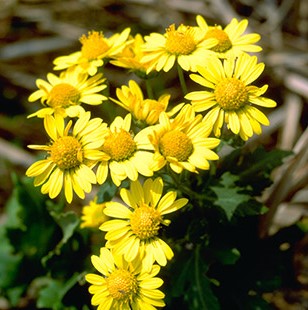
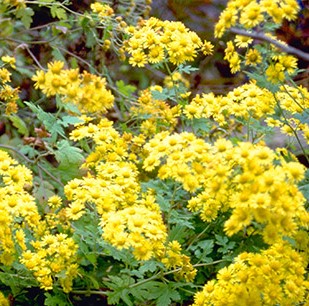
Deulgukhwa, often translated as “wild chrysanthemum,” is a broader everyday expression. It includes several daisy-like wildflowers, including asters:
- Gamguk and sanguk: yellow wild chrysanthemums; gamguk cultivated specifically for food can also appear in tea and seasonal dishes.
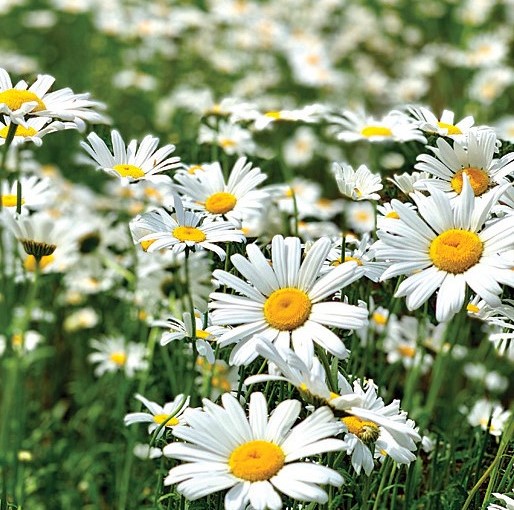
- Gujeolcho: white or pale pink flowers with yellow centers, celebrated at Jeongeup’s garden festival.
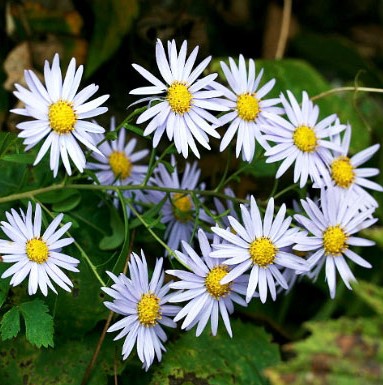
- Ssukbujaengi and Korean aster: familiar purple-toned flowers. Some bloom well before late autumn, so their timing differs from the main chrysanthemum festivals.
A small white flower beside a trail deserves its own name. Use plant labels or reliable identification rather than assuming every autumn daisy is the same species.
Chrysanthemum Festivals in Korea: Where to Go in 2026
The following dates and general adult admission fees were checked against official listings on October 1, 2026. Programs and opening arrangements can change, so follow the linked event pages before traveling. Free admission does not necessarily include food, workshops, or other paid activities.
| Festival | 2026 dates | Main setting | General adult admission |
|---|---|---|---|
| Jeongeup Gujeolcho Flower Festival (정읍구절초꽃축제) | October 8–18 | Pine-forest garden | KRW 7,000, including a KRW 4,000 spending voucher |
| Yuseong Chrysanthemum Festival (유성국화축제) | October 17–November 1 | Daejeon (대전) city park and streamside walks | Free |
| Hampyeong Chrysanthemum Festival (대한민국 국향대전) | October 23–November 8 | Expo park with major flower displays | KRW 7,000 at the gate; KRW 6,300 with advance purchase |
| Iksan Ten Million Chrysanthemum Festival (익산천만송이 국화축제) | October 23–November 1 | City park with floral art and evening lighting | Free |
| Masan Gagopa Chrysanthemum Festival (마산가고파국화축제) | October 31–November 8 | Waterfront parks | Free |
Jeongeup: small flowers beneath the pines
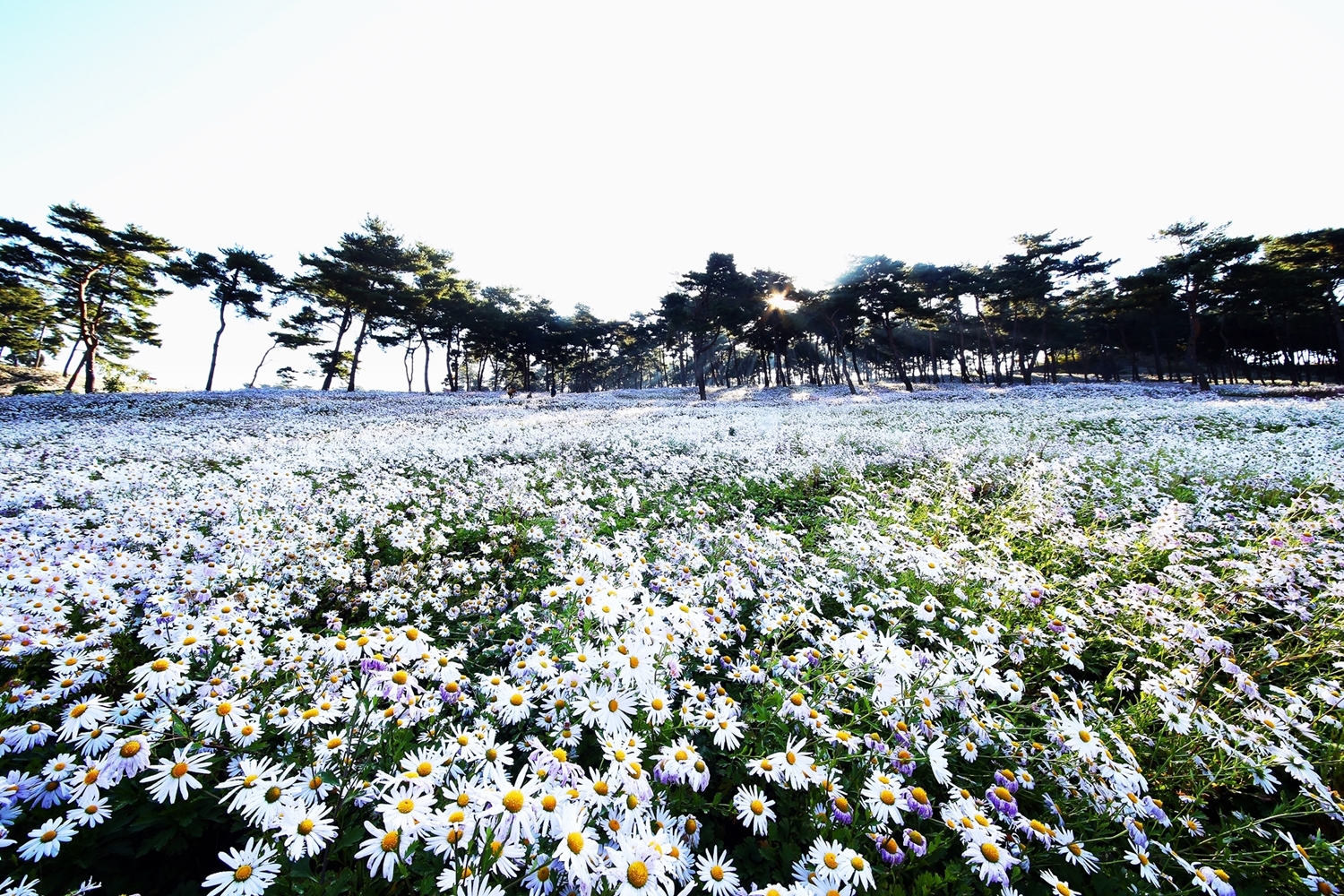
Choose this for a landscape-led flower outing. The Jeongeup Gujeolcho Flower Festival takes place at Jeongeup Gujeolcho Local Garden (정읍 구절초지방정원), where pale flowers spread beneath pine trees. This is a planted, maintained garden featuring a wildflower species, with a very different atmosphere from elaborate chrysanthemum sculptures.
The adult ticket includes a KRW 4,000 voucher for eligible spending; it is not a cash refund. The official festival website also provides access to flowering CCTV. The garden is outside central Jeongeup, so arrange your onward journey from the station and your return transport.
Yuseong, Daejeon: an easygoing urban autumn
Choose this if flowers are part of a city break. The Yuseong Chrysanthemum Festival centers on Yurim Park (유림공원) and surrounding areas. Its 2026 program combines chrysanthemum displays with asters, cosmos, streamside walks, gardening activities, and performances.
A chrysanthemum sculpture of Hanbit Tower (한빛탑) brings a local science-city landmark into the floral scenery. Evening activities are also listed, although individual performances have their own schedules. Check the 2026 festival information before choosing your visit time.
Hampyeong: make the flowers the main event
Choose this for large floral artworks and a dedicated festival outing. The Hampyeong Chrysanthemum Festival, officially Daehanminguk Gukhyang Daejeon, fills Hampyeong Expo Park (함평엑스포공원) with major installations and chrysanthemum bonsai. Performances, hands-on activities, and local produce stalls round out the day.
Advance adult admission costs KRW 6,300 through October 22; gate admission is KRW 7,000. The 2026 ticket page lists visiting hours of 9 a.m.–6 p.m., with ticket sales ending at 5 p.m., and a KRW 2,000 adult spending coupon. If online booking is difficult, gate purchase is available. Review the organizer’s announcements for activity details.
Iksan: flowers by day, light after sunset
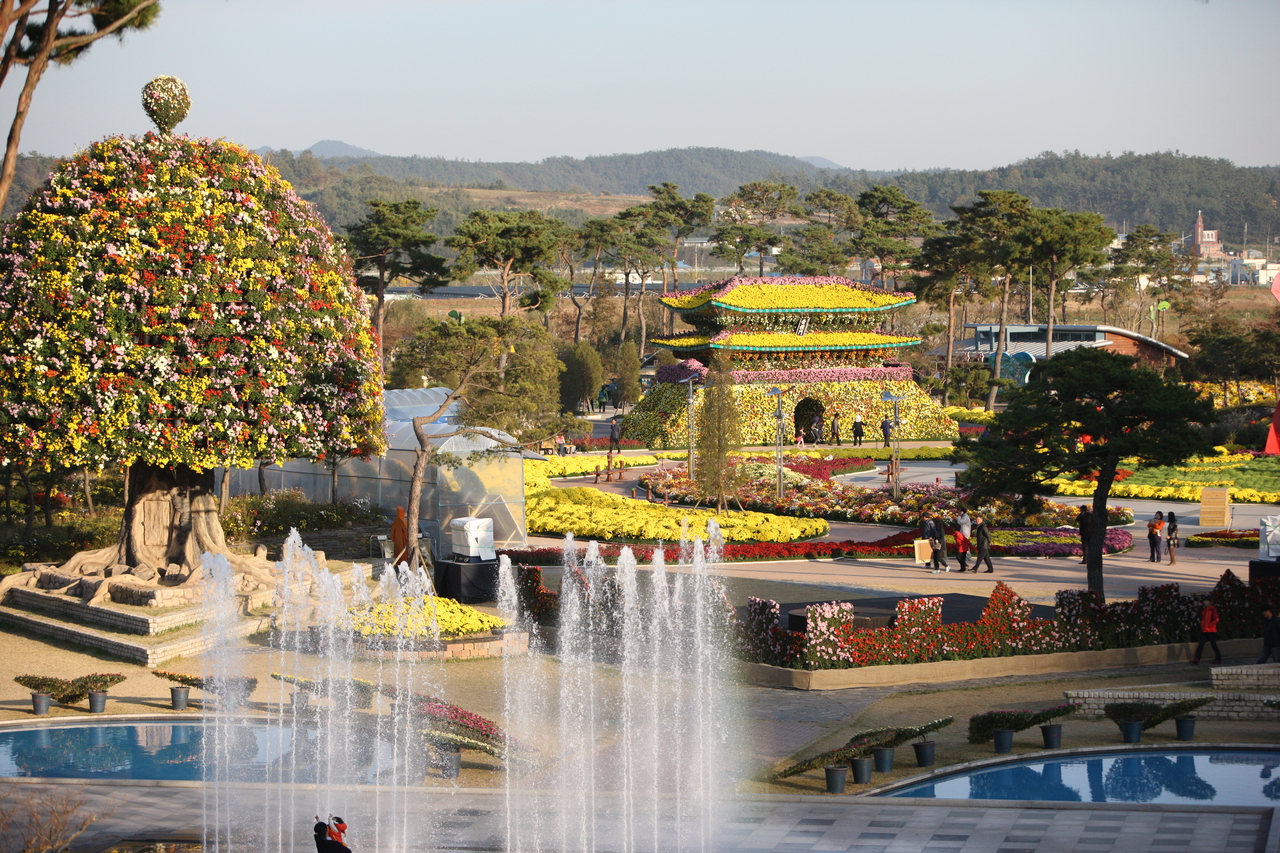
Choose this for a visit that can extend into the evening. The Iksan Ten Million Chrysanthemum Festival is held at Iksan Central Sports Park (익산 중앙체육공원). The 2026 theme, “GLOW IKSAN,” connects flower displays with the city’s jewelry identity.
Expect large sculptures, bonsai, multi-bloom plant displays, and illuminated features. “Ten Million” is the festival’s name, rather than a daily flower count visitors need to take literally. Consult the official festival website for evening hours and special events; a listed fireworks program should not be assumed to run every night.
Masan, Changwon: chrysanthemums beside the sea
Choose this for waterfront scenery and impressive growing techniques. The Masan Gagopa Chrysanthemum Festival uses 3·15 Marine Nuri Park (3·15해양누리공원), Happo Waterfront Park (합포수변공원), and the Masan Marine New City (마산해양신도시) area.
Its connection to local agriculture gives the spectacle another layer. The organizer’s introduction traces Masan’s commercial chrysanthemum growing to six farming households in 1961 and exports to Japan in 1972. Flower artworks, bonsai, performances, and food bring that growing tradition into a public celebration. Use the current event listing for locations and show schedules.
Allow time for a meal around Masan Fish Market (마산어시장). For spicy cooked seafood, look up Odong-dong Agujjim Street (오동동 아구찜거리), known for steamed monkfish. If you are extending a southern coastal trip, the Tongyeong (통영) travel guide offers ideas for another stop.
Look beyond the photo backdrop: A single-plant multi-bloom display is created by branching and training one chrysanthemum into an extraordinary arrangement. Cascading displays guide stems downward, while chrysanthemum bonsai gives an herbaceous plant the appearance of a miniature old tree. Large animal or architectural sculptures may use many plants attached to a frame. Check the label to understand what the grower achieved.
Chrysanthemum Exhibitions and Other Autumn Displays
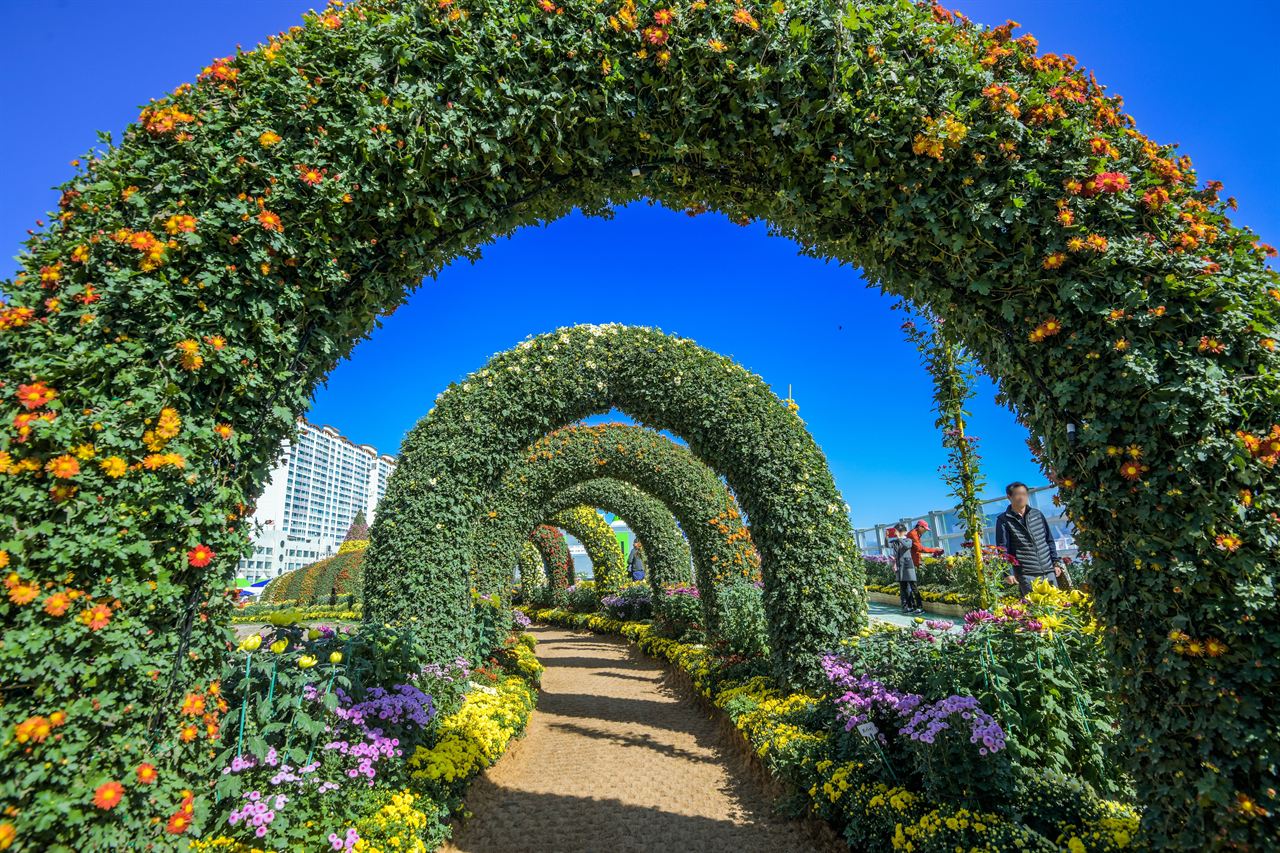
A flower outing does not have to mean a full regional festival. The following three venues have documented chrysanthemum exhibitions, but their 2026 exhibition dates had not been verified as of October 1. Treat them as places to check, rather than confirmed event bookings.
- Jogyesa Temple (조계사), Seoul: past chrysanthemum displays have brought autumn color into a working Buddhist temple. This is a promising option for combining flowers with a central Seoul cultural walk. Check the temple’s announcements, and keep worship areas and passageways clear.
- Daegu Arboretum (대구수목원): its official exhibition information documents flower sculptures, bonsai, and carefully trained plant displays. The page currently describes 2025 arrangements, including separate display locations. Look for a dated 2026 update on the city’s exhibition page.
- The Garden of Morning Calm (아침고요수목원), Gapyeong: the garden documented a cultivated-chrysanthemum exhibition at its Achimmaru space in autumn 2025. Check the garden’s current notices for 2026 dates and admission. A wildflower exhibition and a cultivated-chrysanthemum exhibition are different events.
Cheongnamdae: an autumn outing with modern history
Cheongnamdae (청남대), a former presidential retreat in Cheongju (청주), has announced its 2026 autumn festival for October 31–November 8. Its 2025 program included chrysanthemum bonsai alongside other plant and art exhibitions. The broader festival dates are confirmed, but check the official website for this year’s exhibition lineup, admission, and access arrangements before traveling specifically for chrysanthemums.
Tasting Autumn: Chrysanthemum Tea, Rice Cakes, and Wine
Korea’s affection for chrysanthemums has also reached the table. Seasonal customs associated with Jungyangjeol, the Double Ninth Festival, on the ninth day of the ninth lunar month include chrysanthemum rice cakes and chrysanthemum wine. Modern flower festivals follow their own schedules and do not necessarily coincide with this lunar-calendar observance.
Gukhwajeon are small, pan-fried glutinous rice cakes decorated with edible chrysanthemum petals and finished with honey or syrup. Their appeal is wonderfully simple: a flower becomes both decoration and a delicate part of the flavor.
Gukhwacha is chrysanthemum tea, while gukhwaju refers to chrysanthemum-scented traditional alcoholic drinks made in different ways. These foods offer another way to appreciate the season, although they are not guaranteed menus at every festival.
Food tip: Choose flowers and tea sold specifically for consumption. Florist bouquets, festival displays, and unidentified wildflowers are not ingredients to collect for your own tea. Ask about ingredients if you have flower-related allergies, and enjoy traditional preparations as food rather than assuming old medicinal beliefs establish modern treatment benefits.
How to Plan a Comfortable Flower Festival Visit
Match your trip to the actual flowers
For the confirmed major cultivated-chrysanthemum festivals, late October and early November offer the widest overlap. Jeongeup’s gujeolcho festival comes earlier. There is no single nationwide peak date: varieties, weather, and cultivation all influence flowering. Recent organizer photos or flowering CCTV are more useful than an undated “best week” online.
Plan the last part of the journey
A ticket to Masan, Iksan, or Jeongeup station gets you to the city, not necessarily to the flower beds. Search the exact venue name in Naver Map or Kakao Map, using the Hangul names above to help identify the correct location. Check local buses or taxis, and plan your return before setting off. Rural gardens deserve particular attention; do not rely on a shuttle unless a current timetable has been published.
If possible, visit on a weekday and leave spare time for busy roads and parking. Jeongeup’s organizer specifically recommends morning arrival for smoother access. Carry comfortable walking shoes and an extra layer for cooler evenings, especially beside the water.
Check access, bookings, and evening schedules
General entry and hands-on programs can have different booking rules. For wheelchairs or strollers, ask about the particular entrance, surfaces, slopes, and accessible toilets; a park setting alone does not guarantee every route is easy. At night, confirm closing times and your ride home before staying for a performance.
Photograph from paths rather than stepping into flower beds or touching trained branches. A display that looks sturdy may represent months of careful growing.
2026 travel note: The Geoje Island Flower Festival (거제섬꽃축제) was canceled after severe rain damage to its grounds and plants. Older promotional pages should not be used to plan a 2026 festival visit.
For a broader itinerary, use Korea’s autumn festivals by travel style to choose a complementary event instead of rushing between several similar flower displays.
FAQ: Chrysanthemums and Autumn Travel in Korea
Do chrysanthemums bloom only in autumn?
Many respond to longer nights by forming flower buds, which helps explain their autumn association. Growers can manage light and darkness to adjust flowering, so cut chrysanthemums are available in other seasons too.
Are white chrysanthemums only for funerals?
Large white chrysanthemums have a strong association with funerals and remembrance in Korea, but they also appear in gardens and exhibitions. A colorful chrysanthemum festival is a seasonal celebration. If buying a bouquet as a gift, ask the florist about an appropriate mix.
Can I see a good display without leaving Seoul?
Jogyesa is a venue to watch for a confirmed autumn exhibition. Check its current announcements before making a special trip; past displays do not establish this year’s dates.
Do free festivals require reservations?
Check general entry and individual programs separately. Free admission does not automatically include a place in a workshop or special performance, and some activities may require advance booking. Paid festivals such as Hampyeong also offer gate tickets.
Should I combine flowers with an autumn foliage trip?
Yes, when the local flowering and leaf-color periods overlap. Avoid assuming both peak together everywhere. For more seasonal ideas, explore Korea’s autumn scenery beyond red leaves, or pair a Seoul cultural outing with the separate park experience described in the Haneul Park guide.
At a chrysanthemum festival, it is worth pausing beside one small flower as well as the largest sculpture. The same autumn bloom that invited a scholar’s poem or a king’s brush still gives visitors a reason to slow down and look.
Korean Culture portal KCulture.com

Founder of Kculture.com and MA in Political Science. He shares deep academic and local insights to provide an authentic perspective on Korean history and society.